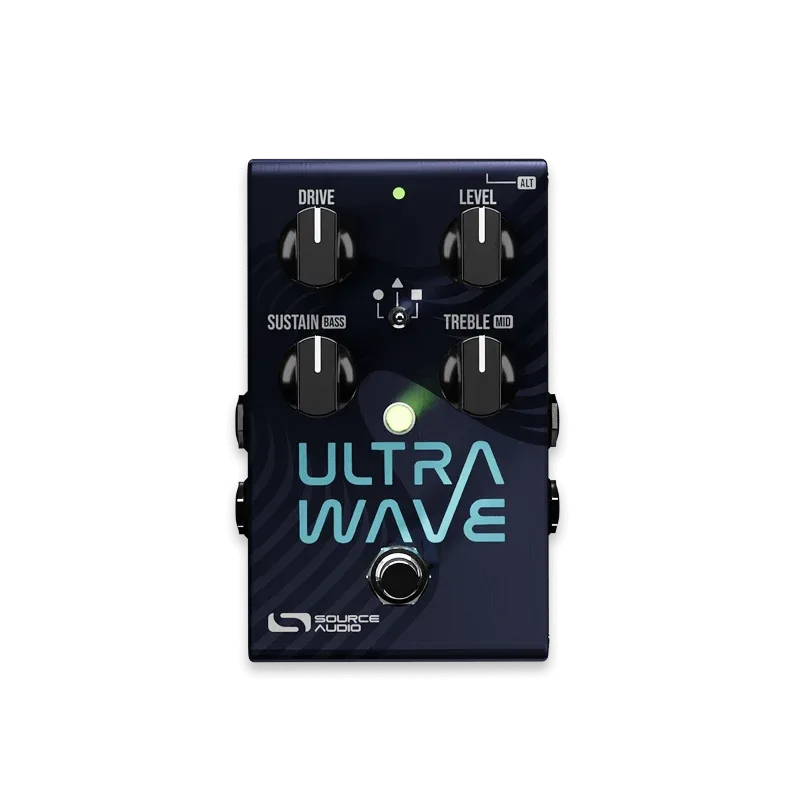


The Source Audio Ultrawave Distortion Lab is a stereo effects pedal housed in a brushed anodized aluminum enclosure measuring 4.6" x 2.75" x 2.2" and weighing 0.625 lb, with a 2 year warranty1. A bass version, the Ultrawave Bass Distortion Lab, is sold out2.
What multiband processing does to your sound
The pedal's enclosure is brushed anodized aluminum, measuring 4.6" x 2.75" x 2.2" and weighing 0.625 lb1. The bass version of the pedal, the Ultrawave Bass Distortion Lab, is sold out2.
Beyond the drive itself, the pedal includes:
- Tremolo, morphing and ring mod with detailed LFO controls
- A choice of a sine wave LFO or A/R (attack/release) controls for custom LFO shapes3
- Graphic EQ, compressor and expander functions1
Stereo operation
The Ultrawave has stereo inputs and outputs. Channel 1/Channel 2 Sync options and a Phase Offset control let you set the two channels against each other for stereo ping-pong tremolo effects, where the modulation travels between the left and right outputs1.
Presets and MIDI
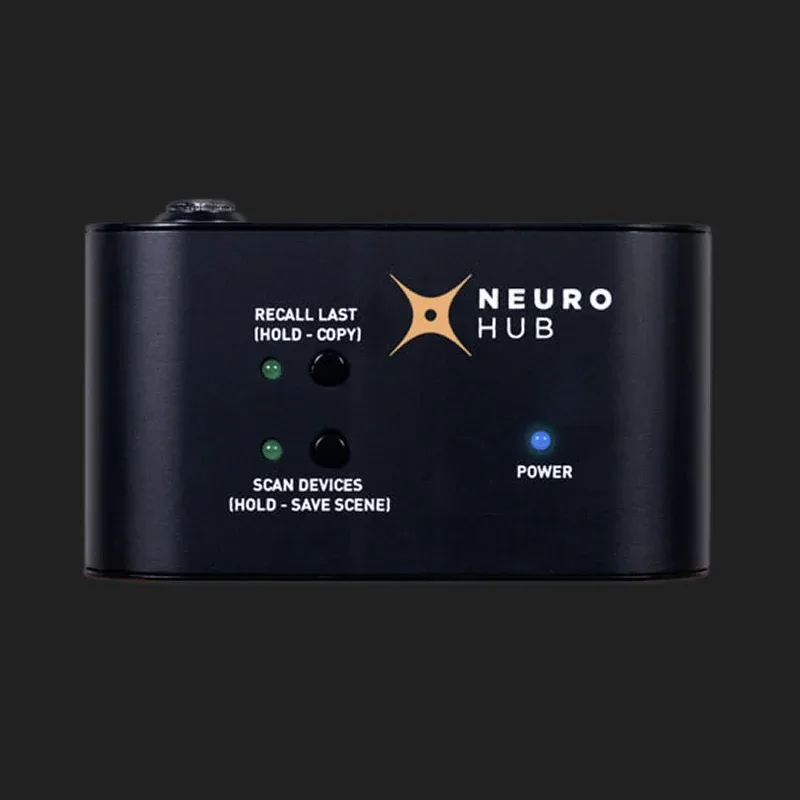
The pedal stores 128 presets. Six of them sit on the pedal's toggle switch for quick recall without any extra hardware. For the full bank, connect the pedal to a Source Audio Neuro Hub or a One Series MIDI Adapter and up to 128 presets become recallable with MIDI program change messages1. Players building a MIDI-controlled board can find more on MIDI pedals.
The 165 mA power consumption is high for a compact pedal. A battery is not part of the picture here, and a daisy chain shared with other pedals is unlikely to hold up; plan a dedicated supply output.
The bass version
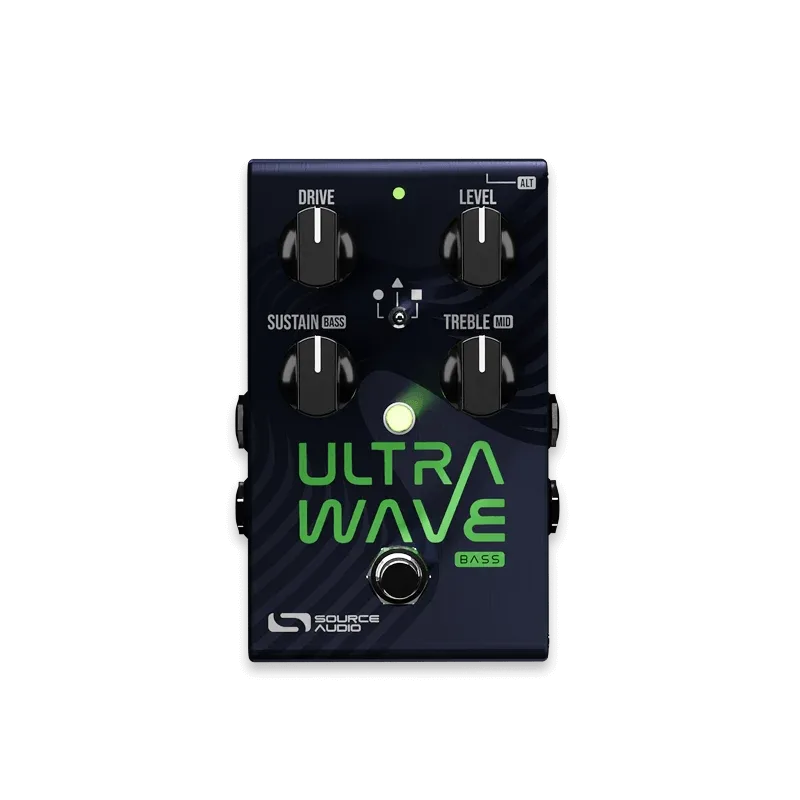
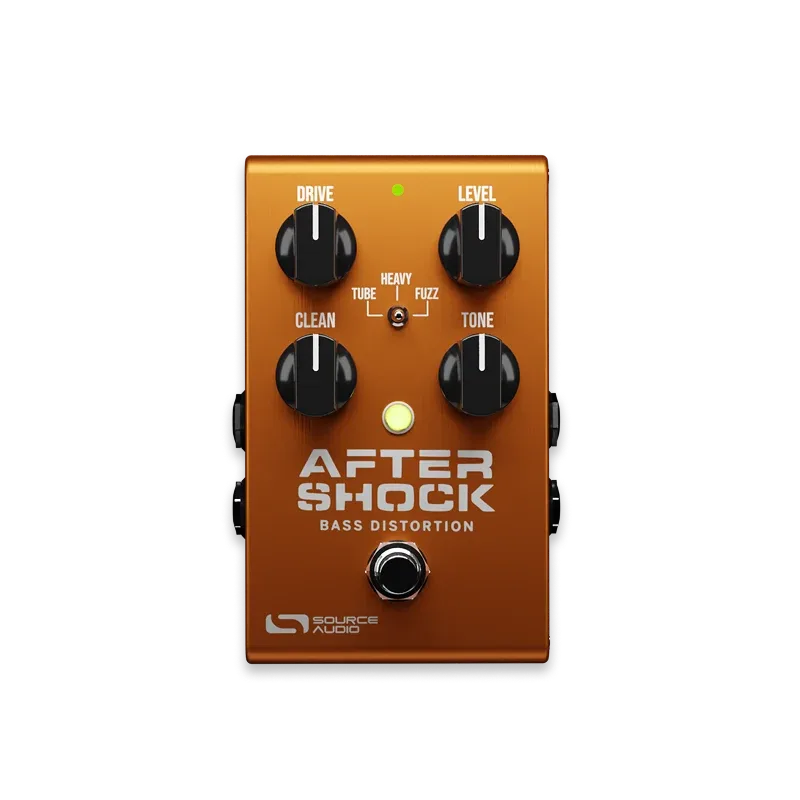
Source Audio makes an Ultrawave Bass Distortion Lab, a bass distortion pedal on the same multiband platform. The maker describes it as bringing "ground-shaking varieties of overdrive and tremolo" to bass, with the same 128 preset memory, the same six presets on the toggle switch, stereo I/O with ping-pong tremolo, and the same MIDI recall through the Neuro Hub or One Series MIDI Adapter3. As of October 2026 the maker's page lists the bass version as sold out3. Bass players comparing options can also look at the AfterShock Bass Distortion, an earlier One Series pedal from the same maker4.
Where it came from
Players looking at the Ultrawave should note that the bass version, the Ultrawave Bass Distortion Lab, is sold out2.
Videos
Sweetwater
sourceaudioeffects
AndyDemos
Questions
How many presets does the Source Audio Ultrawave Distortion Lab store?
The pedal has a 128 preset memory. Six of those presets are accessible directly from the pedal's toggle switch, and all 128 can be recalled over MIDI. To reach the full bank by MIDI you connect the pedal to a Source Audio Neuro Hub or a One Series MIDI Adapter and send MIDI program change messages.
Is the Ultrawave Distortion Lab true bypass?
It uses Source Audio's Universal Bypass, which lets you choose between two behaviors: high-quality signal relays for true bypass, or transparent buffers for analog bypass. That makes it usable on pedalboards where a hard-wired or buffered bypass either is preferred or causes problems.
How much current does the Ultrawave Distortion Lab draw?
Source Audio lists the power consumption at 165 mA. That is well above what a typical pedalboard daisy-chain output supplies, so a dedicated isolated supply output rated for at least that draw is the practical choice.
Does the Ultrawave Distortion Lab work in stereo?
Yes. The pedal has stereo inputs and outputs, with Channel 1/Channel 2 Sync options and a Phase Offset control that can be used to create stereo ping-pong tremolo effects.
How do you recall presets by MIDI on the Ultrawave Distortion Lab?
Connect the pedal to a Source Audio Neuro Hub or a One Series MIDI Adapter, and up to 128 presets become recallable with MIDI program change messages. Without that hardware, six presets are reachable from the pedal's own toggle switch.
Is there a bass version of the Ultrawave Distortion Lab?
Yes. Source Audio makes the Ultrawave Bass Distortion Lab, a bass distortion pedal built on the same multiband processing approach, with ground-shaking varieties of overdrive and tremolo, the same 128 preset memory, stereo I/O, and the same MIDI options. As of October 2026 the maker's page lists it as sold out.
Sources (4)
- Ultrawave Distortion Lab, Source Audio
- Source Audio combines overdrive, fuzz and tremolo in "first of its kind" Ultrawave Multiband processor, guitarworld.com, 2021-03-18
- Ultrawave Bass Distortion Lab, Source Audio
- Source Audio Unveils the Ultrawave Multiband Processor, premierguitar.com, 2021-03-22