

The Strymon Fairfax is a drive pedal with an unusual premise: Strymon describes it not as a distortion pedal but as "a complete miniature amplifier in 100% analog form"1. Instead of clipping diodes or a digital amp model, the circuit is a miniaturized tube preamp, a Class A power amp, and a custom circuit that emulates the saturation of a tube amp's output transformer, with a variable Sag circuit on top1. Strymon says the sound and feel is extremely tube-like, with added harmonics and saturation that glue notes together, and that a discrete tube emulation circuit provides smooth asymmetric clipping1.
It launched on December 9, 2025 as the first pedal in Strymon's Series A line of pure analog pedals, priced at $199213. For a company best known for digital processing, it is a deliberate change of direction: Delicious Audio noted that Strymon, "a name long synonymous with cutting-edge digital processing, has entered the analog arena with the Fairfax Drive"4.
A miniature analog amp in a drive pedal
The Fairfax's circuit recreates the critical elements of a small tube amp in the analog domain. Pedal of the Day reports that Strymon's analog engineers set out to "recreate all of the critical elements of a custom Champ-like [tube amp] circuit"9, and MusicRadar explains that JFET transistors stand in for the original's tubes6. The preamp feeds a Class A power amp stage, and a custom circuit emulates the output transformer's saturation, the part of a tube amp's character that most drive pedals leave out1.
The result, in Strymon's words, is "a drive pedal that feels completely natural to play"1. Delicious Audio describes the foundational Drive and Level knobs as providing a wide gain spectrum, from a transparent, glue-like boost to aggressive distortion4. Because the pedal is really an amp circuit rather than a clipping stage, Strymon's Head of Marketing Sean Halley told Premier Guitar that "it doesn't change your core tone, and it stacks brilliantly with other drive pedals"10.
The controls: Level, Drive, Sag and Bright
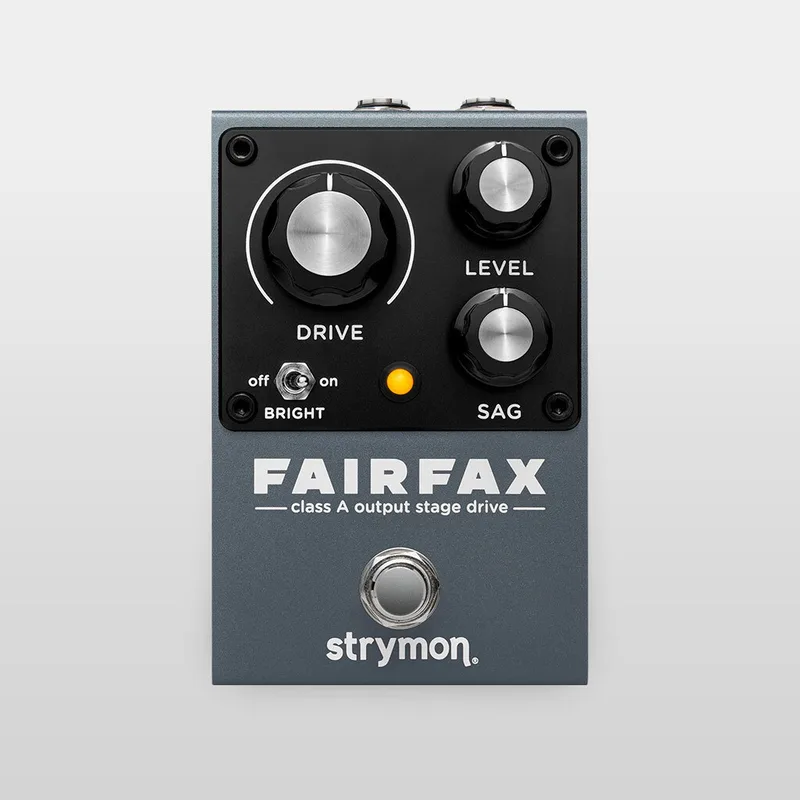
The Fairfax keeps it simple with three knobs and one switch, which Pedal of the Day joked makes it not seem like a true Strymon creation9. There are no menus or presets, just twist and play6.
| Control | What it does |
|---|---|
| Drive | Determines the amount of drive and saturation, working in tandem with Level1 |
| Level | Sets the output level; lower settings send less signal to your amplifier1 |
| Sag | Fine-tunes the Sag circuit; fully counterclockwise applies no sag, at high settings the preamp un-biases itself, leading to gating and sputtering1 |
| Bright | Sets the high frequency contour; Off attenuates highs somewhat, On leaves them untouched for a brighter, more trebly response1 |
The Sag control is what sets the Fairfax apart from most overdrive pedals. Guitar Pedal X describes its range as running "from mild compression to unbiasing and gating, producing spitting, chortling fuzz sounds"11. MusicRadar similarly reports that it produces dynamic artifacts at low values and full sputtering, gated sounds more commonly associated with fuzz pedals at extreme settings12. At maximum, Strymon says the sound can chortle and sputter, mimicking a tube amp starved of power1.
Based on the Garnet Herzog
The design started with a piece of Canadian amp history. Strymon says the Fairfax was "initially inspired by the original Garnet Amplifiers Herzog® tube drive unit designed for Randy Bachman in 1965"1. The Herzog was a tube drive unit built for the Guess Who guitarist, and MusicRadar calls it an under-the-radar gem that Strymon set out to resurrect using JFETs to mimic the original's tube character6. Where the Herzog used tubes, the Fairfax substitutes JFETs and a custom circuit emulating an output transformer4.
Power, connections and setup
The Fairfax runs on a 9V DC center negative power supply rated at a minimum of 500mA, sold separately and not included17. There is no battery option.
The 500mA minimum current requirement means the Fairfax needs a proper isolated or high-current output; it cannot run on a battery, and many low-current daisy chains will not supply enough power.
For standard use, connect your guitar to the INPUT jack and your amp to the OUTPUT jack with 1/4 inch TS instrument cables13. Strymon also says the pedal can serve as a preamp in an effects loop: connect the Fairfax's INPUT to the amp's effects send and its OUTPUT to the effects return13.
By default the pedal powers up in bypass. To change that, disconnect power, remove the four bottom screws and open the chassis, then move both internal jumpers to the left for engaged startup or both to the right for bypass startup14.
What is Strymon Series A?
Series A is Strymon's line of pure analog pedals, and Fairfax is the first in the line1. Strymon says the series exists to give its analog engineers an outlet and is intended to offer something different from traditional Strymon offerings, with no MIDI, USB, firmware or digital processing1. There are no MIDI capabilities on the Fairfax at all, a choice Strymon made specifically to keep it completely analog15. As the first in the deliberately non-digital series, the Fairfax is a statement of intent from a maker long known for digital processing4.
What reviewers said
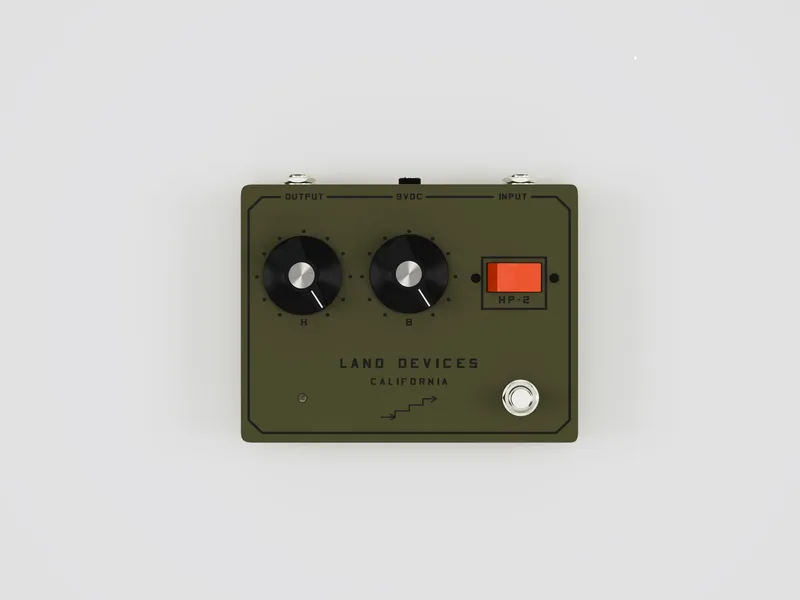
Guitar.com's reviewer rated the Fairfax 9 out of 10, finding "nicely organic tones at a range of gain levels"16. The same review found it less fuzzy than a Land Devices HP-2 or Hudson Broadcast, but doing a fine impression of a small tweed combo at full volume16. Guitar World described the chassis as sleek, in a stylish shade of muted green, feeling industrial and robust, at a weight of 0.28kg3.
Sean Halley's verdict in Premier Guitar's launch coverage:
"Man, this thing is such a chameleon"
Halley, a long-time session and live player, called it a creamy and gooey boost that works great with any style of amp and can also breathe saturated fire, and said it is not leaving his board10.
At launch, Andertons presented the newly released pedal on video, covering its 100% analog Class A output stage design, its inspiration from the rare 1960s tube unit, and its UK price of £19917129.
Videos
strymon
Peter “Danish Pete” Honoré
Questions
Does the Strymon Fairfax have MIDI?
No. Strymon says there are no MIDI capabilities on the pedal, in order to keep it completely analog. There are also no menus, presets, USB or firmware, so everything is set with the knobs and switch on the front.
Is the Strymon Fairfax true bypass?
Yes. The single footswitch engages and bypasses the pedal, and bypass is true bypass. A lit amber LED shows when the pedal is engaged. By default the pedal powers up in bypass, though internal jumpers can change that.
Can the Fairfax be used as a preamp in an effects loop?
Yes. Strymon says Fairfax can be used as a preamp in an effects loop by connecting the pedal's INPUT to the amp's effects send and the pedal's OUTPUT to the effects return, using 1/4 inch TS instrument cables.
Does the Strymon Fairfax take a battery?
No. The pedal is powered from an external 9V DC, center negative supply rated at a minimum of 500mA, which is sold separately and not included with the pedal. A supply with that current rating rules out most simple daisy chains.
How do I make the Fairfax start up engaged?
By default the pedal starts up in bypass. To change it, disconnect power, remove the four bottom screws and open the chassis, then move both internal jumpers to the left position for engaged startup, or both to the right for bypass startup.
What is Strymon Series A?
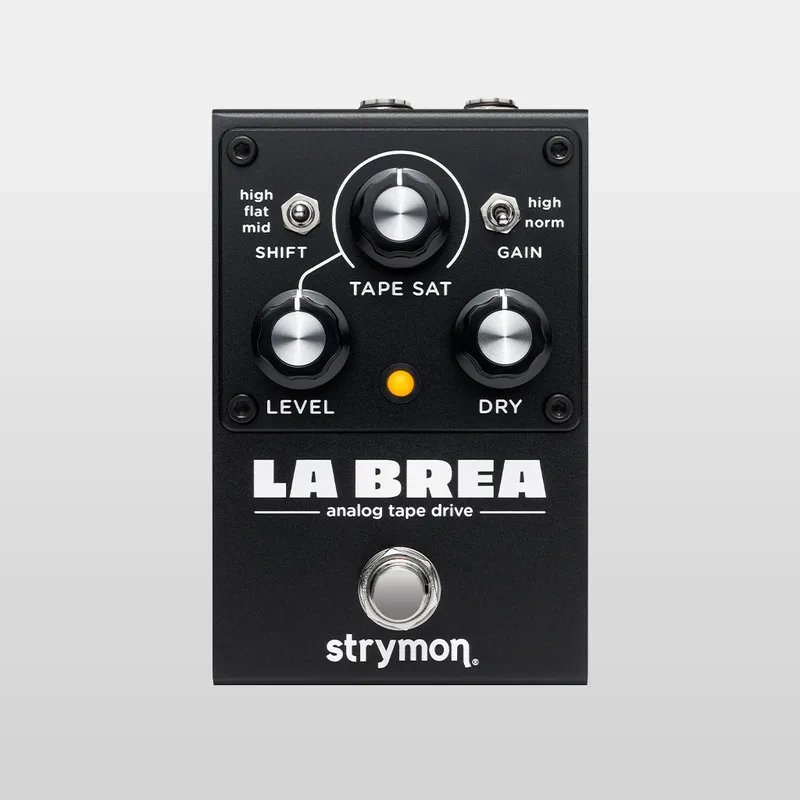
Series A is Strymon's line of pure analog pedals, and Fairfax is the first in the line. Strymon says the series is intended to offer something different from its traditional digital offerings, with no MIDI, USB, firmware or digital processing. Later Series A pedals include the Canoga fuzz and the La Brea tape drive.
Sources (17)
- Fairfax Class A Output Stage Drive, Strymon (www.strymon.net), 2026-08-12
- La Brea Analog Tape Drive, Strymon
- Strymon Fairfax Class A Output Stage Drive pedal review, Guitar World, 2026-02-17
- Strymon Fairfax Drive, Delicious Audio, 2026-01-07
- Drive - Strymon, Strymon
- "Like a good valve amp, it responds to your pick attack and guitar volume with proper character": Strymon Fairfax Class A Output Stage Drive pedal review, MusicRadar, 2026-01-14
- What are the power requirements for Fairfax?, Strymon
- What are the dimensions of Fairfax?, Strymon
- Strymon Fairfax Class A Output Stage Drive, Pedal of the Day (www.pedal-of-the-day.com), 2026-01-11
- Strymon Releases The Fairfax Class A Output Stage Drive, Premier Guitar, 2025-12-09
- Guitar Pedal X, Guitar Pedal X, 2025-12-11
- “Man, this thing is such a chameleon. It can be a creamy and gooey boost that works great with any style of amp, and it can also breathe saturated fire”: Strymon goes analogue drive crazy, promising Randy Bachman-style tones and more from the Fairfax, MusicRadar, 2025-12-09
- How do I connect Fairfax to my amp?, Strymon
- How do I change the Power Up State on Fairfax?, Strymon
- Does Fairfax have MIDI?, Strymon
- Strymon Fairfax review, guitar.com, 2026-05-04
- Strymon Fairfax, Andertons Music Co (YouTube), 2025-12-09