

The Strymon Orbit dBucket Flanger is a flanger pedal from Strymon, announced in 2010 and priced at $299 (US) at launch1. Where most flangers of its era were either analog bucket brigade circuits or straightforward digital copies, the Orbit takes a third path: it is a DSP-driven pedal built to reproduce the behavior of analog bucket brigade chips, the same technology Strymon developed for its Brigadier delay12. Strymon's press release described it as "a powerful DSP driven flanger pedal" delivering "the best analog bucket brigade flanger sounds possible"1.
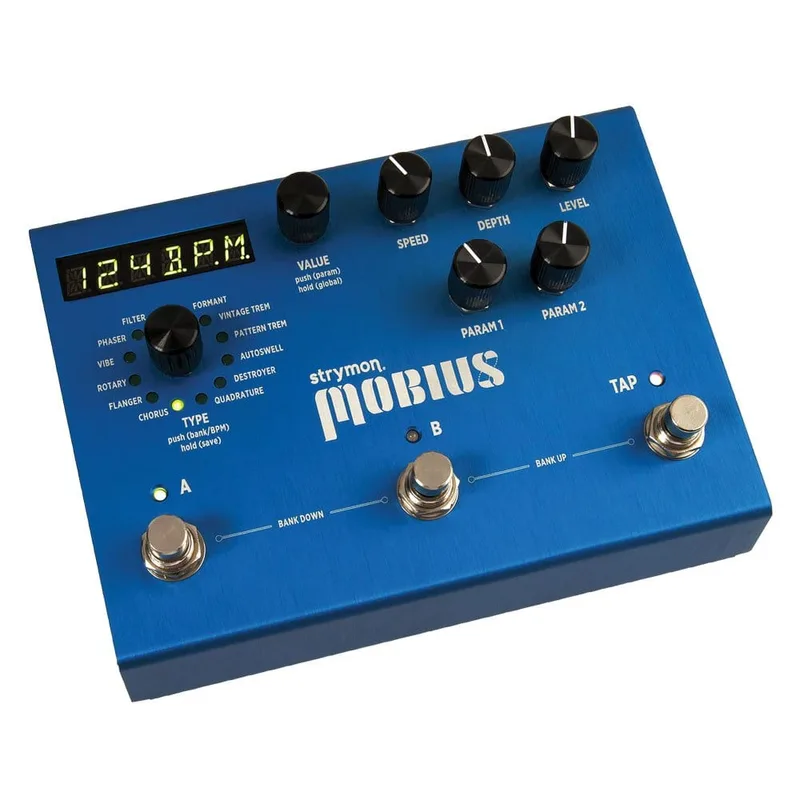
The pedal is designed and built in the USA, housed in a rugged purple anodized aluminum chassis, with Pete Celi credited as Strymon Engineer and Sound Designer1. It runs 24-bit 96kHz A/D and D/A converters with 32-bit floating point processing, a spec Strymon shared across the Orbit, Ola and Mobius, giving a 110dB typical signal-to-noise ratio and a 20Hz to 20kHz frequency response13.
A DSP flanger built on bucket brigade sounds
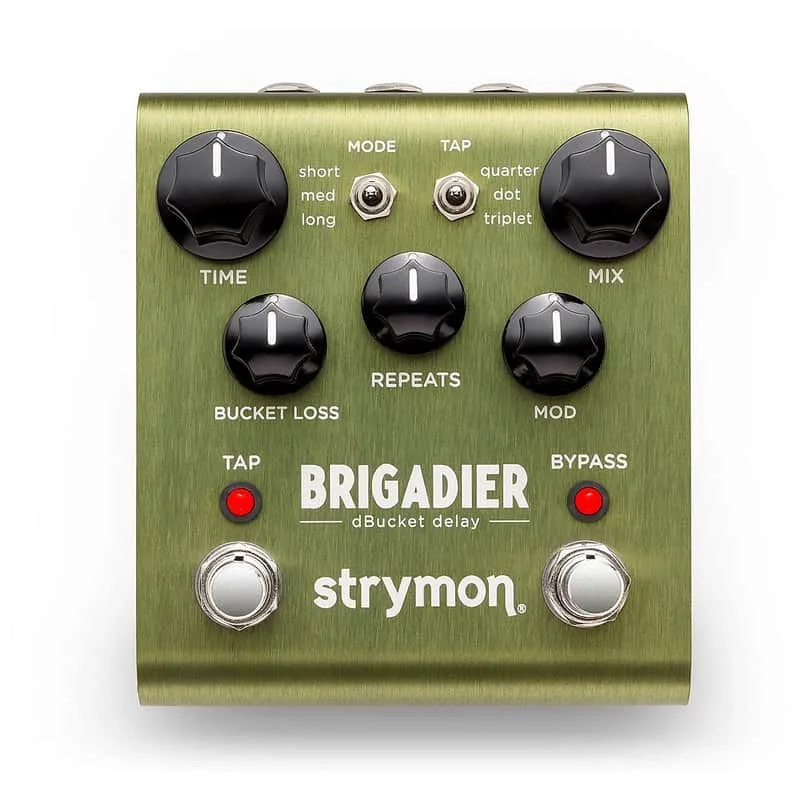
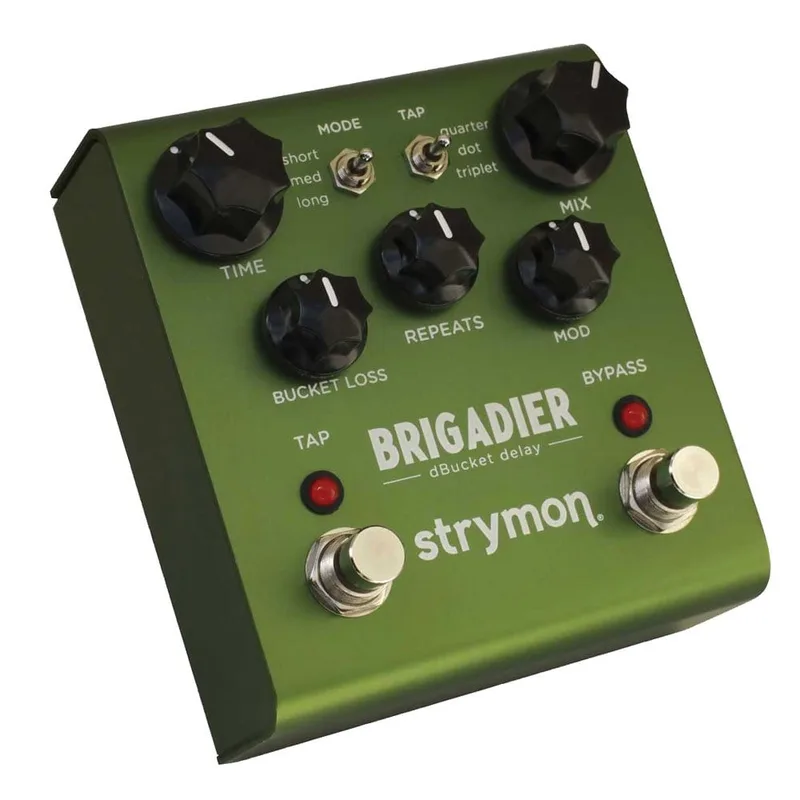
The Orbit's core idea is the "dBucket" algorithm. Pedal of the Day's review explains that the pedal is "Built on the dBucket building blocks developed for our Brigadier delay," meaning Strymon reused the delay-line modeling it had already built for the Brigadier and turned it toward flanging2. Premier Guitar noted the same lineage in its roundup of Strymon pedals, writing that "Strymon calls the technology dBucket, and they're using it in three of their five pedals," the Brigadier, Orbit and Ola among them4.
For a player, the practical difference is this: an analog bucket brigade flanger has a particular smeared, dark character because of how the chips pass signal along, and the Orbit aims to get those sounds from a digital circuit, with the noise floor and consistency of a modern DSP pedal. The 110dB signal-to-noise ratio Strymon quotes is part of that pitch13.
The controls: five knobs, feedback and LFO toggles
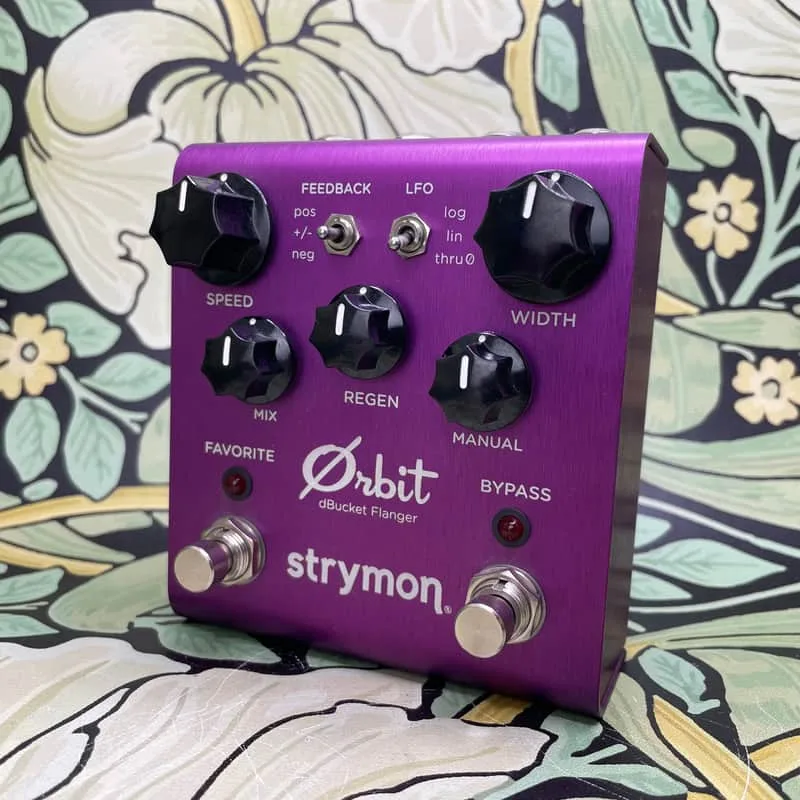
The front panel gives you five knobs, all dedicated rather than shared: Speed, Width, Mix, Regen and Manual1. Two toggles shape the character of the sweep, and a Favorite footswitch saves a setting you want to recall instantly2.
| Control | What it does |
|---|---|
| Speed | Adjusts the speed of the LFO (low-frequency oscillation)2 |
| Width | Adjustes the LFO's overall depth2 |
| Mix | Varies how much of your dry guitar signal is mixed with the Orbit's wet signal2 |
| Regen | Controls the feedback intensity2 |
| Manual | Sets the delay time for the flanging2 |
The Feedback toggle selects between three feedback types: positive, negative, and positive/negative1. Pedal of the Day describes the character of each:
- Positive: jet-engine flange sounds2
- Negative: watery, shimmery flange sounds2
- +/-: combines pieces of the Positive and Negative settings, a mode Pedal of the Day calls unique to the Orbit2
Strymon's own flanger page goes further on how the modes work: with positive feedback the wet and dry signals are in phase, producing a jet-like swish at higher Regen settings; negative feedback creates "hollow" or "watery" flange sounds; and +/- uses frequency-dependent feedback that combines both modes3.
The LFO toggle has three settings of its own2:
- LOG (Logarithmic): an even sweep of the flanger's frequency2
- LIN (Linear): speeds up as the frequency gets higher and slows down as it drops2
- Thru 0: puts the wet signal ahead of the dry signal, the through-zero flanging effect, which Pedal of the Day calls "a rad setting, also unique to the Orbit"2
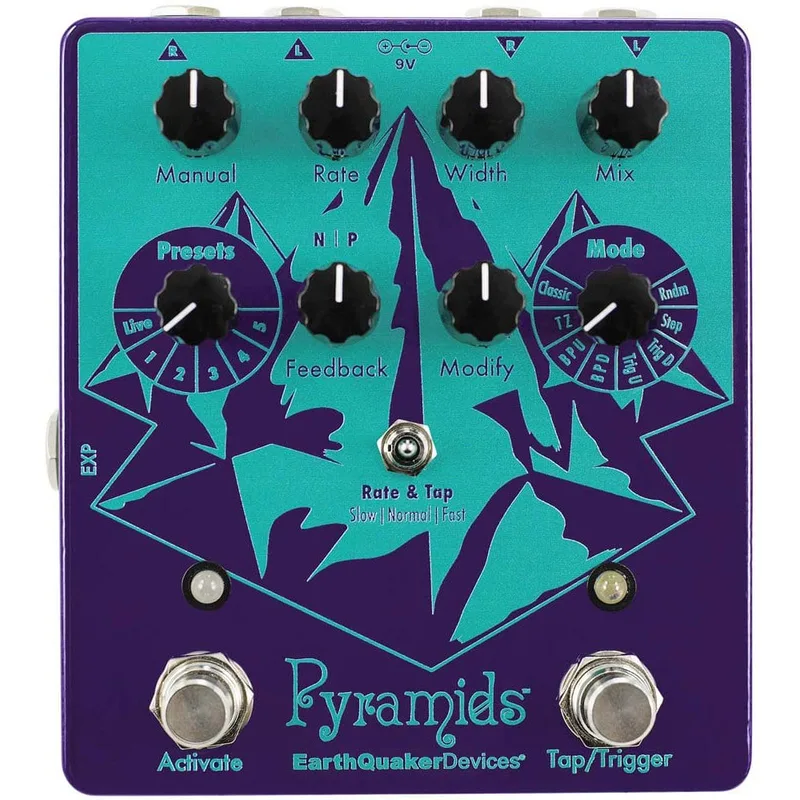
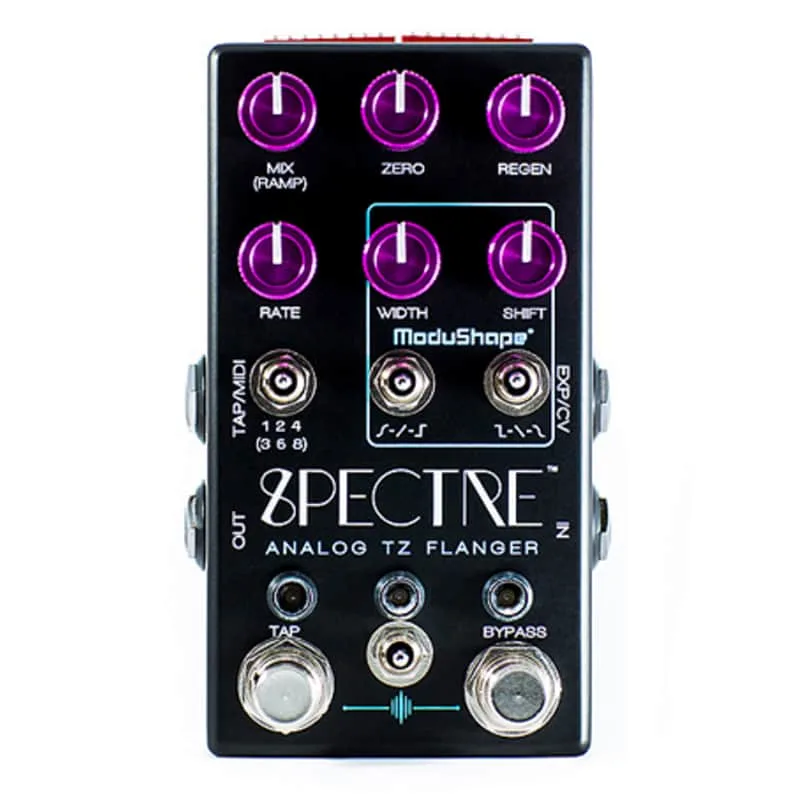
Through-zero flanging recreates the effect first done by hand with two reel-to-reel tape machines, where the delayed signal passes through zero delay time and back. Players comparing the Orbit against other through-zero-capable pedals like the EarthQuaker Devices Pyramids or the Chase Bliss Audio Spectre Analog TZ Flanger will find the Orbit covers that territory from a DSP circuit.
Power: 9V center negative, 250mA recommended
The Orbit runs on a standard 9V center negative DC supply, drawing 200mA, with a 250mA recommended supply2.
At 200mA, the Orbit draws more current than a typical analog pedal, so a dedicated power output is safer than a small daisy chain. Use a center negative supply; the standard boss-style 9V adapter polarity is what the pedal expects2.
The 2012 update
Strymon sells the current Orbit directly through its online store and through select authorized dealers in North America. See the Strymon Orbit page for that version1.
What reviewers said
Published coverage of the Orbit was positive. Pedal of the Day's 2015 review praised both the build and the sound2:
"Made from only the highest-quality components, the design and build teams have once again taken no shortcuts"2
Mike B, Pedal of the Day2
"the sound is just phenomenal, and will put a big grin on your face as soon as you plug it in"2
Mike B, Pedal of the Day2
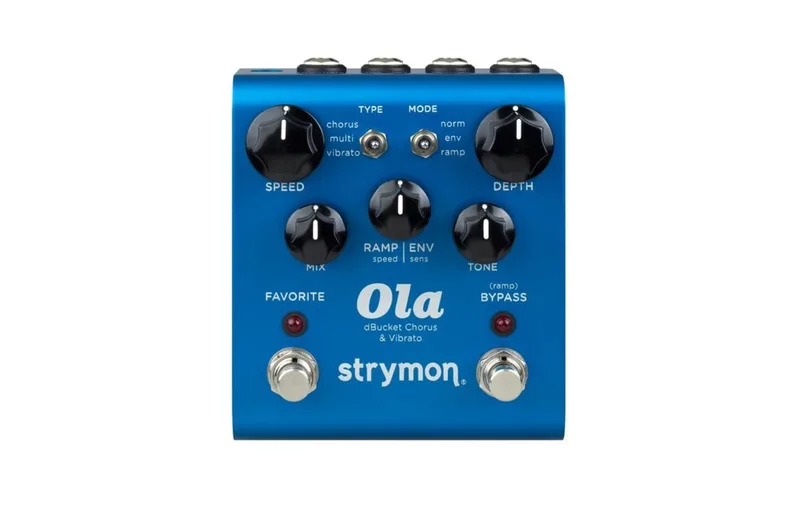
The same review called it "an incredible flanger with loads of options and tons of range"2. Premier Guitar's roundup of Strymon's early pedals placed the Orbit in the context of the company's dBucket line, noting the shared technology across the Brigadier, Orbit and Ola4.
Videos
Sweetwater
gearwire
Musicoff - Where Music Matters
Questions
Is the Strymon Orbit true bypass?
Yes. Strymon's announcement for the Orbit lists true bypass among its features, so with the pedal off your dry signal passes without the converters in the path. The pedal runs its DSP when engaged, and the 2012 updated design added non-click footswitches for silent switching.
Does the Strymon Orbit have stereo outputs?
Yes. Strymon's press release states that the Orbit provides stereo outputs, and a 2012 update added an internal jumper for selectable TRS stereo input. An expression pedal input is also on board for real-time control of parameters.
What does the Favorite footswitch on the Orbit do?
The Favorite footswitch saves your favorite setting so you can recall it with a second stomp instead of bending down to re-dial the knobs. It sits alongside the main bypass footswitch on the front of the pedal.
Can the Strymon Orbit do through-zero flanging?
Yes. The LFO toggle has a Thru 0 setting that puts the wet signal ahead of the dry signal, which is what through-zero flanging is. Pedal of the Day's review called Thru 0 a setting unique to the Orbit.
What changed in the updated Strymon Orbit?
In June 2012, based on customer feedback, Strymon introduced an updated Orbit design with an internal jumper for selectable TRS stereo input and non-click footswitches. The core dBucket flanger circuit and control set stayed the same.
Sources (4)
- Strymon Orbit dBucket Flanger Effect Pedal Now Available, Strymon, 2010-06-10
- Strymon Orbit dBucket Flanger, Pedal of the Day (pedal-of-the-day.com), 2015-08-02
- What is a Flanger?, Strymon (www.strymon.net), 2018-02-01
- Strymon Pedal Reviews: Brigadier, Orbit, Blue Sky, Ola, Premier Guitar, 2010-06-16