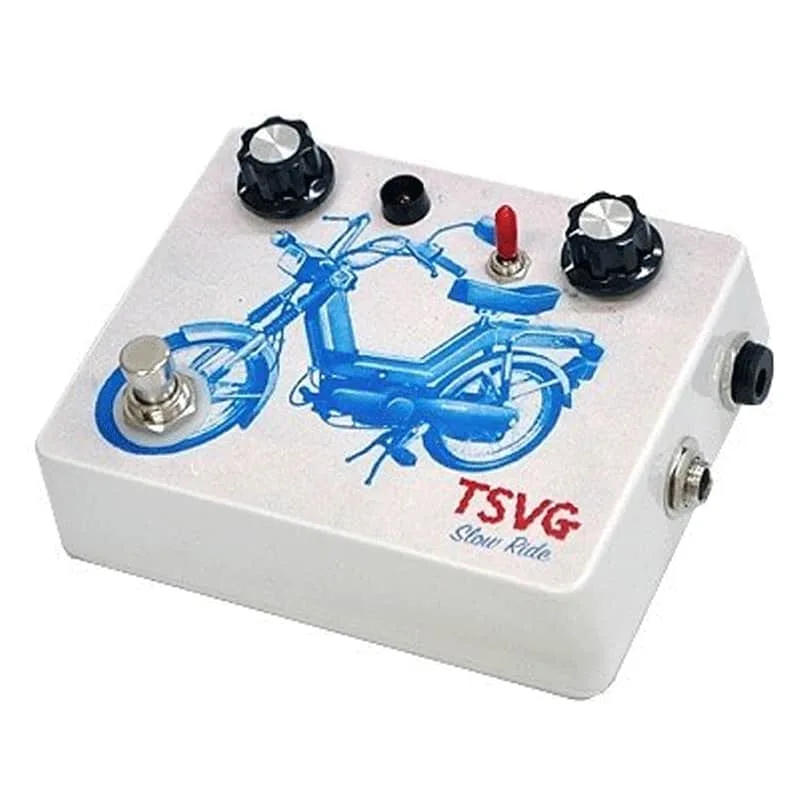



The TSVG Slow Ride Overdrive/Fuzz is a hand-built germanium overdrive and fuzz pedal from TSVG Pedals, released in 2013 at a suggested retail price of $200. It combines two late-1960s fuzz styles in one box: Premier Guitar's reviewer heard it as combining the smoothness of a Fuzz Face with raunchy aggression, in a circuit that harkens back to the era when the Tone Bender and Fuzz Face ruled psychedelic guitar1. TSVG's own description at launch was a warm, full-bodied germanium fuzz tone that pushes the boundaries of sustain and harmonic feedback2.
Controls
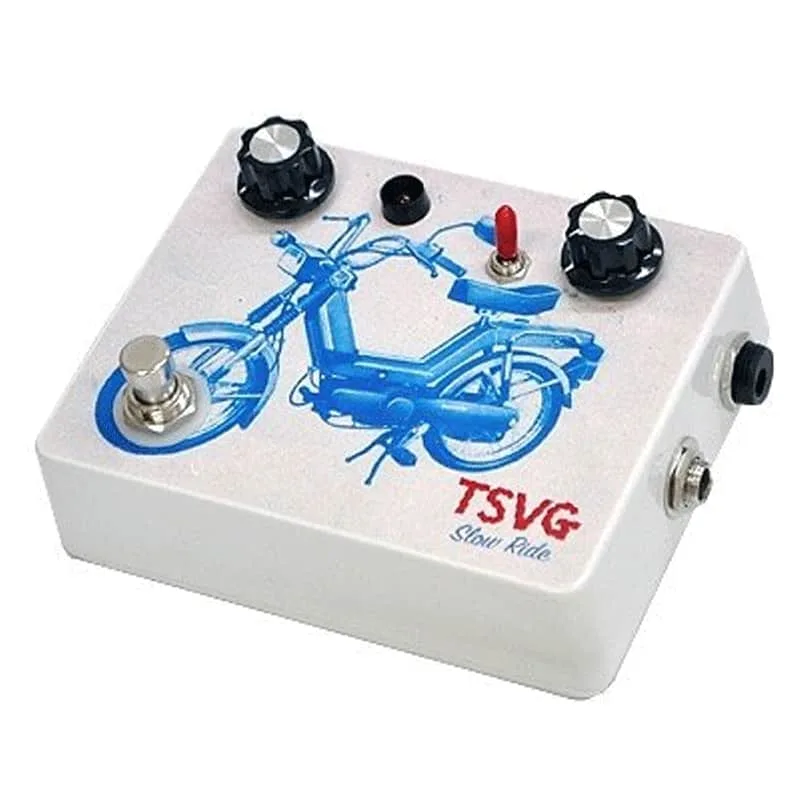
The Slow Ride keeps things simple: two knobs and a toggle switch. Premier Guitar's reviewer noted that despite its unlabeled knobs, the pedal is about as straightforward as it gets1.
| Control | What it does |
|---|---|
| Left knob | Controls level1 |
| Right knob (attack) | Transitions between relatively smooth overdrive and raspy fuzz; lowering it reins in high-end raspiness, cranking it introduces more fuzz and snarling treble bite1 |
| Toggle switch | Two-position thickness switch changing the voicing from high-end scream to full-bodied midrange growl23 |
Delicious Audio adds a detail on the toggle: it acts as a high-end filter, with the down position allowing the full signal to pass and the up position cutting most of the bass response4. Premier Guitar's reviewer heard the two positions as thick and mid-heavy versus cutting and bright, with the low-cut setting letting highs shine through for focused high-gain tones1.
The attack control is advertised as morphing the tone from fuzz to overdrive, but Premier Guitar's reviewer cautions not to expect the relatively smooth overdrive at one end of the sweep. In practice the pedal stays generally quite fuzzy at any setting, even with the guitar's volume rolled back, with midrange honk and fuzz-like compression even at the lowest attack setting1.
Circuit and build
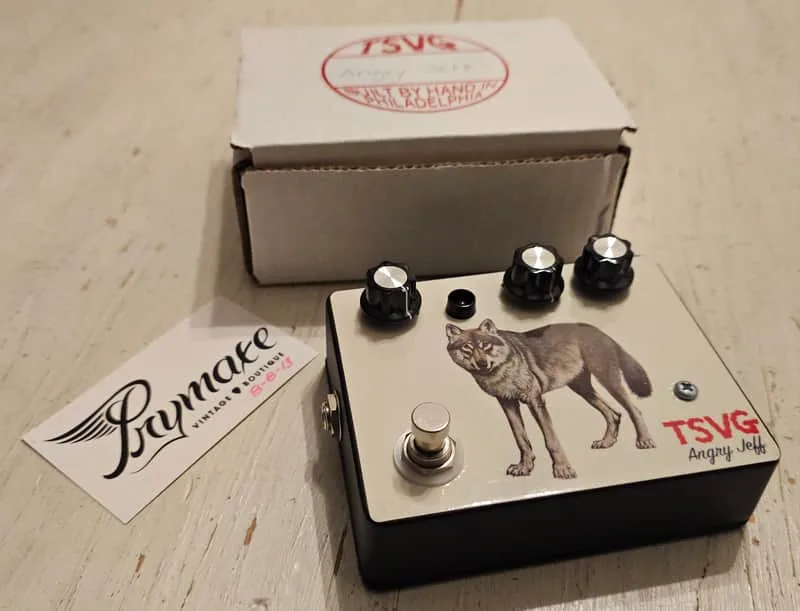
The Slow Ride uses three hand-selected NOS AC128 germanium transistors. These are PNP-style transistors, which means the pedal only accepts a specific power arrangement, so check the power requirements before adding it to a shared supply1. Like TSVG's earlier Angry Jeff and Keystone fuzzes, it boasts point-to-point wiring1, and each unit is built by hand using Mullard "tropical fish" capacitors, IRC resistors, Alpha pots, cloth-covered wire, and true-bypass switching1.
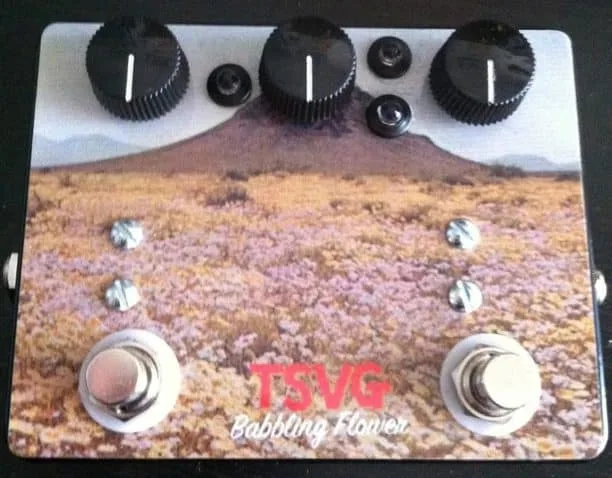
For players tracing the family tree, the circuit draws on the Fuzz Face and Mk II-era Tone Bender1, the two designs that defined germanium fuzz in the late 1960s. If that territory interests you, the site's Fuzz Pedals page covers the wider field, and TSVG's Babbling Flower is a related germanium fuzz from the same announcement period.
What reviewers said
Premier Guitar's reviewer was direct about the pedal's limits and its strengths:
"It's not the most versatile fuzz you'll find, and its overdrive is really just a softer fuzz. But whatever the Slow Ride lacks in flexibility, it more than makes up for it in exceptional and dynamic fuzz textures."
That verdict frames the pedal well for a buyer: it is a specialist. Players after a wide range of drive tones may want to compare it with the site's Overdrive Pedals or Distortion Pedals pages, but for dynamic, late-1960s-style fuzz textures, the Slow Ride's reviewer found it delivers1.
Videos
Premier Guitar
Premier Guitar
TSVGpedals
Questions
Is the TSVG Slow Ride true bypass?
Yes. Both Premier Guitar's press release and its later review describe the Slow Ride as true-bypass switching, so the pedal passes your guitar's signal to the amp untouched when it is off. That matters on a pedalboard where several effects sit in the chain, since a buffered pedal left on all the time can color the signal even when it is not doing anything.
Where is the TSVG Slow Ride made?
TSVG builds the Slow Ride by hand in Philadelphia, PA. Vintage Guitar's report on the release says the pedal is hand-built by the company in Philadelphia, and Premier Guitar's press release states that TSVG Pedals are built by hand there. The hand-built approach extends to the parts: Mullard tropical fish capacitors, IRC resistors, Alpha pots, and cloth-covered wire.
What does the thickness switch do on the Slow Ride?
It is a two-position switch that changes the pedal's voicing. TSVG describes it as moving the tone from high-end scream to full-bodied midrange growl. Premier Guitar's reviewer heard it as changing the voicing from thick and mid-heavy to cutting and bright, and noted the low-cut position lets highs shine through for focused high-gain tones.
What transistors does the Slow Ride use?
The Slow Ride uses three hand-selected NOS AC128 germanium transistors. Premier Guitar's review notes these are PNP-style transistors, which affects how the pedal is powered. Germanium transistors like the AC128 are the part most associated with late-1960s fuzz designs such as the Fuzz Face and early Tone Benders.
Sources (4)
- TSVG Slow Ride Overdrive/Fuzz Review, Premier Guitar, 2013-08-29
- TSVG Releases the Slow Ride OD/Fuzz Pedal, Premier Guitar, 2013-05-31
- TSVG Pedals Unveils Slow Ride OD/Fuzz, Vintage Guitar magazine, 2013-05-31
- New Pedals: TSVG's Slow Ride Overdrive/Fuzz, Delicious Audio, 2013-06-04