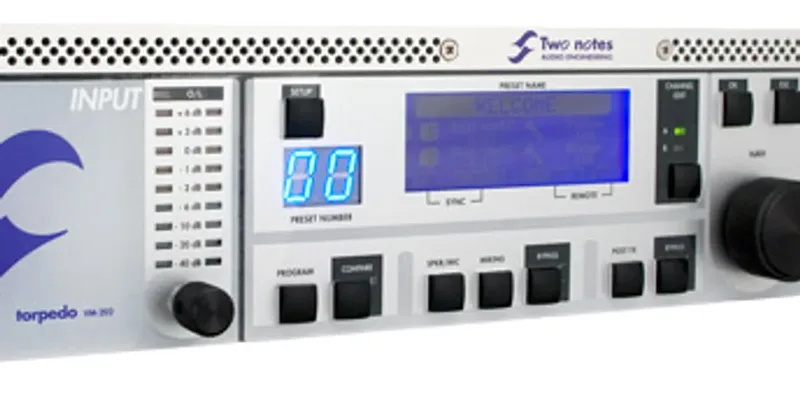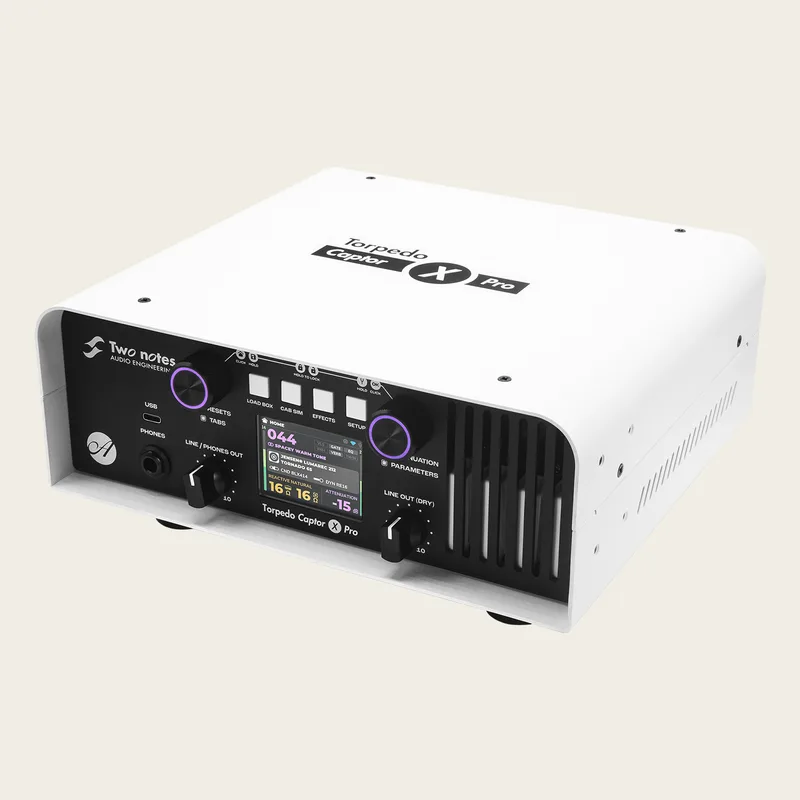



The Two notes Torpedo Captor X Pro is a load box and amplifier control unit with cabinet simulation, made by Two notes. It sits between a tube amplifier's speaker output and the outside world: it absorbs the amp's power so the amp can be driven hard at manageable volume through a real cabinet, while sending a processed, speaker-simulated feed to a mixing desk or recording interface. Two notes pitches it at players who want what it calls "total backline authority", whether that is driving a cabinet at manageable volumes or delivering a pristine studio-grade direct feed1.
Two notes positions the Pro as the top of its digital load box line, the product of what the maker describes as eighteen years of load box and cabinet-simulation development, and it was developed in partnership with Ampete Engineering1.
What it does, and where it came from
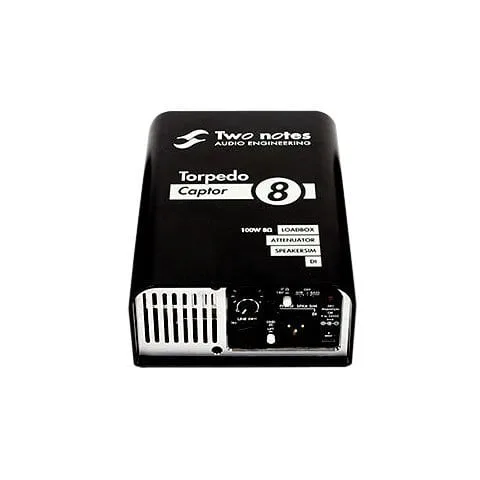
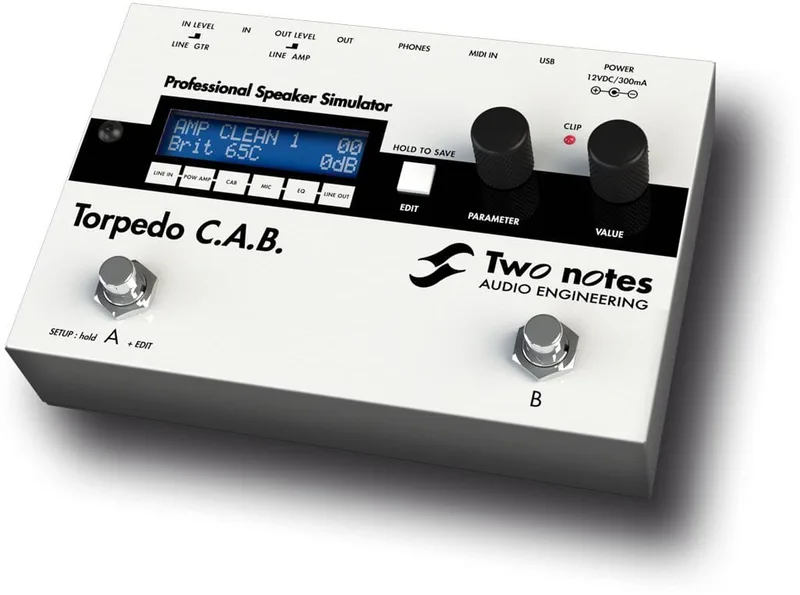
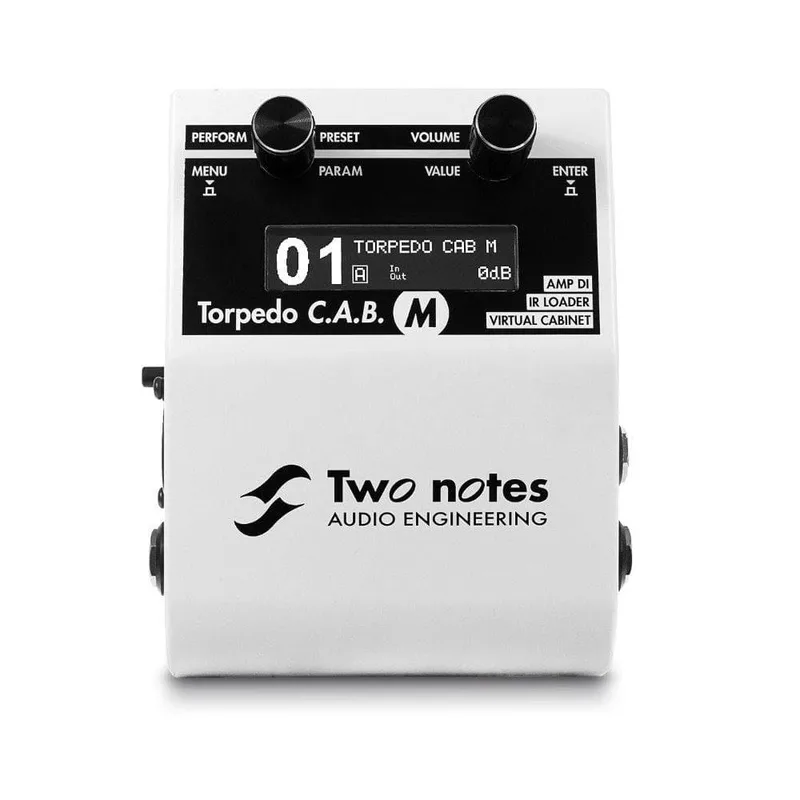
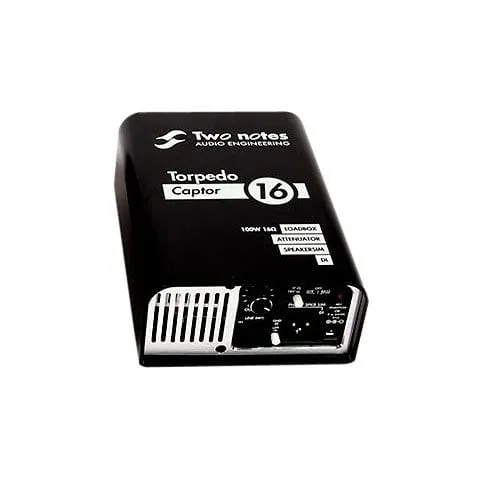
A load box replaces the speaker in an amp's signal path so the amp sees a proper load even when nothing is audible. Two notes' original Torpedo Captor, still in the range, is a compact reactive load box, tube amp attenuator and analog cab simulator for home, live and studio use, built around an analog 100w load2. The Captor X generation added digital processing: Two notes support describes the Torpedo Captor X as a reactive load box with speaker simulation and power attenuation that "actually combines the functions of Captor and C.A.B. M+ into one device"3. The Captor X Pro carries that lineage forward with multi-impedance capability and switchable Reactive and Resistive load voicing, alongside what Two notes calls precision programmable processing1.
For a player, the practical difference from a simple attenuator is the direct feed: the amp can stay on stage at conversation volume while the house receives a fully simulated cabinet signal3.
Reactive and Resistive load voicing
The Captor X Pro's two load modes are the headline feature over earlier Captor X hardware1:
- Reactive: the load's impedance varies with frequency, behaving more like a real speaker, which many players find keeps the amp's feel and response intact at low volume.
- Resistive: a more constant load across the frequency range.
Two notes makes the two voicings switchable and combines them with multi-impedance capability, so the box can be matched to amplifiers of different output impedances rather than being fixed at one setting1. The Captor X+ line, by comparison, is sold in fixed-impedance versions, such as the 8-ohm model listed as a compact reactive load box (8 ohm), attenuator, DynIR engine, IR loader and stereo expander4.
Outputs, routing and connections
The Captor X family carries two XLR outputs. Two notes support documents three routing options on the Torpedo Captor X: Stereo, dual Mono (allowing one output to have a different EQ and settings), and Dry/wet3. On the Captor X+, the dual XLR outputs add smart routing: dual mono, processed and dry simultaneously, or full stereo cabinet simulation, with distinct DynIR microphones, mic and output EQs, enhancers and reverbs available on each channel in dual mono mode56.
Connections documented across the line include:
| Connection | Detail |
|---|---|
| Speaker input | 1/4" jack, unbalanced (TS)64 |
| Outputs | 2 XLR3 |
| MIDI input | 1/8" jack balanced TRS, with a jack-to-MIDI cable adapter supplied4 |
| Power | Supplied adapter, 100-240v AC to 12v DC 2A5 |
The Captor X+ also includes Two notes' TWIN TRACKER stereo double tracking: the mono amp sound routes to the left XLR output while the DSP creates a "Virtual Guitarist" on the right channel in real time6. Its Output EQ sits after the mic EQ and enhancer and can act on each output channel independently in dual mono mode6.
Cabinet simulation
The Captor X Pro was developed in partnership with Ampete Engineering, and Two notes describes it as giving players "total backline authority whether it's driving a cabinet at manageable volumes to delivering a pristine studio-grade direct feed"1. In other words, the cabinet simulation side of the unit is aimed at players who want a studio-grade direct feed alongside a real amplifier, rather than at standalone modeling. The Captor X+ is made by Two notes5.
How it differs from the rest of the range
| Model | What it is |
|---|---|
| Torpedo Captor | Compact reactive load box, tube amp attenuator and analog cab simulator, 100w analog load2 |
| Torpedo Captor X | Reactive load box with speaker simulation and power attenuation; combines Captor and C.A.B. M+ functions in one device3 |
| Torpedo Captor X+ | Compact reactive load box, attenuator, DynIR engine, IR loader and stereo expander6 |
| Torpedo Captor X SE | Special Edition compact reactive load box (8 ohm), attenuator, DynIR engine, IR loader and stereo expander7 |
| Torpedo Captor X Pro | Load box and amplifier control unit with cabinet simulation, multi-impedance, switchable Reactive and Resistive voicing1 |
The Pro's distinguishing features over the Captor X+ are the multi-impedance capability, the switchable Reactive and Resistive load voicing, and the partnership with Ampete Engineering. Two notes calls it "the most advanced expression of our digital load box line to date"1.
"Eighteen years of load box and cabinet-simulation development led here, refined, pressure-tested, and focused on one outcome."
Videos
Thomann's Guitars & Basses
Guitar Bonedo
Mad Steex
Questions
Can the Torpedo Captor X Pro be used without an amp?
The Captor X Pro is a load box in the Torpedo line, and Two notes positions it around driving a real cabinet at manageable volumes while also delivering a studio-grade direct feed1. It is powered by a supplied 100-240v AC to 12v DC 2A adapter5, and it lists at 999.99 USD1. A player who wants cabinet simulation without a real amplifier is looking at a different class of product, such as an IR loader like the Two Notes Torpedo C.A.B. M or the Suhr Reactive Load I.R..
What is the difference between the Captor X Pro and the Captor X+?
The Captor X+ is a compact reactive load box, attenuator, DynIR engine, IR loader and stereo expander6. The Pro keeps that platform but adds multi-impedance capability and switchable Reactive and Resistive load voicing, was developed with Ampete Engineering, and carries a list price of $999.99 as of October 20261.
What are the Reactive and Resistive load modes?
Two switchable load voicings. Reactive presents a frequency-varying impedance closer to a real speaker; resistive presents a more constant load. The player switches between them and pairs the choice with the unit's multi-impedance capability to match the amplifier in use1.
Does the Captor X Pro have stereo outputs?
The Captor X line has two XLR outputs3, and the Captor X+ routes them as dual mono, processed plus dry, or full stereo cabinet simulation, with Twin Tracker double tracking available in stereo mode56.
Sources (7)
- Torpedo Captor X Pro, Two notes, 2026-10-01
- Torpedo Captor, Two notes, 2026-06-10
- Differences between Captor X, Captor & C.A.B. M.?, Two notes, 2020-11-06
- Torpedo Captor X + (8-Ohm), two-notes
- Torpedo Captor X +, Two notes Audio Engineering, 2026-08-10
- Torpedo Captor X +, Two notes, 2026-08-10
- Torpedo Captor X SE, Two notes, 2024-12-12