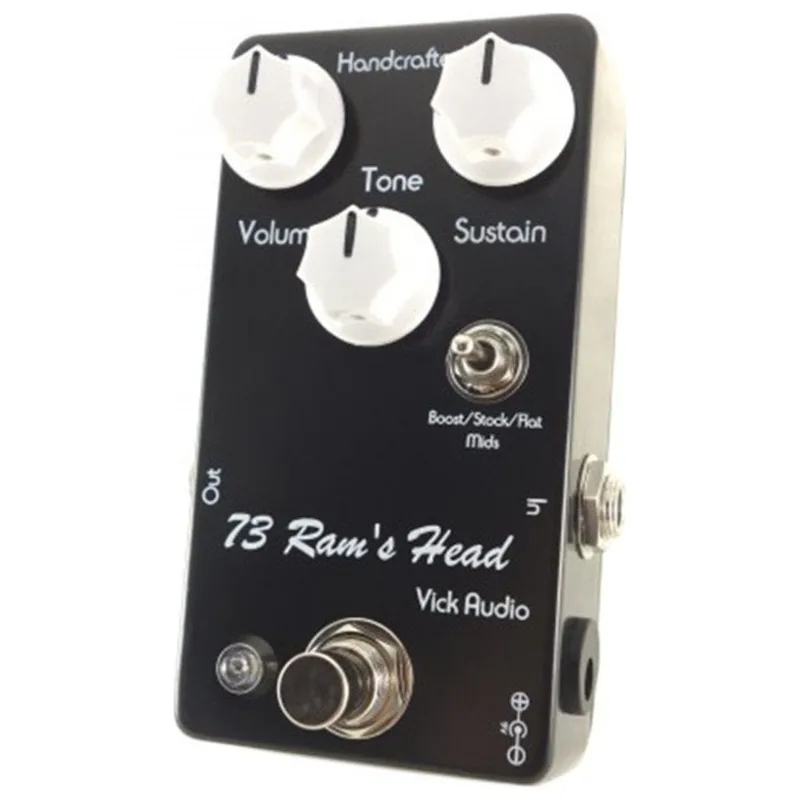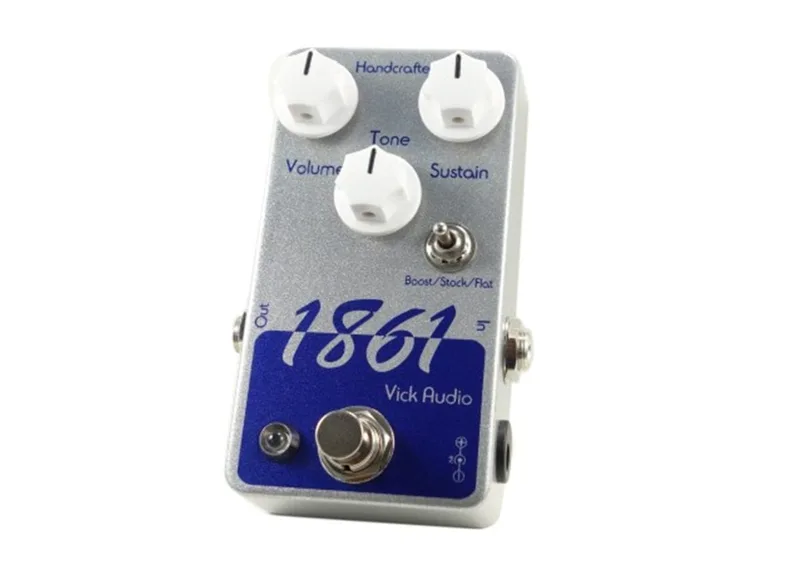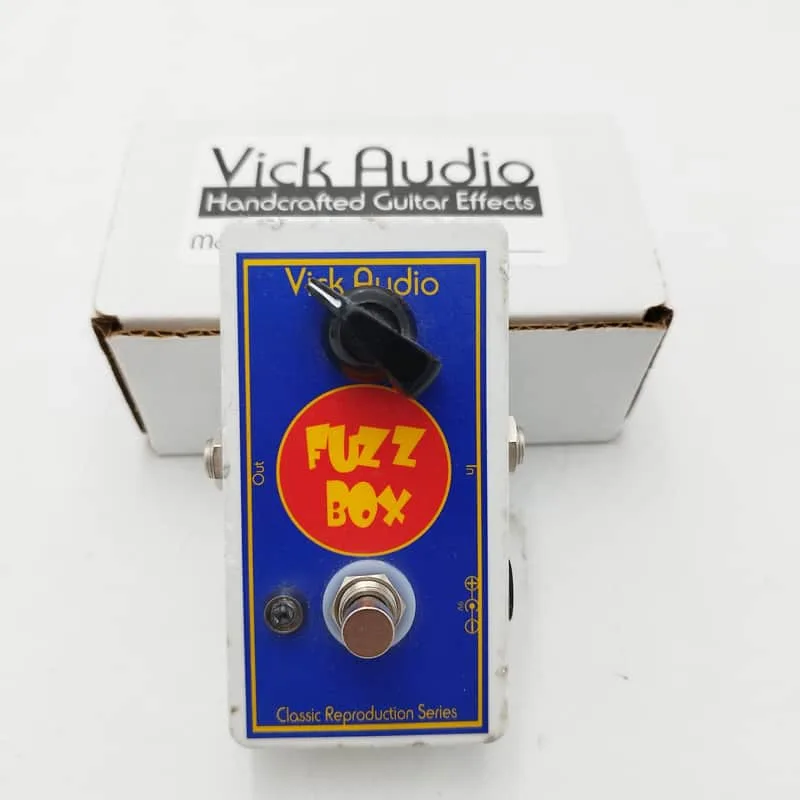
The Vick Audio Fuzz Box is a simple, one-knob fuzz pedal with, as Pedal of the Day put it, "a ton of character"1. It is a hand-wired, boutique-quality build in a powder coated enclosure, made in Gilbert, Arizona, by Vick Audio, a builder better known for its Big Muff-style recreations such as the 73 Ram's Head and the Vick Audio 18611.
What makes it unusual is its lineage: it is a reproduction of the Colorsound Fuzz from the early 90s, a British silicon fuzz circuit with a single knob12. Where most fuzz pedals on the market trace back to Fuzz Faces or Big Muffs, this one follows a shorter, simpler family line.
A Colorsound Fuzz reproduction
Pedal of the Day's Mike B. described the pedal plainly in his 2014 review: "A reproduction of the legendary Fuzz produced by Colorsound in the early 90's"1. The original Colorsound Fuzz Box was made by Sola Sound, and its maker described it as a "relatively high gain silicon fuzz circuit" that is smooth, with the construction style of the 90s pedals Dick made: solid core wire and a small circuit board, simple and effective2. Sola Sound's page sums up the control scheme in four words: "One knob, many flavours."2
That single knob is the whole interface of the Vick Audio version too. As Mike B. put it, "with one simple knob to control, you can dial in your sound on the fly if need be"1. For a player used to fuzz pedals with volume, tone and sustain controls, this is the opposite approach: one control that sweeps the character of the circuit, and your guitar's volume knob does the rest of the work.
On the sound, the review says the Fuzz Box "can go from slight buzzy overdrive to a HUGE fuzzy extravaganza, all while retaining the clarity of your tone"1. In other words, it covers ground from a light, edgy overdrive-ish breakup to full distortion-style fuzz, without the low end or note definition collapsing into mush.
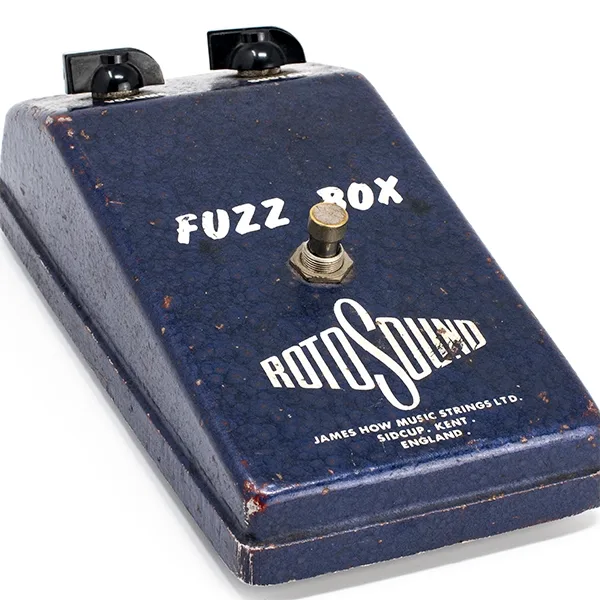
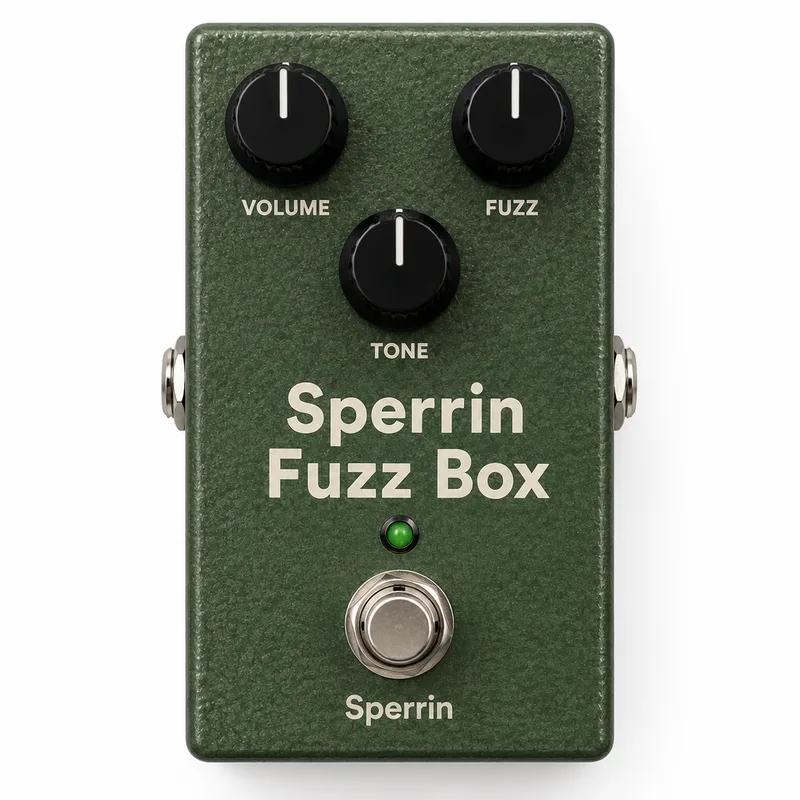
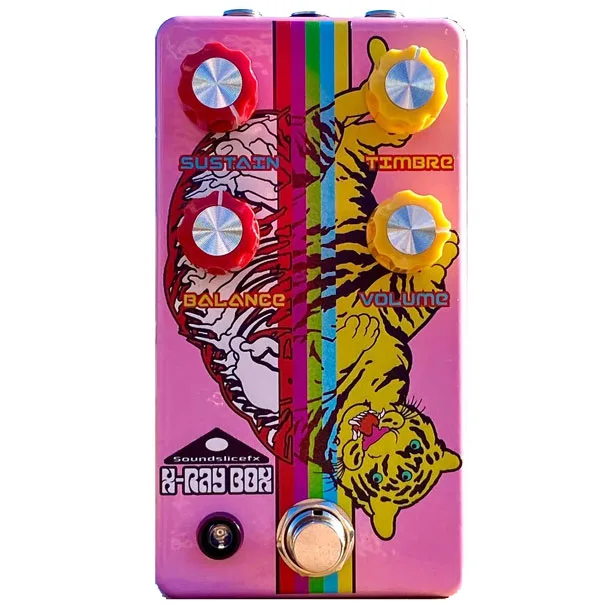
The Colorsound circuit has a longer history than its 90s form. The classic Colorsound "Fuzz Box" of the 60s is the circuit other builders have borrowed as well: GuitarPCB's One-Knob Fuzz project is, by its own manual, "Based on the classic Colorsound 'Fuzz Box' of the 60's"3. And the Fuzz Box name goes back further still, to the cast metal Rotosound Fuzz Box of 1968, a Sola Sound-built unit whose gold versions carried early Tone Bender-family circuits4. The Vick Audio pedal sits at the modern end of that line, alongside other one-knob and small-batch fuzzes like the Sperrin Fuzz Box and the Soundslice FX X-Ray Box.
Controls, power and connections
| Feature | Detail |
|---|---|
| Controls | One knob1 |
| Bypass | True bypass switch1 |
| Power jack | 2.1 mm Boss style1 |
| Battery | No internal 9V battery clip1 |
| Input and output jacks | Neutrik1 |
There is no internal 9V battery clip1. The pedal runs from a 2.1 mm Boss style power jack, so it needs a standard external 9V supply and cannot run on a battery.
The 2.1 mm Boss style jack is the common barrel connector on most pedalboards, so the Fuzz Box fits a typical daisy chain or isolated supply without adapters. The true bypass switch means the signal path is out of the circuit entirely when the pedal is off1.
What reviewers said
The main published review is Pedal of the Day's, from March 31, 20141. Beyond the sound description above, Mike B. focused on responsiveness:
"It is very responsive as well, depending on how hard you hit the strings, and reacts well with both bridge and neck pups"
He noted that this was tested with humbuckers only, so players with single coils are going on the circuit's reputation rather than a documented test1. Responsiveness to picking dynamics and volume changes is a trait players usually associate with lower-gain fuzz circuits, and it is the quality the review highlights most.
The review's overall framing is that of a simple pedal done well: one knob, hand-wired, made in the USA, with quality components throughout1.
Where it sits in the Vick Audio range
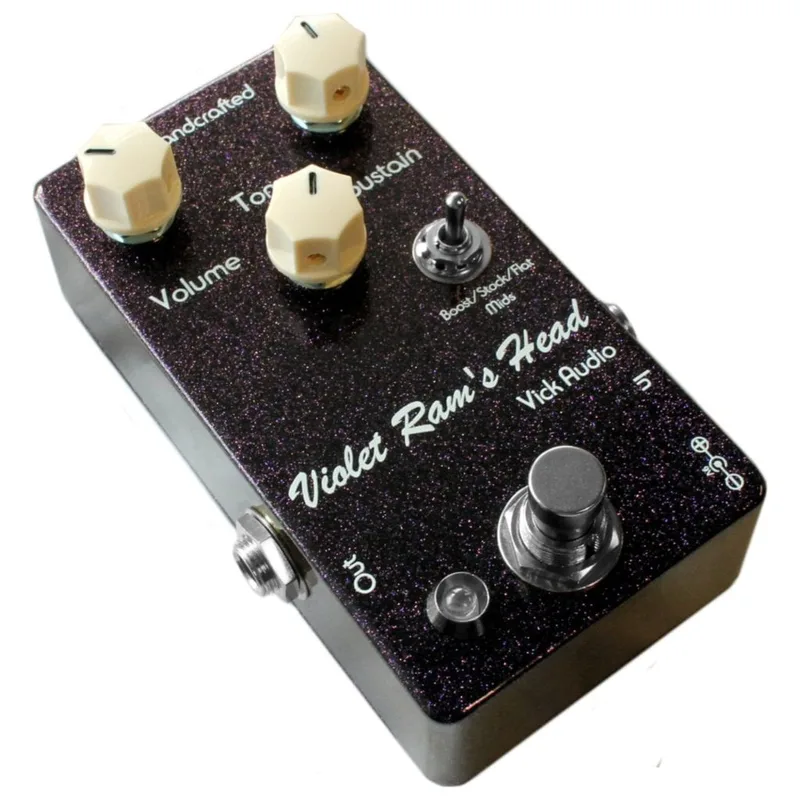
Vick Audio's catalog leans heavily on fuzz, and the Fuzz Box is one of its simplest offerings. The builder's other pedals include the 73 Ram's Head and Violet Ram's Head Big Muff recreations, the Vick Audio 1861 and 1861 Tau Classic Civil War-style Muffs, the Black Russian fuzz, and the Lucky No. 13, a one-knob fuzz also based on the Colorsound Fuzz circuit. Compared with those multi-knob Muff-style pedals, the Fuzz Box is the stripped-down option: one control, one circuit, no toggles.
Questions
Is the Vick Audio Fuzz Box true bypass?
Yes. Pedal of the Day's 2014 review lists a true bypass switch among the pedal's build features, so the signal passes through untouched when the effect is off.
What power jack does the Vick Audio Fuzz Box use?
It uses a 2.1 mm Boss style power jack, the same barrel connector found on most modern pedals, so it works with standard 9V power supplies and daisy chains. There is no internal 9V battery clip, so it needs external power.
Where is the Vick Audio Fuzz Box made?
It is made in Gilbert, Arizona, in the USA. The 2014 Pedal of the Day review describes it as hand-wired, boutique quality, in a powder coated enclosure.
Is the Vick Audio Fuzz Box based on the Colorsound Fuzz?
Yes. Pedal of the Day described it in 2014 as a reproduction of the Fuzz that Colorsound produced in the early 90s, a high gain silicon fuzz circuit with a single control.
Sources (4)
- Vick Audio Fuzz Box, Pedal of the Day, 2014-03-31
- Fuzz Box, stompboxes.co.uk, 2012
- OKF Build Doc, GuitarPCB.com, 2023
- Rotosound Fuzz Box • Fuzzboxes, Fuzzboxes.org, 2021-05-19