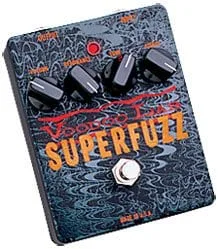

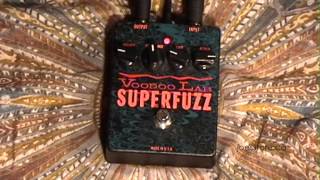

The Voodoo Lab Superfuzz is an analog fuzz pedal made by Voodoo Lab in the USA. Its circuit starts from the rare Jordan Electronics Bosstone, a fuzz unit from around 1968 that Voodoo Lab calls, in its own words, "considered by many to be the ultimate vintage fuzz." On top of that classic design the Superfuzz adds tone and resonance circuits, which Voodoo Lab says let you "dial up an amazing array of new" fuzz tones beyond what the original Bosstone offered12.
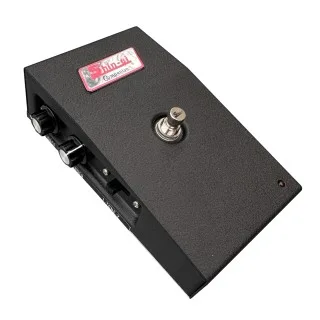
The name causes real confusion among players. Gearnews notes the pedal "often gets confused with the Univox SuperFuzz, as Voodoo Labs for some reason went with 'Super Fuzz' as a name"3. The two circuits are unrelated: the Univox/Shin-ei Super-Fuzz is an octave-up fuzz with two germanium diodes and full-wave rectification, while the Superfuzz is a Bosstone-derived fuzz with no octave circuit. EarthQuaker Devices' pedalboard guide still recommends it, calling it "a great and inexpensive alternative to a Univox SuperFuzz" for players on a tight budget4.
The controls: Attack, Tone, Resonance, Volume
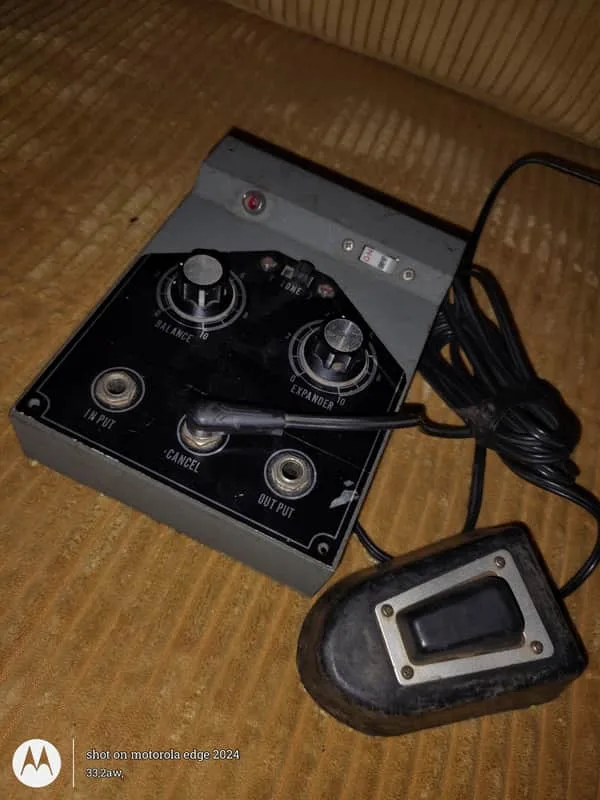
The Superfuzz has four knobs, which sets it apart from both the two-knob original Bosstone-style units and the Univox Super-Fuzz, which has Balance and Expander knobs plus a tone switch5. Voodoo Lab's own descriptions of each control1:
| Control | What it does |
|---|---|
| Attack | The gain control. Turning it up provides additional sustain and buzz. |
| Tone | Affects mostly the midrange frequencies. Set to 12:00 for a classic fuzz sound; turn it down for a modern "scooped" tone, or up for a prominent midrange, bluesy voicing. |
| Resonance | A sub-harmonic boost that brings up the bottom end without losing bass crispness or causing excessive speaker distortion. All the way down gives traditional fuzz; up adds girth and fatness, useful at low volume. |
| Volume | Sets the output level. |
The Tone control is where the pedal departs most from a straight clone. Voodoo Lab says it "delivers a wide spectrum of midrange and bass timbres, everything from an extreme gain scooped tone through a raucous, bluesy, prominent mid voicing"1. The Resonance control is described in the maker's FAQ as "a unique sub-harmonic booster that lets you add an aggressive bottom end not typically found on" fuzz pedals2.
Pedal of the Day's 2023 review summed up the design: the pedal "adds unique tone and resonance circuits to create an amazing new array of fuzz tones," and the reviewer noted the true bypass switching and that it is "proudly made in the USA"6.
"I was overjoyed to plug in my guitar and hear the exact sound I used on the first four Spirit albums" -Randy California
Randy California of Spirit is the player Voodoo Lab names in connection with the pedal, quoting his reaction to plugging into it1.
Power and connections
The Superfuzz runs on 9V DC at 10mA, using a 5.5mm x 2.1mm barrel connector with center negative polarity, the common standard shared by most modern pedals and power supplies1.
Older Voodoo Lab pedals built without the LED use a 3.5mm mini-plug power jack instead of the barrel connector. Current Superfuzz pedals with the LED have the 5.5 x 2.1mm barrel connector, so check which version you have before buying a supply or cable2.
At 10mA the pedal draws very little current, so it is an easy load for any isolated or daisy-chain supply with the correct plug and polarity1.
Circuit and DIY builds
For players interested in what is under the hood, the independent Guitar FX Layouts blog analyzed the circuit when it published a vero, or stripboard, layout for the Superfuzz in September 2016 by reader request7. The layout's diodes D1 and D2 are "clippers/limiters to ground after the transistor gain stage," and the blog encourages experimentation: "Different diodes will clip differently, and therefore sound different. Experimentation is the name of the game here!" D3 serves only as reverse polarity protection and can be a 1N4001 or omitted entirely7.
The layout was verified by a builder who used a BC327 transistor in place of the 2N2907s and reported it "sounds very similar to the yt vid." The original Free Stompboxes discussion thread is linked from the layout post for anyone wanting the tracing details7.
How it fits among fuzz pedals
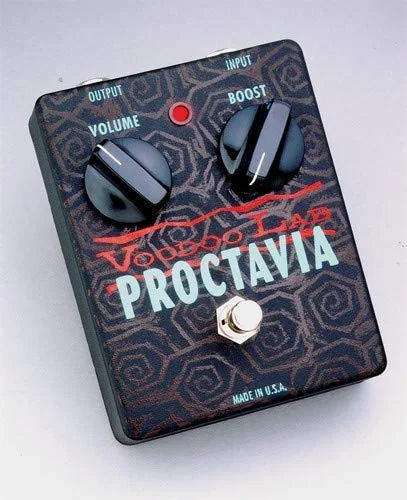
Within Voodoo Lab's own line, the Superfuzz sits alongside other vintage-circuit pedals like the Proctavia. Its circuit is based on the Jordan Electronics Bosstone (circa 1968), a rare vintage fuzz that Voodoo Lab describes as considered by many to be the ultimate vintage fuzz1. Delicious Audio's Super-Fuzz buying guide places the Univox-style octave fuzzes, with their Balance and Expander knobs and tone switch, as a separate lineage from the Bosstone camp5, which is worth keeping in mind when comparing the similarly named pedals.
Videos
ProGuitarShopDemos
TheJRGuitars
Guitar Gear
Questions
Is the Voodoo Lab Superfuzz the same as the Univox Super-Fuzz?
No. The two are often confused because Voodoo Lab used the Superfuzz name, but the Voodoo Lab pedal is based on the Jordan Electronics Bosstone circuit from around 1968, not the Shin-ei/Univox Super-Fuzz octave fuzz. The Univox pedal has Balance and Expander knobs plus a tone switch, while the Voodoo Lab has four knobs and no octave-up circuit.
Is the Voodoo Lab Superfuzz true bypass?
Yes. Voodoo Lab lists true bypass switching for the Superfuzz, so with the pedal off the guitar signal passes through without active buffering. The pedal runs an analog circuit for classic '60s fuzz sounds when engaged.
What power supply does the Voodoo Lab Superfuzz need?
It needs 9V DC at 10mA, through a 5.5mm x 2.1mm barrel connector with center negative polarity, the same standard as most modern pedals. Older Voodoo Lab pedals without the LED instead used a 3.5mm mini-plug jack, so a used early unit may need a different plug.
What does the Resonance knob do on the Superfuzz?
Voodoo Lab describes Resonance as a sub-harmonic boost that brings up the bottom end without losing bass crispness or causing excessive speaker distortion. All the way down gives a traditional fuzz sound; turning it up adds girth and fatness, which is useful when playing at low volume.
Is there a DIY layout for the Voodoo Lab Superfuzz?
Yes. Guitar FX Layouts published a vero, or stripboard, layout for the Superfuzz in September 2016 by reader request, with the original Free Stompboxes thread linked from the post. A builder verified the layout, substituting a BC327 transistor for the 2N2907s, and reported it sounded very similar to a demo video.
Sources (7)
- Superfuzz®, Voodoo Lab
- Superfuzz FAQ, Voodoo Lab, 2026-07-24
- Fuzzly Bear 2: KMA Machines updated take of Jordan Bosstone silicon fuzz, gearnews.com, 2022-04-21
- A Beginners Guide To Pedalboards Pt. 1: Choosing Your Pedals, EarthQuaker Devices, 2021-12-06
- 20 Of The Best Super Fuzz Clones And Evolutions In 2023, Delicious Audio, 2022-10-11
- Voodoo Lab Superfuzz, Pedal of the Day, 2023-10-08
- Guitar FX Layouts: Voodoo Lab Superfuzz, Guitar FX Layouts (tagboardeffects.blogspot.com), 2016-09-19