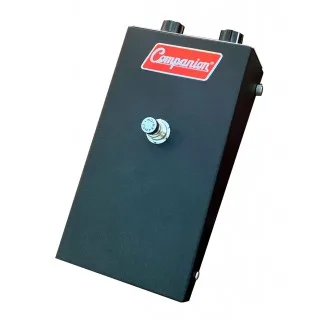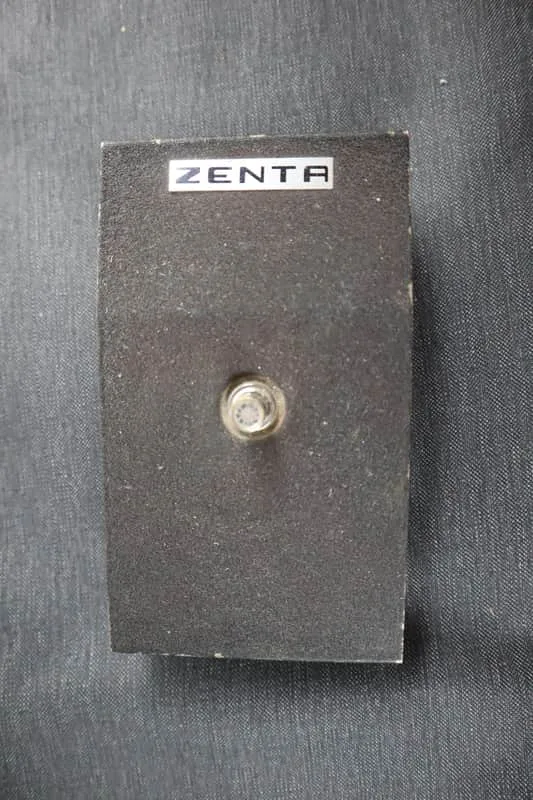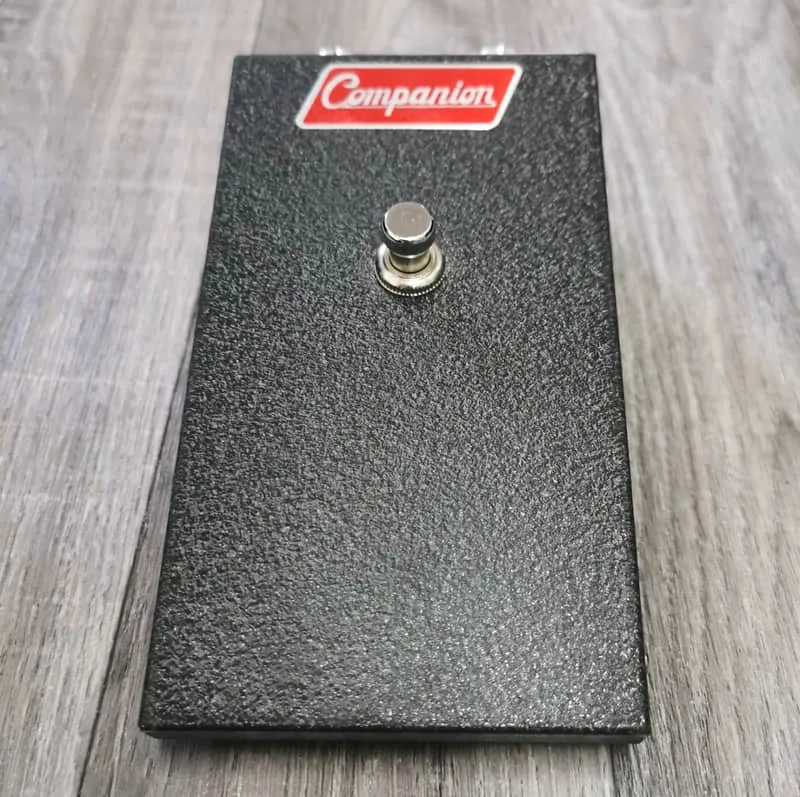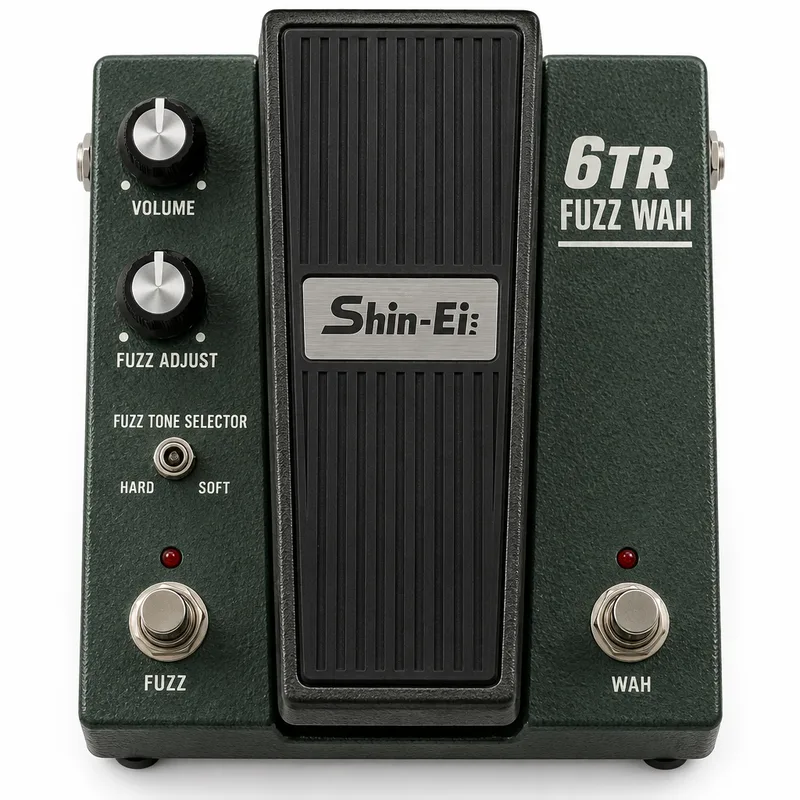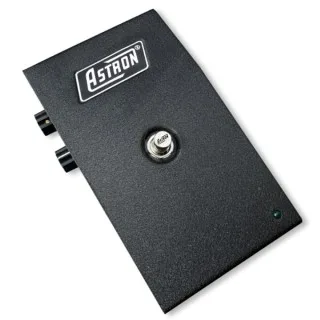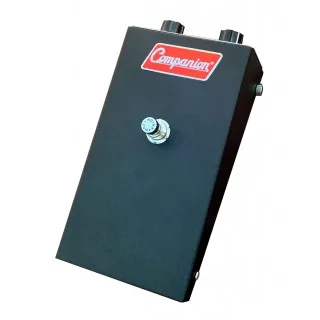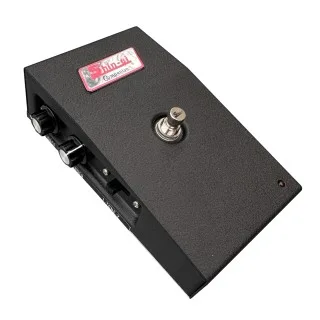


The Shin-ei Companion Super Fuzz is a Japanese fuzz pedal from 1970, designed by engineer Masuo Suzuki. It is known for a specific type of fuzz distortion with a pronounced octave effect, the sound that made the circuit famous and that has been copied and rebranded ever since1. It belongs to the wider family of fuzz pedals, and its closest relative in the Shin-ei line is the FY-2 Companion Fuzz.
What it does
The Super Fuzz produces a fuzz distortion characterized by a pronounced octave effect, an upper-octave edge over the fuzz note that defines the circuit's character1. The pedal kept things simple: two knobs, Volume and Expand, with Expand controlling the intensity of the fuzz1.
The related FY-2 Companion Fuzz, from the same maker and era, shows how the Super Fuzz differs. The FY-2 is an early 1970s silicon transistor fuzz, and Aion FX notes that "The FY-2 does not have the octave effect of the Super Fuzz," while the FY-6 "has the octave effect and a make-up gain stage"2. On the FY-2, the Fuzz control is an unusual setup that shifts the balance between the two transistor stages rather than directly controlling gain, changing harmonics and texture rather than intensity2. Coda Effects describes the Companion Fuzz sound bluntly: "It produces a \"chainsaw\", buzzy, nasty sound! It has a very harsh and raspy sound that is really recognizable."3
History and the Univox rebrand
Shin-ei created the Super Fuzz in 19701. Because of legal issues, the circuit was rebranded and sold under different names by various companies1. The best known of these is the Univox Super Fuzz, which Aion FX describes as the name the FY-6 is "best known for being re-branded as"2.
The Companion Fuzz side of the family dates to 1970 as well; Coda Effects credits the Companion Fuzz to Shin-ei in that year and notes that EarthQuaker Devices later issued a clone, the Terminal Fuzz3.
Modern versions and clones
Players looking for the Super Fuzz sound today have several routes, from Shin-ei's own reissues to independent builds:
- Rebranded versions. Because of legal issues, the Super Fuzz circuit was rebranded and sold under different names by various companies1, so players encounter the same design under several badges rather than one. The circuit itself was designed by engineer Masuo Suzuki1.
- A documented player. One of the most iconic uses of the Super Fuzz can be heard in the guitar tone of Pete Townshend on The Who's live album "Live at Leeds"1.
The FY-2 and FY-6 are different circuits. A pedal described as a "Companion Fuzz" clone will not have the Super Fuzz's octave effect unless it also includes the FY-6 side, as the Fredric Effects combined clones do24.
The FY-2 side of the family
The FY-2 Companion Fuzz has its own following among builders. A builder report on Guitar FX Layouts, using 2N2222 transistors, said: "I built this with 2N2222 and hot dang it's stupid loud. Sounds great! The mid scoop knob is excellent."5 The same layout added a one-transistor amplifier at the output to deal with the circuit's volume issues, a mod credited to General Guitar Gadgets5. Shin-ei's own FY-2-based reissues and reproductions, such as the Shin-ei Companion FY-2, carry that side of the line forward.
Videos
Joe Gagan
Stromer Mutroniks
OfficialHankIII
Questions
What is the difference between the Shin-ei FY-2 Companion Fuzz and the FY-6 Super Fuzz?
The FY-2 Companion Fuzz is an early 1970s silicon transistor fuzz without the octave effect of the Super Fuzz. The FY-6, the Super Fuzz circuit, adds the octave effect and a make-up gain stage. The FY-2's Fuzz control also works differently: it shifts the balance between the two transistor stages, changing harmonics and texture rather than intensity.
Why is the Super Fuzz sold under different names?
According to tru-fi.com's history of the pedal, legal issues led to the Super Fuzz circuit being rebranded and sold under different names by various companies. The best known of these rebrands is the Univox Super Fuzz, which Aion FX describes as the FY-6's best-known identity.
Who played the Shin-ei Super Fuzz?
Tru-fi.com names Pete Townshend's guitar tone on The Who's live album Live at Leeds as one of the most iconic uses of the Super Fuzz.
Sources (5)
- The Super Fuzz, tru-fi.com
- Constellation Vintage Fuzz / Shin-ei Companion FY-2, Aion FX, 2019-11-25
- Coda Effects, Coda Effects, 2015-08
- Super Unpleasant Companion, fredric.co.uk
- Guitar FX Layouts: Shin-Ei FY-2 Companion Fuzz with mods, Guitar FX Layouts (tagboardeffects.blogspot.com), 2022-03-04