Dave Navarro is the guitarist of Jane's Addiction, with a career that also includes six-string duties for the Red Hot Chili Peppers, the Jane's Addiction spin-off projects Deconstruction and The Panic Channel, and a solo career1. His pedalboard is unusual among players of his stature in one way: it is built almost entirely from stock BOSS pedals that any guitarist can buy off the shelf2. His guitar tech, Dan Cleary, has looked after the rig for over a decade2, and much of the gear has been with him since Jane's Addiction's Ritual de lo Habitual tour almost three decades ago2.
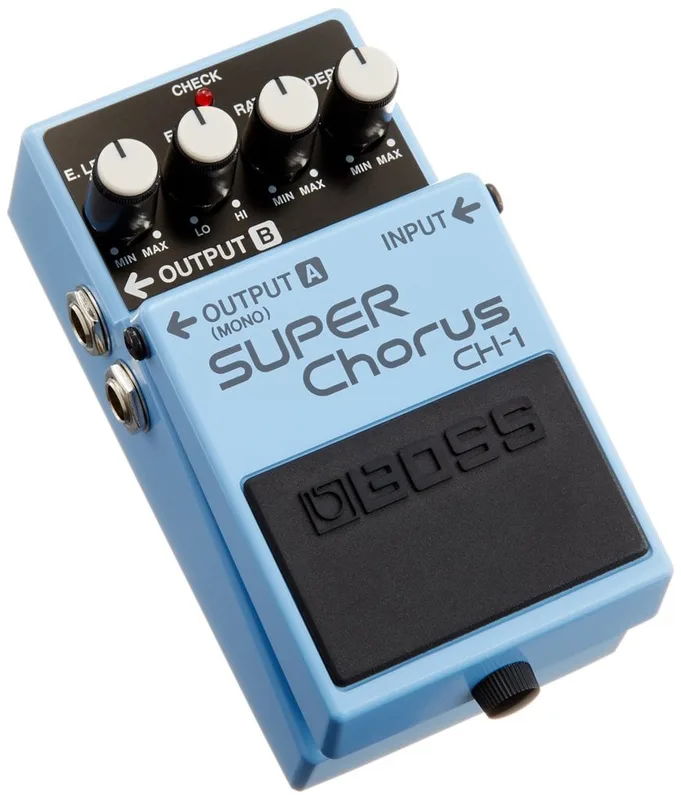
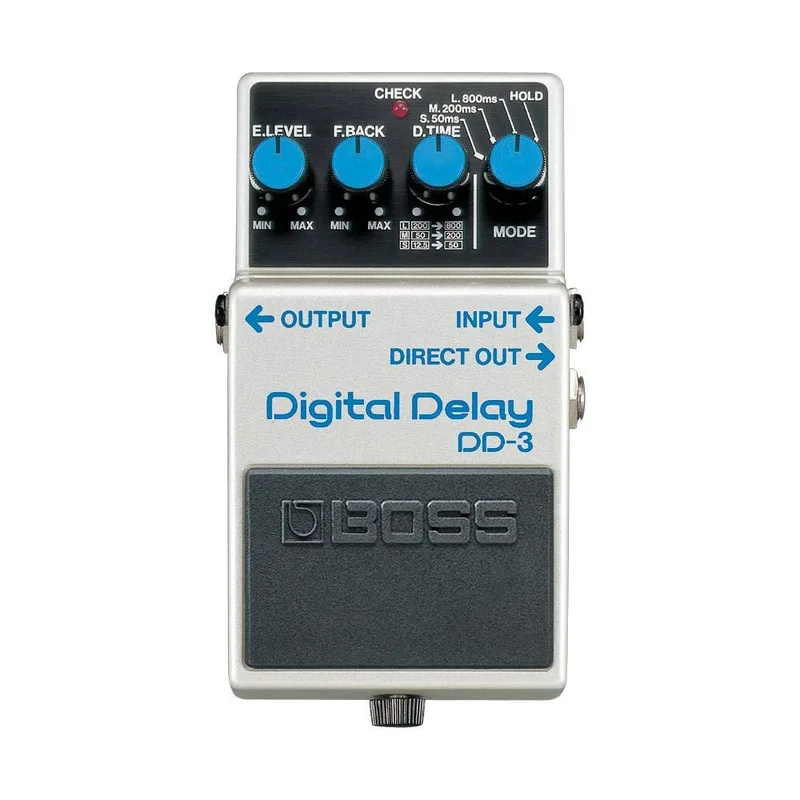
Navarro has used BOSS pedals since the '80s1, and as Cleary puts it, "Since day one, Dave's been a Boss guy"3. BOSS has made compact pedals since 19774, and Navarro's board is a working demonstration of that line: three DD-3 Digital Delays, two CH-1 Super Chorus units and one TU-3 Chromatic Tuner1, plus a Jimi Hendrix Wah2.
The Jane's Addiction pedalboard
The board most associated with Navarro is his main Jane's Addiction pedalboard, built around 2008-2009, close to when Cleary first came on board officially3. The core of it has stayed the same for years: the three Boss DD-3 units and two Super Chorus boxes are, in Cleary's words, "Navarro's true longtime workhorses"3.
| Pedal | How many | Job on the board |
|---|---|---|
| BOSS DD-3 Digital Delay | 3 | Main delay, clean-chain delay, and a noise/effects pedal13 |
| BOSS CH-1 Super Chorus | 2 | Dirty chain and clean chain, almost the same settings1 |
| BOSS TU-3 Chromatic Tuner | 1 | Tuning1 |
| Jimi Hendrix Wah | 1 | Wah duties, just below the tuner2 |
Navarro tours with two duplicate pedalboards so that a failure on stage never costs a show1. The build has proven durable in practice: Cleary began Jane's Addiction's 2024 European tour by breaking a van with Navarro's pedalboard, and the BOSS pedals were fine1. Cleary's confidence in the setup is straightforward:
"Dave tours with two duplicate pedalboards, but if something got lost, I know I could walk into virtually any guitar store in the world and build him a new one in a couple of hours."
That repairability is the practical argument for a stock-pedal board: nothing on it is a one-off, and every unit is replaceable anywhere in the world21.
The clean chain: CH-1 Super Chorus and DD-3
Navarro's pedalboard is split into a "clean" top chain and a "dirty" bottom chain, and each chain carries its own DD-3 Digital Delay and CH-1 Super Chorus side by side1. The clean chain runs a CH-1 with almost the same settings as the dirty channel, and another DD-3 set to a different delay time1.
Both clean-chain pedals stay on. Dave's cleans always have a little delay and chorus, to get what Cleary calls "that ethereal jangly sound he loves"3. For songs like "Three Days" and "Then She Did," he uses two Super Choruses and two Digital Delays together for a clean tone, with the DD-3 delay times set differently1.
On the dirty chain, the pairing is his solo sound. When he goes for a guitar solo, he will often step on the DD-3 and Super Chorus at the same time1. The DD-3 also carries whole songs: he uses one throughout virtually all of "Three Days," with the heavy chugging part the only section where he does not use it1.
The delay time that never changes
Two details of Navarro's delay setup define his sound. First, the delay time is set by ear against a specific reference: he always sets it to the beginning part of Pink Floyd's "Run Like Hell" to check it is correct1. Second, the setting does not move from there, whatever the song:
"one of the keys to Dave's signature sound is that those delays don't change. They stay the same no matter what tempo the song is, fast or slow."
Of the three DD-3s, the bottom left one is his main delay, and that setting never changes3.
The noise DD-3: Hold mode and hand-tweaking
The third DD-3 has a completely different job. This one is specifically for making crazy noises: special effects, like when Navarro adjusts the delay time by hand or kicks on the Hold mode1. It is the DD-3 that sits by the wah, and unlike the main delay he is free to tweak its settings in real time3. Cleary describes the purpose bluntly:
"Dave's got three DD-3s on his board, and this one is specifically for making crazy noises. It's for special effects, like when he adjusts the delay time by hand or kicks on the Hold mode."
So the three DD-3s divide cleanly: a main delay with a frozen setting, a clean-chain delay at a different time, and an effects box he manipulates live13.
Around the pedals: amps and guitars
The pedals sit inside a two-amp rig. Navarro travels with one Marshall for his dirt channel and goes into a Fender for cleans, blending the two2. The Marshalls are JCM 900s that have been in his rig since 1990, modded for more low end in the signal2. Once the amps are set, almost nothing changes from night to night: the only setting he and Cleary ever adjust is presence, depending on the room or the stage2.
On guitar, he plays mainly black guitars after Cleary found him a black PRS one-off nicknamed "Lucille"2. The wah on his board is a Jimi Hendrix Wah2, and Hendrix is his favorite guitar player, which Cleary calls an obvious choice3.
FAQ
What chorus pedal does Dave Navarro use?
The BOSS CH-1 Super Chorus, two of them, one in each chain1. The clean-chain unit runs with almost the same settings as the dirty-chain one, and both chains pair the chorus with a DD-31.
Why does Dave Navarro use three DD-3 delays?
Each DD-3 has its own role: the bottom left one is his main delay with a setting that never changes, another serves the clean chain at a different delay time, and the third is a noise and special-effects pedal he tweaks live13.
How does Dave Navarro use the DD-3 Hold mode?
Hold mode lives on the noise DD-3, the one by his wah. He kicks it on, and adjusts the delay time by hand, for the special-effects sounds his tech describes as crazy noises13.
Are Dave Navarro's chorus and delay always on?
On the clean chain, yes: his cleans always have a little delay and chorus3. On the dirty chain, he steps on the DD-3 and Super Chorus together for solos rather than leaving them on throughout1.
Questions
What chorus pedal does Dave Navarro use?
Dave Navarro uses the BOSS CH-1 Super Chorus, and he carries two of them on his Jane's Addiction pedalboard. One sits in his dirty chain and one in his clean chain, with almost the same settings on each. His cleans always have a little chorus and delay on, which his tech Dan Cleary describes as the ethereal, jangly sound he loves.
Why does Dave Navarro use three DD-3 delays?
Each of Dave Navarro's three BOSS DD-3s does a different job. One is his main delay in the dirty chain, with a setting that never changes. Another serves his clean chain with a different delay time. The third is his noise pedal, tweaked in real time and used with the Hold mode for special effects.
How does Dave Navarro use the DD-3 Hold mode?
Navarro reserves one DD-3 specifically for making crazy noises. His tech Dan Cleary says it is for special effects, like when he adjusts the delay time by hand or kicks on the Hold mode. This is the DD-3 that sits by his wah, the one he is free to tweak in real time for the robot-like sound effects he loves.
Are Dave Navarro's chorus and delay always on?
On his clean chain, yes. Dave Navarro's cleans always run through a CH-1 Super Chorus and a DD-3 Digital Delay, both always on, for songs like Three Days and Then She Did. On the dirty chain he steps on the DD-3 and Super Chorus together when he goes for a solo, which is his main solo sound.
Sources (4)
- Behind the Board: Dan Cleary with Dave Navarro of Jane’s Addiction, BOSS (articles.boss.info), 2024-07-11
- Visiting Dave Navarro, Stompbox Book, 2019-06-14
- Dave Navarro, Stompbox Book, 2019-06-02
- BOSS - PX-1 | Plugout FX, BOSS (boss.info)