
Keith Richards is the guitarist of the Rolling Stones, and his relationship with effects is unusual for a player of his stature: he has mostly run his guitar straight to the amp1, and he says he has only ever used foot pedals twice2. His one landmark pedal moment, the Maestro FZ-1 Fuzz-Tone riff on "(I Can't Get No) Satisfaction" in 1965, introduced the sound of a fuzz pedal to a worldwide audience3 and made the Fuzz-Tone the "it" pedal almost overnight2.
Straight into the amp: distortion from two amps
Richards' distortion comes from amps, not boxes. In a 1992 GuitarPlayer interview he explained his approach:
"If I'm looking for some kind of distortion, I usually use two amps rather than go for it out of one thing, because I've always found that a really good distortion needs to come from two different places."4
The idea is to overdrive one amp while keeping a cleaner signal from the other, so the distortion and the clarity of the part each come from a different place and get mixed together4. Part of that sound is a specific amp: he owns a Fender Twin with serial number #A00003, an amp he describes warmly:
"Yeah. It's a bad amp, man! I wish I'd had it from day one! It takes a while to find those."4
For context on where pedal distortion comes from instead, most distortion pedals use a hybrid design of op-amps and diodes to clip the signal5, and Dunlop's guide describes pedal distortion as coming from clipping the signal before it runs out of headroom, or from transistors acting as imperfect amplifiers that generate extra harmonics6. Richards' two-amp method sidesteps all of that by pushing real amps into overload.
The Maestro Fuzz-Tone on "Satisfaction"
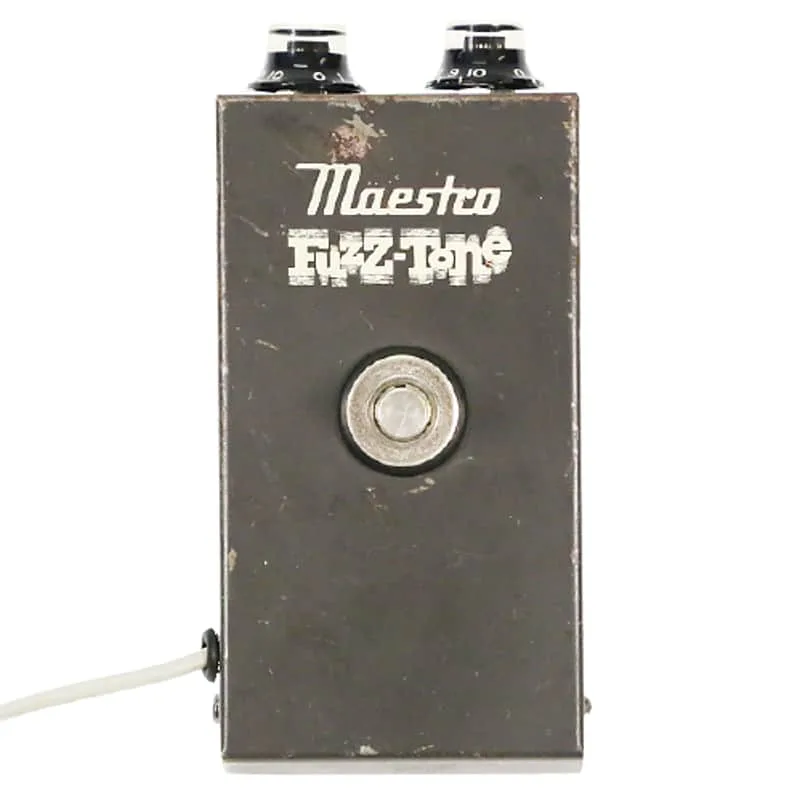
The one pedal every player associates with Richards is the Gibson Maestro FZ-1 Fuzz-Tone, the earliest germanium fuzz pedal, introduced in 19627. The floor pedal version followed a built-in bass effect, and before Richards it was a commercial failure8. He used it in 1965 on "(I Can't Get No) Satisfaction," the Rolling Stones' first number one hit910, and after that Gibson sold out around 5000 units and released the FZ-1A7.
Before the fuzz, the session had a problem. Richards was after a specific kind of grit for the riff:
"I was screaming for more distortion: 'This riff's really gotta really hang hard and long,' and we burnt the amps up and turned the shit up, and it still wasn't right."4
The FZ-1 gave the riff the distortion it needed4, and MusicRadar describes it as giving the riff "something that no riff had had before"11.
Was the fuzz meant to be a horn part?
Yes, and Richards has told the story himself. He laid down a scratch track for the song as a guide, with the fuzz effect standing in for a full brass section, but the planned brass was never used and, against his own wishes, the original fuzz track remained on the record12. MusicRadar reports the same account: he used the FZ-1 for temporary sax tones on the demo, ended up keeping it in, and started a chain reaction for fuzz tones that continues today13. In his 2010 autobiography Life, Richards says he used the Fuzz-Tone to emulate a horn2. Guitar.com's history adds that he figured the squawky sound of his guitar through the box could act as a sketch for the horn sound he could sort out properly later14.
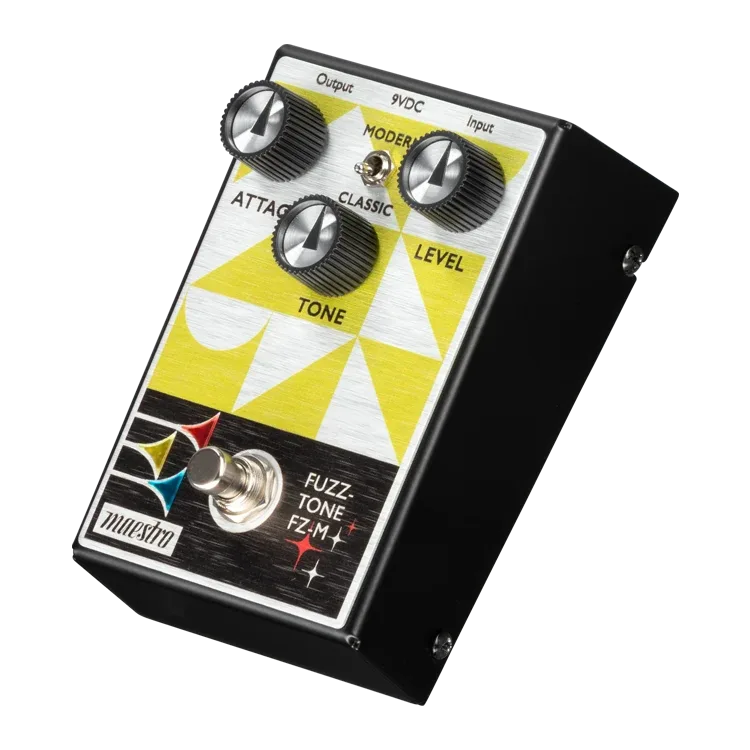
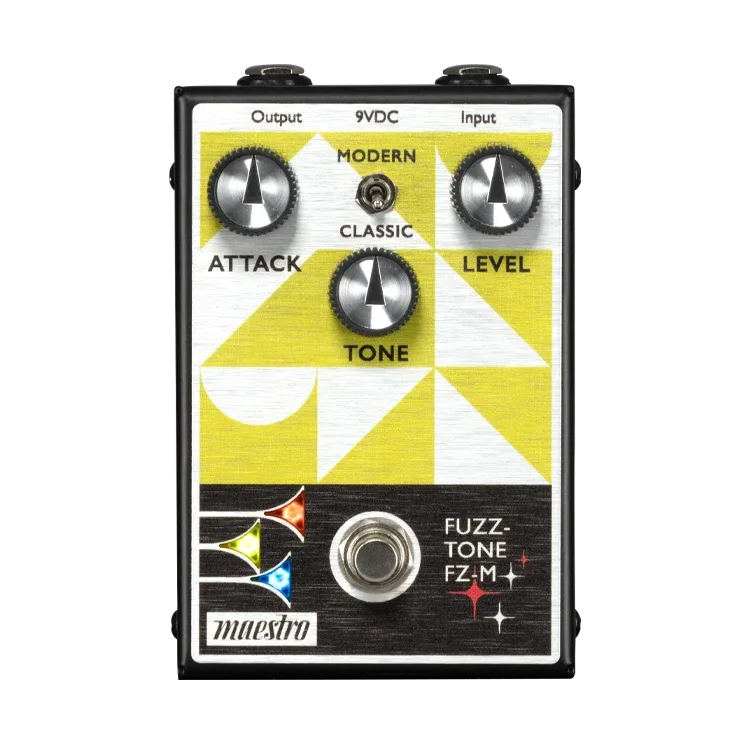
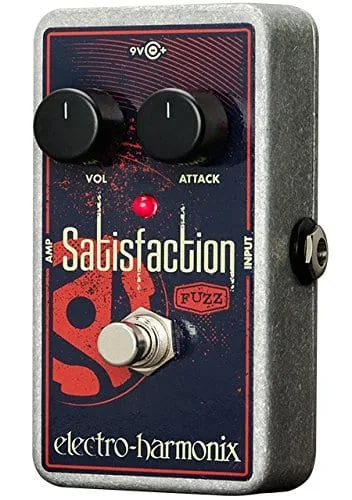
The sound has since been revisited in pedal form: the Electro-Harmonix Satisfaction fuzz is an homage to Richards' FZ-1 tone, with a stripped back setup of just Volume and Attack controls11.
The rest of his pedal use
Richards' own tally is blunt:
"I've only ever used foot pedals twice [the other being an XR delay on Some Girls]… effects are not my thing."2
Beyond the FZ-1 and that XR delay on Some Girls, the record of his gear use is short:
- An MXR Phase 100, which JHS Pedals' history says he used a lot and which is on a ton of Rolling Stones hits15.
- A Palmer speaker simulator on the 1992 track "999," which he described as "a little box, no speakers"4.
That is the whole picture: a player whose tone was built on cranked amps, with two foot pedals in a lifetime and one fuzz riff that changed what a guitar could sound like on record.
Questions
What fuzz pedal did Keith Richards use on Satisfaction?
He used a Gibson Maestro FZ-1 Fuzz-Tone, the earliest germanium fuzz pedal, introduced in 1962. Richards played the Satisfaction riff through it in 1965, and the sound introduced the fuzz pedal to a worldwide audience. He later said the unit he had was the first one Gibson made.
Was the Satisfaction fuzz meant to be a horn part?
Yes. Richards has said the fuzz guitar was a scratch guide track standing in for a planned brass section, with the FZ-1 used for temporary sax tones on the demo. The brass was never added, and against his own wishes the original fuzz track stayed on the released record.
Does Keith Richards use pedals?
Very few. He has said effects are not his thing and that he has only ever used foot pedals twice, one being an XR delay on Some Girls. He has also used an MXR Phase 100 on a lot of Rolling Stones hits, and a Palmer speaker simulator on the 1992 track 999.
How does Keith Richards get his distortion?
Mostly from amps, not pedals. He runs two amps and overloads one, mixing distortion from one with clarity from the other, because he has found a really good distortion needs to come from two different places. On Satisfaction, after cranked amps still were not right, the FZ-1 gave the riff the distortion it needed.
What delay did Keith Richards use on Some Girls?
He used an XR delay on Some Girls. He counts it as one of only two times he has ever used a foot pedal, saying in his own words that effects are not his thing and that he has only ever used foot pedals twice.
Sources (15)
- Pioneers of fuzz: 13 guitarists who defined the fuzz pedal, MusicRadar, 2020-07-23
- Maestro Fuzz-Tone, Vintage Guitar magazine, 2015-12-08
- Maestro Fuzz-Tone FZ-M review, Guitar World, 2022-05-09
- The Keith Richards Guide to Distortion, GuitarPlayer (Future), 2022-03-11
- 5 types of overdrive pedal every guitarist needs to try, Guitar World, 2020-02-07
- Overdrive vs. Distortion vs. Fuzz, Dunlop Lifestyle, 2017-03-14
- Modern Fuzz Pedals That Make Old-School Sounds, Premier Guitar, 2025-05-01
- All About… Fuzz, Guitar.com, 2015-08-27
- Maestro FZ-M Fuzz-Tone Review, GuitarPlayer, 2022-04-06
- Maestro Invader Distortion Review, GuitarPlayer, 2022-04-06
- Electro-Harmonix adds beef to the Keef with the expanded Satisfaction Plus fuzz debuting an all-new Fat mode, MusicRadar, 2023-04-28
- The history and origins of the iconic Maestro FZ-1 Fuzz-Tone, Guitar World, 2021-10-20
- Hear the oldest guitar effects pedal demo ever from 1962, MusicRadar, 2023-03-30
- The history of overdriven guitar tones, guitar.com, 2021-01-15
- HOW MXR PEDALS BECAME LEGENDARY, JHS Pedals
