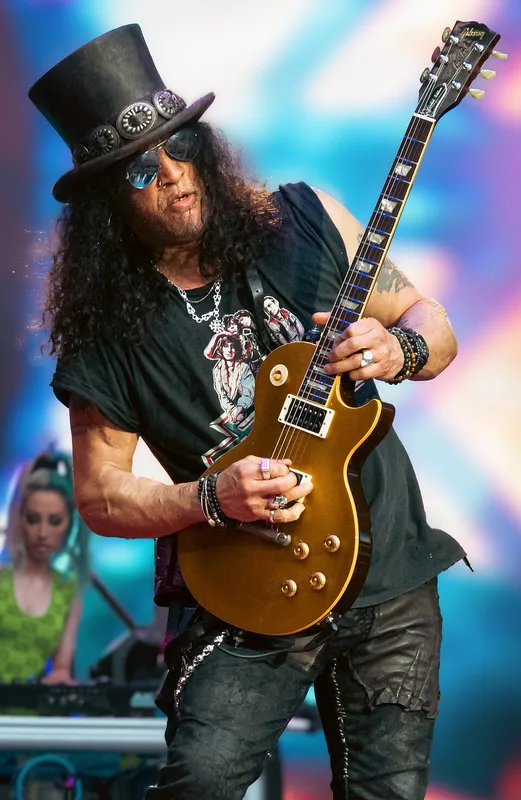
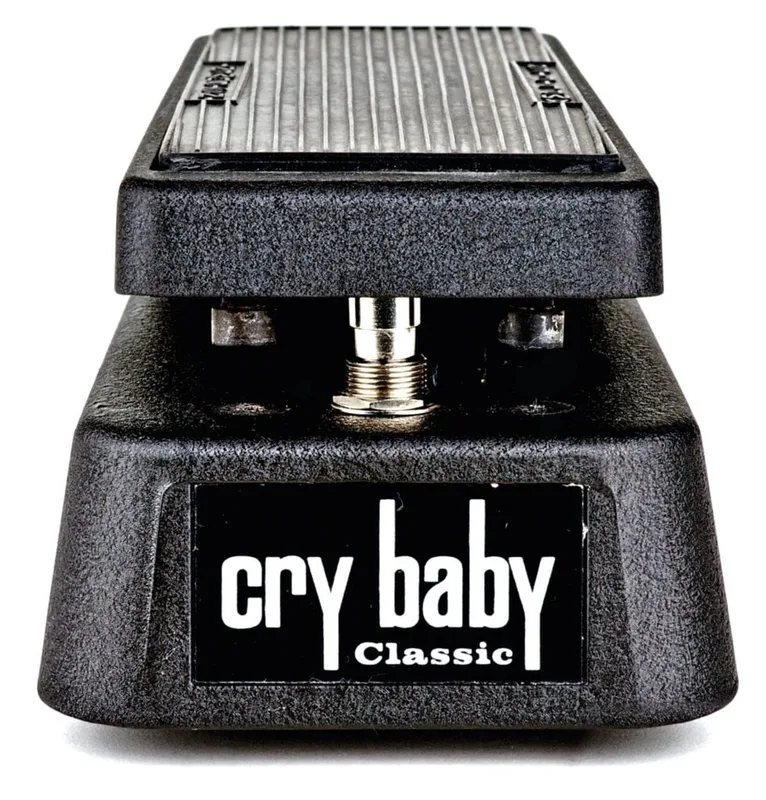
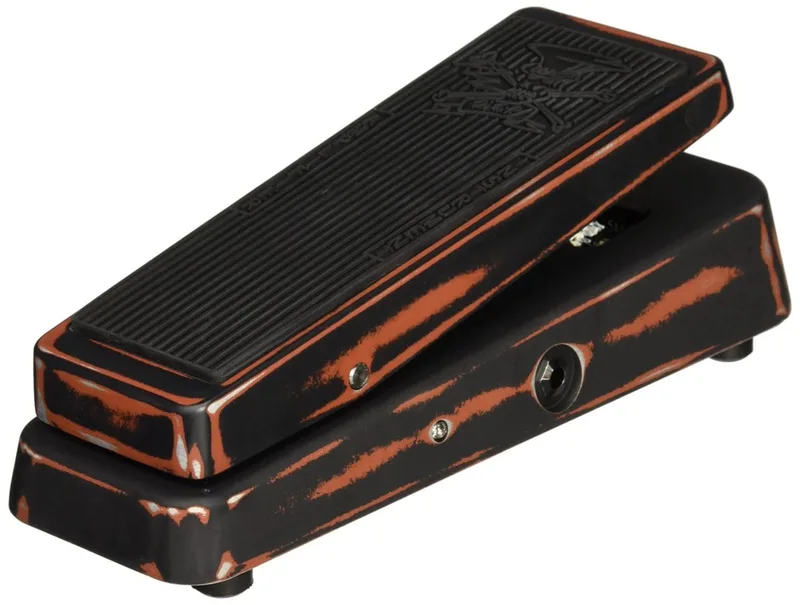
Slash is the guitarist behind Guns N' Roses' biggest records and a long run of solo albums, and for pedal builders he has been one of the most enduring signature artists in the business. His relationship with Jim Dunlop, the effects and accessories firm behind the Cry Baby wah and the MXR and Way Huge brands, spans a line of picks, pedals and more developed over what Dunlop describes as "30+ years of close collaboration"12. Guitar World's reviewers have called him "undeniably a master of the wah pedal," and noted that he likes to boost his Marshalls with some type of distortion/overdrive pedal3.
His pedalboard story splits neatly into two parts: the wah pedals that carry his name, and the octave and fuzz effects tied to his playing and his signature models.
Wah pedals
Slash's wah sound is inseparable from his playing. He performed the wah guitar solo on Guns N' Roses' "Sweet Child O' Mine"4, and by the end of the '80s into the '90s he was one of the players Gearnews points to as being "armed with Les Pauls. And wahs."5
His signature wah history runs through several Dunlop models:
| Pedal | What it is | Key details |
|---|---|---|
| Original signature Cry Baby | Wah with built-in dirt | Combined distortion/overdrive and wah in one pedal3 |
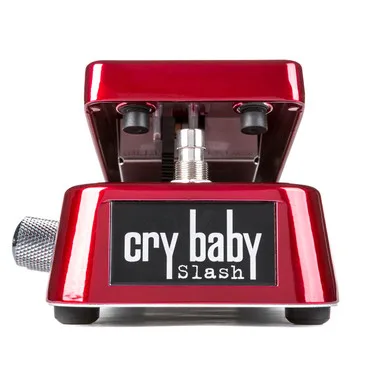
| SW95 Slash Wah | Signature wah, introduced 2007 | High-gain distortion circuit and a classic Fasel inductor, based on Slash's own custom-built wah4 |
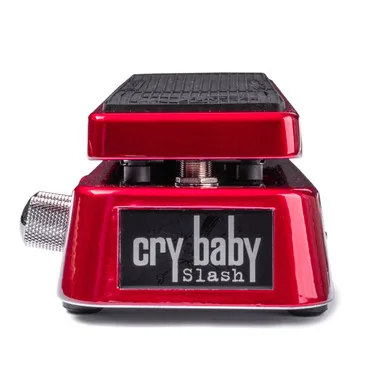
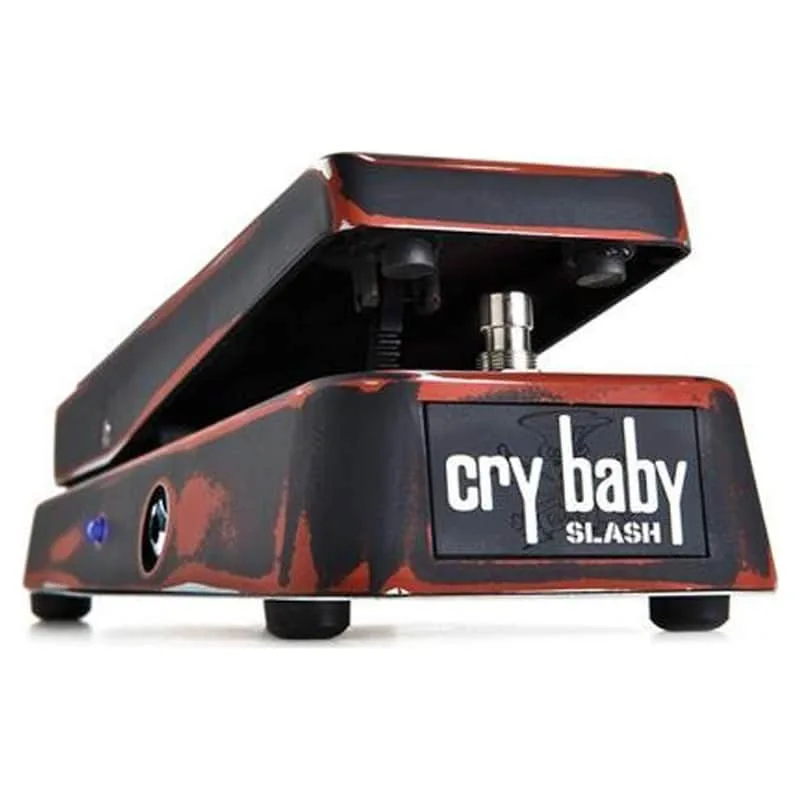
| SC95 Slash Cry Baby Classic | Revoiced signature wah | Custom-wound inductor with three wah sweet spots3 |
| SW96 | Current signature wah | One of the two Slash signature wahs currently to his name6 |
The original signature Cry Baby put both of Slash's core effects in one box, which Guitar World's reviewer found "somewhat difficult to nail the ideal combination of dirt and wah"3. His later approach separates the two: an entirely revoiced SC95 Dunlop Cry Baby Classic wah and a signature SF01 MXR Octave Fuzz3.
The SW95, reviewed by Guitar World in 2007, "features a high-gain distortion circuit and a classic Fasel inductor, just like Slash's own custom-built wah pedal"4. Its manual describes a red DISTORTION switch and a footswitch that toggles the pedal on and off7.
The SC95 is the wah most players associate with him now. Its custom-wound inductor is paired with what Guitar World called "a silky-smooth pot," giving three wah sweet spots so players can create wah effects that are baritone, soprano or treble3. Dunlop tuned the pedal's EQ sweep to a lower frequency, which Vintage Guitar found "helps give it a warm, thick sound devoid of harshness at any point"8. It carries a distressed hot-rod finish, battery or external power options, and the trademark Slash-and-crossbones logo3. Per the Dunlop manual, it runs on one 9-volt battery, a 9-volt AC adapter such as the Dunlop ECB003/ECB003EU, or a DC Brick power supply9, and it features what the manual calls "SLASH-APPROVED TREAD"9.
Slash currently has two signature wahs in the Dunlop line, the SW96 and the SC956. The SW95 with its built-in distortion circuit is an earlier model, so a used one behaves differently from the current pedals.
Octave effects: Tycobrahe Octavia and Boss OC-3
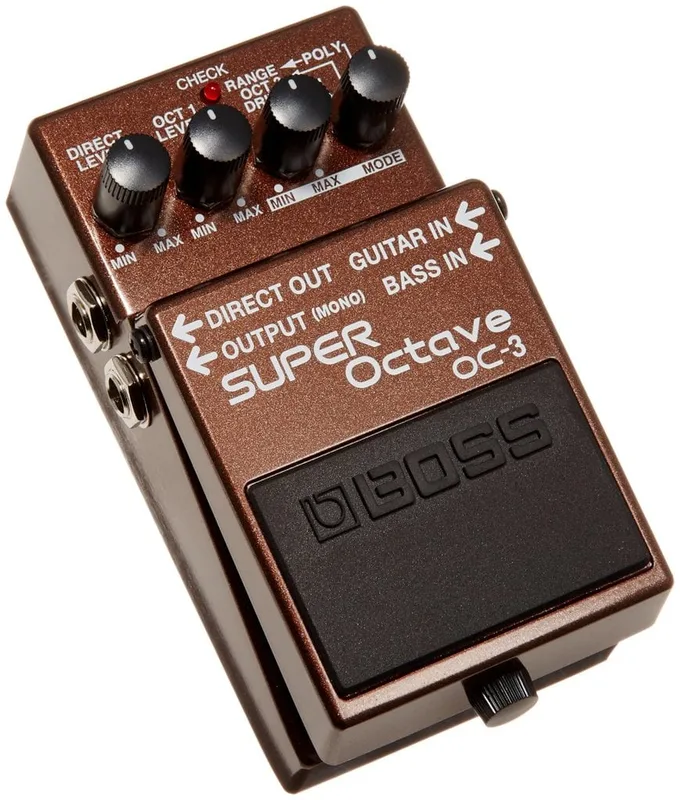
Before the signature octave fuzz existed, Slash was using vintage and modern octave pedals side by side. Premier Guitar reported that he had been using the Tycobrahe Octavia and the Boss OC-3 Super Octave "for the last couple of years" at the time of their 2021 review10.
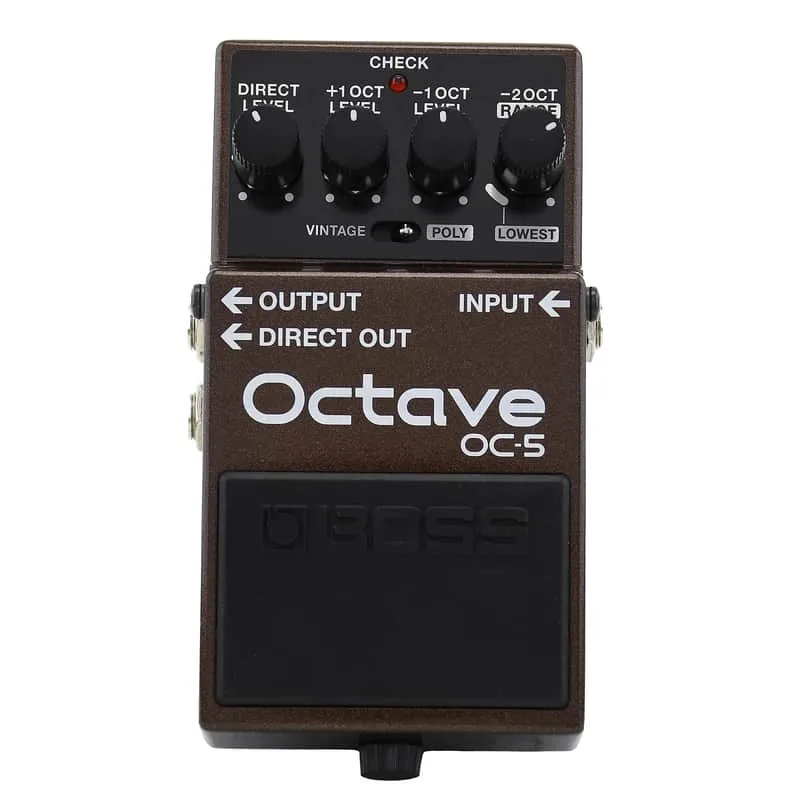
The two pedals come from very different eras of octave design. The Tycobrahe Octavia is a 1970s piece, a fuzz/octave divider pedal that provided an octave-up effect, from a builder whose Parapedal, Pedalflanger and Octavia are "fondly remembered by many guitarists, but no one seems to recall how they sound," as Guitar Player's historians put it11. The Boss OC-3 Super Octave is the modern counterpart: Guitar World credits it with having "introduced polyphonic octave effects, turning this bottom-end box into a broader innovation"12. It sits in Boss's OC range of octave effect pedals, a line later extended by the OC-513, and it was among the octave pedals covered in a That Pedal Show demo of the category14.
Signature pedals: the MXR SF01 Octave Fuzz
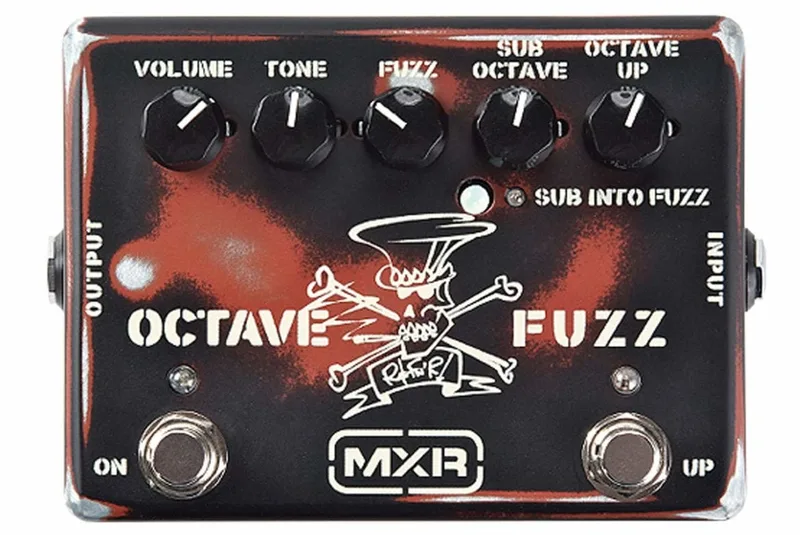
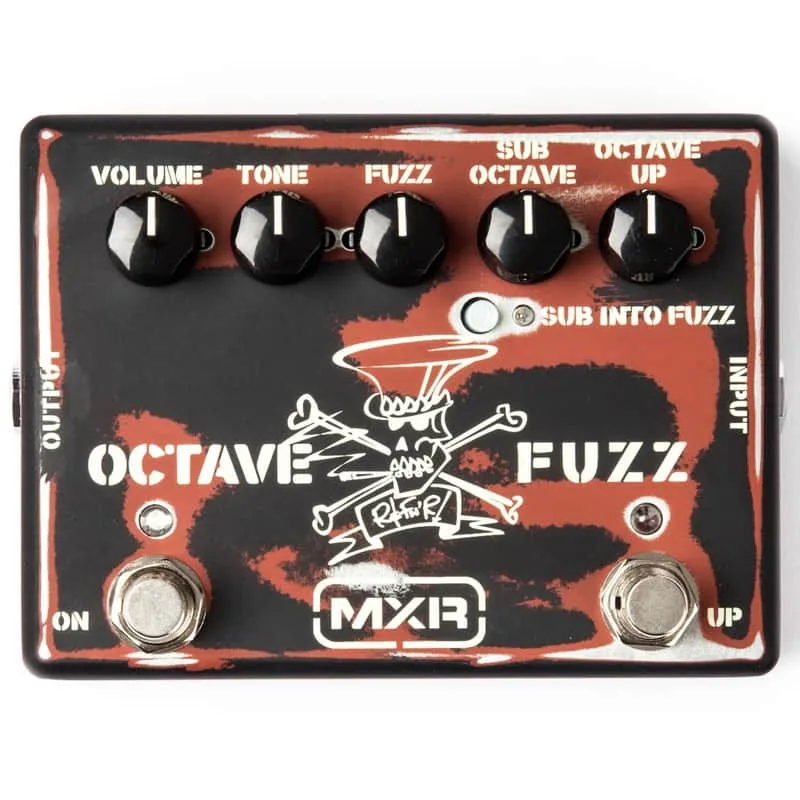
The pedal that turned Slash's octave habit into a product is the MXR Slash Octave Fuzz, announced in May 2012 as part of a trio of products with Jim Dunlop15. Dunlop and Slash teamed up to create two pedals, the MXR Slash Octave Fuzz and the Slash Cry Baby Classic16.
It is an analog pedal with three fuzz voices17:
- Sub Octave: a low-octave fuzz voice that can be run dry or switched into the '70s-style "shag" fuzz circuit17
- Fuzz: the core '70s-style fuzz circuit17
- Octave Up: a high-octave fuzz voice17
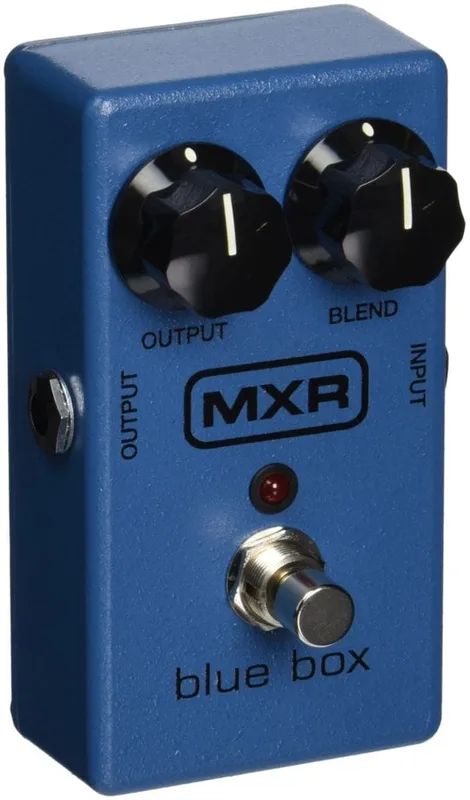
Vintage Guitar describes the three flavors as offering "a palette of distinctive, utilizable sounds"8. The circuit has a clear lineage: one of Dunlop's goals was to develop a more predictable version of the '70s MXR Blue Box fuzz pedal, and Vintage Guitar's reviewer concluded that "the Slash achieves that"818.
Slash's own explanation of what he wanted is quoted in Guitar World's launch coverage:
"I've had a talk box since I was 16. First time I heard it was Frampton's 'Do You Feel Like We Do,' then Jeff Beck's 'She's a Woman,' and Aerosmith's live 'Walk This Way.'"
He used it on two tracks from Apocalyptic Love, his second solo album10, and MusicRadar credits its use on that record as the reason MXR brought out the signature octave fuzz19. Reviewers were positive: Guitar World's reviewer wrote, "I can see everyone from detuned hardcore shredders to traditional blues wailers becoming addicted to this pedal's refined octave/fuzz grind and attack-preserving tonal integrity"3.
The Appetite for Destruction rig
The gear behind Guns N' Roses' 1987 debut predates all of the signature pedals, and two pieces of it are fixed points in the story.
The amp was a rented Marshall from S.I.R. in Los Angeles. Slash had asked for their Stock #39 but was delivered Stock #36 instead, a similar but not identical amp modded by Frank Levi, without S.I.R. telling him. He recorded the album with it, then kept it after the sessions by claiming it had been stolen; an S.I.R. supervisor named Glenn Buckley later retrieved it from Stage 6.
The guitar was a Les Paul copy built by luthier Kris Derrig. The band's manager handed it to Slash at the last minute before guitar overdubs in January 1987, and it carried most of the album's guitar parts. Derrig died of throat cancer a few months before the record came out. Another guitar from the sessions, a 1961 Gibson SG used for the rhythm part of "My Michelle," was smashed through the tour van's windshield during a photo shoot at Take One Studios' parking lot, for a Robert John photo.
Other gear and endorsements
Beyond wah and octave pedals, Slash's name shows up across several makers' catalogs:
- Tortex picks: Dunlop celebrated 25+ years of Slash using Tortex picks with a limited edition Slash Pick Tin, featuring the same white 1.14mm Tortex picks he takes to the studio and on the road20.
- Talk box: he says the effect goes way back for him: "I've had a talk box since I was 16. First time I heard it was Frampton's 'Do You Feel Like We Do,' then Jeff Beck's 'She's a Woman,' and Aerosmith's live 'Walk This Way.'"1
- JAM Pedals: he is quoted calling them "one of the best pedal creators to come along since I've been playing guitar."21
- PedalPalFx: the maker describes its MOD #34 modification, a mod that can be made in a 1959SLP or JCM800 amp, as Slash's main tone, calling him one of their favorite guitar players2223.
That last point lines up with what Guitar World observed about his playing style: he likes to boost his Marshalls with some type of distortion/overdrive pedal rather than relying on pedals for his core tone3. The signature line with Dunlop and MXR, now more than three decades old, keeps growing around that approach1.
Questions
What wah pedal does Slash use?
Slash currently has two signature Cry Baby wahs to his name with Dunlop, the SW96 and the SC95. The earlier SW95 was built around his own custom wah, with a high-gain distortion circuit and a classic Fasel inductor. The SC95 is a revoiced Cry Baby Classic with a custom-wound inductor that gives three wah sweet spots.
What amp did Slash use on Appetite for Destruction?
The core amp was a rented Marshall from S.I.R. in Los Angeles. Slash had asked for their Stock #39 but was delivered Stock #39's neighbor, Stock #36, a similar amp modded by Frank Levi, without anyone telling him. He recorded the album with it and kept it after the sessions by claiming it was stolen, until an S.I.R. supervisor retrieved it.
What guitar did Slash record Appetite for Destruction with?
Most of the album's guitars were recorded with a Les Paul copy built by luthier Kris Derrig. The band's manager handed it to Slash at the last minute before guitar overdubs in January 1987. Derrig died of throat cancer a few months before the album came out.
Does Slash's original signature wah have distortion built in?
Yes. His original signature Cry Baby wah combined distortion/overdrive and wah in one pedal, which Guitar World's reviewer noted made it somewhat difficult to nail the ideal combination of dirt and wah. His later signature pedals separate the two effects into the SC95 wah and the SF01 Octave Fuzz.
What octave pedal did Slash use on Apocalyptic Love?
The MXR Slash Octave Fuzz, his signature SF01. He used it on two tracks on Apocalyptic Love, his second solo album. The analogue pedal carries three fuzz voices, Sub Octave, Fuzz and Octave Up, and its circuit is a more predictable take on the '70s MXR Blue Box.
Sources (23)
- MXR® SLASH SIGNATURE TALK BOX, Jim Dunlop (jimdunlop.com)
- NAMM 2017: Jim Dunlop unveils 50th anniversary gold-plated Cry Baby, MusicRadar, 2017-01-21
- Review: Dunlop SC95 Cry Baby Classic Slash Signature Wah and MXR SF01 Slash Signature Octave Fuzz, Guitar World, 2013-05-01
- Dunlop Cry Baby SW-95 Slash wah review, Guitar World, 2007-07-19
- The VOX Clyde McCoy Wah: A classic wah pedal and its history, Gearnews, 2021-02-20
- Kirk Hammett confirms his second signature Dunlop Cry Baby Wah is on the way, Guitar World, 2022-03-21
- SW95.pdf, Dunlop Manufacturing, Inc., 2019
- MXR Slash Octave Fuzz SF01/Slash Cry Baby Classic SC-95, Vintage Guitar magazine, 2013-12-09
- SC95, Dunlop Manufacturing, Inc., 2019
- MXR Slash Octave Fuzz Pedal Review, Premier Guitar, 2012-09-05
- Six Pioneering Effects Builders of the 1970s, GuitarPlayer, 2022-05-26
- Boss OC-5 Octave review, Guitar World, 2021-03-09
- Boss updates its classic octave circuit with the new OC-5 pedal, Guitar World, 2020-09-17
- That Pedal Show, That Pedal Show, 2016-10-07
- Jim Dunlop Introduces MXR Slash Octave Fuzz, Slash Cry Baby Classic, Guitar World, 2012-05-07
- Dunlop Offers MXR Slash Octave Fuzz, Cry Baby, Vintage Guitar magazine, 2012-05-04
- MXR Slash Octave Fuzz signature pedal unveiled, MusicRadar, 2012-05-01
- MXR Slash Octave Fuzz SF01 and Slash Cry Baby Classic SC-95, Vintage Guitar magazine, 2014-01-27
- MXR SF01 Slash Octave Fuzz review, MusicRadar, 2012-09-20
- New MXR Slash Octave Fuzz & Cry Baby Pedals Unveiled, Premier Guitar, 2012-05-04
- JAM pedals, JAM pedals
- PedalPalFx, PedalPalFx
- PedalPalFx, PedalPalFx
