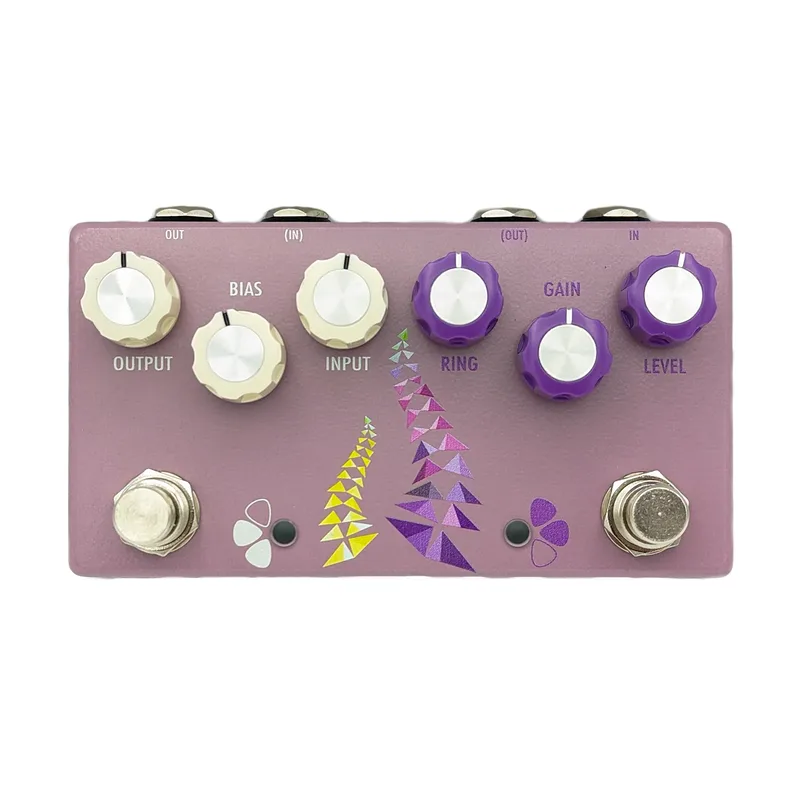
The Peppermill is a DIY guitar overdrive circuit from Runoffgroove, the collective known for free, openly published amp-in-a-box designs like the Supreaux. Where most overdrive pedals clip the signal with diodes or an op-amp running into the rails, the Peppermill gets its grind from field-effect transistors arranged as a MOSFET driving a JFET, a topology chosen to behave more like a tube gain stage than a typical pedal stage12.
The circuit has no commercial pedal form. It lives as a published project that home builders put on stripboard, perfboard or a third-party PCB, the best known being GuitarPCB's Blues Power v2, which the maker describes as "The Perfect Peppermill" with added clipping options3.
Where the Peppermill came from
Runoffgroove (often written R.O.G. or ROG) publishes complete schematics, part lists and build notes for its circuits free of charge, and its designs circulate widely in the DIY community. GuitarPCB, a PCB vendor, credits Runoffgroove directly in its own documentation: the Red Special v4 project notes thank "Runoffgroove" for original circuit design, and the Blues Power v2 page states plainly that "The circuit is based off the R.O.G. Peppermill but with additional clipping options to allow the circuit to exhibit more" tonal range34.
So the family tree runs one way: the Peppermill is the original design, and the Blues Power v2 is a derivative based on it that adds additional clipping options. That matters to builders comparing boards, because the stock Peppermill and the modded version do not behave identically3.
If you see a "Peppermill" for sale as a finished pedal or a kit, it is a builder's product built from the published circuit, not an official Runoffgroove product. Runoffgroove publishes circuits, not pedals.
How it works: a MOSFET driving a JFET
The Peppermill's defining feature is its gain stage: a MOSFET (metal-oxide-semiconductor field-effect transistor) driving a JFET (junction field-effect transistor). Both transistor families turn a voltage at their gate into a change in current flow, which is closer to how a triode tube amplifies than the voltage-to-voltage behavior of an op-amp. That is the whole reason FETs appear so often in DIY amp-in-a-box projects; runoffgroove chose them for the Peppermill for their tube-like sounds12.
The character difference between the two device types is real and documented elsewhere in audio gear. Pendulum Audio, whose PL-2 compressor lets the user switch between JFET and MOSFET limiting, describes the distinction in its manual5:
"The JFET/MOSFET switch determines which type of device is doing the peak limiting."5
In a compressor that difference shows up as grab; in an overdrive it shows up as how the stage saturates as you push it. Other makers have made the same choice for the same reason. General Guitar Gadgets' Improved EA Tremolo swaps the runoffgroove.com MOSFET first stage for a JFET because "The JFET stage (first transistor stage in the circuit) we use sounds great"6, and Flower Pedals built the Cream side of its Lupine Dual Fuzz on a JFET transistor topology7. The Peppermill uses both devices in series, the MOSFET doing the driving and the JFET doing the amplifying, to get tube-like soft saturation instead of the hard clipping of a diode-to-ground design.
For contrast, Warm Audio describes its ODD Box V1 as "a hard-clipping, op-amp-based overdrive inspired by an iconic pedalboard staple"8. That is the conventional approach: an op-amp with diodes that slice the waveform's peaks off abruptly. The Peppermill's FET stages instead round the waveform over as they run out of headroom, which is the mechanism behind its amp-like reputation.
The sound: a cranked Fender-style overdrive
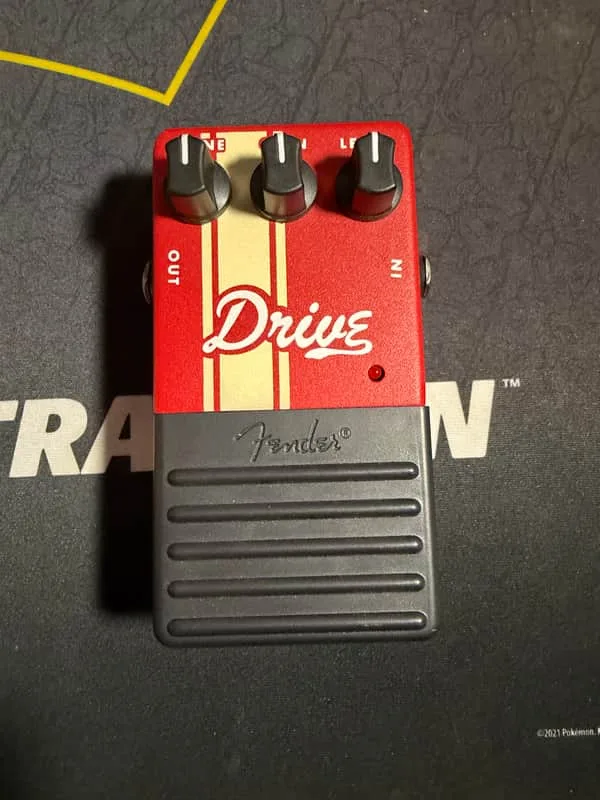
The Peppermill is voiced as a cranked Fender-style overdrive, the sound of a blackface or silverface amp pushed hard rather than a British crunch box. Fender's own take on that territory, the Competition Drive, is described in RockBoard's PedalPedia as creating "a warm overdrive reminiscent of classic '60s and '70s rock and blues tones" with "harmonically rich crunch and sustain"9. That is the general territory: warm, sustained, dynamic, not high-gain metal.
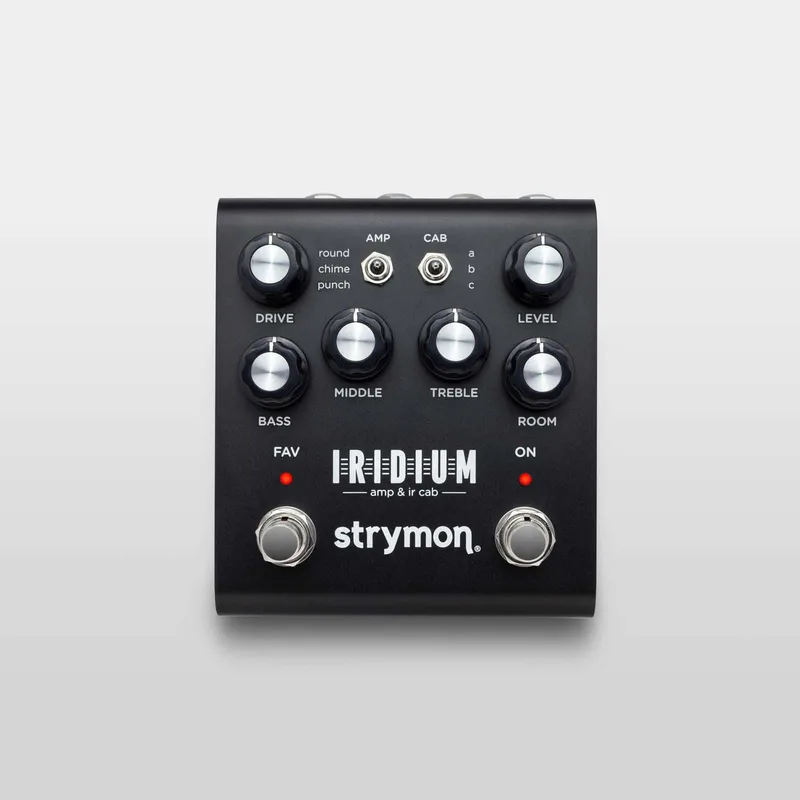
A useful point of comparison is Strymon's Iridium, whose Round Amp setting is "Based on* a Fender® Deluxe Reverb" (Normal channel)10. The Iridium is a full amp modeler: it reproduces the whole amp, its clean headroom and its breakup. The Peppermill takes the opposite approach, one gain stage that goes after the breakup character only, and it sits in front of whatever amp you already own. A player who wants the complete cranked-Deluxe experience in a box is looking at amp modeling; a player who wants a single Fender-flavored drive stage to push their existing rig is looking at a circuit like this.
Compared with the classic diode-clipping overdrives, the Tube Screamer family, the FET approach trades the midrange hump and compressed squeeze for a more open, touch-responsive breakup. Whether that is better is a matter of taste; it is simply a different clipping mechanism with a different feel.
Building one: parts, voltages and PCB layout
Because Runoffgroove publishes the circuit freely, the practical build path for most players is a third-party PCB. The main one is GuitarPCB's Blues Power v2, sold as "Blues Power, Modded Peppermill w/ Clipping Options"3.
What the Blues Power v2 adds over the stock circuit:
- Switchable clipping options, so the builder can select between clipping characters on the fly.
- LED clipping among the options, which GuitarPCB says provides "a much warmer tube-style tone"3.
- Everything else from the R.O.G. Peppermill design as published3.
Builders who prefer other formats are in the same ecosystem as the wider DIY world: vendors like Griffin Effects ship project files containing a single-sided PCB layout, stripboard and perfboard layouts, a schematic and a true-bypass wiring diagram for their circuits11, and Runoffgroove's own project pages are the reference point for the schematic and original build notes.
The Blues Power v2 is a modified Peppermill, not a clone. If you want the circuit exactly as Runoffgroove designed it, build from the original project documentation; if you want switchable clipping on a ready-made PCB, the Blues Power v2 is the version to look at.
Selling builds and licensing
Runoffgroove's circuits are published for personal building, but many builders eventually wonder about selling finished pedals. The answer depends on whose board you used. As an example of how these licenses work, Madbean's PepperSpray manual (a different circuit, based on the Harmonic Percolator) states:
"You are free to use purchased PepperSpray circuit boards for both DIY and small commercial operations. You may not offer PepperSpray PCBs for resale or as part of a 'kit' in a commercial fashion."12
That is a common pattern in the DIY world: small commercial use of purchased boards is allowed, reselling the boards or kitting them up is not. Before selling anything built from the Peppermill, read the license that comes with the specific PCB you built on, since each vendor sets its own terms.
Pedals on this page

Questions
Does the Peppermill sound like a Fender Deluxe Reverb?
The Peppermill is a Fender-style overdrive: it aims at the character of a cranked Fender tube amp rather than copying one specific model. For reference, Strymon's Iridium pedal models a Fender Deluxe Reverb in its Round Amp setting, which is a different approach, full amp modeling rather than a single overdrive stage.
What transistors does the Peppermill use?
The Peppermill is built around field-effect transistors, with a MOSFET driving a JFET. JFETs are valued in DIY amp-in-a-box circuits because their transfer characteristics resemble those of a tube gain stage more closely than a typical op-amp stage.
Is the Peppermill based on the Blue Magic?
No. The Peppermill is an original Runoffgroove design. The lineage runs the other way: GuitarPCB's Blues Power v2 is based on the R.O.G. Peppermill, adding clipping options so the circuit can cover more ground than the original.
Can I sell pedals built from the Peppermill circuit?
That depends on whose board you build it on. Madbean's license for its PepperSpray boards, a different circuit, allows both DIY and small commercial use of purchased boards but forbids reselling the PCBs themselves or including them in a commercial kit. Check the license that ships with the specific board you use.
Sources (12)
- Peppermill, runoffgroove.com
- Runoffgroove Peppermill JFET Overdrive - Aion FX, Aion FX, 2020-06-05
- Blues Power v2, GuitarPCB
- Red-Special-v4-2022.pdf, GuitarPCB, 2022-09
- PL-2-Manual-Complete.pdf, Pendulum Audio, Inc.
- EA Tremolo: DIY Tremolo Pedal Kit, PCB & Schematic, generalguitargadgets.com, 2014-05-18
- Lupine Dual Fuzz, Flower Pedals
- Warm Audio ODD Box V1 Hard-Clipping Overdrive Pedal, Warm Audio
- Competition Drive by Fender, RockBoard PedalPedia, 2026
- Iridium Amp Modeler And Cab, Strymon, 2026-02-19
- Cyclops Fuzz PCB, Griffin Effects
- PepperSpray.pdf, madbeanpedals.com, 2024-06-07