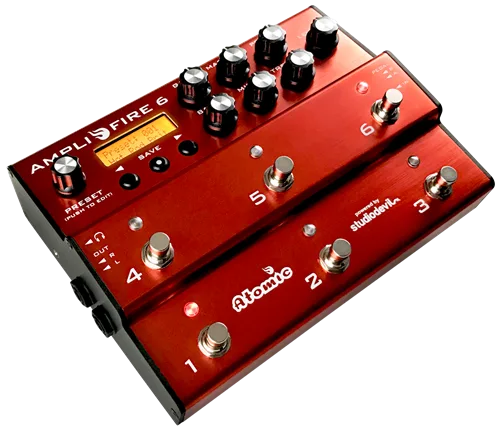
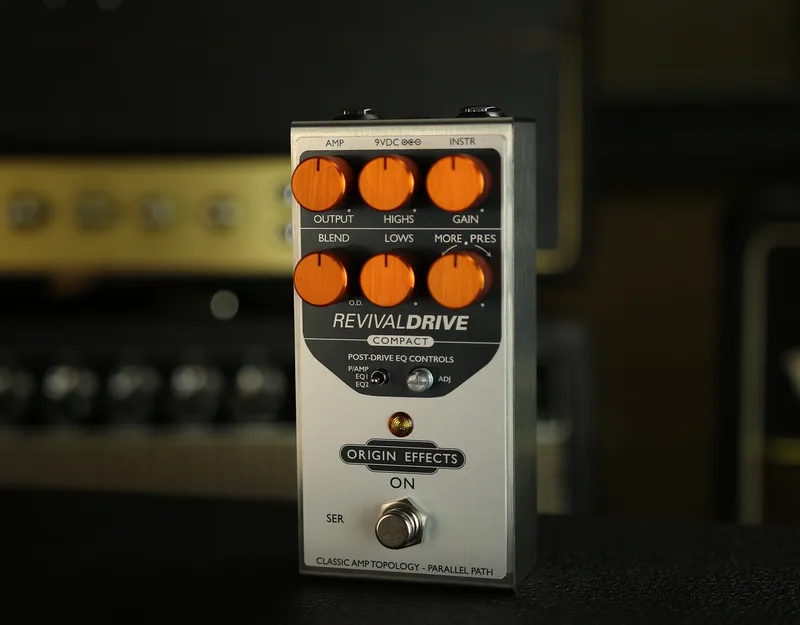
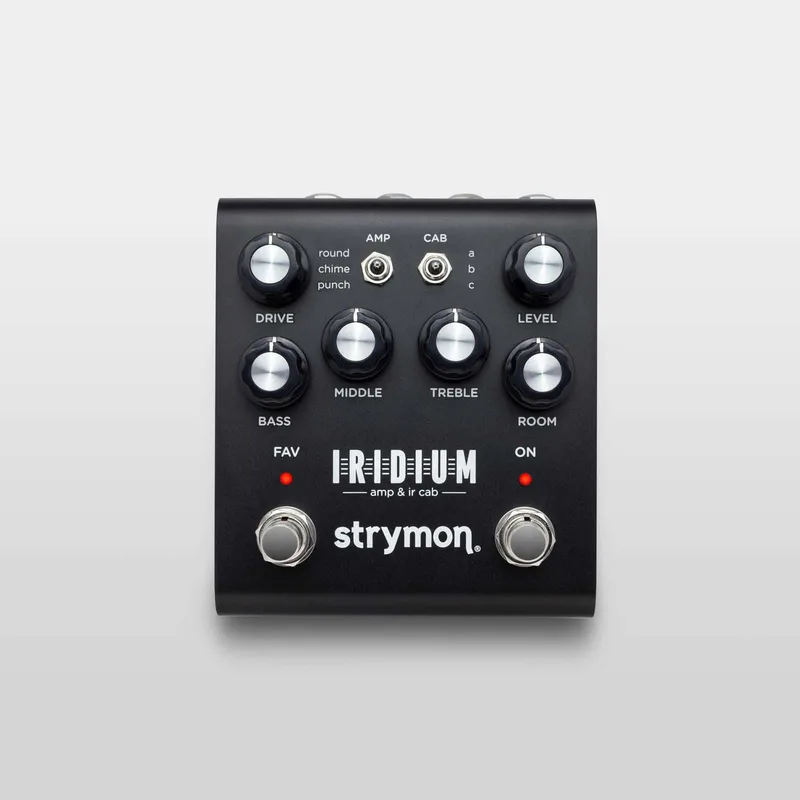
An amp modeler is a device that reproduces the sound and behavior of a guitar amplifier, either in a multi-effects floor unit or in a single pedal. Some, like the Strymon Iridium, were "designed as an amp modeler solution in a pedal format that you can drop into any pedalboard"1. Others, like the Atomic Amplifire, combine amp modeling with a full multi-effects engine in one box2. A third group, including Origin Effects' RevivalDRIVE Compact, are analog circuits that model an amp's preamp and power amp behavior rather than sampling or digitally emulating it; Origin Effects says of its Amp Recreation pedals that "their real identity is as analogue amp modellers"3.
The question for a pedalboard builder is where the modeler sits in the chain, and what happens to the pedals on either side of it. This page covers the four common configurations: pedals into the front of a modeler, pedals in a modeler's effects loop, direct rigs with cab sims and impulse responses, and parallel routing around the modeler. For the broader question of what goes where, see pedal signal chain order.
What an amp modeler is and where pedals fit
Amp modelers fall into a few families, and the family determines how your pedals interact with it.
| Family | How it models | Examples from makers |
|---|---|---|
| Digital amp modeler pedals | Digital amp and cab models in a stompbox | Strymon Iridium1, Atomic Amplifire2 |
| Analog amp recreation pedals | Analog circuits modeling preamp and power amp behavior | Origin Effects RevivalDRIVE Compact3 |
| Preamp simulator pedals | Preamp circuitry from tube amps in pedal form | Master Effects preamp simulators4, AMT Legend Amps series5 |
| Character preamp pedals | A specific amp's character with headphone and recording outputs | Surfy Industries SurfyMan6 |
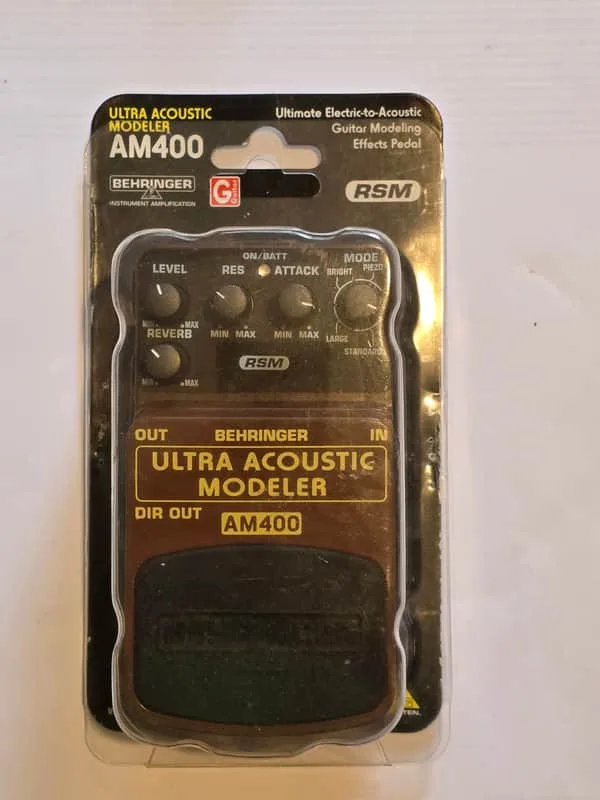
The distinction matters for pedal placement. Origin Effects treats its analog modelers as an amp in the chain, with the same before-and-after logic you would apply to a real amplifier3. Digital units like the Amplifire often include their own effects sections, so your external pedals may only need to cover what the unit lacks2. And some pedals blur the line: the Behringer AM400 Ultra Acoustic Modeler is a modeling effect pedal built for electric players who want an acoustic guitar sound, a specialized case of amp and instrument modeling7.
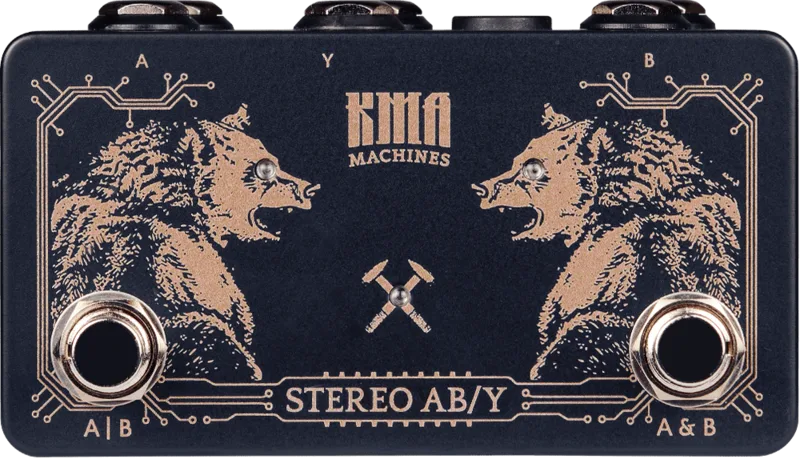
A related category is the AB/Y switcher, such as the KMA Machines AB/Y series, which splits, combines or switches between audio devices. These are useful when a modeler is one of two destinations for your signal, for example feeding both a modeler and a real amp8.
Pedals into the front of a modeler
Running pedals into the front of a modeler mirrors running them into the front of a real amp: drives, fuzzes and boosts hit the modeler's input stage and push it the same way they would push an amplifier's preamp.
- Carl Martin describes its Ampster preamp pedal as usable "as your main overdrive pedal into a clean amp, as a preamp into a power amp or effects return, or as a core tone shaper before modulation and delay"9. The same logic applies to a modeler set to a clean amp model.
- Master Effects says its preamp pedals "were designed to be used in front of an amplifier" but have enough output to drive a power amp or FX loop return, though performance in that use is not guaranteed10.
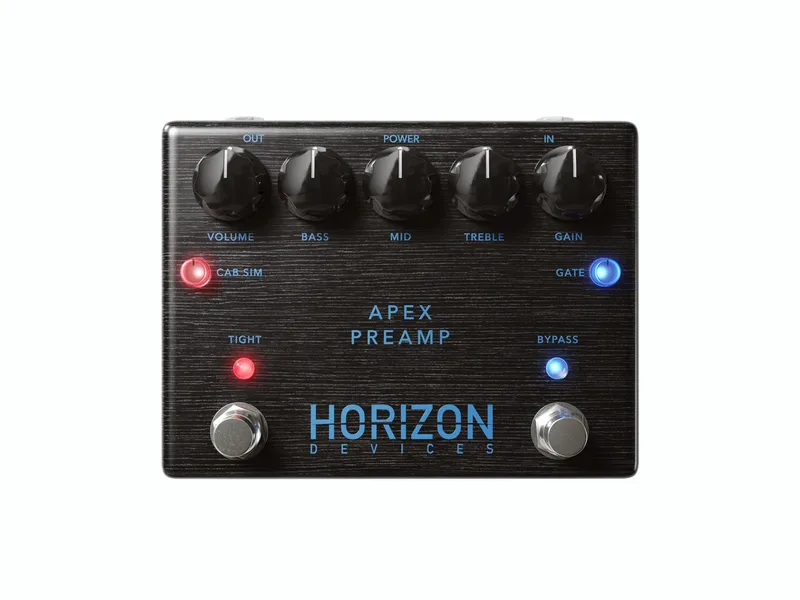
- Horizon Devices built its Apex Preamp to be "voiced to cut through both high gain heads and integrate perfectly with digital modeling rigs," a preamp designed from the start to sit in front of a modeler11.
- Mod Electronics' Penetrator "adds glistening harmonics that get loud enough to saturate your amp's front end," a boost-style pedal whose purpose is exactly this front-end push12.
One placement note from Origin Effects: "For players using an amp-like overdrive pedal, it can be very useful to place the compressor after the overdrive." Placing the compressor after an amp-like overdrive preserves the guitar's volume control over the overdrive level and keeps your level consistent when you clean up13. The same article adds that certain vintage fuzz and wah pedals do not work with buffers and should go before buffered tuners and before the compressor, a caveat covered in more depth in true bypass and buffers13.
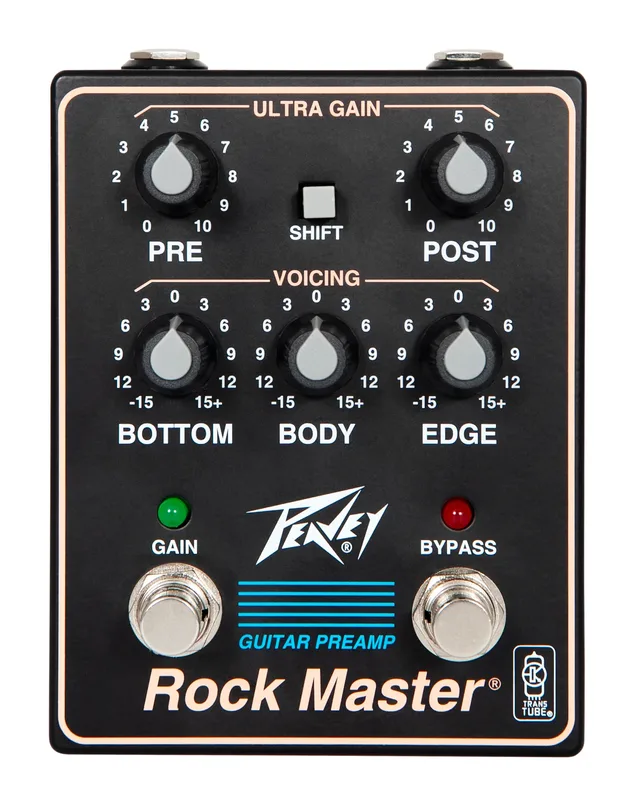
Preamp pedals without built-in speaker simulation, like the Peavey Rock Master Preamp Pedal, are intended to supercharge the front end of an amplifier, feed a power amp, or run into an external speaker emulator. If you use one into a modeler, the modeler's own cab block supplies the speaker stage14.
Pedals in a modeler's effects loop
Many modelers, like many amps, provide an effects loop: a send and return placed after the amp modeling, where time-based effects normally belong. The routing tools built for amp effects loops work the same way here.
- The American Loopers Amp Effect Loop Switcher reroutes any effects connected to its PEDALS SND and PEDALS RTN jacks to run through the loop or to the front, and can also be used with amps that have no FX loop by sending everything to the front without disconnecting anything15.
- The Saturnworks Front / Effects Loop Switcher does the same job in a simpler form: "In one switch position, your pedals go to the front of your amp. In the other position, your pedals go through your amp's effects loop"16.
- The JHS Pedals Blender is a parallel blender with a send and return loop: "Take any effect or chain of effect (even your whole board) and run them through the send and return of the Blender." It can also serve as a tuner out or simple effects loop to activate a string of pedals for a preset tone17.
For the underlying technique of connecting a pedalboard to an amp's loop with four cables, see the four-cable method.
Several pedals exist to manage what runs in the loop and what runs in front of the amp. The American Loopers Amp Effect Loop Switcher reroutes any effects connected to its PEDALS SND and PEDALS RTN jacks between the amp's FX loop and the front of the amp, and it also works with amps that have no FX loop by sending all effects to the front without disconnecting anything15. The Saturnworks Front / Effects Loop Switcher does the same job: in one switch position your pedals go to the front of the amp, in the other they go through the amp's effects loop16. For players who want a parallel path instead, the JHS Pedals Blender runs any effect or chain of effects through its send and return, and it can also serve as a tuner out or simple effects loop that activates a string of pedals at once for a preset tone17.
Stereo direct rigs and impulse responses
Two things complete a direct rig: the cab stage and the output path.
Cab sims and IRs. Origin Effects explains that in its P/AMP mode, "the POST-DRIVE EQ is disabled and there is no output filtering. This is used when the Amp Recreation pedal is used directly with power amps into guitar cabs, or with some sort of cab sim"18. In other words, when going direct, the speaker stage has to come from somewhere: either the modeler's built-in cab block, an impulse response loader, or an external cab sim pedal. GUP Tech's Taxi Cab and Lab Series #16 are examples of the latter; the maker says the Lab Series #16 "will bring any pedalboard tone to a complete 'Micked Cab Tone'"19. Note the Taxi Cab's limits: it is "NOT an attenuator, its use is to simulate a cab on a Line/Instrument Level only. You cannot plug this pedal between amp and speaker"20. See speaker simulation pedals for the category.
Amp captures. HeadRush's products use Neural Amp Modeler captures, which "recreate the sound, response, and feel of real amplifiers, pedals, and signal chains with exceptional accuracy"21. Captures of full pedal-and-amp chains are one way to fold favorite drive sounds into the modeler itself.
Feeding amp and PA at once. The Radial JDX Direct-Drive is "an amp simulator designed for your pedalboard," and Radial suggests you "use the Direct-Drive at the output of your pedalboard to feed your amp and the PA at the same time," a hybrid rig for players who want both a stage amp and a direct feed22. Stereo versions of these rigs are covered in stereo pedal rigs.
Running pedals in parallel with a modeler
Parallel routing splits your signal into two paths, processes them separately and sums them back together. Around a modeler, this lets you keep a clean or modeled path alongside an effects path.
- Saturnworks' Parallel Pedal "lets you set up a simple 2-channel parallel setup with a single combination splitter/summer"23.
- The JHS Blender, covered above, runs any effect or chain through its send and return and blends it with the dry signal17.
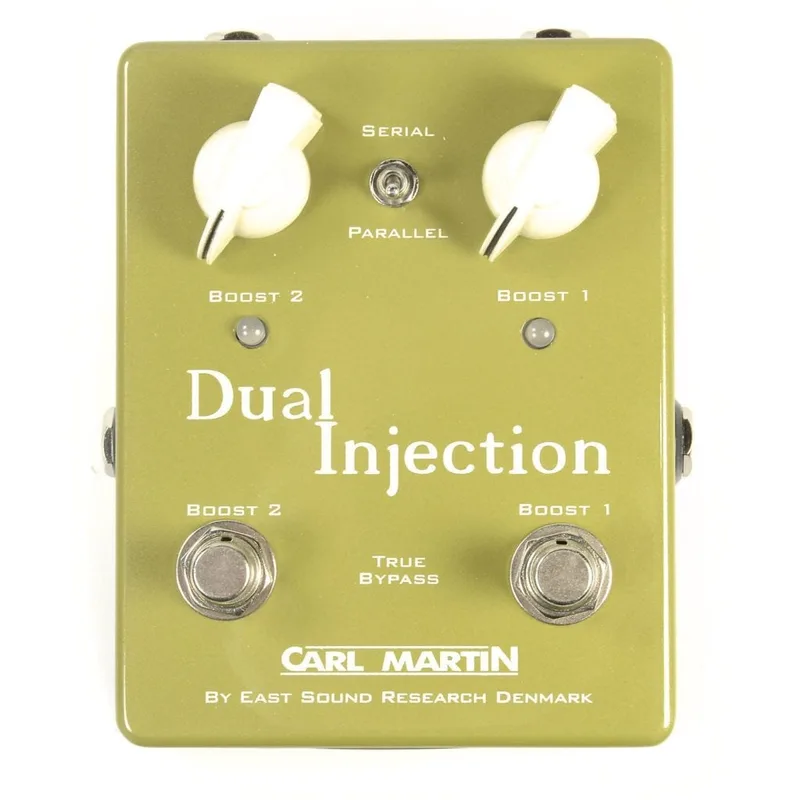
- Carl Martin's Dual Injection has a dedicated Parallel mode: "connect the Output 1 before your Drive or Preamp, and then use the Input/Output 2 on the side of the pedal to connect to your effects loop on the amp"24. The same wiring works with a modeler's loop, putting one side of the parallel path after the amp modeling.
The Poly Effects Ample
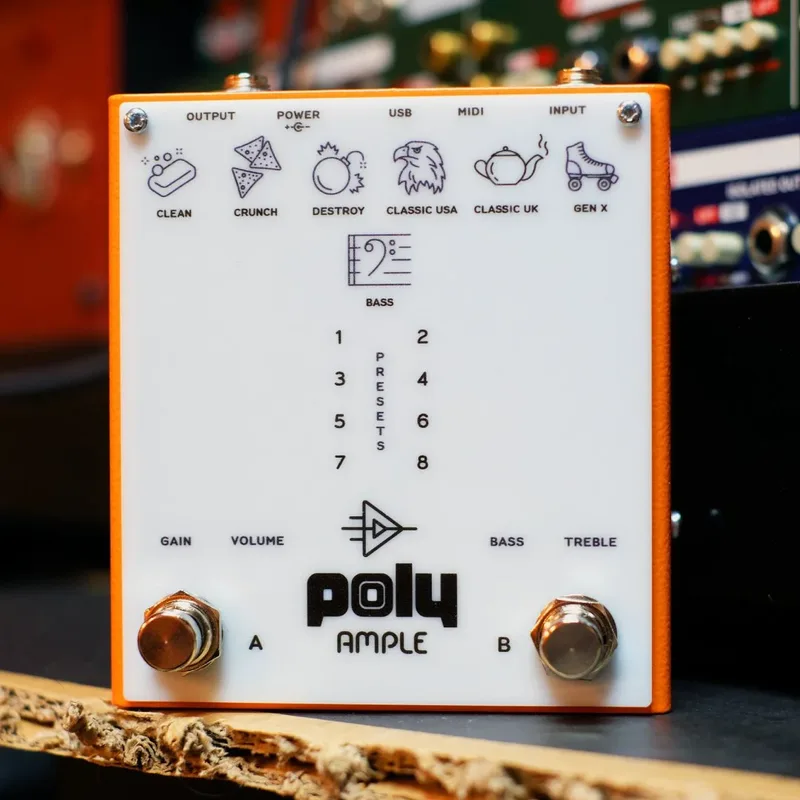
The Poly Effects Ample is an amp simulation pedal offering "a curated collection of classic amp tones in an easy to use format"25. The maker positions it as flexible rather than amp-replacing: "Ample can replace your amp or complement it, allowing you to stack gain tones," and it "can run direct to monitors, in ears or headphones"25. Its amp categories include a Clean mode described as "Boutique amps for perfect clean tones"25. For players comparing it with the analog approach, Origin Effects' Amp Recreation pedals are "all-analogue modellers, and as such, we can think of them as an amp"18, a useful contrast with a digital unit like the Ample.
Pedals on this page
Questions
Can I use overdrive pedals with an amp modeler?
Yes. Overdrives and preamp-style pedals work into a modeler set to a clean or lightly driven amp, just as they would into a real clean amp. Carl Martin describes its Ampster as usable as a main overdrive into a clean amp, as a preamp into a power amp or effects return, or as a core tone shaper before modulation and delay. Origin Effects adds that placing a compressor after an amp-like overdrive keeps your level consistent when you clean up with the guitar's volume knob.
Should time-based pedals go before or after an amp modeler?
Time-based effects such as delay and reverb normally sit after the amp and cab stage, which on a modeler means in its effects loop or after the modeler itself. BOSS's signal chain guide places the looper before the delay, with the exact spot depending on how you want looped phrases effected. Modulation and filtering can go either side of the amp stage depending on the sound you want.
Do I need a cab sim if my pedal board ends in an amp modeling pedal?
It depends on the pedal. Some amp modelers, like the SurfyMan, include cab simulation and a headphone preamp. Others, like the Peavey Rock Master Preamp Pedal, have no built-in speaker simulation and are intended for use with an amp, a power amp, or an external speaker emulator. If yours has no cab sim and you are going direct, add one, such as a GUP Tech Taxi Cab or Lab Series #16.
Can I run pedals in parallel with an amp modeler?
Yes. Saturnworks' Parallel Pedal sets up a two-channel parallel rig with a single combination splitter and summer, and the JHS Pedals Blender runs any effect or whole board through a send and return loop. Carl Martin's Dual Injection has a Parallel mode that connects one output before your drive or preamp and a second input and output to the amp's effects loop.
What is the Poly Effects Ample?
The Ample is an amp simulation pedal from Poly Effects offering a curated collection of classic amp tones. The maker says it can replace your amp or complement it by stacking gain tones, and that it runs direct to monitors, in-ears or headphones. Its Clean category covers boutique amps for clean tones.
Sources (25)
- Using Iridium's Headphone Output, Strymon, 2026-06-17
- AmpliFire Pedal, Atomic Amps
- RevivalDRIVE as an Amp Modeller?, Origin Effects, 2025-07-11
- Master Effects Pedals, Master Effects Pedals
- AMT F1 | AMT Electronics official website, AMT Electronics, 2026
- Surfy Industries, Surfy Industries
- AM400 Ultra Acoustic Modeler by Behringer, RockBoard PedalPedia, 2026
- Introducing our New ABY pedals, KMA Machines
- Support - Carl Martin, Carl Martin (carlmartin.com), 2026
- Master Effects Pedals, Master Effects
- APEX PREAMP, Horizon Devices
- The Penetrator, Mod Electronics, 2026
- Tech Tips: Where in the Chain, Origin Effects, 2024-05-17
- Rock Master® Preamp Pedal, Peavey
- Amp FX Loop or Chain Router, American Loopers (www.americanloopers.com)
- Pedal Order & Effects Loop Switcher, Saturnworks, 2026-08-29
- BLENDER - JHS Pedals, JHS Pedals
- Using Origin Effects AIAB pedals in your rig, Origin Effects, 2026-08-20
- Lab Series #16, GUP Tech (guptech.ca)
- Taxi Cab (Cab Sim), GUP Tech (guptech.ca)
- Core | HeadRush FX, HeadRush FX (headrushfx.com), 2026
- JDX Direct-Drive, Radial Engineering, 2026-02-25
- Parallel Loopers, Saturnworks, 2026-10-07
- Dual Injection, Carl Martin, 2026
- Ample - Poly Effects, Poly Effects