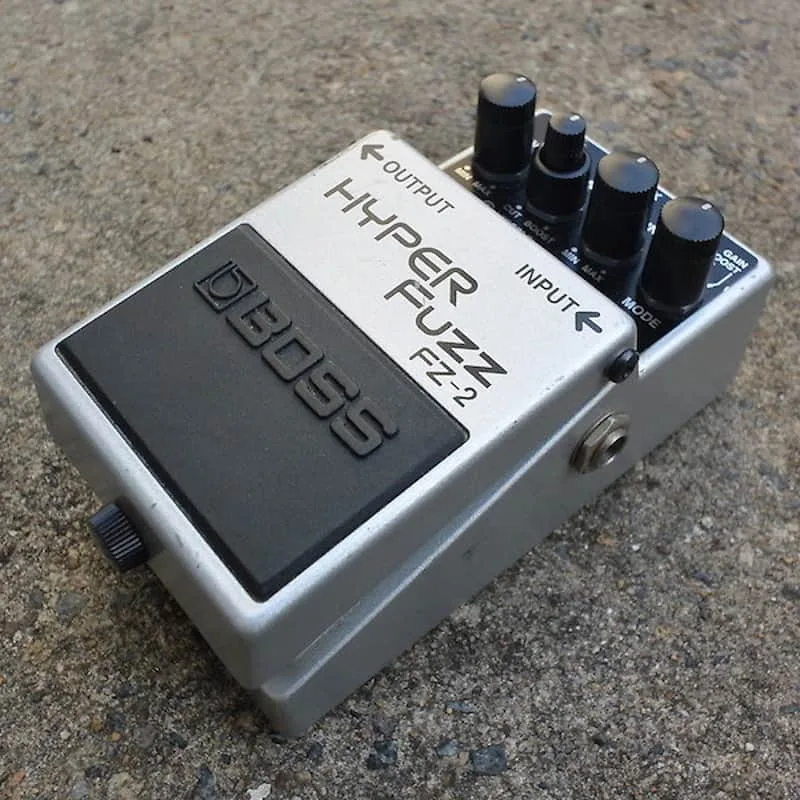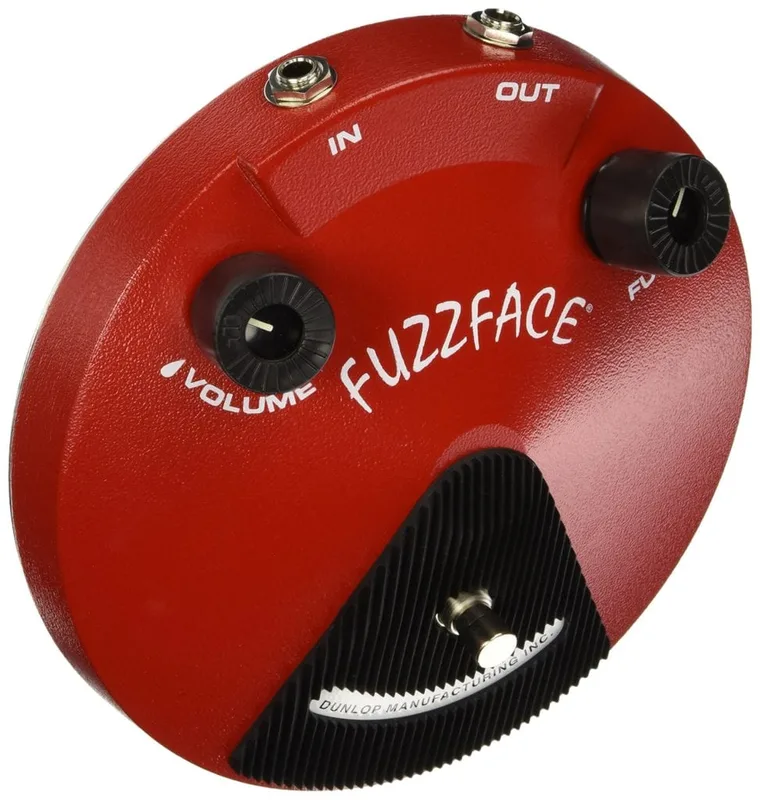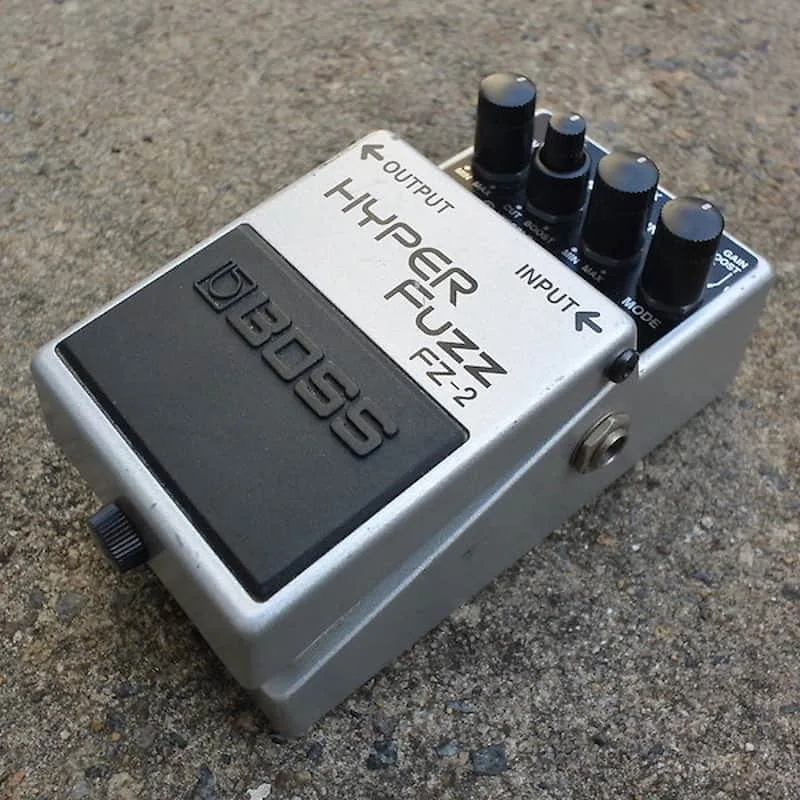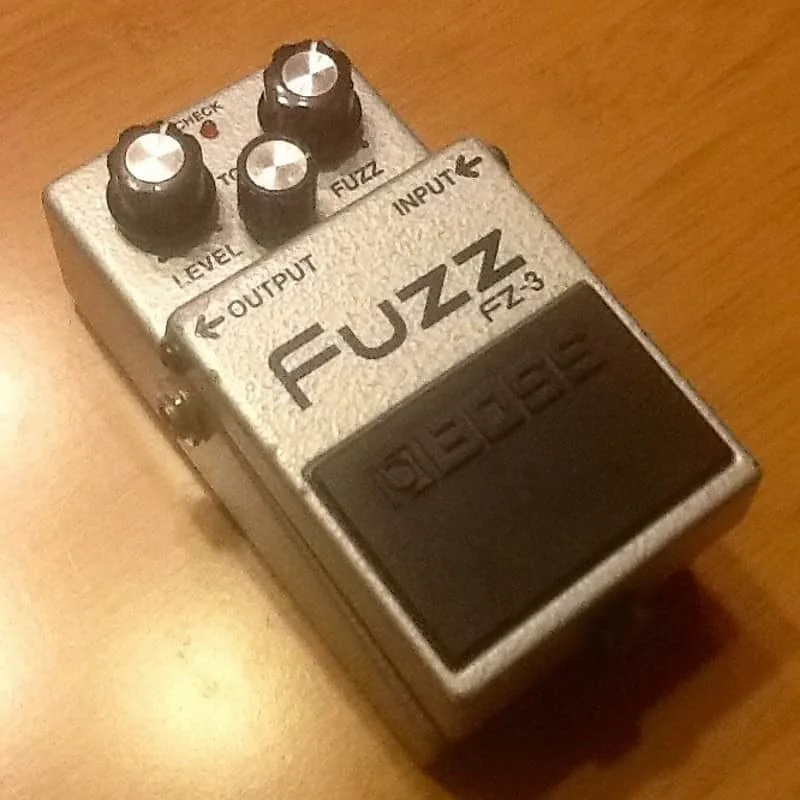


The Boss FZ-3 is a fuzz pedal released in 1997 and discontinued after only a couple of years. Boss marketed it as a successor to the FZ-2 Hyper Fuzz, but the two pedals share nothing in common in tone or circuitry: where the FZ-2 is derived from the Superfuzz with an input boost and tone stack added, the FZ-3 is loosely based on the Fuzz Face and Tone Bender circuits1. It is a silicon design throughout, with 8 silicon transistors, 6 of which generate the fuzz voicing, and an input JFET using the SMD version of the 2SK184-GR found in the original1.
What it does to a sound
Guitar Pedal X's Stefan Karlsson describes the FZ-3 as a fuzz whose output straddles both classic Tone Bender and Fuzz Face tones, retaining its Tone Bender/Fuzz Face profile and guitar-volume cleanup2. Coda Effects puts it in the same family:
"The Boss FZ3 is close to a silicon fuzz face, whereas the Boss fz2 is really peculiar, really close to a Super Fuzz."
That distinction matters if you are choosing between the two Boss fuzzes: the FZ-2 is derived from the Superfuzz, while the FZ-3 is close to a silicon fuzz face and retains a Tone Bender/Fuzz Face profile. For more on that tradition, see the site's guide to Fuzz Pedals132.
The controls: Volume, Tone and Fuzz
The FZ-3 keeps things simple with three knobs: Volume, Tone and Fuzz. In his review of a modern FZ-3 recreation, Karlsson describes his settings on the original as having the Volume and Fuzz cranked while the Tone control is set to noon2, a starting point that suggests the pedal was voiced to be pushed hard with the tone left to shape the top end.
| Control | What it does |
|---|---|
| Volume | Sets output level; reviewers run it cranked2 |
| Tone | Shapes the top end; set to noon in Guitar Pedal X's settings2 |
| Fuzz | Sets the fuzz amount; run cranked for the full voicing2 |
Where it came from
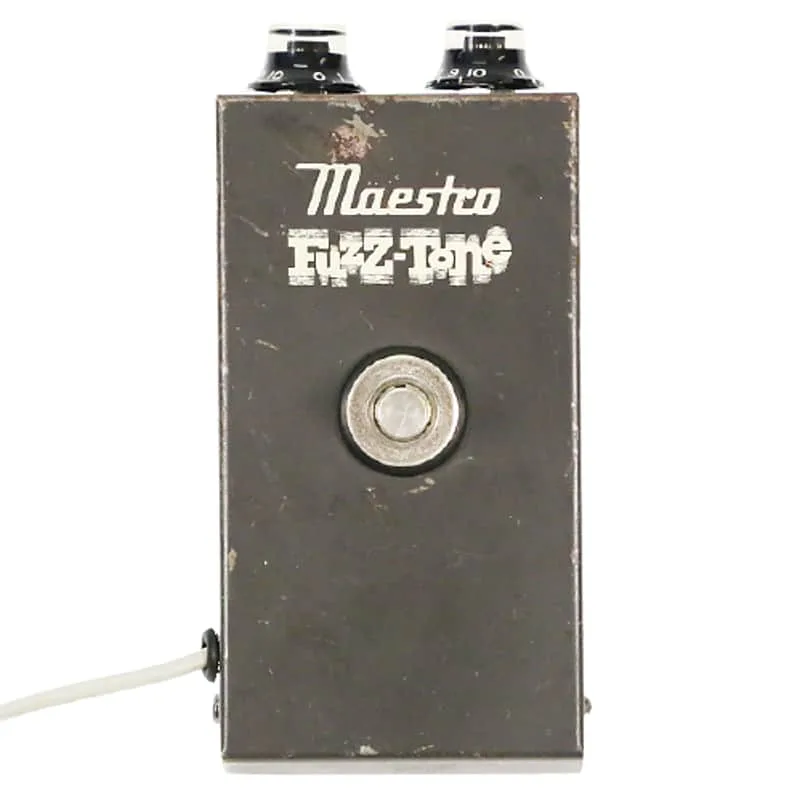
The FZ-3's circuit family traces back to British fuzz design. British Pedal Company's history records that in 1965 Vic Flick approached Gary Hurst to modify his Maestro FZ-1 Fuzz-Tone for more sustain, and that Hurst's modifications of the FZ-1 led him to design his own circuit, the Tone Bender42. Delicious Audio notes that the Tone Bender in turn became the inspiration for the Fuzz Face5. The FZ-3, arriving decades later, is a loose descendant of both.
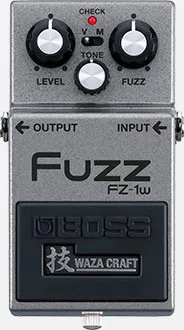
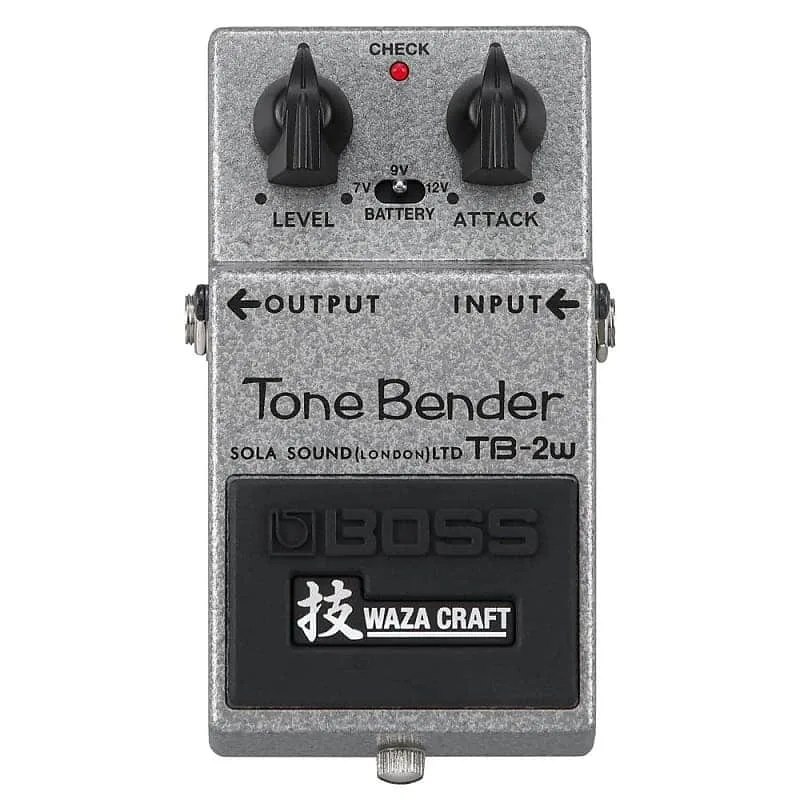
For more on Boss's later fuzz designs, see the Boss FZ-1W and the Boss Waza Craft TB-2W Tone Bender.
Collectibility and used prices
Premier Guitar describes the FZ pedals as modest successes upon release, at least by Boss standards, that remain relative sleepers, though the FZ-3 is coveted by certain collectors6. Aion FX reports that today they routinely sell for USD$250 or more on the used market1. That figure reflects scarcity as much as reputation: the pedal was on sale for only a couple of years, and no Boss reissue has followed.
The FZ-3 was discontinued after only a couple of years and has never been reissued by Boss. Used examples command USD$250 or more as of 20261.
Videos
TheToneShack
gilmourish
TheSuperFunAwesomeHappyTimePedalShow
Questions
Is the Boss FZ-3 based on a Fuzz Face or a Tone Bender?
Both, loosely. Aion FX describes the FZ-3 as loosely based on the Fuzz Face and Tone Bender circuits, and Guitar Pedal X says its output straddles both classic Tone Bender and Fuzz Face tones while keeping the Tone Bender/Fuzz Face profile and guitar-volume cleanup. Coda Effects places it close to a silicon Fuzz Face in character.
Is the Boss FZ-3 the same as the FZ-2 Hyper Fuzz?
No. Although Boss marketed the FZ-3 as a successor to the FZ-2 Hyper Fuzz, Aion FX notes the two share nothing in common in tone or circuitry. The FZ-2 is derived from the Superfuzz with an input boost and tone stack added, while the FZ-3 follows the Fuzz Face and Tone Bender family.
Is the Boss FZ-3 discontinued?
Yes. Aion FX reports it was discontinued after only a couple of years following its 1997 release. Premier Guitar describes the FZ pedals as modest successes upon release, at least by Boss standards, that remain relative sleepers, though the pedal is coveted by certain collectors.
Is the Boss FZ-3 a germanium or silicon fuzz?
Silicon. Guitar Pedal X counts no fewer than 8 silicon transistors in the FZ-3, with 6 of those generating the fuzz voicing, and Aion FX identifies the input JFET as the SMD version of the 2SK184-GR used in the original.
How much does a used Boss FZ-3 cost?
Aion FX reports that FZ-3 pedals routinely sell for USD$250 or more on the used market, as of September 2026. That is well beyond what a modest seller from the late 1990s might suggest, which reflects the pedal's collector appeal.
Sources (6)
- Argent Silicon Fuzz / BOSS FZ-3, Aion FX, 2021-11-23
- Guitar Pedal X, Guitar Pedal X, 2025-01-07
- Coda Effects, Coda Effects, 2015-08
- Tone Bender History, britishpedalcompany.com, 1965
- New Pedal: Tampco All-Bender Fuzz, Delicious Audio, 2022-02-21
- Boss FZ-1W Waza Craft Fuzz Review, Premier Guitar, 2022-02-07