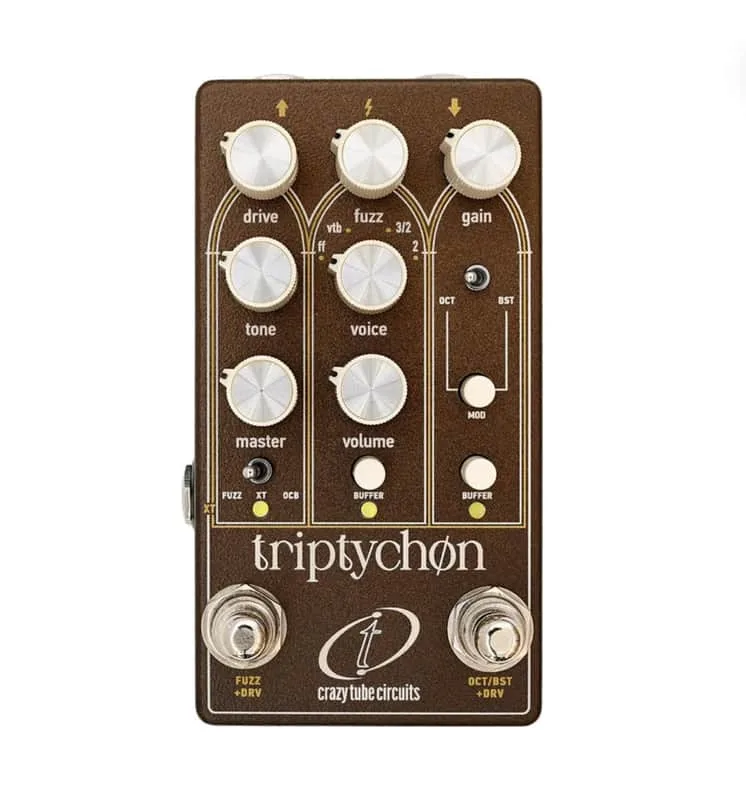


The Crazy Tube Circuits Triptychon is a fuzz pedal that packs three independent tone elements into one enclosure: a boost and upper-octave fuzz section, a multi-voice vintage fuzz section, and an amplifier drive section. The Greek maker describes it as "a sonic artwork built around three independent tone elements, each complete on its own, yet fully realized"1. It sells at £269/€2992, and Guitar World lists the US price at $3593.
The signal order is boost into fuzz into drive3, so you can push the fuzz with the booster, then feed both into the overdrive for extra grind. The whole thing runs on silicon: the maker says the fuzz section uses "a custom six metal-can silicon transistor design that delivers true germanium tone and feel"1.
Boost, fuzz and drive in one box
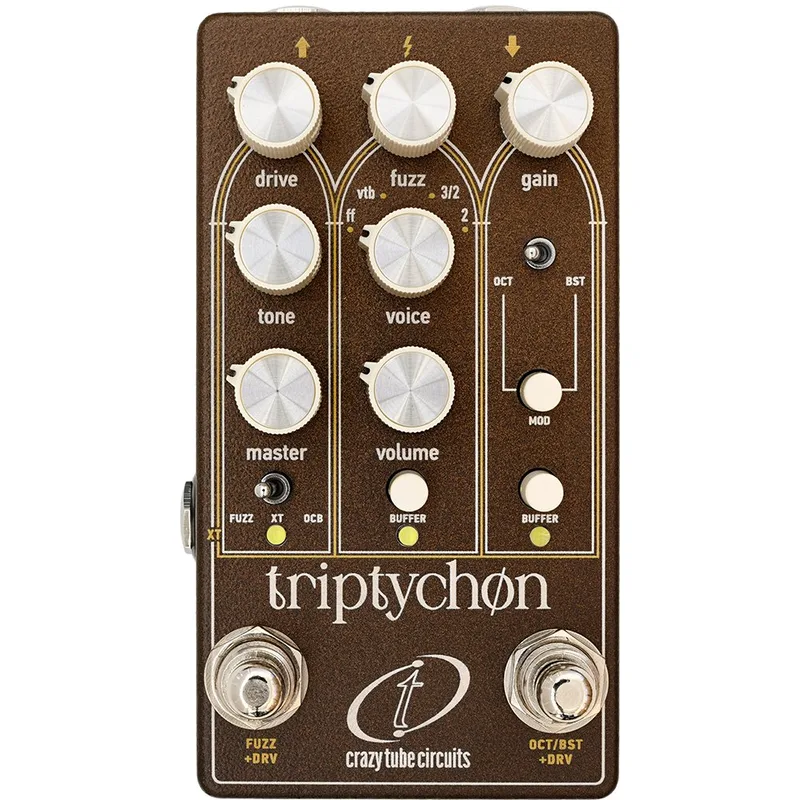
The pedal is laid out as three panels, one per section, in a three-panel metal box that Delicious Audio called "a manifesto in a metal box"4. Each section has its own controls, and the sections stack in a fixed order: boost into fuzz into drive3.
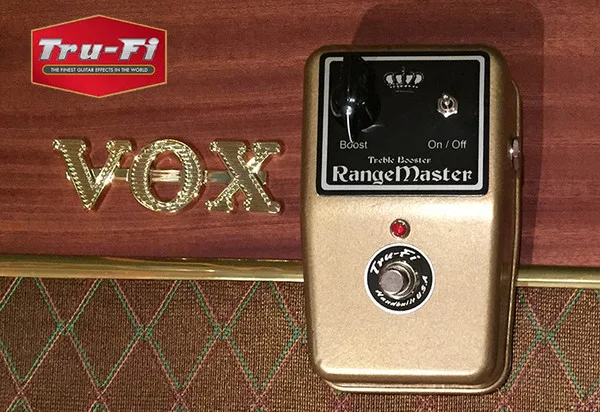
The boost/octave section offers a treble booster and an octave fuzz, each with two different modes you flip between using the "mod" button5. In boost mode it delivers two distinct treble booster voices, from classic cutting presence to a fuller, mid-focused response1. Guitar.com's reviewer described it as settable for "either a Rangemaster-style lift to the high mids or something reaching a little lower down the frequency spectrum"5. Guitar World's Alex Lynham found himself leaving it in the Rangemaster setting, adding a treble boost3.
The fuzz section carries four circuits, detailed below under "Where the circuits come from542."
The drive section is an amplifier-style overdrive. Guitar.com's Richard Purvis found it "just about totally transparent, natural in feel, and perfect for giving those fuzzes an already crunchy base to build on," calling it "low-key brilliant"5.
Controls
Guitar World lists the control set as follows3:
| Control | Section | What it does |
|---|---|---|
| Octave/Boost | Boost/octave | Selects between the section's modes |
| Mod | Boost/octave | Flips between the two voices of each mode3 |
| Boost gain | Boost/octave | Sets boost level |
| Fuzz Gain | Fuzz | Sets fuzz amount |
| Fuzz Voice | Fuzz | Selects between the four fuzz circuits |
| Fuzz Volume | Fuzz | Sets fuzz output level |
| Drive Gain | Drive | Sets overdrive amount |
| Drive Tone | Drive | Shapes overdrive tone |
| Drive Volume | Drive | Sets overdrive output level |
Connectivity is input, output, an expansion footswitch jack and power3. There are no presets2, and Guitar.com noted the absence of indicator LEDs for the push buttons as a drawback5.
The anti-buffer circuits and the XT footswitch
Two features shape how the Triptychon fits on a board. First, the pedal integrates dedicated switchable anti-buffer circuits that restore the correct impedance relationship, allowing use with buffers, active pickups and wireless systems1. The maker's guidance is simple: engage the anti-buffer circuits when a buffered pedal or active pickups or circuits are present before the Triptychon, and disengage them when connecting directly from a passive guitar pickup1. Guitar Pedal X noted that the buffer switches support placing the pedal further up the chain6, which matters because vintage-style fuzz circuits are normally sensitive to what feeds them.
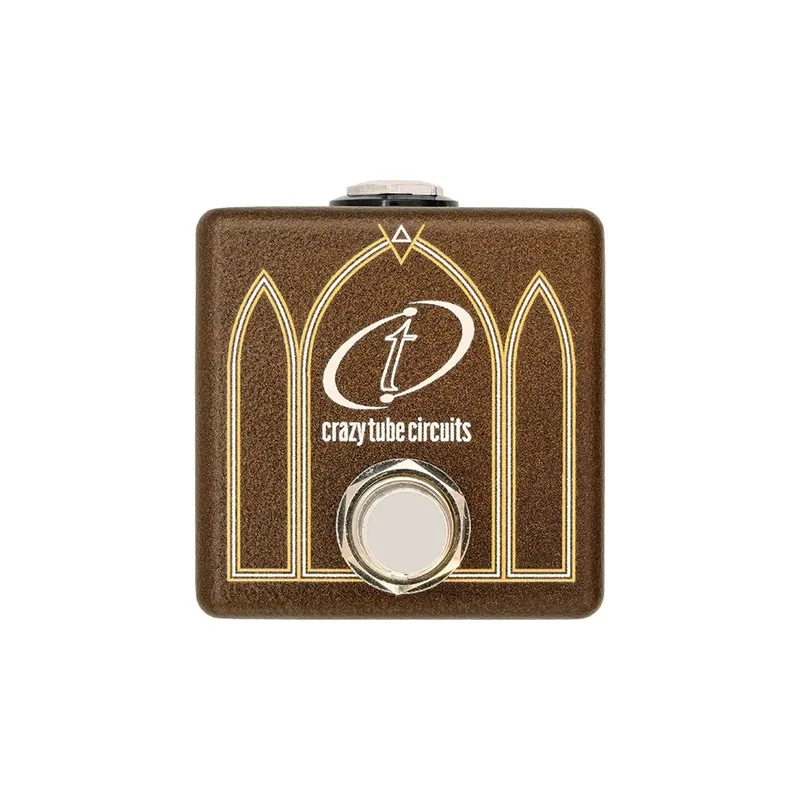
Second, there is the optional XT external footswitch, which adds a switch for each of the three sections5. Guitar.com's reviewer found navigating "actually a lot simpler with the XT footswitch plugged in: now you've got a pedal made up of three sections"5, but summed up the stock experience bluntly:
"In summary, using the Triptychon without the external switch is a pain in the hole5."
Richard Purvis, Guitar.com5
He also noted the footswitch is not included in the price5. Guitar Pedal X reported the optional remote is priced at €496.
Where the circuits come from
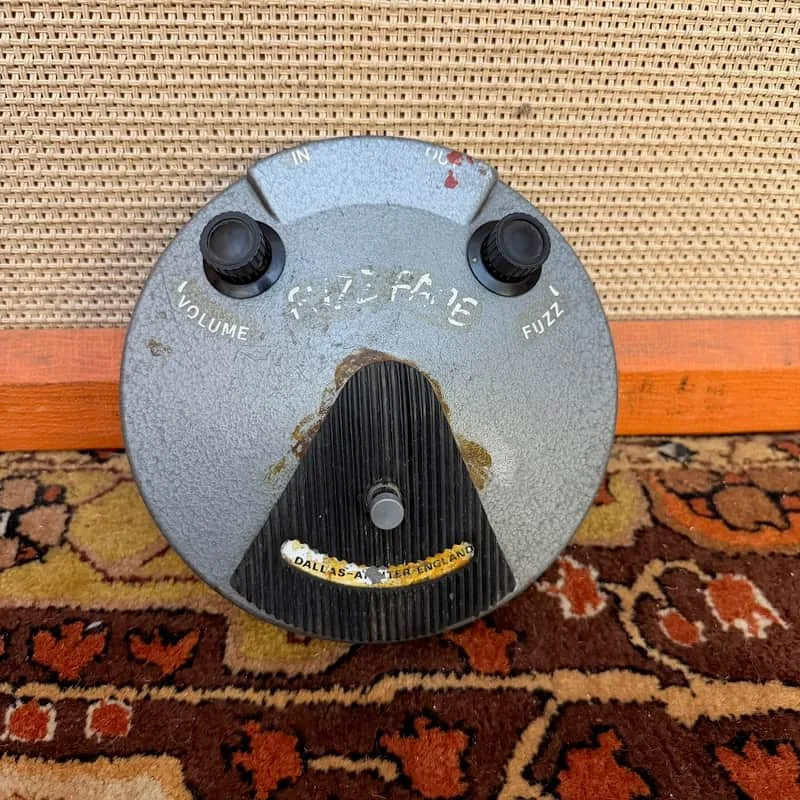
The Triptychon's fuzz section is built from four classic circuits: a Fuzz Face and three Tone Benders, the Vox, Mk1.5 and MkII variants5. MusicRadar describes the fuzz as inspired by the Dallas Arbiter Fuzz Face circuit, transformable into an upper-octave complete fuzz2.
What reviewers said
Reviews were largely positive about the sounds and split on the ergonomics. Guitar.com scored it 8 out of 10, concluding that the classic rock tones are beyond argument but the pedal is compromised without the XT footswitch, feeling "like a big pedal trapped in a small pedal's body" that "would surely have made more sense as a wide-format" unit5. On the fuzzes themselves, the reviewer found them "big, warm and fluffy in vintage style. All four options are nicely balanced, with no spikiness"5.
Guitar Pedal X was more enthusiastic:
"All in all this is a fantastic pedal, which goes straight into my Top 10 Fuzz list6."
Stefan Karlsson, Guitar Pedal X6
He called it "a fully granular vintage fuzz system currently unparalleled at this compact size"6. MusicRadar's Jonathan Horsley noted that at £269/€299 "it is not cheap"2. Guitar.com also pointed to the Great Eastern FX Co. Focus Fuzz Deluxe (£299/$349) as the Triptychon's closest rival5.
Videos
Mad Steex
R.J. Ronquillo
Michael Nielsen - Big Hairy Guitars
Questions
What is the anti-buffer switch on the Triptychon for?
The Triptychon has dedicated switchable anti-buffer circuits that restore the correct impedance relationship when a buffered pedal, active pickups or a wireless system sits before it in the chain. Engage them in those situations; disengage them when you plug straight in from a passive guitar pickup, since vintage-style fuzz circuits depend on seeing that pickup directly.
Do you need the XT footswitch for the Triptychon?
The pedal works on its own with two footswitches, but reviewers found it limited without the optional XT external footswitch, which adds a switch for each of the three sections. Guitar.com's reviewer called using the pedal without it 'a pain in the hole' and noted the footswitch is not included in the price.
What order are the boost, fuzz and drive in on the Triptychon?
The signal runs boost into fuzz into drive. The boost section can be set as a Rangemaster-style treble booster or an upper-octave fuzz, each with two voices, then feeds the four-circuit fuzz section, then the overdrive, which reviewers found nearly transparent and useful as a crunchy base under the fuzzes.
Is the Rapture Overdrive the same as the Triptychon's drive section?
Yes. By popular demand, Crazy Tube Circuits released the Pushed Amplifier style Rapture Overdrive as a standalone pedal in October 2026, extracted from the Triptychon's drive section. If you only want that part of the pedal, the standalone version exists.
Is the Triptychon true bypass?
Yes. Guitar World lists the bypass as true relay switching. The pedal also carries switchable anti-buffer circuits so it can sit further up a chain after buffered pedals, active pickups or wireless systems without losing the impedance relationship the fuzz circuits expect.
Sources (6)
- Triptychon, Crazy Tube Circuits
- Crazy Tube Circuits unveils the Triptychon pedal, MusicRadar, 2026-04-30
- Crazy Tube Circuits Triptychon review, Guitar World, 2026-08-25
- Crazy Tube Circuits Triptychon, Delicious Audio, 2026-07-28
- Crazy Tube Circuits Triptychon review, Guitar.com
- Guitar Pedal X, Guitar Pedal X, 2026-04-28