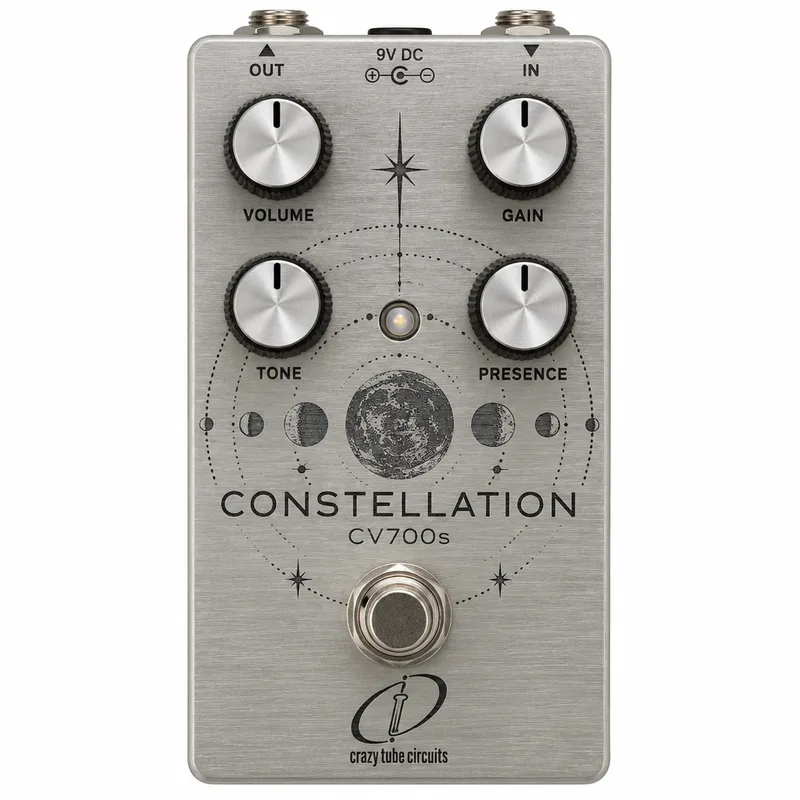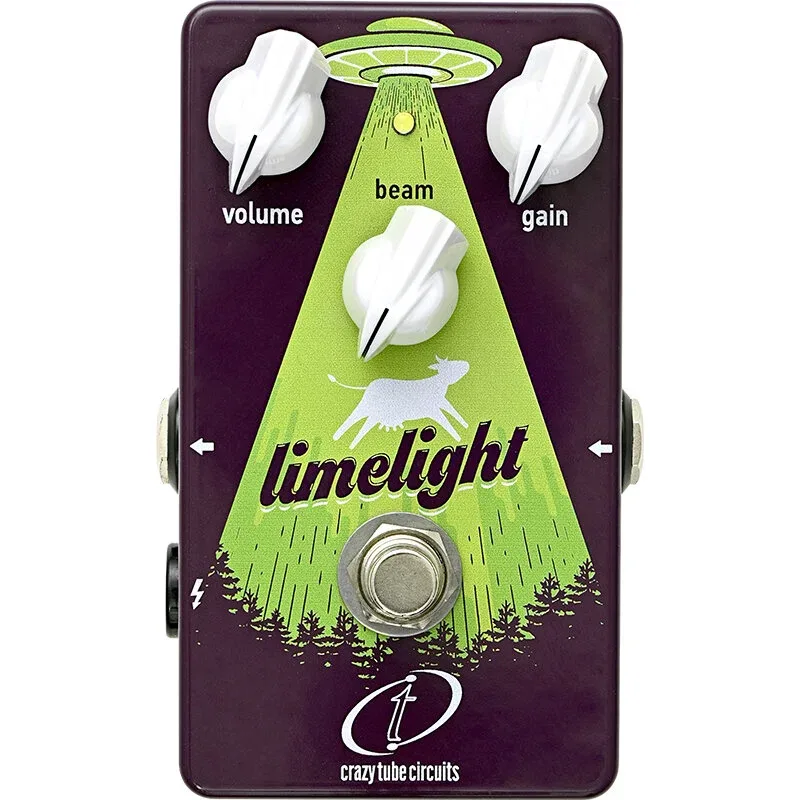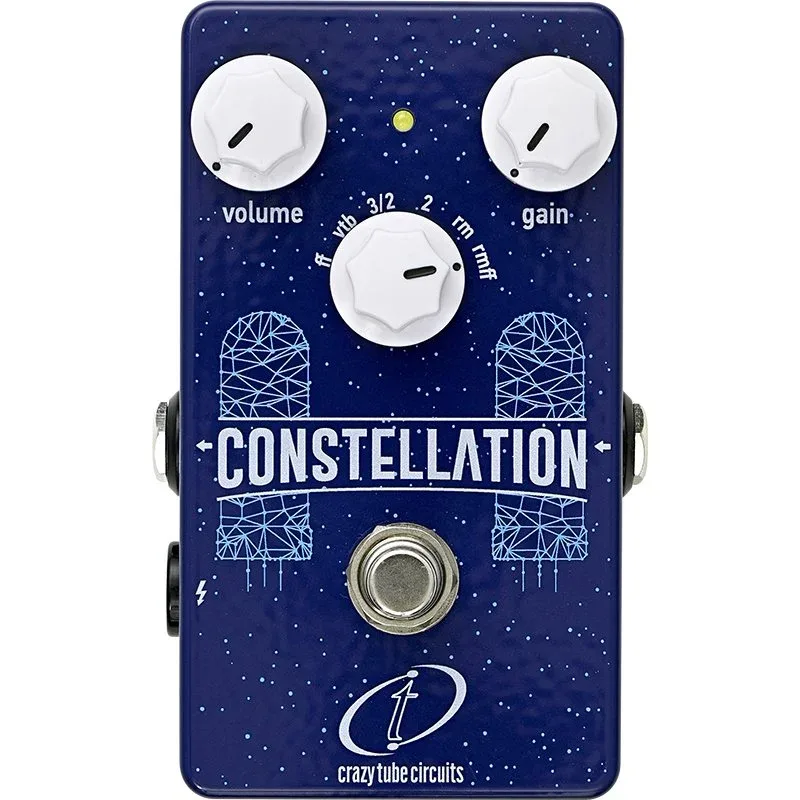


The Crazy Tube Circuits Constellation is a multi-mode fuzz pedal built around three NOS germanium transistors, inspired by six classic British fuzz boxes of the past. Instead of buying a Fuzz Face, a Tone Bender and a RangeMaster separately, one Constellation puts all of those voicings on a six-way rotary, selected with Volume and Gain knobs alongside it12.
GuitarPlayer described it on launch as "a pedal that aped a variety of classic fuzz tones in a similarly small footprint"3. It was announced in January 2018 and became available in April 2018 at €2594, and it comes in three germanium editions: the original OC45, the OC41, and the limited CV7003, which uses military-spec OC44 transistors1.
Six British fuzz voicings in one germanium pedal
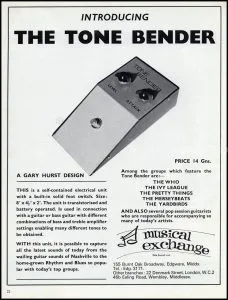
The Constellation's six-way rotary covers the classic British fuzz family. Guitar Pedal X lists the voicings as Fuzz Face, Vox Tone Bender, MKI.V Tone Bender, MKII Tone Bender, RangeMaster, and a RangeMaster plus Fuzz Face combination1. Gearnews walked through the same modes from top to bottom: Fuzz Face, Vox Tone Bender, Tone Bender I.5 and II, and Range Master fuzz voicings2.
| Mode | Voicing |
|---|---|
| FF | A tribute to what Guitar World called "the most-copied fuzz circuit of all"7 |
| 3/2 | Voiced after the mythical mk1.5 circuit2 |
| 2 | The soaring-gain 3-transistor fuzz circuit2 |
| RM | RangeMaster-style boost1 |
| VTB | Inspired by the Italian-made Vox fuzz circuit2 |
| RMFF | A tailor-made RangeMaster into a Fuzz Face, which Gearnews called "a future classic combination"2 |
All three transistors in each pedal are NOS germanium, hand-selected. Guitar.com described the result on launch as "smooth and deep complex tone with amazing clean-up"4, the clean-up referring to how the fuzz responds when you roll back the guitar's volume knob.
The controls: Volume, Gain and the voicing rotary
The control set is deliberately simple. Guitar Pedal X calls the Constellation and its siblings "relatively simple devices with just a variable Volume and Gain Control, and then a 6-way Rotary"1. Gearnews put it the same way for the CV7003: "Apart from the giant knob that selects the fuzz characteristic, you get a volume and gain knob"2.
- Volume: sets the output level.
- Gain: sets the amount of fuzz.
- Mode: the six-way rotary that selects the voicing5.
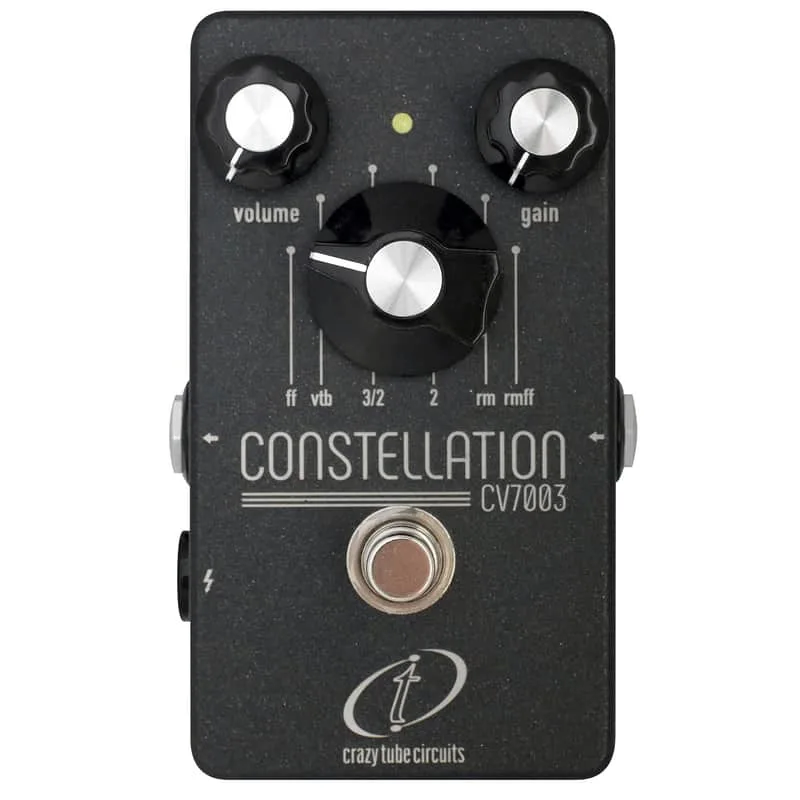
The CV7003's controls are identical to the OC45's, with only the graphics and knobs differing between the two5.
Versions: OC45, OC41 and the CV7003 limited edition
The Constellation shipped in three germanium editions, each using a different vintage transistor1.
| Version | Transistors | Notes |
|---|---|---|
| OC45 | Valvo Black Glass OC455 | The original; B-stock now sold out9 |
| OC41 | Philips Black Glass OC41, from summer 20195 | Listed by the maker as discontinued/old-stock and sold out8 |
| CV7003 | Texas Instruments CV7003, mil-spec OC445 | Limited run of 200 units5 |
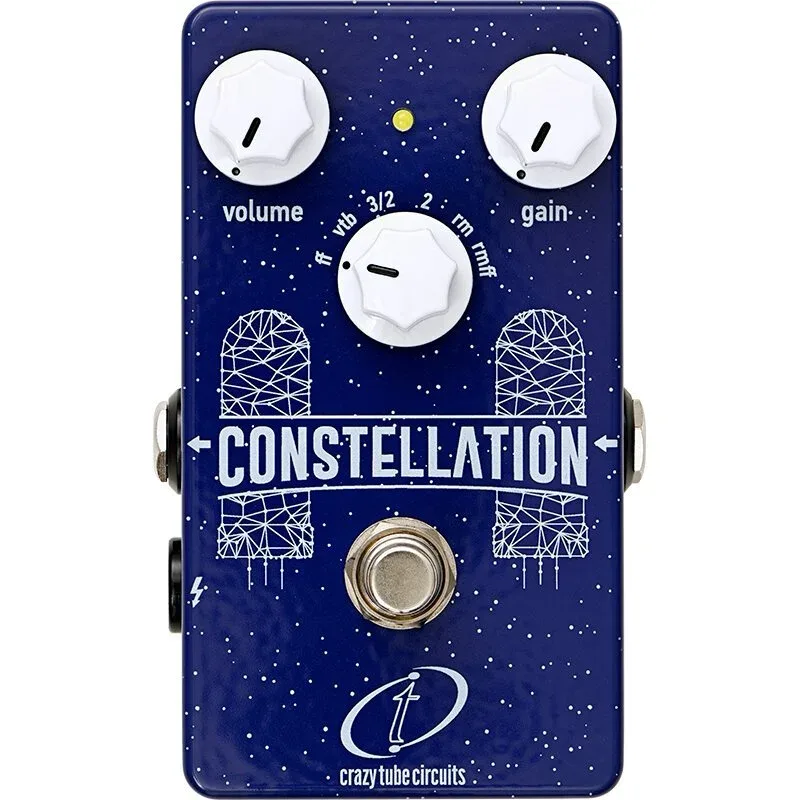
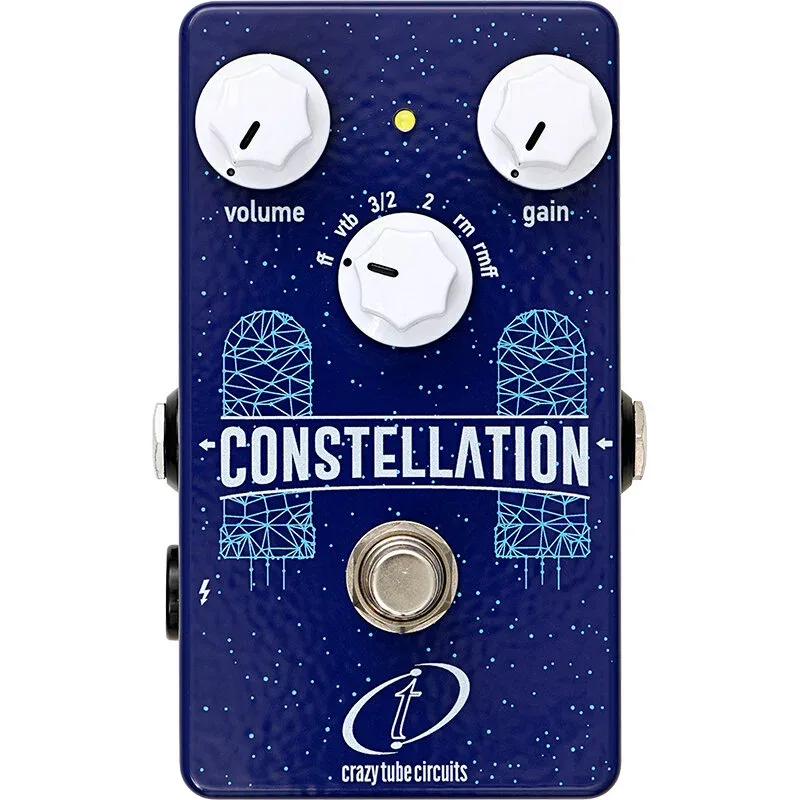
The earliest Constellation pedals had all-white graphics on a navy blue enclosure; later versions changed the tube icons to cyan when the transistors changed to Philips Black Glass OC41 in summer 20195. The CV7003's transistors are UK-made NOS germanium, hand-sourced and hand-selected, and MusicRadar reported they date back to 1968 and were manufactured by Texas Instruments6. Each pedal in the CV7003 run was built by hand, one at a time, in the Crazy Tube Circuits workshop7, and by April 2021 the run was nearly sold out, with five units listed on Reverb and more on the maker's webstore11.
On price, several dated figures exist: €259 at the April 2018 launch4, €299 for the Constellation Fuzz6, $275 for an OC45 and OC41 pair in 202412, and $299/£299 in a 2026 Guitar World review4612.
What reviewers said
Guitar Pedal X's Stefan Karlsson, who reviewed all three germanium editions side by side, found each had its own character. Of the OC45 he wrote that it "delivers overall the most interesting Fuzz Face voicing" and is better suited to humbuckers to some degree, while the CV7003 is "possibly overall better suited to Single Coils" and the OC41 is "the most neutral and balanced option", particularly strong for Led Zep and Jimmy Page MKII stylings11. In an earlier comparison he found the pedals "full-frequency and rich-sounding with beautiful raspy harmonic textures" by default, and that the CV7003 is "a touch denser with more low end" than the OC455.
His overall verdict on the Constellation line, from a 2024 roundup:
"This is easily one of the best Multi-Fuzz pedals ever made"
And on the OC45 and CV7003 pair specifically, from 2021:
"makes these among the very best and most versatile vintage-style fuzz pedals available anywhere"
Videos
Pete Thorn
CrazyTubeCircuits
R.J. Ronquillo
Questions
Is the Crazy Tube Circuits Constellation discontinued?
The germanium versions are effectively finished. The maker lists the Constellation OC41 as discontinued and sold out, and the OC45 B-stock as sold out. A 2026 review notes the germanium transistors ran out, which prompted the silicon-based Triptychon spin-off. The CV7003 was a limited run of 200 units that was nearly sold out by April 2021.
What transistors are in the Constellation CV7003?
The CV7003 uses Texas Instruments CV7003 transistors, a military-spec version of the OC44, described as hand-sourced and hand-selected NOS germanium. MusicRadar reported they date back to 1968 and were manufactured by Texas Instruments. The original Constellation OC45 instead used Valvo Black Glass OC45 transistors.
How many Constellation CV7003 pedals were made?
The CV7003 was a limited edition of 200 units worldwide, each built by hand, one at a time, in the Crazy Tube Circuits workshop. By April 2021 a reviewer noted the run was nearly sold out, with only a handful of units still listed on Reverb and the maker's own webstore.
Where is the Crazy Tube Circuits Constellation made?
The Constellation is built by hand in Athens, Greece. Crazy Tube Circuits describes each pedal in the limited CV7003 run as built by hand, one at a time, in the company's own workshop.
Who designed the Crazy Tube Circuits Constellation?
The Constellation was designed by Christos Ntaifotis, described by Guitar Pedal X as Crazy Tube Circuits' main man. After the germanium transistors ran out, he turned to a silicon version of the multi-fuzz concept, which became the Triptychon pedal released in 2026.
Sources (12)
- Guitar Pedal X, Guitar Pedal X, 2026-04-28
- Crazy Tube Circuits introduces new Constellation CV7003 fuzz and Memphis preamp/vibrato, gearnews.com, 2020-12-13
- Crazy Tube Circuits Cyclone Review, GuitarPlayer, 2021-11-01
- Crazy Tube Circuits introduce Constellation Germanium Fuzz & Ziggy v2, Guitar.com, 2018-01-19
- Guitar Pedal X, Guitar Pedal X, 2021-03-18
- Crazy Tube Circuits plays it old-school with the vintage-voiced Memphis vibrato and ltd edition Constellation fuzz, MusicRadar, 2020-12-18
- Crazy Tube Circuits seeks to recreate and reinvigorate classic tones with the Constellation fuzz and Memphis vibrato/preamp, Guitar World, 2020-12-14
- Constellation OC41 (B-Stock), Crazy Tube Circuits
- Constellation OC45 (B-Stock), Crazy Tube Circuits
- Constellation OC41 (discontinued/old-stock), Crazy Tube Circuits
- Guitar Pedal X, Guitar Pedal X, 2021-04-26
- Guitar Pedal X, Guitar Pedal X, 2024-06-24