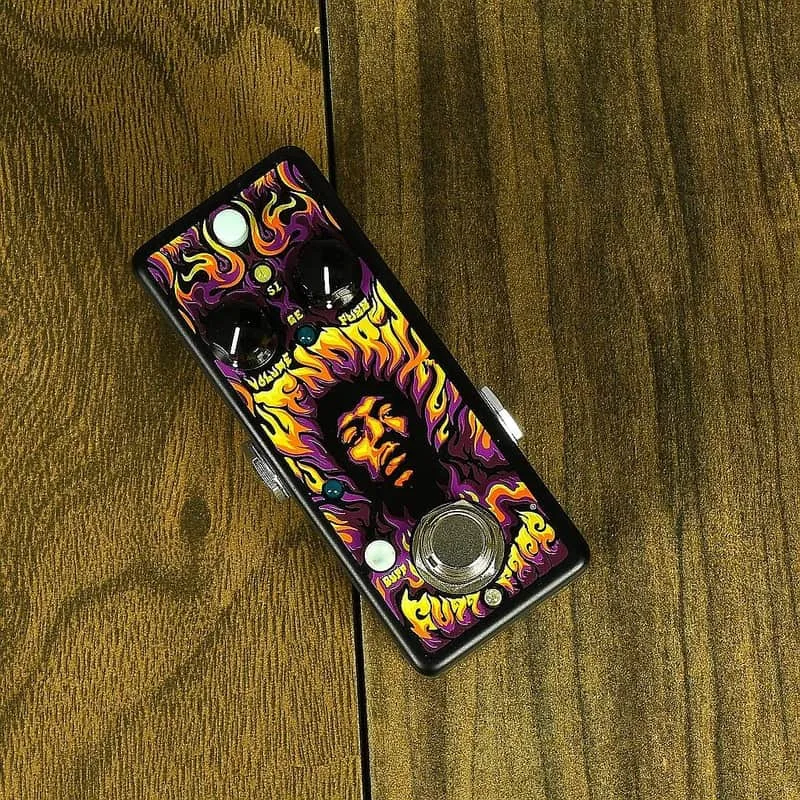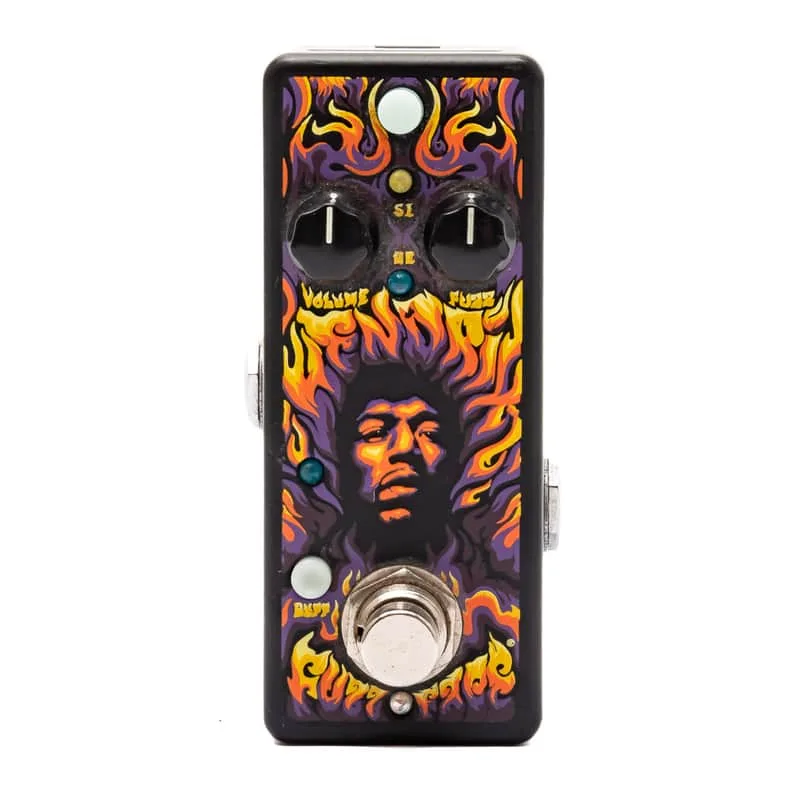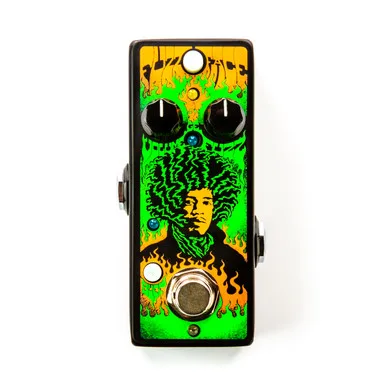


The Dunlop Authentic Hendrix '68 Shrine Series Fuzz Face Distortion is a fuzz pedal from Dunlop that packs two different flavors of Jimi Hendrix fuzz tones into a single MXR mini housing: the aggressive silicon-based crunch he used in the latter part of his career, and the warm, smooth saturation of the germanium-based fuzz he used in the early years1. A switch selects between the two, so one small box covers both eras of his fuzz sound.
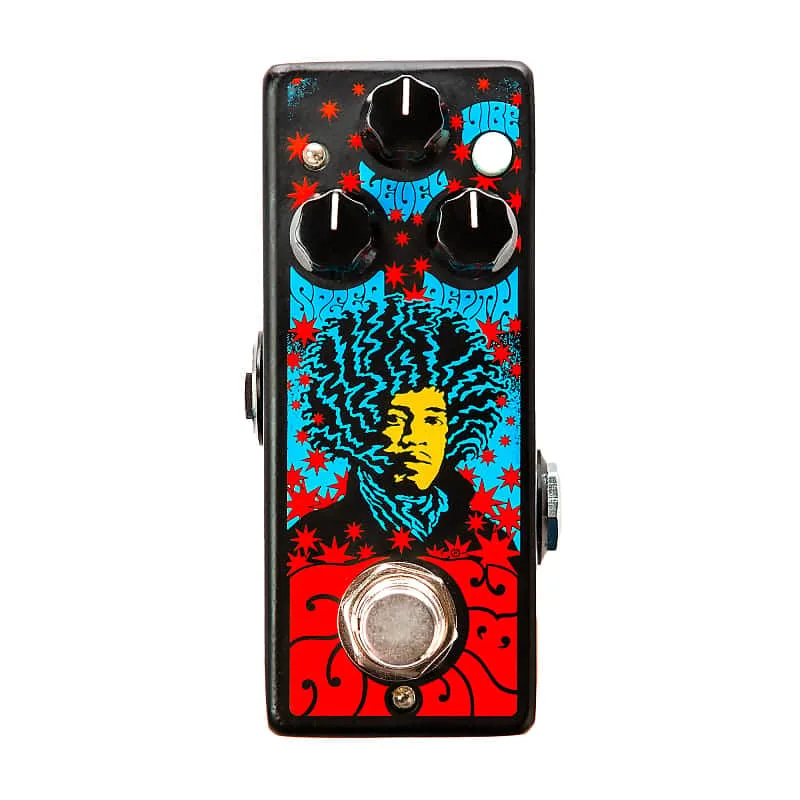
It is also a special edition. The custom finish features John Van Hamersveld's 1968 Shrine Auditorium Jimi Hendrix concert poster art, remixed by Simon Berndt of One Horse Town Illustration1. Dunlop now lists it as a legacy product that is no longer in production1.
Silicon and germanium fuzz in a mini housing
The core idea of the pedal is simple: instead of choosing between a silicon Fuzz Face and a germanium one, you get both. Dunlop describes the silicon mode as the aggressive silicon-based crunch of Hendrix's later career, and the germanium mode as the warm, smooth saturation of his early years1.
The format matters as much as the circuit. The original Fuzz Face was a large, round, top-powered stompbox; the Shrine Series version fits the same two-tone concept into an MXR mini housing, which is what Dunlop means by capturing the tones "in a single mini housing"1. Guitar World reported the pedal as offering knobs for Volume and Fuzz, keeping the control set to the two knobs the classic circuit is known for2.
| Control | What it does |
|---|---|
| Volume knob | Sets the output level2 |
| Fuzz knob | Sets the amount of fuzz2 |
| Silicon/germanium switch | Selects between the two Hendrix fuzz flavors1 |
| Buffer switch | Allows for true bypass switching1 |
The Shrine Series versions
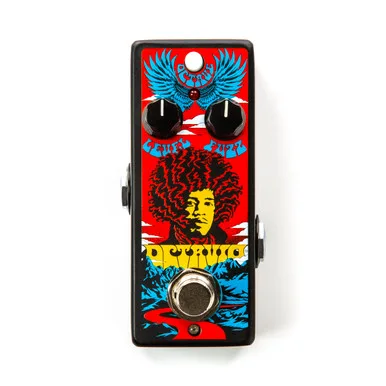
Alongside the Shrine Series Fuzz Face, the line included the Authentic Hendrix '68 Shrine Series Uni-Vibe Chorus/Vibrato packed into an MXR mini housing, the Band of Gypsys fuzz, and the Shrine Series Octavio, which crams the MXR Octavio, with its Output and Fuzz knobs, into a smaller housing2.
The series also included an Octavio fuzz, which Guitar World described as cramming the MXR Octavio, with its Output and Fuzz knobs, into a smaller housing2, and a Band of Gypsys fuzz. Dunlop says the Band of Gypsys version is based on a mysterious Fuzz Face Distortion that Jimi Hendrix used at several iconic shows between 1969 and 1970, most notably the Band of Gypsys performance, and that it has no mode-selecting switches, just parameters for Tone, Output and Fuzz23. That makes the Fuzz Face version the switch-heavy one of the family: it is the only Shrine Series fuzz with both a transistor-flavor switch and a buffer switch.
The Shrine Series Octavio is a smaller-housing version of the MXR Octavio, keeping the Output and Fuzz knobs of the original12.
The Fuzz Face circuit and Hendrix tones
The pedal is a special edition of the Fuzz Face Distortion, Dunlop's miniaturized take on the circuit Hendrix made famous1. The two modes map onto the two transistor types that define the Fuzz Face's history: germanium in the early years, silicon later. Dunlop's framing is that the switch lets you move between those eras rather than committing to one1.
The same two-tone concept appeared earlier in Dunlop's Hendrix line. The Authentic Hendrix '69 Psych Series Fuzz Face Distortion (JHW1) likewise combines the two different flavors of Fuzz Face Distortion tones used by Jimi Hendrix, aggressive silicon-based crunch and smooth germanium saturation4.
Bypass and wah use
Bypass is where this pedal differs from a standard mini Fuzz Face. Dunlop says the pedal features buffered bypass switching for a greater range of tones and full cooperation with wah pedals such as the Jimi Hendrix Cry Baby Wah, and that a Buffer switch allows for true bypass switching1. In practice that means you can leave the buffer engaged when running the pedal into a wah, where the classic fuzz-and-wah interaction benefits from it, and switch to true bypass when you want the pedal fully out of the path.
Guitar.com's review of the related '69 Psych Series Fuzz Face Mini noted the same switchable true or buffered bypass arrangement on that pedal5, so the feature runs through Dunlop's Hendrix mini fuzz line rather than being unique to the Shrine Series.
Videos
Andertons Music Co
Fuzzed Drones
Secure Gadgets Tube
Questions
Is the Shrine Series Fuzz Face true bypass or buffered?
It has a Buffer switch, so you can choose. Dunlop says the pedal features buffered bypass switching for a greater range of tones and full cooperation with wah pedals such as the Jimi Hendrix Cry Baby Wah, while the Buffer switch also allows for true bypass switching when you want the pedal out of the signal path entirely.
What is the difference between the silicon and germanium modes?
According to Dunlop, the silicon mode gives the aggressive silicon-based crunch Hendrix used in the latter part of his career, while the germanium mode gives the warm, smooth saturation of the germanium-based fuzz he used in the early years. A single switch on the pedal selects between the two flavors.
What is the limited edition Shrine Series finish?
The Shrine Series pedals carry a custom finish featuring John Van Hamersveld's 1968 Shrine Auditorium Jimi Hendrix concert poster art, remixed by Simon Berndt of One Horse Town Illustration. Dunlop lists the Fuzz Face as a legacy product that is no longer in production.
Does the Shrine Series Fuzz Face work with a wah?
Yes. Dunlop designed the buffered bypass mode specifically for full cooperation with wah pedals such as the Jimi Hendrix Cry Baby Wah, and says the buffering gives a greater range of tones. If you prefer, the Buffer switch lets you run true bypass instead.
Sources (5)
- AUTHENTIC HENDRIX™ '68 SHRINE SERIES FUZZ FACE® DISTORTION, Jim Dunlop (jimdunlop.com)
- Dunlop honors Jimi Hendrix's iconic effects with Authentic Hendrix '68 Shrine mini pedals, Guitar World, 2023-02-02
- AUTHENTIC HENDRIX™ '68 SHRINE SERIES BAND OF GYPSYS™ FUZZ, Jim Dunlop (www.jimdunlop.com)
- Summer NAMM 2019: Dunlop Introduces Four New Jimi Hendrix Mini Pedals, Dimebag Darrell and Gary Clark Jr. Wahs, Guitar World, 2019-07-19
- Review: Dunlop Authentic Hendrix ’69 Psych Series Pedals, Guitar.com, 2019-11-12