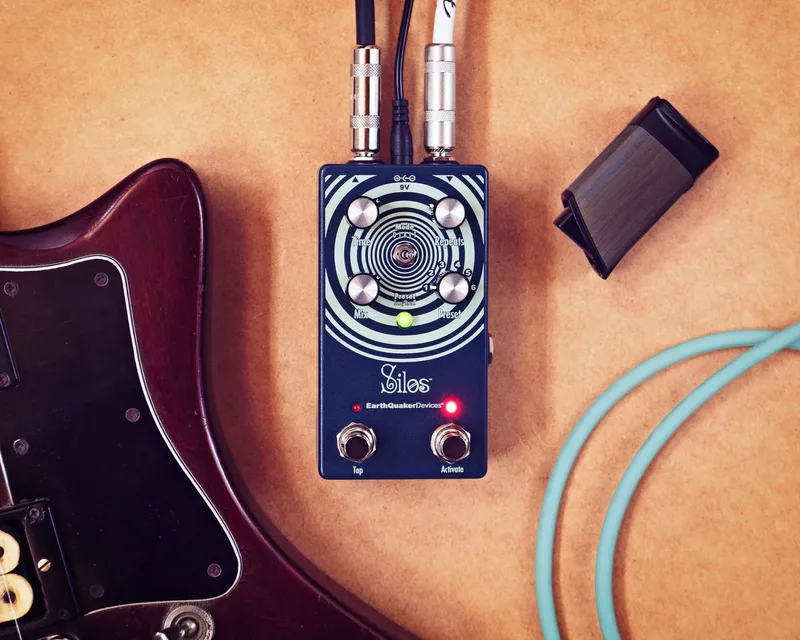


The EarthQuaker Devices Silos is a compact delay pedal that merges three delay types in one enclosure: a digital delay, an analog-style delay and a tape-style delay, selected by a single toggle1. EarthQuaker Devices bills it as a "Multi-Generational Time Reflection Device," and each of the three modes offers up to one second of delay time1. It arrived in August 2024 at a US retail price of $149.0023, alongside tap tempo, user-assignable expression control and six preset slots435.
The idea behind the pedal is simple: instead of choosing between the clean fidelity of digital, the darkening repeats of a bucket-brigade analog unit, or the grubby character of a tape echo, a player gets all three voices on one box with shared controls. Premier Guitar's reviewer called it "a very elegant solution to this can't-have-it-all dilemma in a U.S.-made effect"4.
Three delay voices in one pedal
A Mode toggle on the face of the pedal switches between Digital Delay, Analog Delay and Tape Delay1. All three share the same controls for mix, repeats and delay time2, so a setting can be carried from one voice to another and compared directly.
| Mode | What EarthQuaker says it does | Character |
|---|---|---|
| Digital | Bright repeats that stay strong as they decay; short settings give a bold stuttering staccato sound, longer settings give ambiance1 | Nearly infinite repeats that hold their fidelity while gradually rolling off the top end with each regeneration5 |
| Analog | Very mid-focused, with faster diminishing repeats and dark, murky buildups; big presence without low-end throb or overpowering high end1 | More mid-focused in the initial attack, gradually degrading and getting darker with each repeat5 |
| Tape | Reminiscent of a well-loved tape delay with a hint of oil can delay vibes mixed in1 | Dark and moody, with just a hint of distortion when hit just right5 |
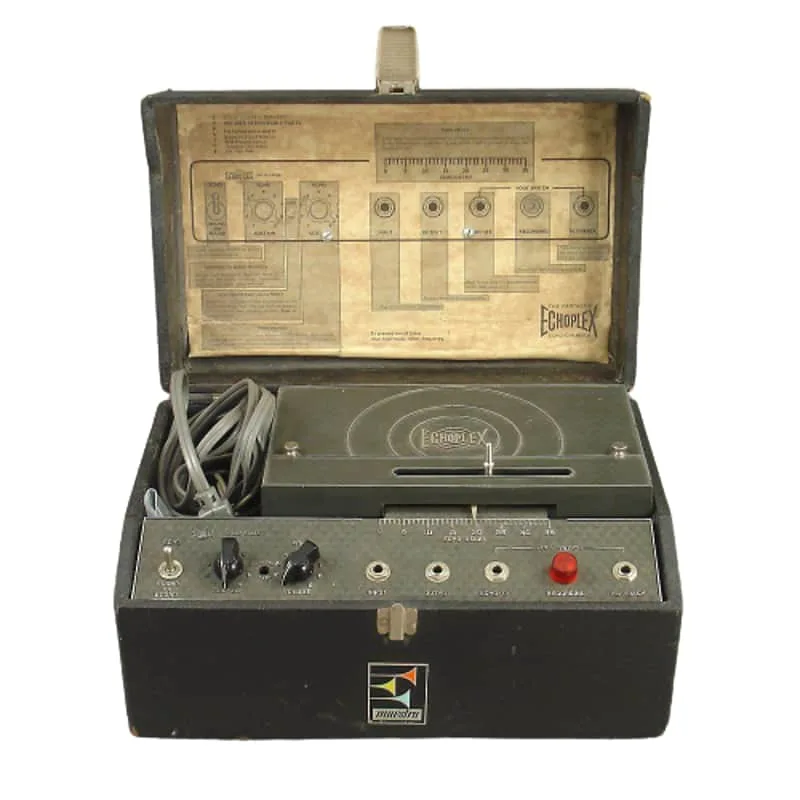
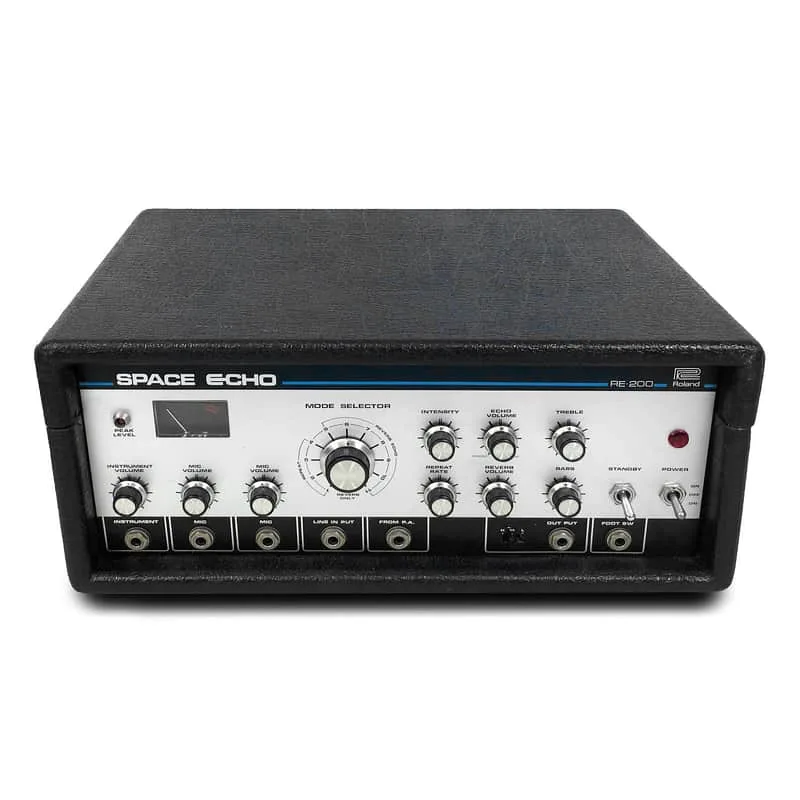
The analog and tape voices are not generic approximations. The analog voice is inspired by the tone makeup of a 1980s-vintage, Japan-made KMD bucket-brigade echo, and the tape voice uses a Maestro Echoplex as its sonic inspiration4. Guitar.com's reviewer reported that both are based on EQD founder Jamie Stillman's own units, that KMD Delay and a vintage Echoplex respectively, while the digital mode is not based on anything in particular2.
The repeats control behaves differently depending on the mode. In Digital mode the pedal does not self-oscillate; in Analog and Tape modes it begins to self-oscillate at about 3 o'clock on the Repeats knob1. Premier Guitar's reviewer noted that the digital voice "will never exhibit runaway oscillation, even at maximum mix and repeat settings," with repeats instead fading out after about six seconds at the fastest time settings4. Guitar.com's reviewer found this useful in practice: at maximum repeats in digital mode, the long decay enabled micro-looping2.
Controls, presets, tap tempo and expression
The control set is deliberately small. Three knobs (Time, Mix, Repeats) and two toggles cover everything12:
- Time: sets the delay time from 0 to 1 second1
- Mix: adjusts the level of the delay signal1
- Repeats: controls the regeneration of the delay signal1
- Mode toggle: selects Digital, Analog or Tape1
- Preset switch: six preset slots for saving and recalling settings1
Settings for the three knobs, the Mode switch and the expression jack assignment can all be saved and recalled1. A small Save/Recall switch is color-coded: green for Live Mode, red for Preset Mode3.
The pedal has two footswitches. The Activate footswitch is a buffered-bypass switch that lets delay trails decay naturally when the effect is kicked off6. The tap tempo footswitch offers real-time manipulation of the delays through EarthQuaker's Flexi-Switch technology9, a relay-based switching style that allows simultaneous momentary and latching operation1.
Any TRS expression pedal can be assigned to control Time, Repeats or Mix1. The expression jack is wired Tip: Wiper, Ring: +3.3V, Sleeve: Ground1. Premier Guitar's reviewer highlighted assigning an expression pedal to the mix control as a particularly effective pairing4.
EarthQuaker's own blog suggests some starting points, including a Mode T setting at Mix 2 o'clock, Time 9 o'clock and Repeats just before 3 o'clock for a "freaky, pingy" 1960s tape delay sound on the edge of self-oscillation, and a Mode A setting at the full one-second delay time with Repeats on an expression pedal, where "the self-oscillation effect will kick in hard, producing a throbbing, distorted sound"6.
Power, bypass and connections
The Silos has no battery option. It requires a standard 9 volt DC power supply with a 2.1mm negative center barrel, draws 75 mA, and EarthQuaker Devices states that power is required to pass signal. Running it at higher voltages is advised against1.
The pedal is fully mono and unmodulated, with a basic single-headed signal path2. It has top-mounted jacks in a compact enclosure2, measuring 4.75 x 2.50 x 2.25 in. (121 x 64 x 57 mm) with knobs1. Input impedance is 500 kΩ and output impedance is 100 Ω1. The dry signal path is all-analog, with a digital effect signal path8. All EarthQuaker devices carry a limited lifetime warranty: "If it breaks, we will fix it"1.
Where the Silos came from
Premier Guitar reported that the pedal "all started when EQD founder Jamie Stillman was admiring his three favorite delay pedals from his personal collection"3, which matches the KMD and Echoplex lineage of the analog and tape voices42.
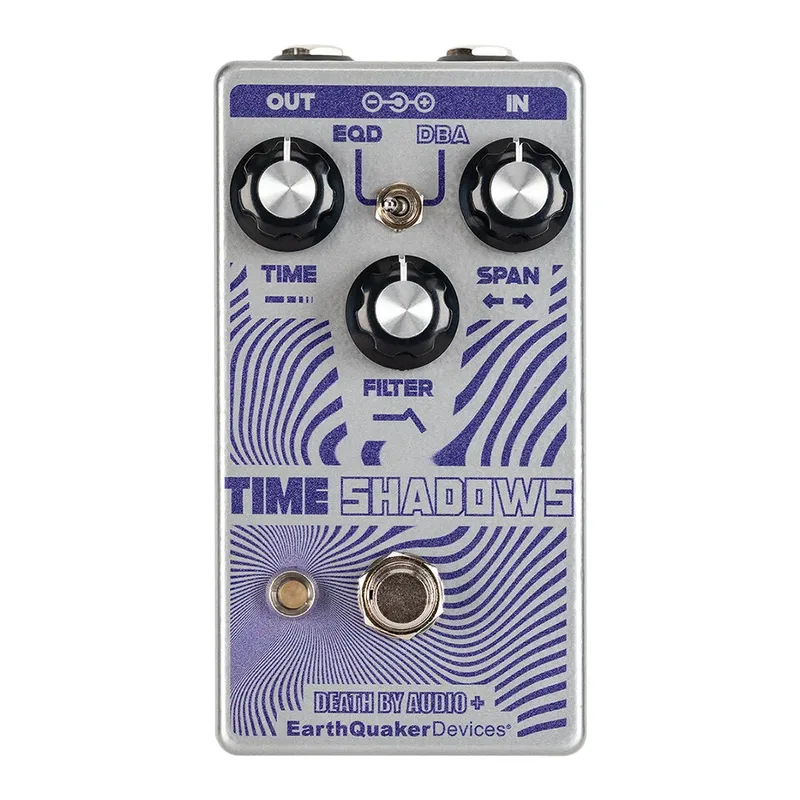
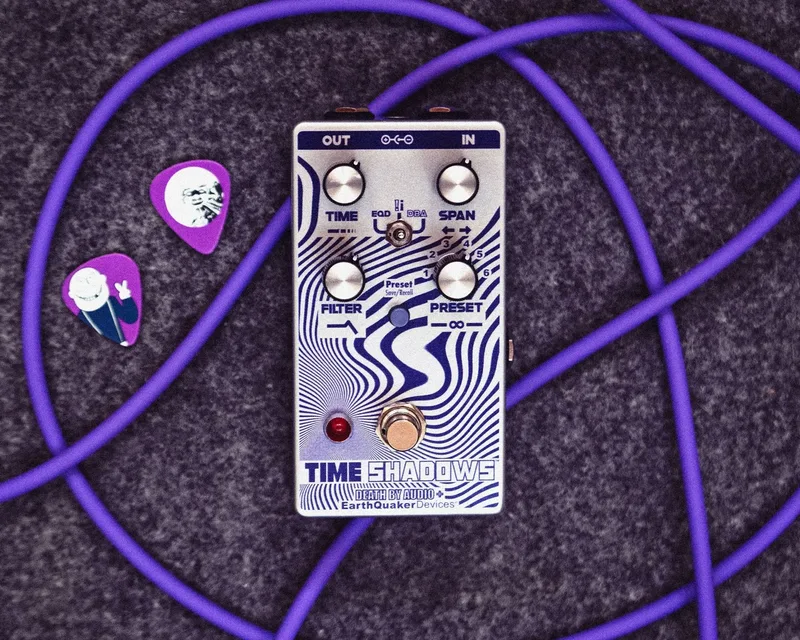
The Silos is also part of a broader format. Guitar Pedal X identified it as the fifth pedal in EarthQuaker's shared-topology 6-Presets Series, following the Aurelius Chorus, Ledges Reverb, Spatial Delivery Filter and Time Shadows II Multi-Delay8. That series format, six presets plus user-assignable expression control in a compact enclosure, also appeared on the EarthQuaker Devices / Death By Audio Time Shadows II earlier in 20248.
Silos and Ledges
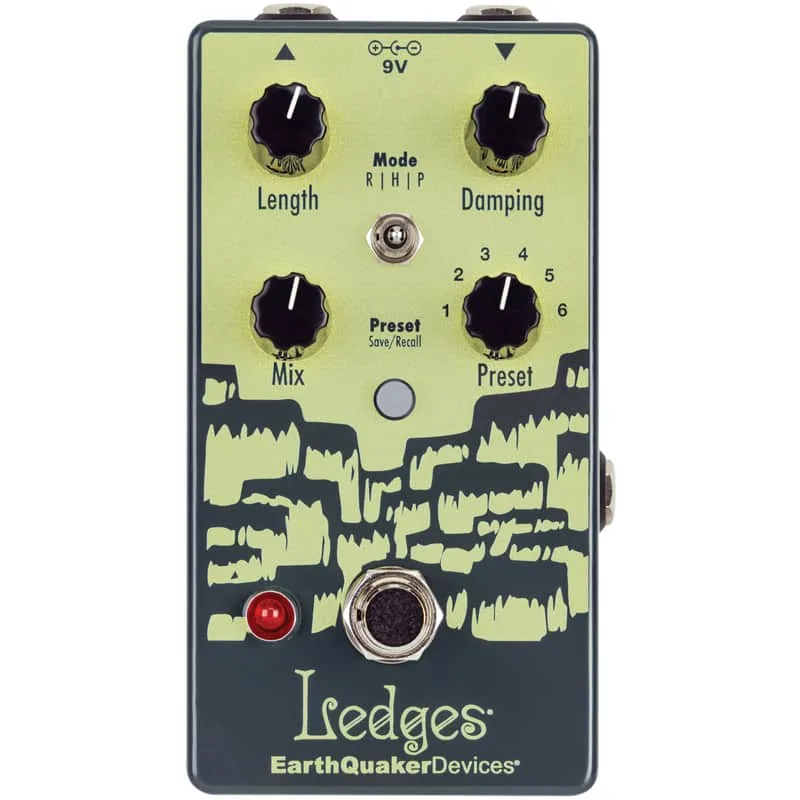
Guitar.com described the Silos as "following in the footsteps of Earthquaker Devices' popular reverb equivalent the Ledges"10. The two pedals share the same series format, but the Ledges is a reverb pedal while the Silos covers delay, picking three standard delay flavors rather than reverb styles10.
What reviewers said
Guitar.com reviewed the Silos in August 2024, calling it a compact, utilitarian three-in-one delay2. The reviewer found the analog mode darker, capturing how a bucket-brigade chip degrades the signal, and working as a subtle sweetening effect with everything at noon2. On the tape mode, the same reviewer noted there is no wow/flutter control or tape-wear adjustment: things come pre-set to an unmodulated, reasonably saturated and murky Echoplex sound2.
Premier Guitar's verdict was positive on usability and value: "It's easy to use, its tone variations are practical and can provoke very different creative reactions, and at $149 it's" inexpensive for its utility4. The reviewer also pointed to the interactivity of the analog and tape voices, comparing the sensitivity of repeat manipulation to machines like the Echoplex, Space Echo and Memory Man4.
On price, most outlets listed the US retail price at $149.00358, while MusicRadar's launch report gave it as $179 / £155; the $149 figure is the one repeated across later coverage311.
Videos
Premier Guitar
EarthQuakerDevices
The Pedal Zone
News
Questions
Is the EarthQuaker Silos stereo?
No. The Silos is fully mono, with a single input and a single output and an unmodulated, single-headed signal path. Players looking for stereo delay spreads or modulation on the repeats would need a different pedal.
Does the Silos self-oscillate?
It depends on the mode. In Digital mode the repeats never run away into self-oscillation, even at maximum settings. In Analog and Tape modes the pedal begins to self-oscillate when the Repeats control passes about 3 o'clock, which can be used for swelling, distorted feedback effects.
Is the Silos true bypass?
No. The Silos uses buffered bypass with tails, so when you switch it off the delay trails decay naturally instead of cutting off abruptly. Power is required for signal to pass through the pedal at all.
Can the Silos run on a battery?
No. The Silos takes a standard 9 volt DC power supply with a 2.1mm negative center barrel, and EarthQuaker Devices says power is required to pass signal. It should not be run at higher voltages.
What is the difference between Silos and Ledges?
They are siblings in the same EarthQuaker Devices preset-series format but cover different effects. The Ledges is a reverb pedal, while the Silos is its delay equivalent, offering digital, analog and tape delay modes with up to one second of delay time, tap tempo and six presets.
Sources (11)
- Silos Multi-Generational Time Reflection Device, EarthQuaker Devices
- Earthquaker Devices Silos review: a surprisingly simple three-mode delay, Guitar.com, 2024-08-05
- Earthquaker Announces Silos, Premier Guitar, 2024-08-01
- EarthQuaker Silos Review, Premier Guitar, 2024-10-10
- EarthQuaker Devices Unveils Silos Tri-Mode Delay, Bass Magazine, 2024-08-02
- Time Traveling with Silos, EarthQuaker Devices, 2024-08-28
- “An ambitious foray into uncharted territory”: Tired of over-complicated delay pedals? EarthQuaker Devices' Silos might just be the answer, Guitar World, 2024-08-01
- Guitar Pedal X, Guitar Pedal X, 2024-08-02
- EarthQuaker Devices Silos: $149 Multi-Mode Delay!, gearnews.com, 2024-08-02
- 60 Seconds S1E35: Earthquaker Devices Silos, Guitar.com, 2024-08-09
- Another delay pedal? But EarthQuaker Devices' Silos takes a best-of approach that has us very interested, MusicRadar, 2024-08-01