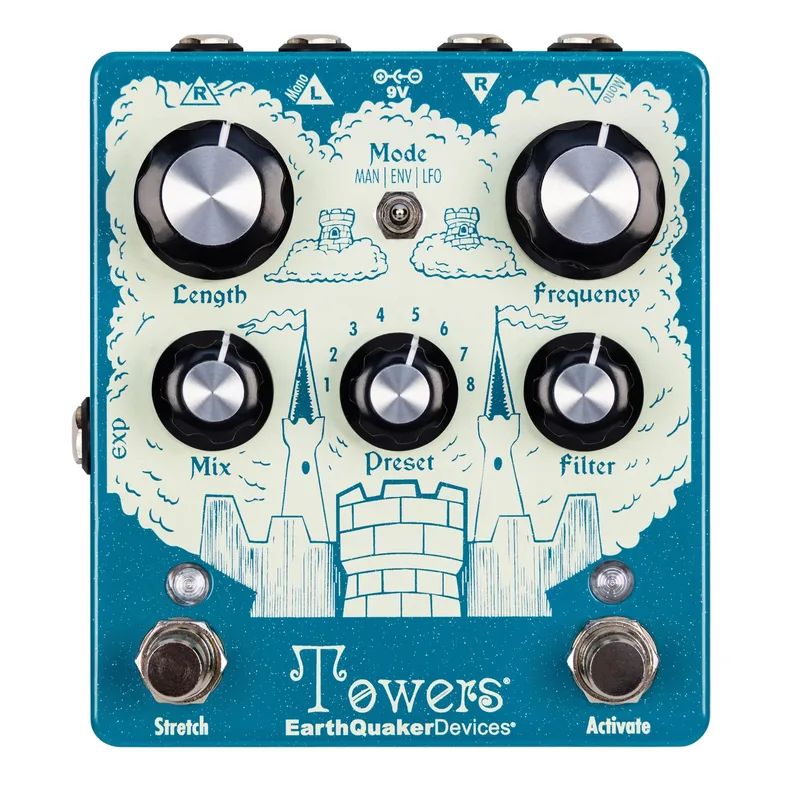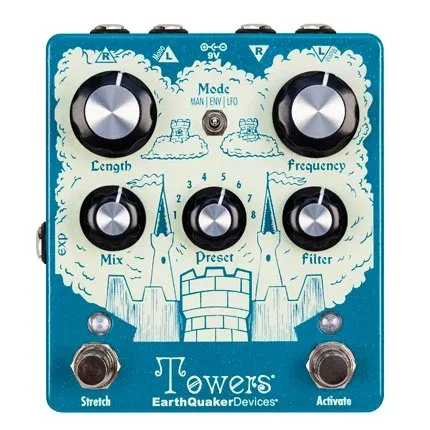


The EarthQuaker Devices Towers Stereo Reverberant Filter is a reverb pedal in stompbox form, released by EarthQuaker Devices in March 20261. It combines ambience with sweeping filters: your input signal is fed into an array of infinitely repeating micro-echoes, creating dynamic generative impulses that feed a cathedral-style reverb, interwoven with a resonant low-pass filter that intersects the delay and reverb pathways at multiple points2. The result is a reverb whose reflections are shaped and colored by a filter you can control manually, with an envelope follower, or with an LFO.
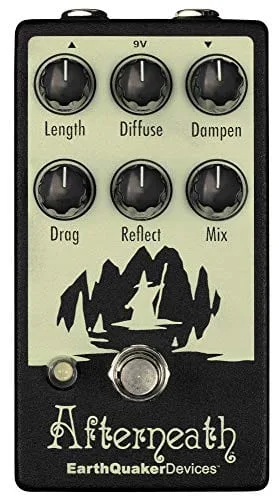
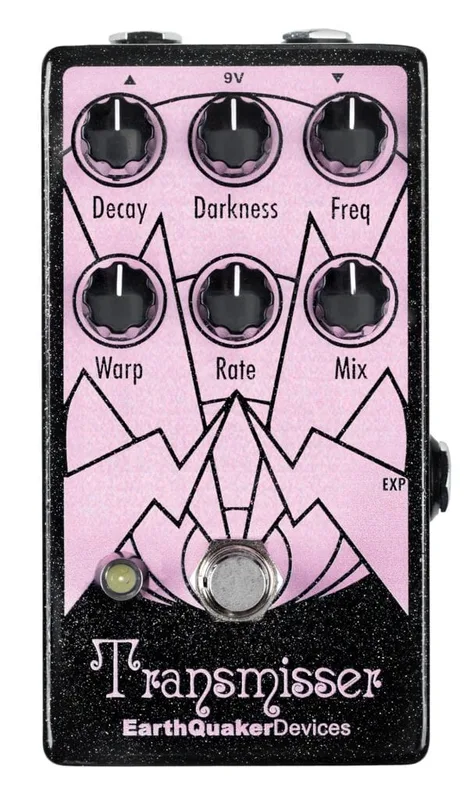
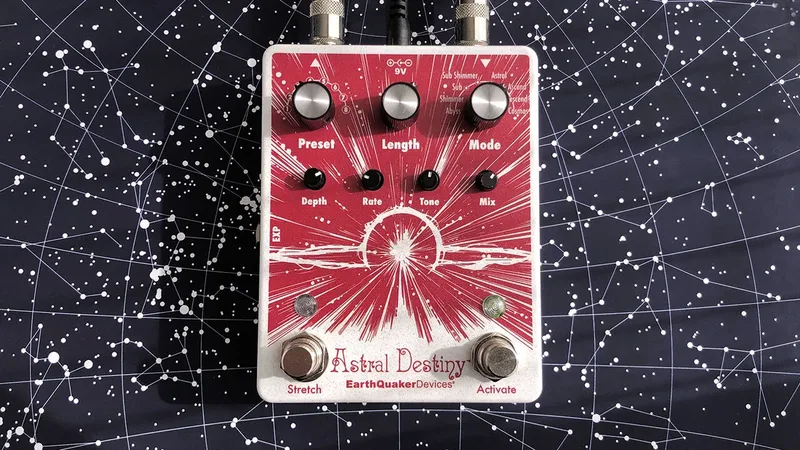
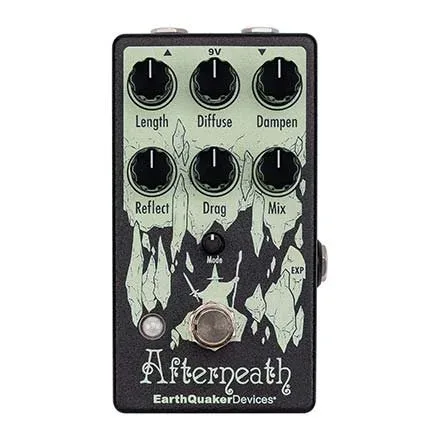
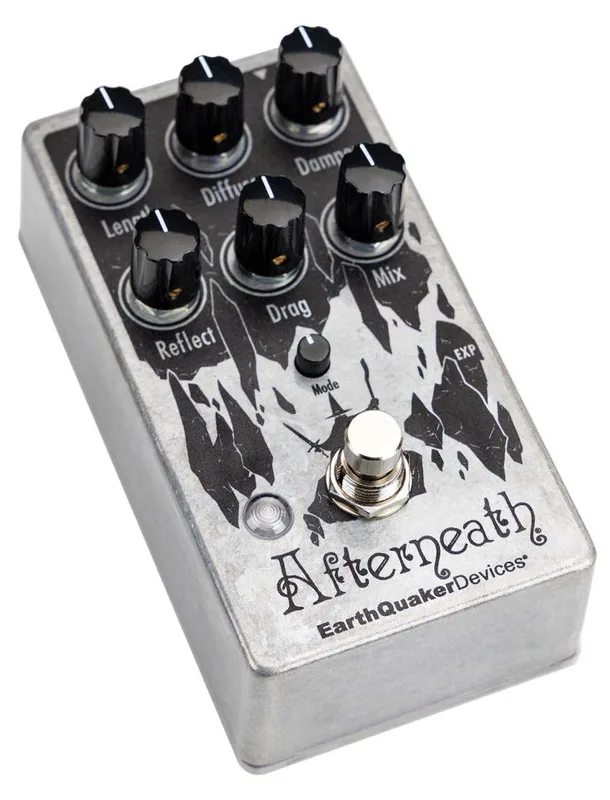
EarthQuaker Devices describes it as carrying the DNA of the Afterneath, the Transmisser and the Astral Destiny, while being a completely new circuit with its own reverb algorithm3. Jamie Stillman, founder of EarthQuaker Devices and the architect of the Towers, wanted it because he loves having resonant filters in his setup4.
What it does and how it works
The signal path is unusual even among ambient reverb pedals. Rather than a straightforward reverb block, the input feeds an array of infinitely repeating micro-echoes that create dynamic generative impulses, and those impulses then feed a cathedral-style reverb. A resonant low-pass filter sits alongside this, intersecting both the delay and reverb pathways at multiple points2. That interweaving of filter, echo and reverb is what separates the Towers from a conventional reverb pedal: the filter is not an afterthought at the end of the chain but part of how the reverb is generated.
EarthQuaker Devices says the Towers adds dynamic, modulated characteristics into the reflections that are absent from the Afterneath's tails, describing a highly responsive rather than static resonance3. It uses a completely different reverb algorithm than the Afterneath and the Transmisser3.
The pedal runs true stereo, mono-to-stereo, and mono-to-mono signal flow3, so it fits a mono board today and a stereo rig later. It includes the ability to save and store user presets, with eight onboard presets23.
The controls and footswitches
The Towers carries a set of knobs and switches that map onto its three operating modes. The Mode control is a 3-position toggle switch that changes the mode of operation4, selecting between the three distinct resonant filter modes3.
| Control or switch | What it does |
|---|---|
| Mode | 3-position toggle switch that changes the mode of operation4 |
| Frequency | Sets the filter frequency; in Manual mode it works across the stereo field, with the left channel opposite the right4 |
| Mix | Sets the balance of reverb tails3 |
| Length/Decay | Sets the length and decay of the reverb tails3 |
| Preset | Selects which user preset to use in preset mode, letting you recall stored configurations4 |
| Activate footswitch | Turns the effect on and off4 |
| Stretch footswitch | Slows down the entire digital system, doubling the reverb length and pitch-bending the sound4 |
The three modes work differently41:
- Manual: The filter frequency is changed by adjusting the Frequency control. This works across the stereo field, with the left channel moving opposite the right4.
- Envelope: The filter frequency is adjusted by an envelope controlled by your picking dynamics. In this mode the Frequency control adjusts the sensitivity of the envelope4.
- LFO: The third position, reported by MusicRadar at launch, cycles the filter automatically1.
The Stretch footswitch is the pedal's most distinctive performance control. MusicRadar describes it as one that "slows everything down, doubling the length of the reverb, playing around with the spectrum"1. Premier Guitar's launch coverage, drawing on the maker's own description, puts it in more detail: Stretch slows down the entire digital system of the Towers, so the reverb length is doubled, the spectrum of frequencies is altered, and a pitch-bending effect runs through the morphing process4. Hold it and the whole soundscape drops and stretches; release it and everything returns.
"the Stretch footswitch, which slows everything down, doubling the length of the reverb, playing around with the spectrum"
The pedal also has an expression pedal option, though EarthQuaker Devices notes it works for very different functions than the Afterneath's expression control3. Players already using an expression pedal for another effect will need to check what the Towers assigns to it.
Where it came from
The Towers was released in March 202615. It emerged from a lineage of EarthQuaker Devices ambient pedals: the maker says it carries the DNA of the Afterneath, the Transmisser and the Astral Destiny, but stresses that it is a completely new circuit, not a stereo Afterneath or Transmisser redux3. Where the Afterneath sends your signal into a cave of scattered echoes, the Towers generates its reverb from micro-echoes and shapes it with a resonant filter running through the whole path23.
EarthQuaker Devices' own comparison article calls it "arguably the most EarthQuakery pedal we've put out in years"3. The Transmisser, one of its ancestors, is no longer in production, while the Towers is in regular production3.
"Towers is a completely new circuit, though it carries the DNA of its ancestors."
Price and buying
The USA MAP price at launch was $2994, and MusicRadar reported the same figure for the US market alongside a UK price of £3291. Gearnews listed it at Thomann for $388 / £349 / €3995, a higher street price than the maker's stated MAP. The pedal carries a Limited Lifetime Warranty4 and is built by EarthQuaker Devices in Akron, Ohio, on the banks of the Ohio and Erie Canal4.
The Towers draws 85 mA4, which is modest for a stereo digital reverb.
Videos
Premier Guitar
EarthQuakerDevices
EarthQuakerDevices
News
Questions
Does the Towers work with a mono rig?
Yes. The pedal offers true stereo, mono-to-stereo, and mono-to-mono signal flow, so a single input and single output work fine. It also has two stereo inputs and outputs on the head for players running a full stereo rig.
Is the Towers Stereo Reverberant Filter true bypass?
It can be. The Towers can be operated in either Tails or True Bypass mode. Tails mode lets the reverb continue ringing out after you switch the effect off, while True Bypass mode cuts the tail completely.
What does the expression pedal control on the Towers?
The Towers has an expression pedal option, though EarthQuaker Devices says it works for very different functions than the expression control on the Afterneath. The maker has not detailed the exact parameters the expression pedal sweeps on the Towers.
Where is the Towers made?
The Towers is built by EarthQuaker Devices in Akron, Ohio, USA, on the banks of the Ohio and Erie Canal, and it carries the maker's Limited Lifetime Warranty.
What is the input impedance of the Towers?
The input impedance is 500 kΩ and the output impedance is 100 Ω. Those figures come from the launch specifications published by Premier Guitar in March 2026.
Sources (5)
- EarthQuaker Devices' Towers is a reverb pedal like no other, MusicRadar, 2026-03-11
- EarthQuaker Devices Towers Stereo Reverberant Filter, Pedal of the Day, 2026-03-24
- The Tale of Tails: Defining the Towers Stereo Reverberant Filter, EarthQuaker Devices, 2026-04-20
- EarthQuaker Devices Release the Towers Stereo Reverberant Filter, Premier Guitar, 2026-03-05
- EQD Towers Stereo Reverberant Filter: Ambient FX, gearnews.com, 2026-03-05