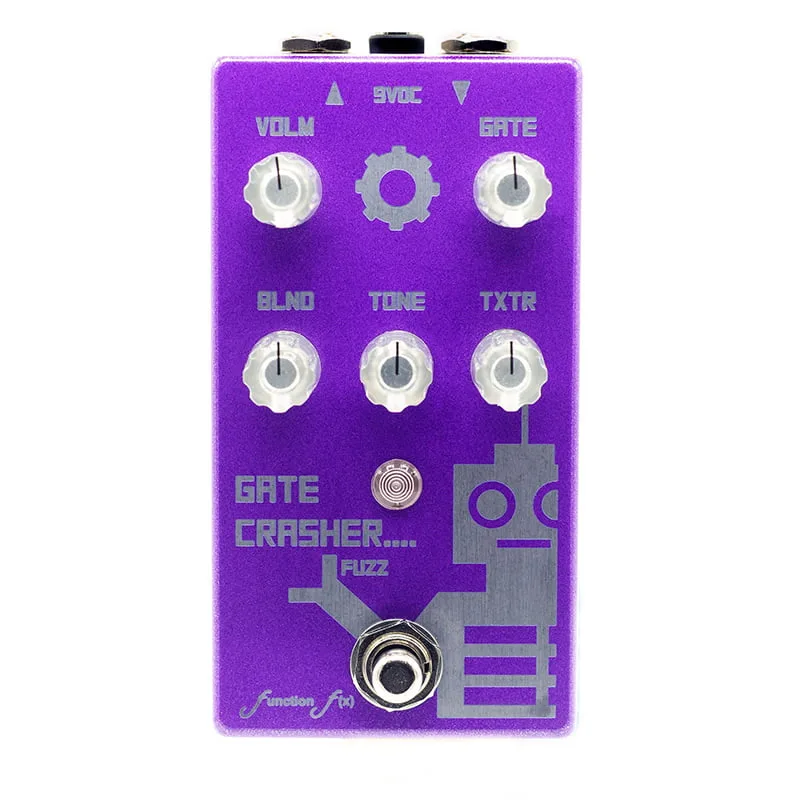


The Function f(x) Gate Crasher is an octave fuzz pedal that produces controllable gated fuzz tones with what the maker calls "over-the-top octave harmonics"1. It is a five-knob fuzz built around CMOS logic integrated circuits, the same family of chips found in digital logic circuits, here used to generate the fuzz and octave sounds. Function f(x) describes the range as running "from woolly low-end fuzz to angry 'bees in a can + chainsaw'," with the octave up riding on top and dialable through the Blend control1. The circuit design is novel and not based on any pre-existing commercial products or DIY projects, according to the maker1.
The Gate Crasher Octave Fuzz carries a list price of $189.002.
What the Gate Crasher does to your sound
The Gate Crasher is a gated fuzz, meaning the Gate control shapes how the fuzz cuts in and out, from a signal that decays into sputtering, chopped-up chunks to one that sustains more fully. On top of that sits the octave-up fuzz, which can be blended against a non-octave fuzz voice. Function f(x) says the pedal can create "a wide range of sonic mayhem, from woolly low-end fuzz to angry 'bees in a can + chainsaw'", all with the octave up riding on top and dialable down through the Blend knob1.
The CMOS logic chips are the heart of the design. Function f(x) explains that "under the hood, the Gate Crasher relies on CMOS logic integrated circuits to create the chaos"1. Many classic octave fuzzes use transistor-based rectifying circuits to generate the octave; the Gate Crasher instead uses logic chips, and the maker states the design is original rather than a clone or modification of an existing circuit1.
The controls
The Gate Crasher carries five knobs: Volume, Gate, Blend, Tone and Texture. Tone and Texture form what the maker calls a two-band tone stack, though both are low-pass filters working at different points in the circuit1.
| Control | What it does |
|---|---|
| Volume | Adjusts the output level of the effect3 |
| Gate | Shapes the gated fuzz tones1 |
| Blend | Mixes octave fuzz and non-octave fuzz; 12 o'clock is a ~50/50 blend, counterclockwise gives more octave, and some of each fuzz type is always present3 |
| Tone | A fairly standard variable single-pole low-pass filter, positioned after the Blend pot, affecting both octave and non-octave fuzz tones3 |
| Texture | Another variable single-pole low-pass filter, but this one mostly adjusts the highs going into the octave generator; highly interactive with Tone, especially when Blend is set to 50% or more octave fuzz3 |
The two filters do different jobs. Tone sits late in the circuit and darkens or brightens the finished fuzz sound. Texture sits before the octave generator and changes what the octave circuit has to work with, which is why the manual notes it is highly interactive with Tone when the Blend knob is set to half octave fuzz or more3.
Power, size and build
The Gate Crasher runs on a 9V DC center negative 2.1mm barrel power supply, the standard pedalboard arrangement3. Current draw is about 15mA, dropping to 10mA when bypassed1. There is no battery option in the manual, so a power supply is required.
The manual specifies a 9V DC center negative 2.1mm barrel supply3. No battery is mentioned, so plan on a pedalboard power supply.
Like all Function f(x) pedals, the Gate Crasher uses a soft-touch, relay-based true bypass switching system, so the clean signal passes through untouched when the pedal is off4. The enclosure measures 4.78" x 2.61" x 1.6" (12.14 x 6.63 x 4.05 cm) and weighs 10 oz (283 g), with top mounted jacks to save board width1. Function f(x) warrants its pedals against defective parts and workmanship for 1 year from the date of purchase, excluding user error; after that period, repairs may incur a parts or labor fee, and a full PCB replacement can take as long as 4 to 6 weeks if critical parts are unavailable3.
How it differs from The Cannon
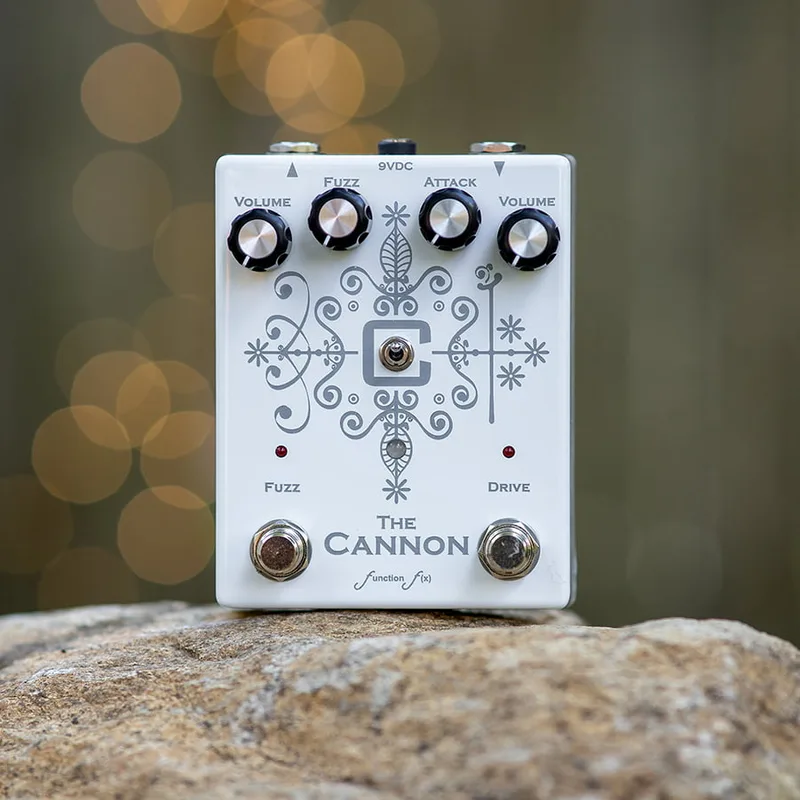
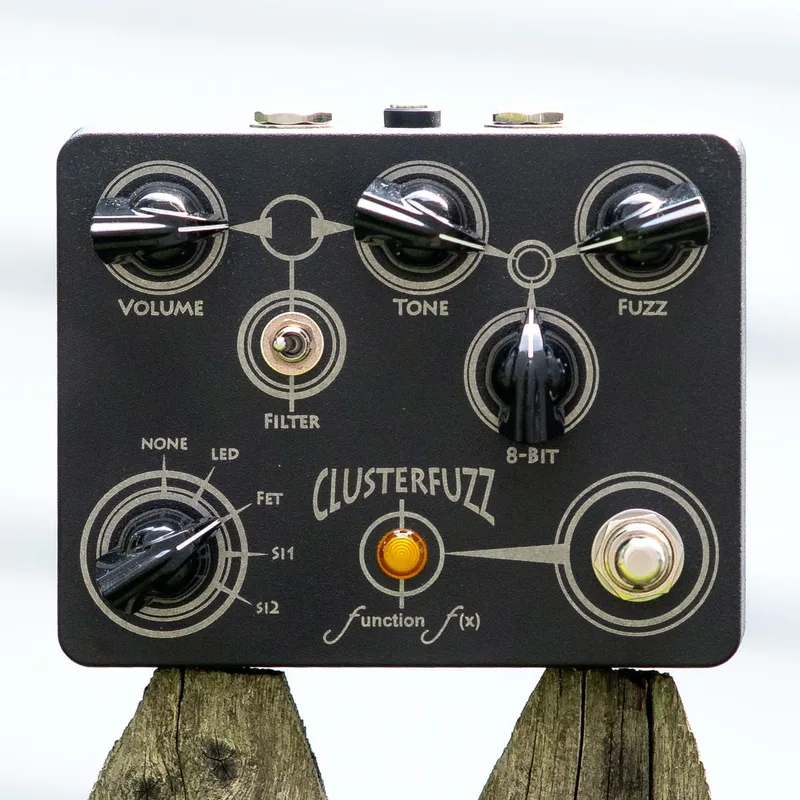
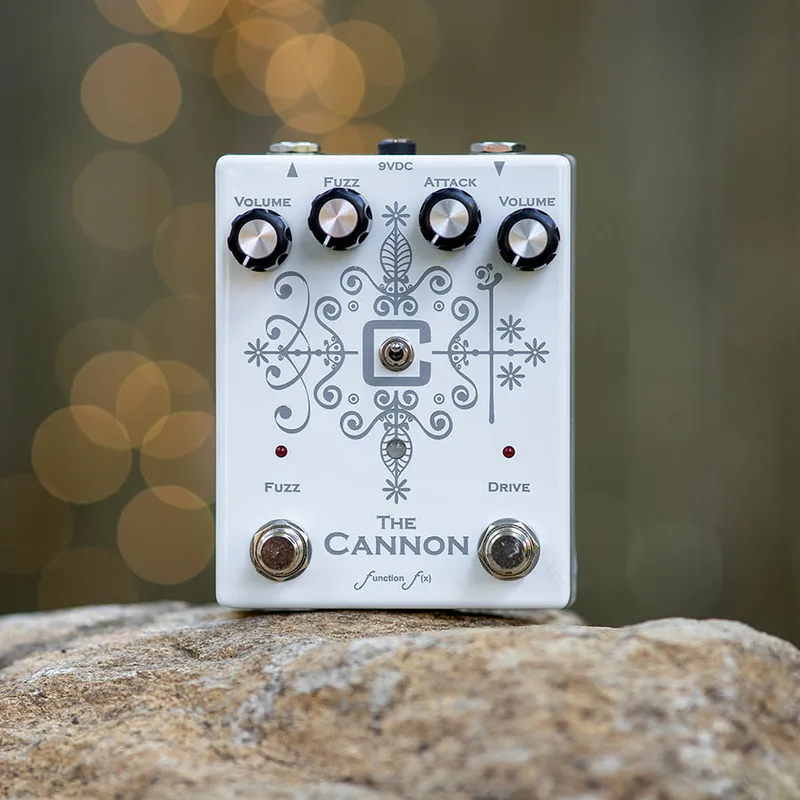
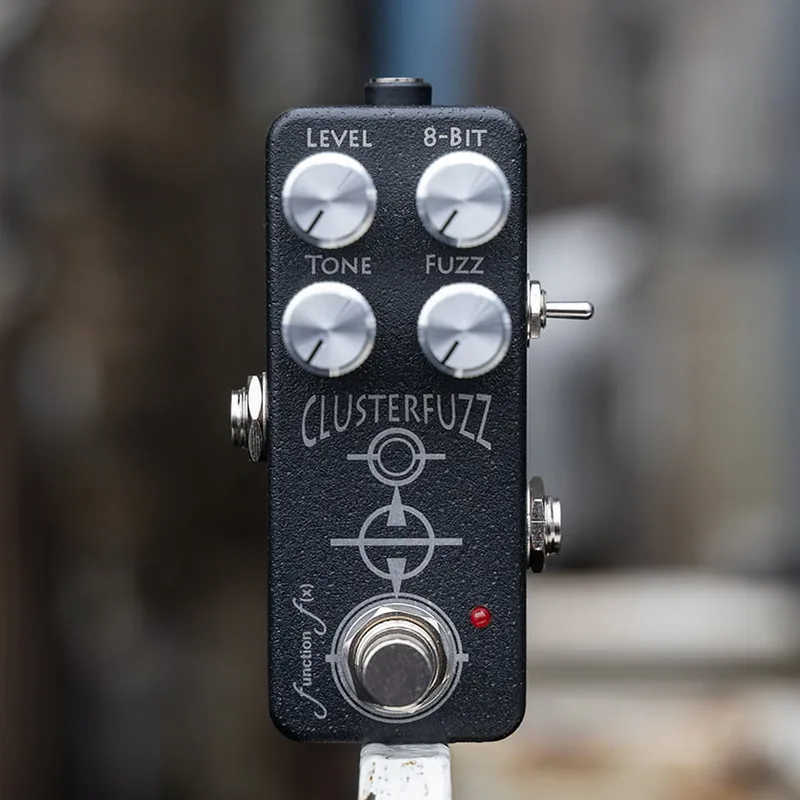
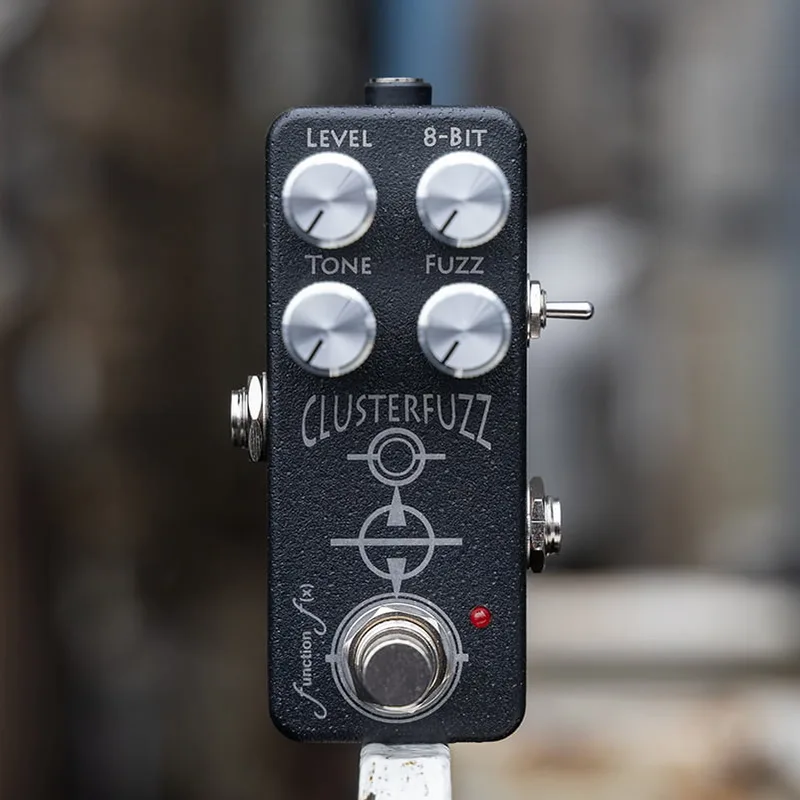
Function f(x) positions the Gate Crasher as the aggressive, gated take on octave fuzz, and points players who want a different flavor to its signature pedal, The Cannon, for a more vintage-like octave fuzz1. Where the Gate Crasher leans into gated sputter and CMOS-generated chaos with a five-knob control set, The Cannon is the maker's recommendation for a more vintage octave fuzz voice. Players comparing the two can also look at the maker's other fuzz offerings, such as the Clusterfuzz.
Videos
Mike Hermans
Ed Pettersen
Ed Pettersen
Questions
Can you turn off the octave on the Gate Crasher?
No, but you can dial it down. The Blend control mixes octave fuzz and non-octave fuzz, and the manual states there is always some of each fuzz type present no matter where the knob sits. Turning Blend toward the non-octave side gets you closer to a plain woolly low-end fuzz.
Does the Function f(x) Gate Crasher take a battery?
No battery option is given. The manual specifies a 9V DC center negative 2.1mm barrel power supply, so you need a standard pedalboard power supply rather than an internal battery.
How is the Gate Crasher different from The Cannon?
The Gate Crasher is the gated, aggressive take on octave fuzz, with a Gate control and a two-band tone stack. Function f(x) points players to The Cannon, its signature pedal, for a more vintage-like octave fuzz sound.
Is the Gate Crasher true bypass?
Yes. Like all Function f(x) pedals, the Gate Crasher uses a soft-touch, relay-based true bypass switching system, so your clean signal passes through untouched when the pedal is off.
Sources (4)
- Gate Crasher Octave Fuzz, Function f(x), 2024-12-04
- Hive Mind, Function f(x), 2026-07-31
- Gate Crasher Octave Fuzz, Function f(x), LLC, 2023
- Gate Crasher Octave Fuzz, function-fx.com, 2018-09-10