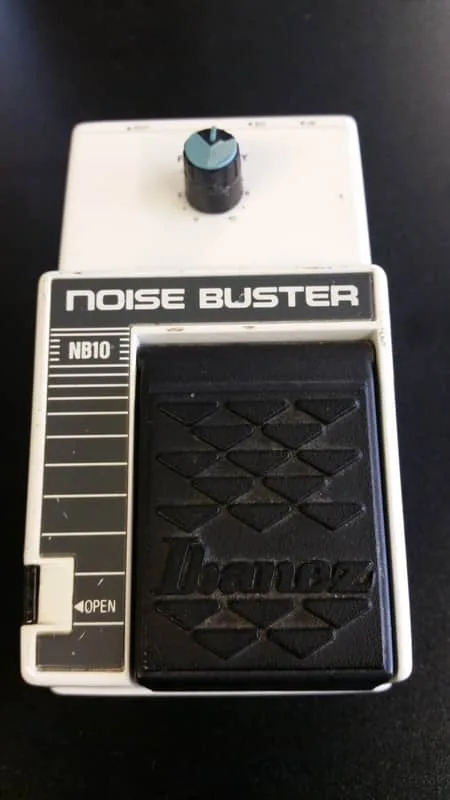


The Ibanez NB10 Noise Buster is a noise reduction pedal, a noise gate, made in Japan and produced from 1987 to 1990 as part of the Ibanez Power Series Compact Effects range1. What set it apart from a conventional gate, according to the product documentation, is that it cuts noise not only while there is no signal but during actual playing as well1.
What it does for your sound
Unlike a conventional noise gate, which only mutes the signal between notes, the NB10 is described as capable of cutting out noise "not only while there is no signal flow, but during actual playing as well"1. Ibanez's pitch was that players are "liberated from the adverse influence of stage lighting or single coil pick-ups on their music, and high gain" distortion becomes usable without noise worries1.
The pedal's single control lets the musician tune the gate so hiss and hum disappear while the attack and decay of each note stay intact12:
| Control | What it does |
|---|---|
| FREQUENCY | Lets the musician eliminate noise components without impairing the envelope or sustain of the original sound12 |
The NB-10 has not been re-issued and is regarded as rare in availability, with average collectibility1. Players who want the circuit generally build a clone.
The circuit and the 3n3 mod
The NB-10 is built around the LM1894N noise reduction chip2. The capacitors between pins 3-4 and 11-12 of that chip set the pedal's bandwidth, and the pedal uses 8n2 values there where the LM1894N datasheet specifies 3n32.
Builders on the Guitar FX Layouts blog found the stock capacitors dull the top end. One wrote: "I also noticed that the high frequencies are muffled compared to the clean tone."2
The capacitor swap works like this:
- Identify the two 8n2 bandwidth capacitors between pins 3-4 and pins 11-12 of the LM1894N2.
- Replace them with 3n3, the value the LM1894N datasheet specifies2.
- Accept a slightly higher noise floor as the trade-off for what the builder called a way better output signal2.
With the mod, the signal tapers off above 12 to 15 kHz and reaches -3dB at 20 kHz2. The same builder's verdict on the modified circuit: "Hands down this is the best noise suppressor on the planet as it is always on, especially with this mod it's like magic."2
A further mod uses an NSL-32 optocoupler with a 1K resistor on pin 10 of the LM1894 to control the gate so all the noise is gone2.
Building a clone
A stripboard (vero) layout for the NB-10 was published by Guitar FX Layouts on 24 December 20152. The layout fits a 1590B enclosure, the standard compact pedal size, which commenters called "really impressive work making this 1590B friendly"2.
How it compares
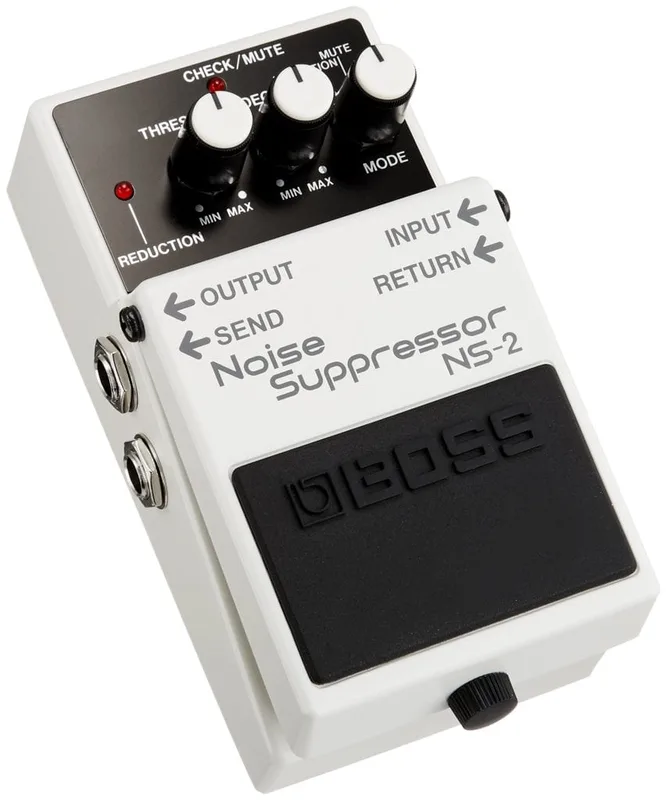
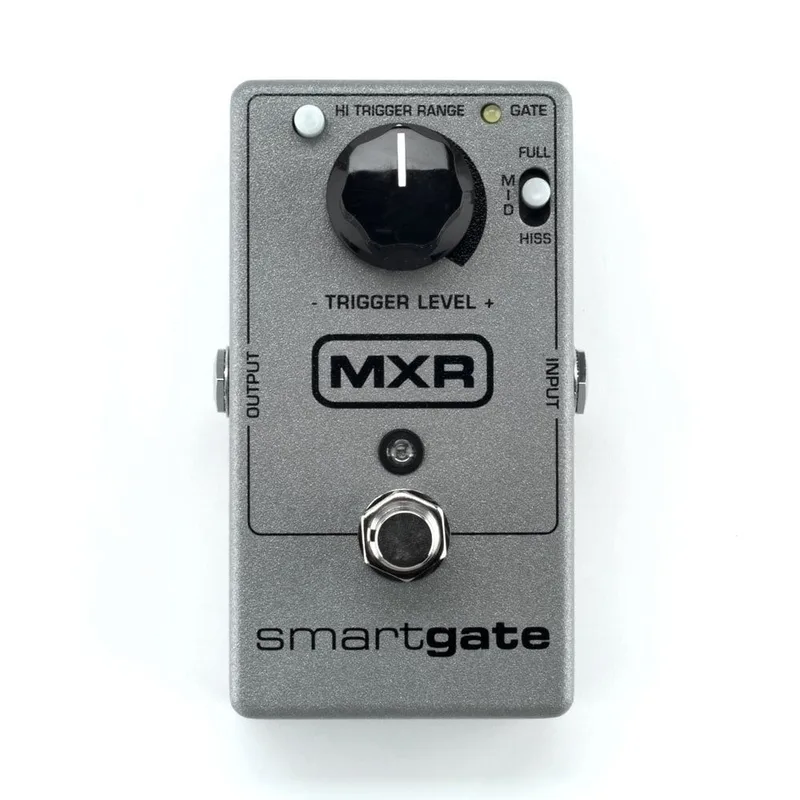
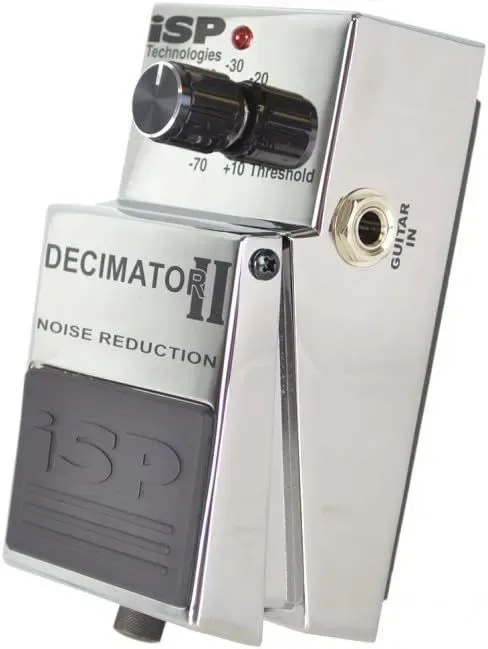
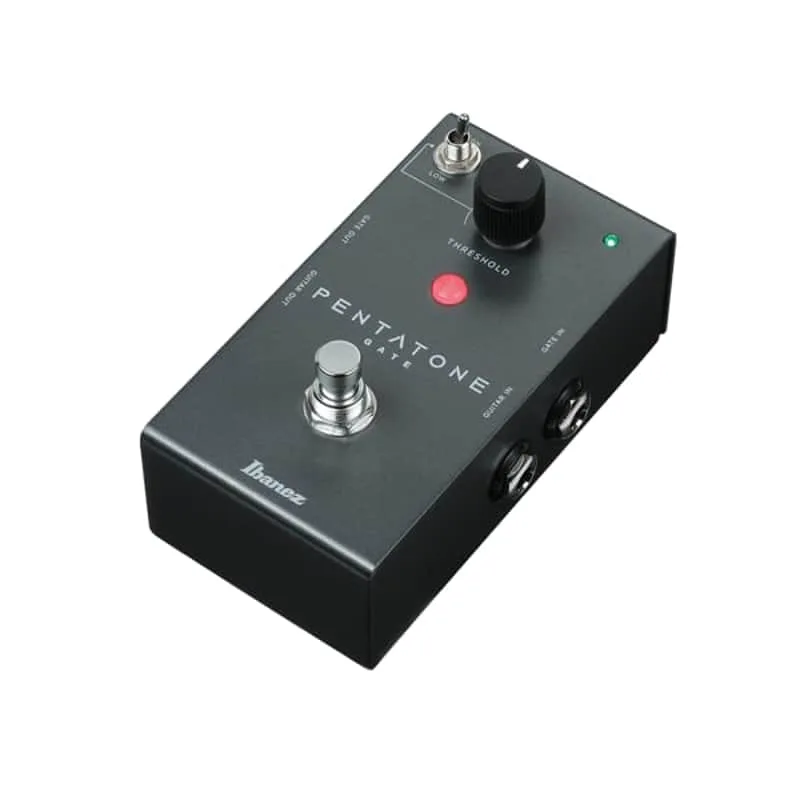
The NB-10's always-on, during-playing approach differs from the simpler between-notes gating of many later pedals. Modern alternatives in the same lane include the Boss NS-2 Noise Suppressor, the MXR Smart Gate and the ISP Technologies ISP Decimator II, and Ibanez's own current offering in the category is the Ibanez Pentatone Gate PTGATE. For more on how gates work and where the NB-10 sits among them, see Noise Gate Pedals.
Videos
jacquespedals
playbass1966
Questions
When did Ibanez make the NB-10 Noise Buster?
Ibanez produced the NB10 Noise Buster from 1987 to 1990, made in Japan. It was part of the Ibanez Power Series Compact Effects range, and a November 1987 brochure documents the pedal and its noise reduction capabilities.
Has the Ibanez NB-10 been reissued?
No. The pedal has not been re-issued, and it is regarded as rare in availability with average collectibility. Players looking for the circuit today generally build a clone from a published stripboard layout, which fits a standard 1590B enclosure.
What chip does the NB-10 use?
The NB-10 is built around the LM1894N, a dedicated noise reduction chip. The capacitors between pins 3-4 and 11-12 of that chip set the pedal's bandwidth, which is where the popular capacitor modification comes from.
What does the Frequency control do on the NB-10?
The Frequency control lets the player eliminate noise components without impairing the envelope or sustain of the original sound, so the gate can be tuned to remove hiss and hum while leaving the note's attack and decay intact.
Why do some builders swap the 8n2 capacitors for 3n3?
Builders found the stock 8n2 bandwidth capacitors muffled the high frequencies compared to the clean tone. The LM1894N datasheet specifies 3n3 in those positions, and swapping them gives a better output signal with a slightly higher noise floor, with signal tapering off above 12 to 15 kHz and reaching -3dB at 20 kHz.
What size enclosure does an NB-10 clone fit?
The published stripboard layout for the NB-10 fits a 1590B enclosure, the standard compact pedal size, which makes building a clone straightforward for hobbyist builders.
Sources (2)
- TONEHOME, TONEHOME
- Guitar FX Layouts: Ibanez NB-10 Noise Buster, Guitar FX Layouts (tagboardeffects.blogspot.com), 2024-12-26