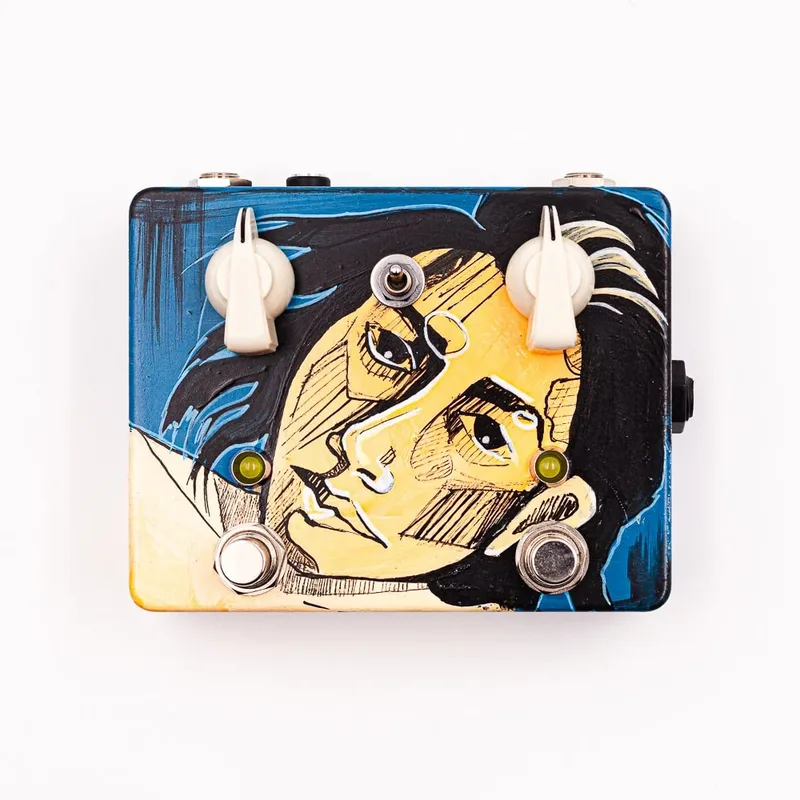


The JAM Pedals "Paths" RetroVibe mk.4 is an all-analog, Uni-Vibe-style modulation pedal that gives you two classic effects in one box: chorus and vibrato, selected by a toggle. JAM Pedals describes the chorus mode as the classic pulsing phase character and the vibrato mode as pitch-focused movement, the same two voices players have pulled out of Uni-Vibe-style circuits since the original1. The "Paths" edition is one of the maker's custom artwork versions of the same pedal: identical sound, hand-painted finish1.
The mk.4 generation is the most expressive version of the RetroVibe yet. JAM Pedals says it "preserves the soul of the original RetroVibe while making it far more expressive in performance"2, and the additions over earlier marks are practical ones: a tap-tempo footswitch with an external input, a ramping function, and an expression input for continuous speed control23.
What it does to your sound
A Uni-Vibe-style circuit is a phase-shift-based modulator, and the RetroVibe mk.4 follows that tradition with what JAM Pedals calls "lush pulse, vocal shimmer and unmistakable vintage character"2. In Chorus mode you get the throbbing, swirling sweep the original Uni-Vibe made famous; flip the toggle to Vibrato and the dry signal drops away in favor of pitch-focused movement, the wobblier voice players associate with the effect1.
The speed of that sweep runs from 0.5 to 9.5 Hz1. RockBoard's PedalPedia entry for the RetroVibe Mk.4 puts that range in player terms: you can go from "slow, liquid waves to fast, rotary-like spins"3. An internal trimmer sets the maximum output level, so you can balance the effect's level against the rest of your rig without touching the external controls1.
Controls and connections
The mk.4's control set is built around live performance. Alongside the Speed and Depth knobs and the Chorus/Vibrato toggle, the second footswitch is where the new features live2.
| Control or connection | What it does |
|---|---|
| Speed knob | Sets modulation speed, 0.5 to 9.5 Hz1 |
| Depth knob | Sets modulation depth; during a ramp hold it sets the travel time1 |
| Chorus/Vibrato toggle | Selects Chorus for the classic pulsing phase character or Vibrato for pitch-focused movement1 |
| TAP/RAMP footswitch | Tap to set modulation speed; hold to ramp to a second speed, with Speed setting the destination and Depth setting travel time while holding1 |
| TRS expression input | Accepts a standard passive 10 kΩ expression pedal for continuous Speed control1 |
| TS tap input | Accepts an external tap-tempo switch1 |
| Internal trimmer | Sets maximum output level1 |
The ramping function deserves a note of its own: hold the TAP/RAMP footswitch and the pedal glides from your current speed to a second, preset speed, with the Speed knob choosing where it lands and the Depth knob choosing how long the glide takes1. That is the kind of move that used to require a heel-toe workout on an expression pedal, now available from one footswitch press.
The power-on state can also be toggled by inserting power while holding the ON footswitch, so you can decide whether the pedal wakes up engaged or bypassed1.
The RetroVibe mk.4 draws up to 120 mA at 9V DC, center negative1. That is well beyond what a 9V battery supplies to most analog pedals, so plan on a dedicated spot on a powered pedalboard, and check your power supply's per-output budget before daisy-chaining it with other pedals.
How the mk.4 differs from earlier RetroVibes
Delicious Audio covered the Mk4 as a significant update to the RetroVibe line, describing it as a Uni-Vibe-inspired pedal that adds a tap-tempo footswitch with an external input, a ramping function and an expression input over the Mk3, along with wider Speed and Depth sweeps4.
"The addition of a Tap Tempo footswitch (with an external input) brings essential rhythmic precision, allowing you to sync the modulation speed to a song."
On That Pedal Show, the presenters gave the pedal a run-through and flagged the same feature: "Anyway, this one has tap tempo"5. Their demo video walks through the pedal's sounds and controls:
The hand-painted artwork editions
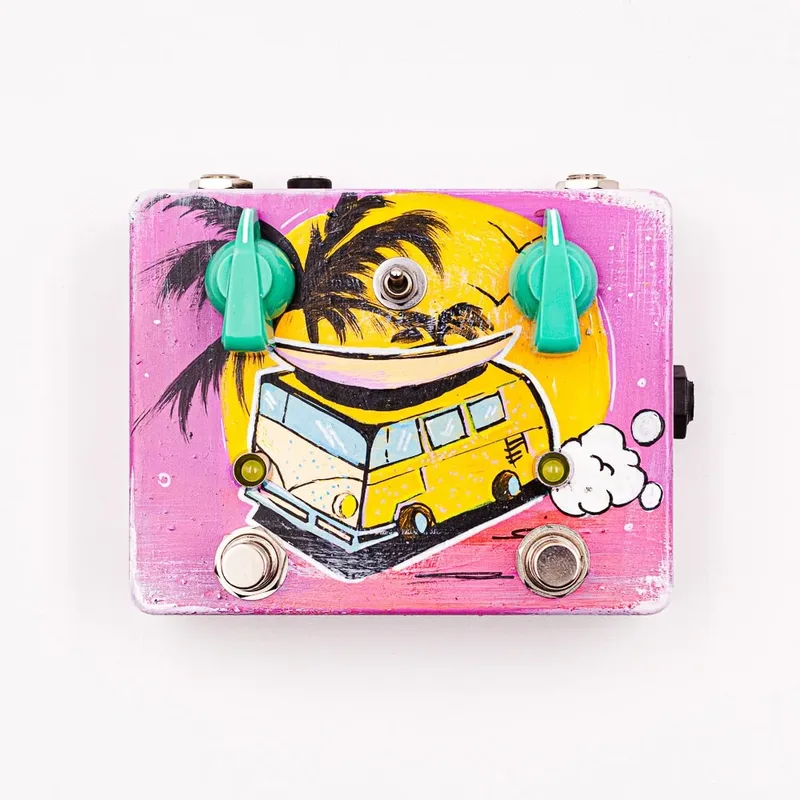
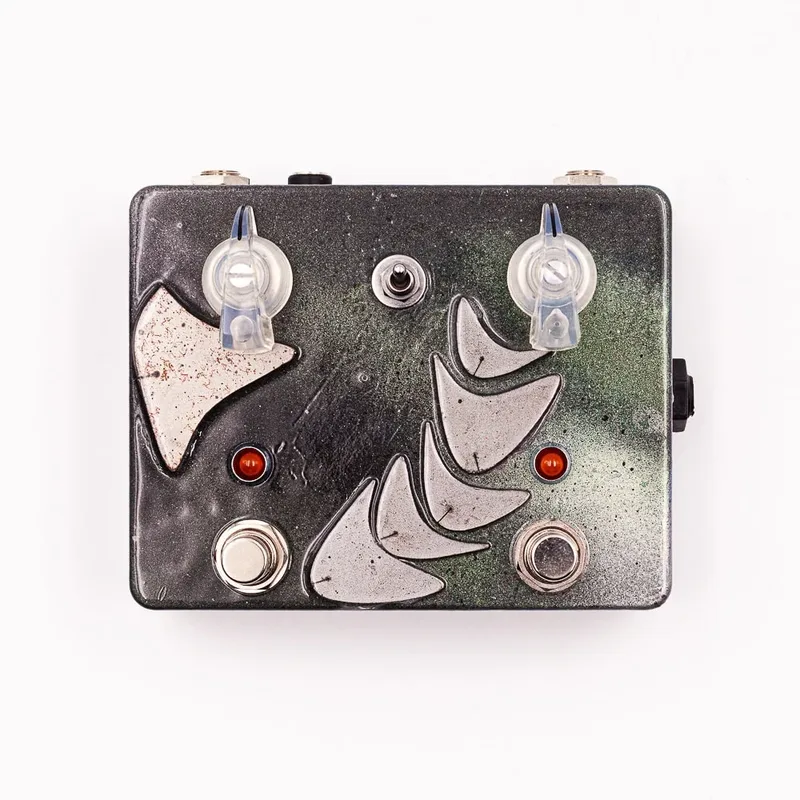
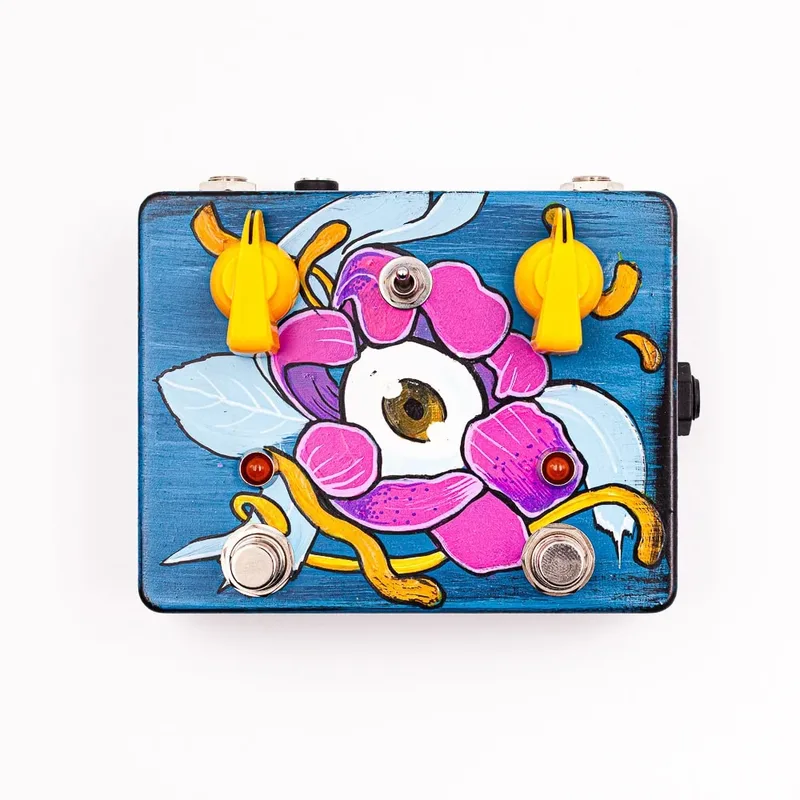
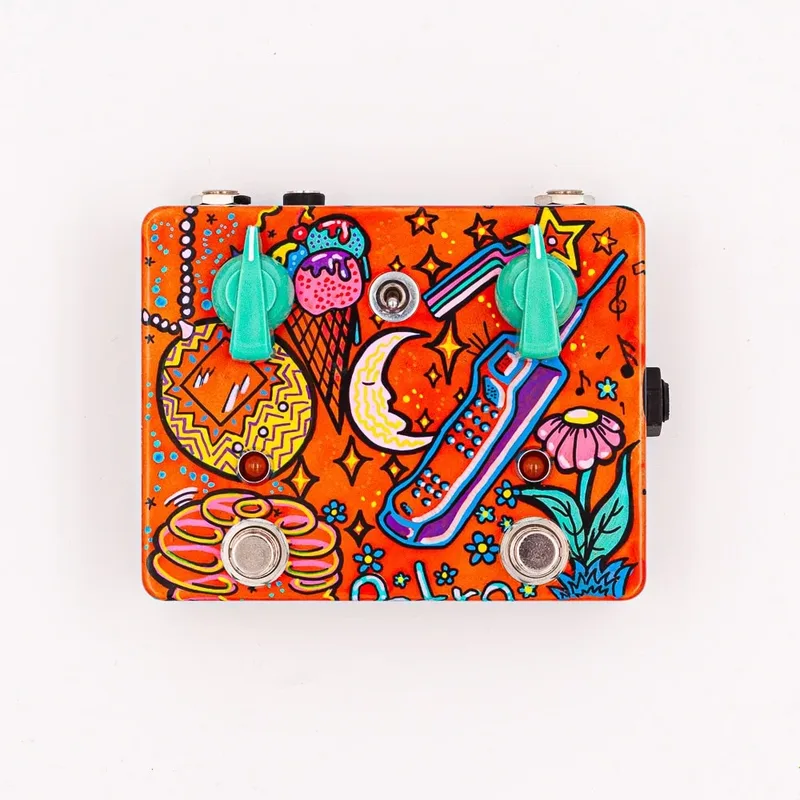
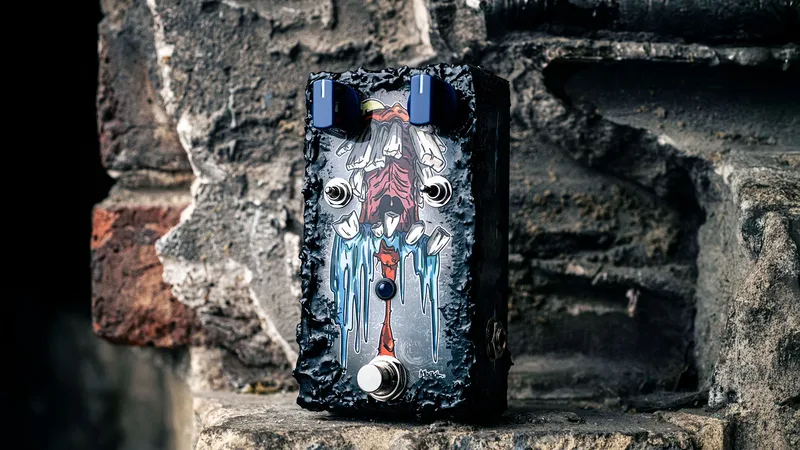
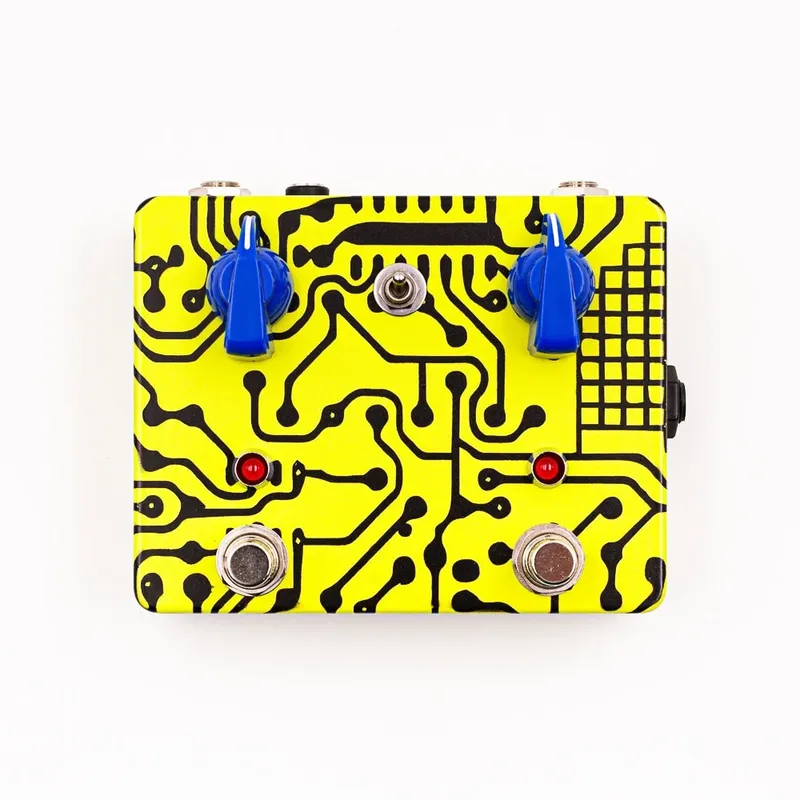
The "Paths" RetroVibe mk.4 is one of several custom artwork versions of the same circuit. JAM Pedals lists the editions as Camper, Fishbone, Paths, Pink Eye, Popped Art and Skin, and states plainly that they are the same sound with different artwork1. Every custom artwork pedal is a one-of-a-kind hand-painted piece, and the maker notes that the pedal you receive will differ in detail from the photos shown6.
- JAM Pedals "Camper" RetroVibe mk.46
- JAM Pedals "Fishbone" RetroVibe mk.47
- JAM Pedals "Pink Eye" RetroVibe mk.48
- JAM Pedals "Popped Art" RetroVibe mk.49
- JAM Pedals "Skin" RetroVibe mk.410
If you like the mk.4's feature set but want a different finish, any of these editions gives you the identical circuit, controls and connections1108.
Who uses it
JAM Pedals lists several players alongside the RetroVibe mk.4's artwork editions. Dweezil Zappa is named on the Camper edition's page6, and Paul Gilbert on the Popped Art edition's page9. The Paths edition carries a quote from J Mascis of Dinosaur Jr, who says of the pedal's lineage: "I have been using a univibe Clone since the early 90's live"1.
Where it sits in the JAM Pedals range
The RetroVibe mk.4 is built on an all-analog circuit, which JAM Pedals lists among the pedal's core specifications1. Its power-on state can be toggled by inserting power while holding the ON footswitch, a startup option players can use to set how the pedal behaves when first powered1. JAM Pedals lists the pedal at a regular price of £459.00, tax included1, and offers a refund, no questions asked, if the product is returned within 30 days of receiving it1.
Videos
JAM pedals
JAM pedals
Shawn Tubbs
Questions
Does the RetroVibe mk.4 have tap tempo?
Yes. The TAP/RAMP footswitch sets the modulation speed when you tap it, and a separate TS input on the pedal accepts an external tap-tempo switch, so you can sync the effect to a song without bending down mid-phrase.
What expression pedal works with the RetroVibe mk.4?
A standard passive 10 kΩ expression pedal, plugged into the TRS input, gives continuous real-time control of the Speed setting. JAM Pedals specifies passive 10 kΩ, so an active or mismatched expression pedal is not the intended match.
Do the RetroVibe artwork editions sound different?
No. JAM Pedals offers the RetroVibe mk.4 in custom artwork versions, including Camper, Fishbone, Paths, Pink Eye, Popped Art and Skin, and states they are the same sound with different artwork. Each is a one-of-a-kind hand-painted piece.
Is the JAM RetroVibe mk.4 true bypass?
Yes. JAM Pedals lists true bypass for the RetroVibe mk.4 across the standard and artwork editions, so your dry signal passes through untouched when the pedal is off.
What is the speed range of the RetroVibe mk.4?
The LFO runs from 0.5 to 9.5 Hz, covering everything from slow, liquid waves to fast, rotary-like spins. You can set the speed with the knob, by tapping the TAP/RAMP footswitch, or with a passive 10 kΩ expression pedal.
Sources (10)
- "Paths" RetroVibe mk.4, JAM Pedals (jampedals.com)
- RetroVibe, JAM Pedals (jampedals.com)
- RetroVibe Mk.4 “My Mind’s Room” by Jam Pedals, RockBoard PedalPedia, 2026
- Jam RetroVibe Mk4, Delicious Audio, 2026-02-11
- New Pedals! Keeley Nocturne, Jam Retrovibe 4, Caroline Kilo 2K, DevTech Soft Drive, Hagerman EF86, That Pedal Show (YouTube), 2026-01-30
- "Camper" RetroVibe mk.4, JAM Pedals (jampedals.com)
- "Fishbone" RetroVibe mk.4, JAM Pedals (jampedals.com)
- "Pink Eye" RetroVibe mk.4, JAM Pedals (jampedals.com)
- "Popped Art" RetroVibe mk.4, JAM Pedals (www.jampedals.com)
- "Skin" RetroVibe mk.4, JAM Pedals (www.jampedals.com)