
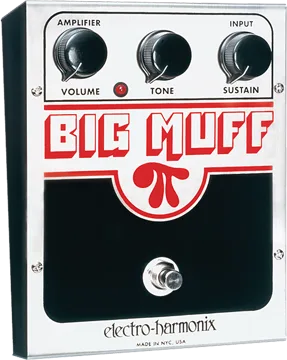
J Mascis is the guitarist, primary songwriter and, after the band's first album, lead vocalist of Dinosaur Jr. Born in Massachusetts and now living in Amherst, he played drums in his first hardcore band, Deep Wound, formed in 1982, and has also played in J Mascis + The Fog, Witch and Sweet Apple12. For a player whose career stretches back to the mid 1980s, one piece of gear sits at the center of everything: the Electro-Harmonix Big Muff. His trademark live electric guitar sound has always been a Big Muff, and he has said it plainly himself:
"That's my sound. The Muff is always on. All distorted sounds begin with the Muff. That's what I grew up playing so it's kind of amazing to have my own signature one."
He started with pedals as soon as he started playing the guitar, he told Lee Ranaldo in an interview for Stompbox Book, "because I was trying to recreate some of the dynamics of the drums"4. That drumming instinct shows up in how he uses gain: stacking fuzzes, pushing overdrives in front of Muffs, and setting treble boosters upstream of his Ram's Head to get contrast between rhythm and lead parts live5.
The Big Muff at the center of the Dinosaur Jr sound
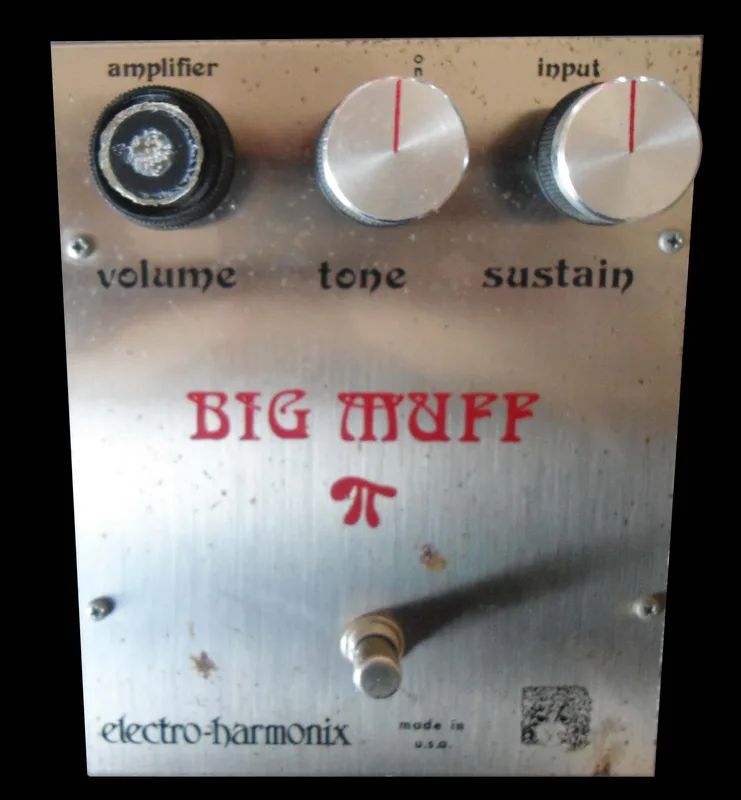
Mascis's first Muff was one of the larger, Howard Davis-designed Deluxe units from the late 1970s, and that Deluxe Big Muff is what you hear on the first two Dinosaur albums. It was stolen one night, and he moved on61. Kit Rae's Big Muff history records the Deluxe Big Muff Pi as used by Mascis on the debut album by Dinosaur Jr, released in 1985, where the thick distortion it yielded was as much a part of his signature sound as anything else106. He later transitioned to vintage version 1 and version 2 Big Muffs, often using one particular favorite Ram's Head, and that pedal became the backbone of Dinosaur Jr's live sound11.
The Ram's Head story has a specific beginning. On the first tour of the States, in Arizona in 1987, he found the Ram's Head Big Muff that he still used at the time of Kit Rae's 2011 interview, and it remained his main Big Muff from then on, in the studio and on tour1. At that interview the pedal was well worn, with tape residue, a #2 sticker, and replacement knobs and pots1. A shop he found on tour, Guitar Maniacs in Tacoma, Washington, sold him a blue Ram's Head next, then a purple one, and that was the start of the collection1.
Guitar World's review of his signature pedal puts his use of the Ram's Head in context: he uses the Big Muff, specifically the 1970s Ram's Head version, as the basis for all of his drive sounds, sometimes solo, but often stacking it with other gain providers12. Premier Guitar's reviewer noted that Mascis leaned heavily on the Ram's Head to lend mass to the folk-rock underpinnings behind many Dinosaur Jr tunes5. Kit Rae's history of the version 2 Ram's Head points players straight to Dinosaur Jr for examples of the raw lead tone and wall-of-sound use of that pedal13.
Fuzz pedals and vintage Big Muffs over the years
The Ram's Head is the constant, but it has never been the only fuzz on the board. Over the years his fuzz choices have included:
- Electro-Harmonix Big Muff Pi, his trademark sound since 19843
- Univox Super Fuzz, a vintage favorite he both uses and collects1
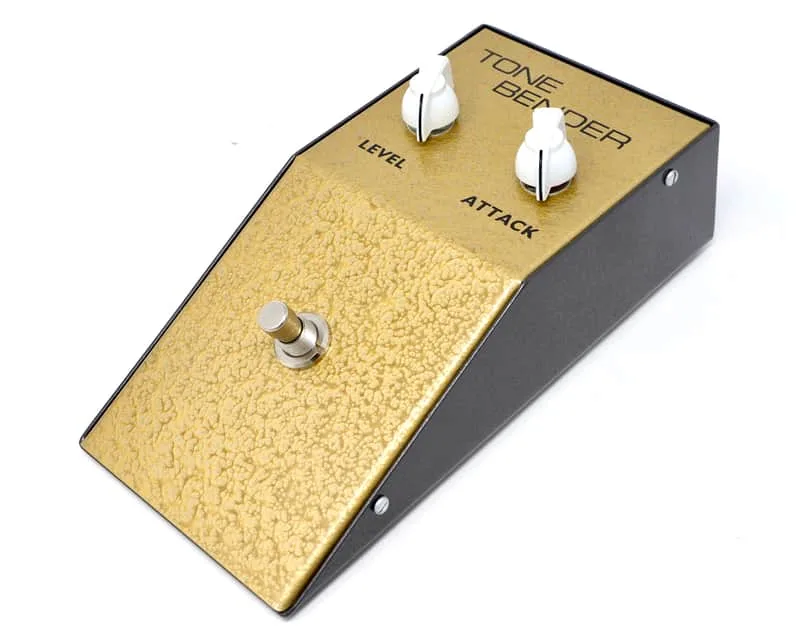
- Jerms MK1.5 and MK2 Tone Bender, part of a fuzz arsenal MusicRadar cataloged14
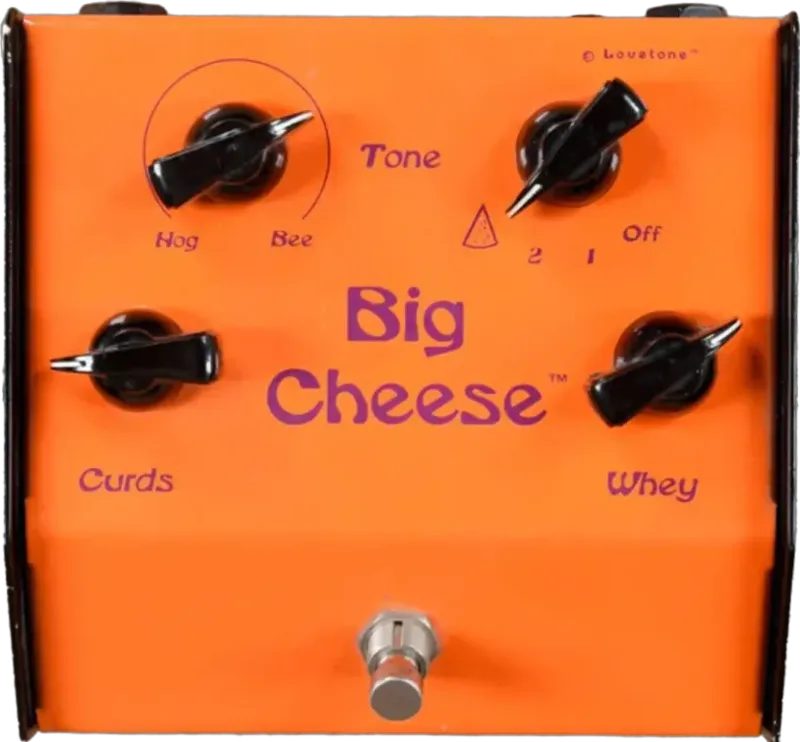
- Lovetone Big Cheese, used on Farm and listed among his fuzzes of choice114
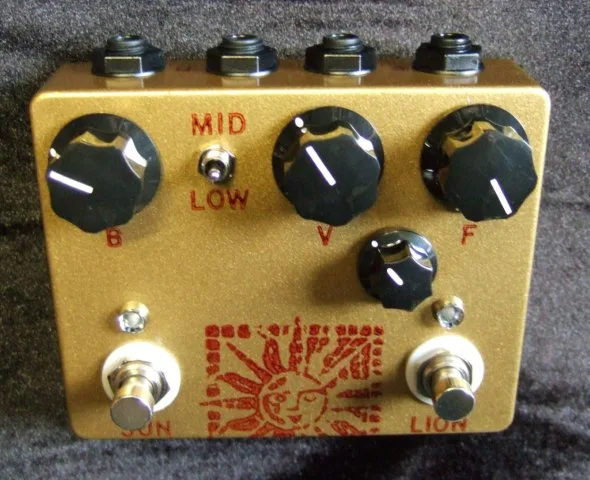
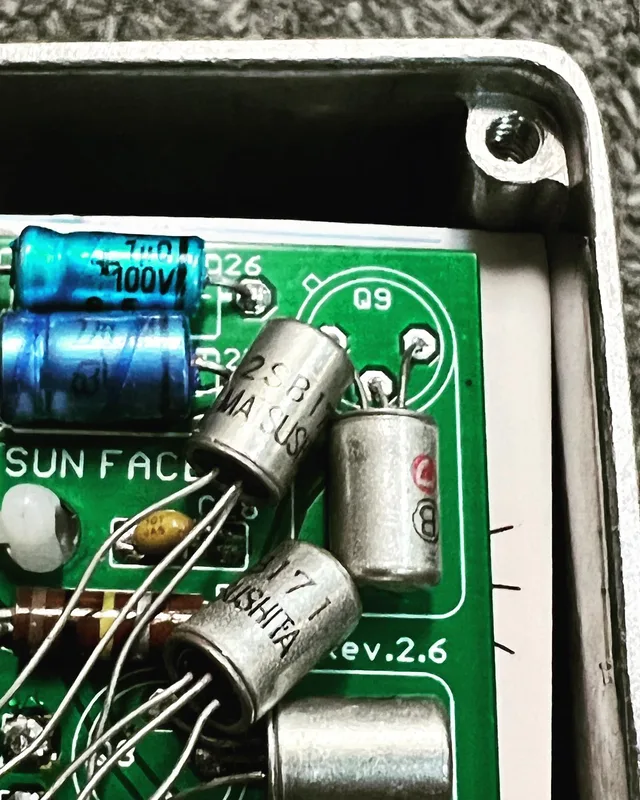
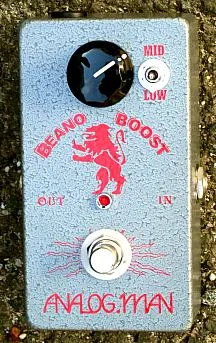
- Analog Man Sun Lion, a Rangemaster and Sun Face fuzz combo he got in 2007 and toured with through late 2008151
- Roland BeeBaa Fuzz, another Farm-era pedal1
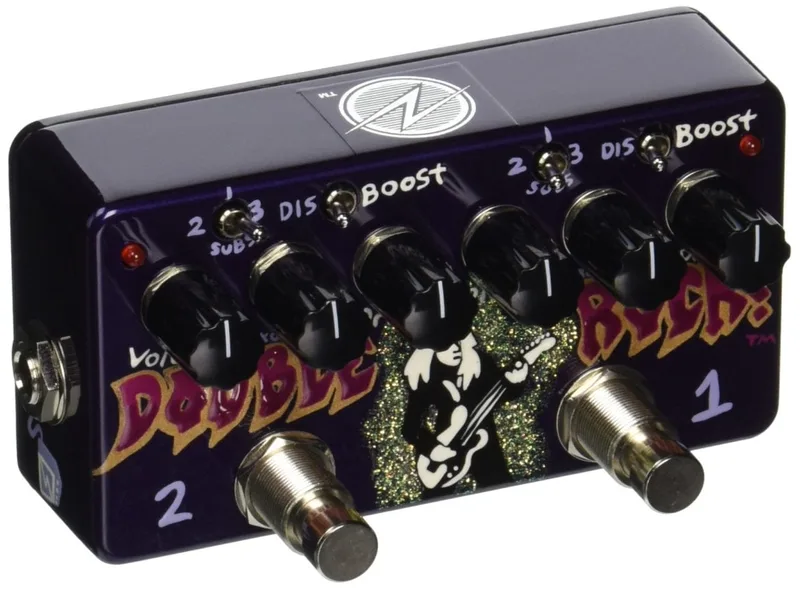
- Z.Vex Double Rock, a custom two-in-one Box of Rocks he requested from Z.Vex, of whose distortion pedals he has long been a fan16
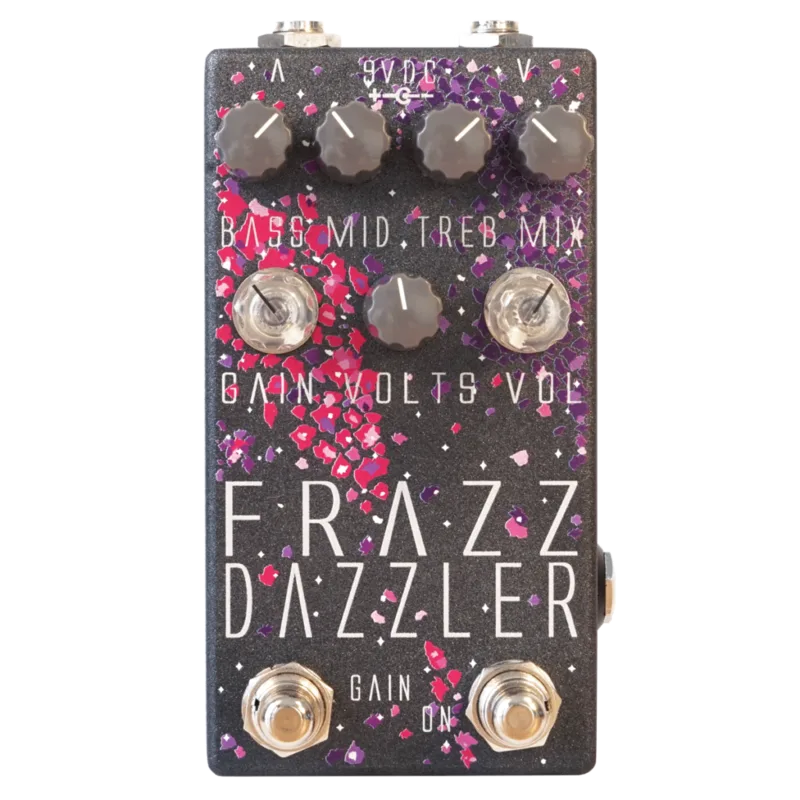
- Dr. Scientist Frazz Dazzler, on the 2010 to 2011 boards, combined with an overdrive1
His stacking habit is his own description: "I was using the Tonebender on most tracks, then adding different fuzzes with it, sometimes three, usually just two"9. On the album Farm he ran the Super Fuzz, Roland BeeBaa, Analog Man Sun Lion and Lovetone Big Cheese into a Vox Super Berkeley or a tweed Fender Deluxe1. The Stompbox Book feature on his collection names more: a Big Cheese and Meatball, Creepy Fingers and Godzilla, a Fuzz Factory, Jangle Box, Dope Priest, a fOXX Tone Machine and a Fuzz Face2.
The collection itself is a big part of the story. He had around ten Big Muffs in 1997, grown to approximately forty by 2011, all vintage USA Big Muffs from the early to late 1970s, in purple, blue, red and black1. A downstairs corner of his studio features more than 40 vintage Big Muffs with an array of paintjobs, knobs and road scars2. His love for Big Muffs was displayed through that collection in the documentary Fuzz: The Sound That Revolutionized The World12.
| Period | Fuzz at the center | Notes |
|---|---|---|
| 1985, first two albums | Deluxe Big Muff (IC version) | Stolen after the second album61 |
| 1987 onward | Vintage mid 1970s Ram's Head | Found in Arizona, main Muff since1 |
| 2007 to late 2008 tours | Analog Man Sun Lion added | Second unit in late 2008 with the Beano Boost side tuned for HI, HIGHER and HIGHEST15 |
| Farm era | Super Fuzz, BeeBaa, Sun Lion, Big Cheese | Into Vox Super Berkeley or tweed Fender Deluxe1 |
| 2010 to 2011 boards | Vintage Big Muff Pi plus Frazz Dazzler, Double Rock, Super Fuzz, Sun Lion | CAE RS-5 switching1 |
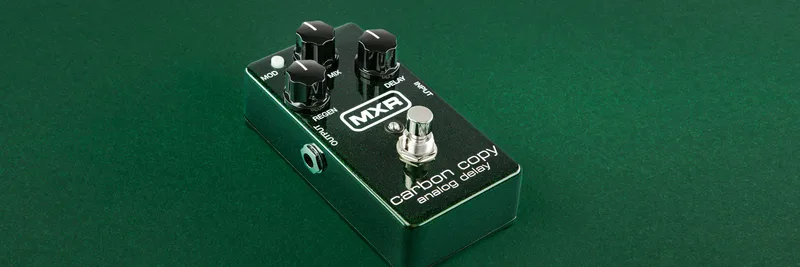
| 2012 board | Sun Lion replaced by Jerms Mark 1 Tone Bender/treble booster combo | Added MXR Carbon Copy, EHX POG2, ZVex Lo-Fi Loop Junky1 |
The Wren and Cuff signature pedal
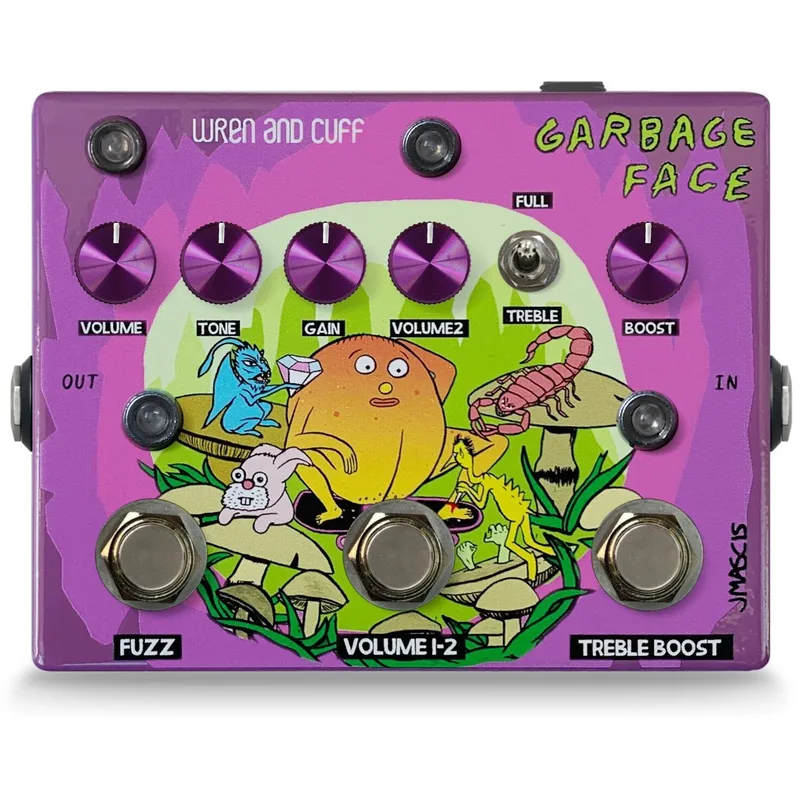
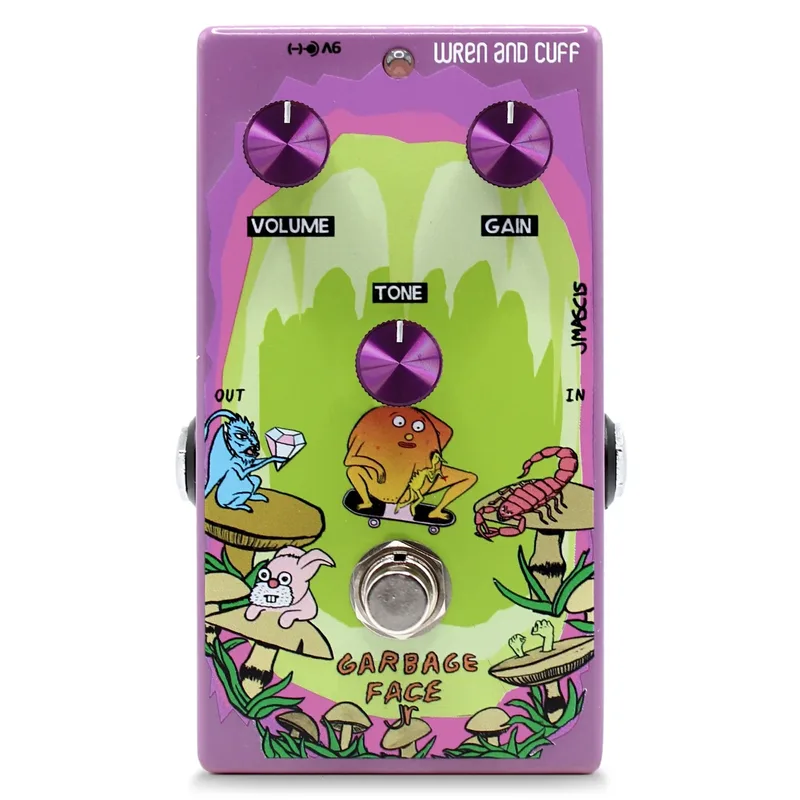
Mascis's favorite vintage Muff, that early 1970s Ram's Head bought on tour in 1987, became the model for a signature pedal with boutique maker Wren and Cuff. Matthew Holl of Wren and Cuff approached J with the idea of doing a signature pedal based on his favorite vintage Muff, and the two worked together for more than two years to ensure the final unit was a dead-on replica of his treasured pedal171819. The result, the Garbage Face, is a full-size dual volume fuzz and treble-booster pedal: a faithful recreation of his favorite Muff circuit with a vintage germanium transistor treble boost, selectable output volumes, true-bypass operation and a lifetime warranty1817.
MusicRadar described it as housing his 1970s Electro-Harmonix Ram's Head Big Muff and a germanium Dallas Rangemaster-style treble booster in one enclosure14. Premier Guitar's reviewer found it effectively replicates one of the most vital sections of Mascis's live rig in a single pedal, noting that his solutions for rhythm/lead contrast over the years included stacked Big Muffs, overdrives in front of Muffs, and treble boosters upstream from his Ram's Head, exactly the combination the Garbage Face puts in one box5. Pedal of the Day's review was blunt: "Well, it worked, and this pedal is absolutely incredible"20.
A smaller version, the Garbage Face Jr, was also built from that same 1987 Ram's Head19. Wren and Cuff say there has been no break in their relationship with J and that the Garbage Faces have not been discontinued21.
There are now two J Mascis signature Muffs: the Wren and Cuff Garbage Face, a part-by-part recreation of his number one Muff with a treble booster added, and the Electro-Harmonix J Mascis Ram's Head Big Muff Pi, a production EHX pedal. Wren and Cuff's own product page addresses the difference directly for players deciding between them1122.
The Electro-Harmonix signature Ram's Head
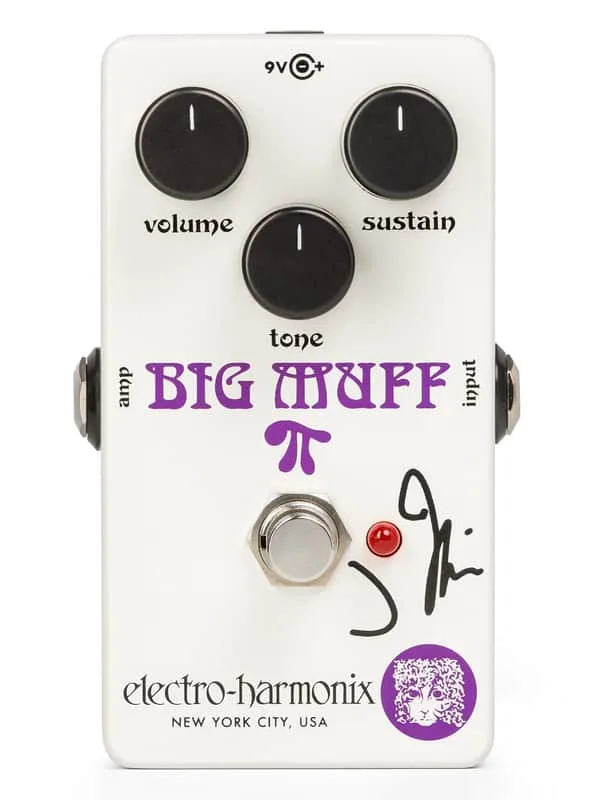
In August 2022 Electro-Harmonix honored Mascis with his own signature Ram's Head Big Muff Pi, a special-edition fuzz and sustainer pedal based on the celebrated 1973 V2 Violet Ram's Head Big Muff Pi, the version used by the guitarist of Dinosaur Jr236. It comes in a compact enclosure with special artwork and his signature printed on the chassis, in a white and violet finish2425. Electro-Harmonix describes it as paying homage to the sonic center of his tone of equal parts thickness and clarity25. Guitar.com reported the silicon fuzz pedal is described as being sonically more articulate than other Big Muffs, with a smooth and aggressive response and a focus on string separation and dynamics24.
Reviews were positive. Premier Guitar found it offers heaps of the balanced but scorching tone colors that make the music of Dinosaur Jr so melodically monstrous26. Guitar.com's reviewer wrote that if you want to recreate the famously massive Muff tones of the Dinosaur albums, "this pedal will absolutely get you there"27. Guitar World's verdict: "Ultimately, Dinosaur Jr. fans are going to love this. For everyone else, it's a fuzz pedal that is more usable than some of the more wooly examples"12. That review also noted a standard Ram's Head reissue lists for $15 less than the signature model12.
The board today: Boss tuner and RV-5 reverb
Beyond fuzz, the rest of the board has stayed deliberately simple in spirit. Despite the amount of gear he uses, it has always been set up to be as intuitive and uncomplicated as possible28. His touring pedalboard is a monstrous 70 pounds, an ongoing project with custom elements alongside a variety of Muffs, tubes and wiring techniques2. Back in summer 1986, touring with Sonic Youth, he shredded through sets with a small pedalboard2.
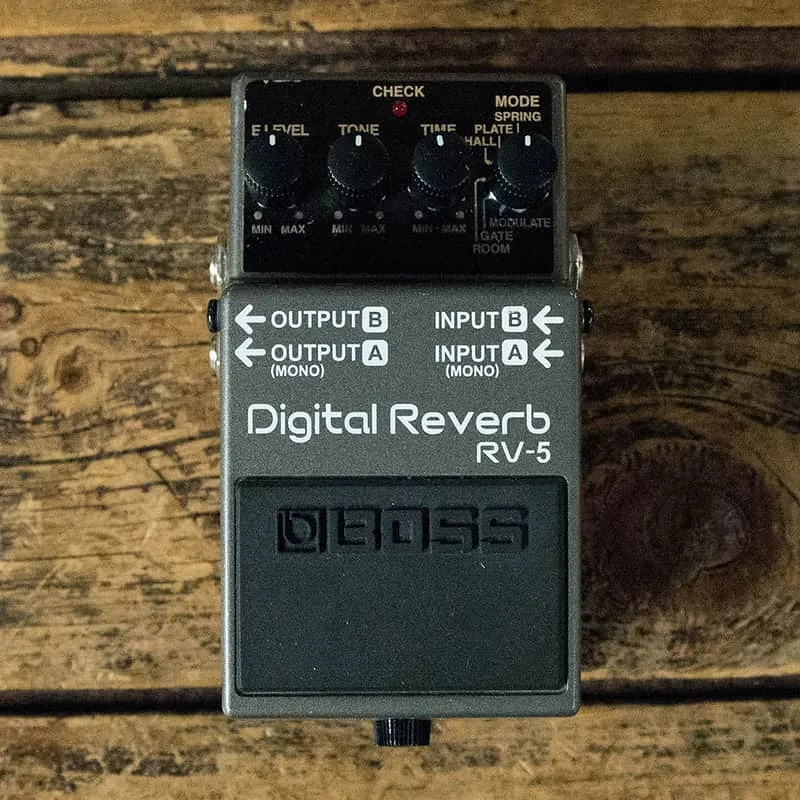
Two BOSS pedals are fixtures. The RV-5 Digital Reverb is still a permanent fixture on his board28. The RV-5 is a digital reverb pedal whose Mode knob selects Plate, Hall, Room, Modulate, Spring or Gate reverb modes, and Pedal of the Day's review praised its rugged enclosure, sturdy knobs and a stomp switch that "would need to get run over by a semi to break, maybe"29. For tuning, he uses BOSS chromatic tuner pedals and is a fan of the TU-3S mini tuners, which he has used in his main rig and on a small fly pedalboard28.
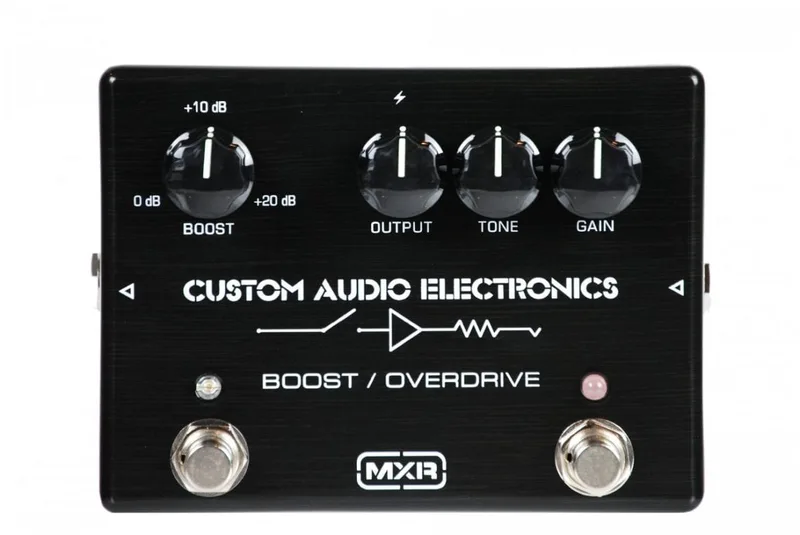
His 2010 to 2011 boards were built around a Custom Audio Electronics RS-5 switching system from Bob Bradshaw1. Bradshaw had put together Mascis's first rack effects and switching setup back in 1997 for the Hand It Over tour, featuring a Ram's Head Big Muff and a Triangle Big Muff1. The 2010 to 2011 pedal list gives a full picture of the rig around the switching system1:
- Vintage Electro-Harmonix Big Muff Pi
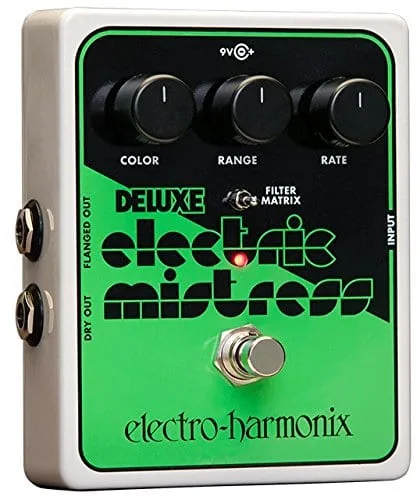
- Electro-Harmonix Deluxe Electric Mistress flanger
- Dr. Scientist Frazz Dazzler, combined with an overdrive
- Z.Vex custom Double Rock (two Box of Rocks)
- MC-FX Super Fuzz
- Analog Man Sun Lion
- RMC wah
- Tube Works Real Tube Overdriver
- KR Musical Products Mega Vibe
- Custom Audio Japan Twin tremolo
- Boss RV-5 Digital Reverb
- Eventide Time Factor delay
- Boss tuner, mute switch and CAE power supply
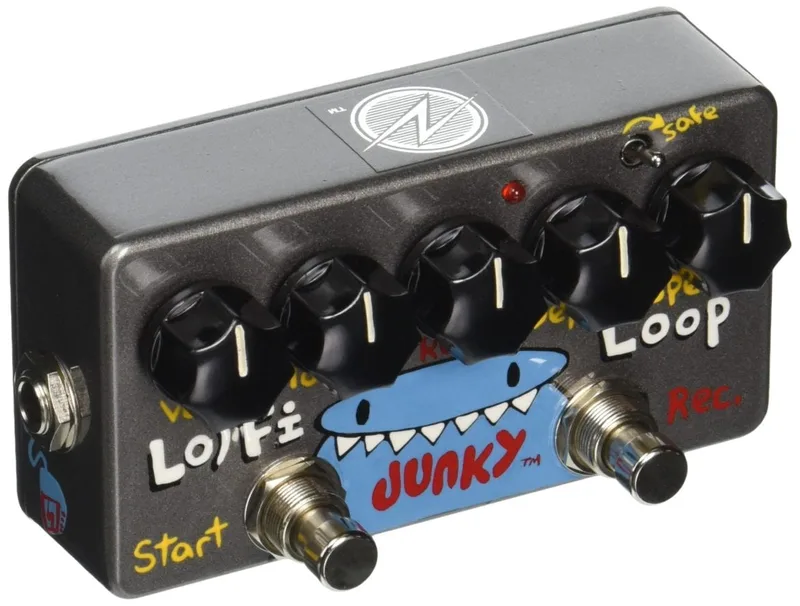
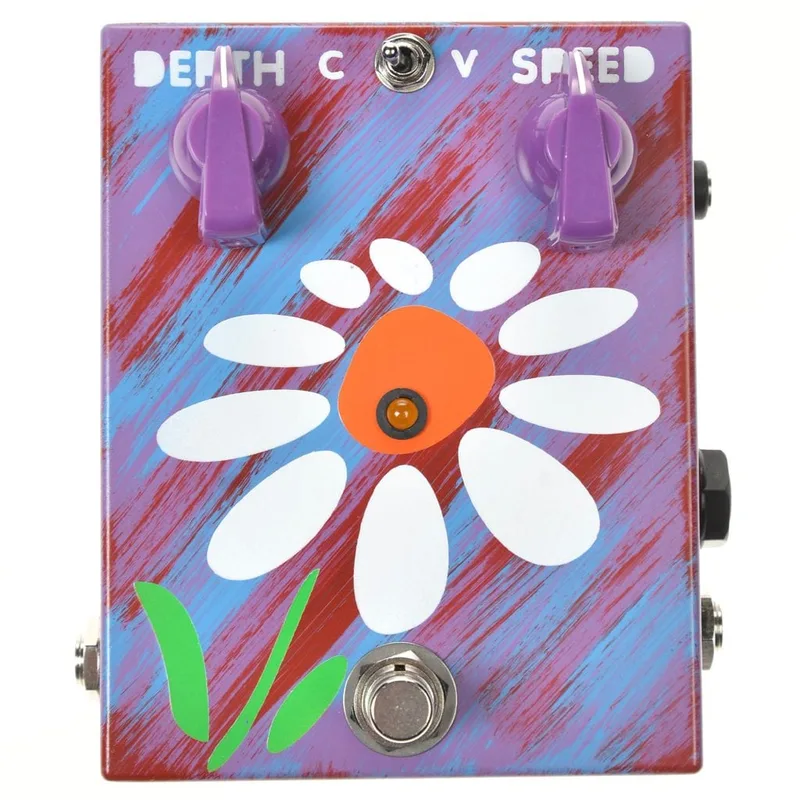
The 2012 board swapped the Sun Lion for a Jerms Mark 1 Tone Bender and treble booster combo, dropped the Frazz Dazzler, switched to an MXR Carbon Copy delay, and added an EHX POG2 and a ZVex Lo-Fi Loop Junky1. He has also used a univibe clone live since the early 1990s, and is among the players associated with JAM Pedals' RetroVibe3031.
The guitars out front
Mascis prefers Fender Jazzmasters and Telecasters and has his own signature Fender Jazzmaster, making him one of the select band of Fender endorsees with not one but two signature models, a Fender and a Squier Jazzmaster19. He favors old instruments: "I'll buy a lot of refinished ones where the headstock's been cracked or something but they still have the sound, but they're a little bit cheaper"9. Guitar.com's review of his signature Muff noted he is no stranger to signature models, from the Squier Jazzmaster to the Garbage Face and the Ram's Head Big Muff Pi27.
News
Questions
What Big Muff does J Mascis use?
His main Big Muff is a vintage mid 1970s Ram's Head version, which he found in Arizona on tour in 1987 and has used in the studio and on tour ever since. He started out on a Deluxe Big Muff, the old IC version, and later moved to vintage version 1 and version 2 Big Muffs, but the Ram's Head became the backbone of Dinosaur Jr's live sound.
How many Big Muffs does J Mascis own?
He had around ten Big Muffs in 1997, and by 2011 that collection had grown to approximately forty. A downstairs corner of his studio holds more than 40 vintage Big Muffs with an array of paintjobs, knobs and road scars, including purple, blue, red and black Ram's Head examples.
What fuzz pedals did J Mascis use on Farm?
For the album Farm he used a lot of different fuzz pedals, including the Super Fuzz, the Roland BeeBaa Fuzz, the Analog Man Sun Lion, and the Lovetone Big Cheese, running into a Vox Super Berkeley or a tweed Fender Deluxe amp. He also chains two, sometimes three, vintage-style fuzzes together, usually just two.
What switching system does J Mascis use on his pedalboard?
His 2010 to 2011 pedalboards were built around a Custom Audio Electronics RS-5 switching system from Bob Bradshaw. Bradshaw had earlier put together his first rack effects and switching setup in 1997 for the Hand It Over tour, a rig that featured a Ram's Head Big Muff and a Triangle Big Muff.
What tuner does J Mascis use?
He uses BOSS chromatic tuner pedals and is a fan of the TU-3S mini tuners, which he has used in his main rig and on a small fly pedalboard. Despite the amount of gear in his setup, it has always been arranged to be as intuitive and uncomplicated as possible.
What guitars does J Mascis play with his pedals?
He prefers Fender Jazzmasters and Telecasters and has his own signature Fender Jazzmaster, plus a signature Squier Jazzmaster, making him one of the few Fender endorsees with two signature models. He favors old guitars and often buys refinished ones with cracked headstocks because they are cheaper but still have the sound.
What Big Muff does J Mascis use?
His main Big Muff is a vintage mid 1970s Ram's Head version, which he found in Arizona on tour in 1987 and has used in the studio and on tour ever since. He started out on a Deluxe Big Muff, the old IC version, and later moved to vintage version 1 and version 2 Big Muffs, but the Ram's Head became the backbone of Dinosaur Jr's live sound.
How many Big Muffs does J Mascis own?
He had around ten Big Muffs in 1997, and by 2011 that collection had grown to approximately forty. A downstairs corner of his studio holds more than 40 vintage Big Muffs with an array of paintjobs, knobs and road scars, in purple, blue, red and black Ram's Head examples among them.
What fuzz pedals did J Mascis use on Farm?
For the album Farm he used a lot of different fuzz pedals, including the Super Fuzz, the Roland BeeBaa Fuzz, the Analog Man Sun Lion, and the Lovetone Big Cheese, running into a Vox Super Berkeley or a tweed Fender Deluxe amp. He also chains two, sometimes three, vintage-style fuzzes together, usually just two.
What switching system does J Mascis use on his pedalboard?
His 2010 to 2011 pedalboards were built around a Custom Audio Electronics RS-5 switching system from Bob Bradshaw. Bradshaw had earlier put together his first rack effects and switching setup in 1997 for the Hand It Over tour, a rig that featured a Ram's Head Big Muff and a Triangle Big Muff.
What tuner does J Mascis use?
He uses BOSS chromatic tuner pedals and is a fan of the TU-3S mini tuners, which he has used in his main rig and on a small fly pedalboard. Despite the amount of gear in his setup, it has always been arranged to be as intuitive and uncomplicated as possible.
What guitars does J Mascis play with his pedals?
He prefers Fender Jazzmasters and Telecasters and has his own signature Fender Jazzmaster, plus a signature Squier Jazzmaster, making him one of the few Fender endorsees with two signature models. He favors old guitars and often buys refinished ones with cracked headstocks because they are cheaper but still have the sound.
Sources (31)
- J Mascis Big Muffs, Kit Rae (The Big Muff Page, kitrae.net), 2011-08-02
- J’s Big Muff Museum, Stompbox Book (stompboxbook.com), 2020-12-30
- The Big Muff History of All Versions Part 1, Kit Rae (kitrae.net), 2024-04
- J Mascis, Stompbox Book
- Melt Faces with a Muff-y Machine Made for Mascis, Premier Guitar, 2020-04-09
- J Mascis Is Honored by Electro-Harmonix With Signature Ram's Head Big Muff Pi, GuitarPlayer (www.guitarplayer.com), 2022-08-17
- Channel your inner J Mascis with the Wren and Cuff Garbage Face, Guitar.com, 2020-04-14
- Introducing the Electro-Harmonix J Mascis Ram's Head Big Muff Pi, MusicRadar, 2022-08-16
- Interview: J Mascis on Fender Jazzmasters, fuzz pedals and I Bet On Sky, MusicRadar, 2012-11-26
- A Fuzz and Muff pedal Timeline, Kit Rae (kitrae.net), 2014-07
- The Big Muff History of All Versions Part 1, Kit Rae (www.kitrae.net), 2023-02
- Electro-Harmonix J Mascis Ram's Head Big Muff review, Guitar World, 2022-12-02
- Big Muff Versions_Quick Identifier, Kit Rae (kitrae.net), 2026
- Pioneers of fuzz: 13 guitarists who defined the fuzz pedal, MusicRadar, 2020-07-23
- Analog Man Sun Lion Fuzz Booster Pedal, Analog Man (analogman.com), 2019
- J Mascis' Tone? ZVEX Vexter Double Rock, Delicious Audio, 2015-08-06
- J Mascis Garbage Face Jr, Wren and Cuff
- J Mascis Garbage Face, Wren and Cuff
- New Pedal: Wren And Cuff Garbage Face Jr, Delicious Audio, 2022-05-24
- Wren and Cuff J Mascis Garbage Face Fuzz Boost, pedal-of-the-day.com, 2021-01-29
- About the EHX J Mascis Big Muff, Wren and Cuff
- Wren and Cuff Garbage Face: J Mascis tone for your pedalboard, happymag.tv, 2020-04-13
- Electro-Harmonix J Mascis Signature Ram's Head Big Muff, Delicious Audio, 2022-09-14
- J Mascis finally gets a signature Big Muff, based on a rare 70s fuzz, Guitar.com, 2022-08-17
- J Mascis Ram's Head Big Muff Pi, Electro-Harmonix
- J Mascis Ram's Head Big Muff Pi Review, Premier Guitar, 2022-11-24
- Electro-Harmonix J Mascis Ram’s Head Big Muff Pi review, Guitar.com, 2022-10-19
- Behind the Board: Mattias Johansson With The Cure, Dinosaur Jr., and The Black Crowes, BOSS (articles.boss.info), 2025-12-18
- Boss RV-5 Digital Reverb, Pedal of the Day (www.pedal-of-the-day.com), 2016-04-04
- J Mascis (Dinosaur Jr), JAM Pedals (www.jampedals.com)
- "Popped Art" RetroVibe mk.4, JAM Pedals (www.jampedals.com)