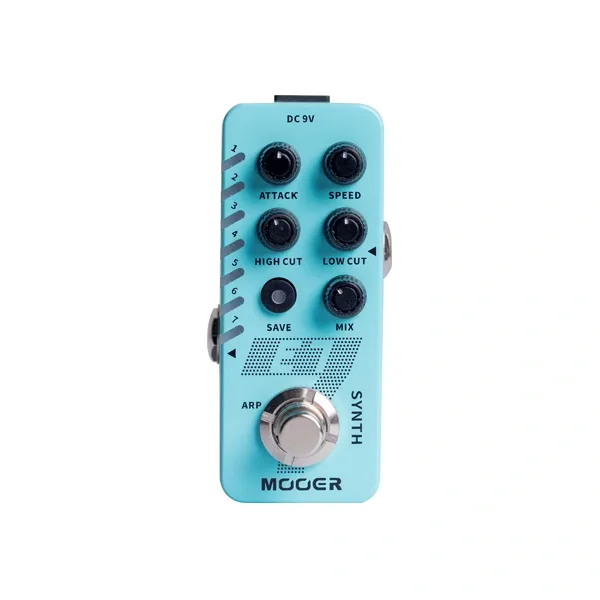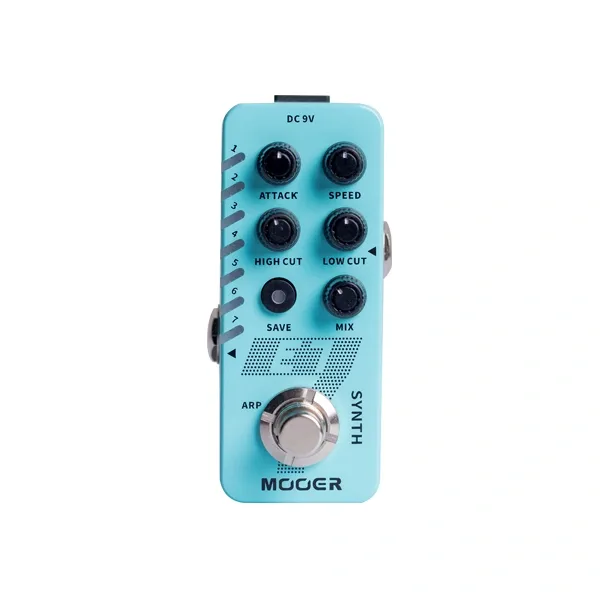


The Mooer E7 is a polyphonic guitar synth pedal in a mini stompbox format, made by the Chinese manufacturer Mooer Audio. It turns your guitar signal into seven analog-style synth voices, from trumpet and organ to ambient pads and an 8-bit setting reminiscent of classic video game soundtracks, and it does it without special pickups or cables123. Mooer's own product page calls it simply the "Polyphonic Guitar Synth Pedal"1.
What makes the E7 unusual is the combination: Delicious Audio described it as the first stompbox of its kind in a mini format, and a genuinely polyphonic one at that2. It came out in late 2019, and Guitar World's mini pedal buying guide summed it up as "a polyphonic synth with an arpeggiator that fits in the palm of your hand"45.
Polyphonic synth sounds in a mini pedal
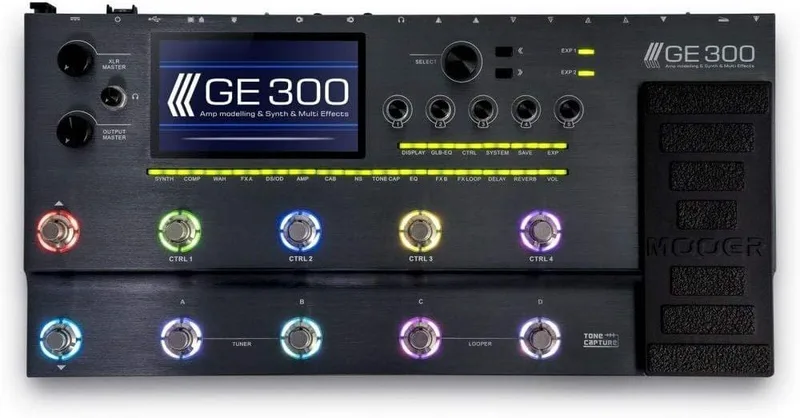
The E7's synth engine is borrowed from bigger company hardware: gearnews.com reported that the pedal is based on the synth engine of Mooer's flagship GE300 multi-effect3. That engine drives seven synth voices, listed by Delicious Audio as:
- Trumpet
- Organ
- Sea wave
- Weeyo
- Saw wave
- 8bits
- EDM
- Pad2
The range of tones runs from organ-like effects and ambient synth pads to the 8-bit setting, and, as gearnews.com put it, "a trumpet"3. MusicRadar described the pedal as offering seven different types of analog synth sounds in a mini guitar effects pedal format6.
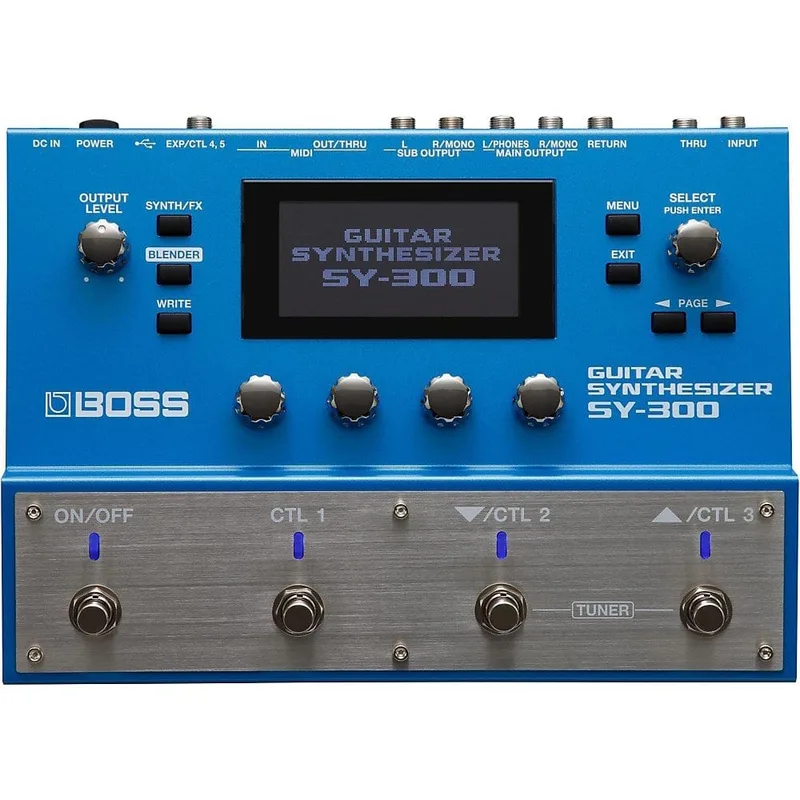
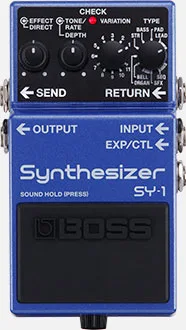
Because the pedal is polyphonic, chords hold their shape: each note you play gets its own synth voice rather than the pedal collapsing everything to one note, the limitation that monophonic synth pedals impose. Guitar World's buying guide noted the E7 requires no special pickups or cables, a contrast with older guitar synth systems that needed a hexaphonic pickup mounted at the bridge4. If you are weighing the alternatives, our synth pedals page covers the wider field, including larger polyphonic units like the Boss SY-300 and Boss SY-1.
Controls and the arpeggiator
The E7's patches are edited through four top knobs, with a fifth control handling preset storage27:
| Control | What it does |
|---|---|
| Attack | Shapes the attack of the patch2 |
| Speed | Controls the speed of the arpeggiator2 |
| High Cut | Rolls off high frequencies in the patch2 |
| Low Cut | Rolls off low frequencies in the patch2 |
| Save | Stores up to seven presets2 |
Seven LED lights on the left side of the pedal indicate the chosen patch2. The built-in arpeggiator, whose rate is set by the Speed knob, automatically cycles the notes you play in a pattern, a feature Guitar World highlighted in its mini pedal roundup4.
One thing the E7 does not have: a resonance control. Delicious Audio noted that although the pedal has both high and low pass filters, there appears to be no Resonance function2. Players who want a resonant, squelchy filter sweep as part of their synth sound will not find it here.
Presets and firmware
The Save button stores up to seven presets, one per synth voice. gearnews.com pointed out a detail worth knowing: "you can save the sound with the SAVE button (storing is not global, but per sound or preset)"3. In other words, each of the seven voices keeps its own stored settings rather than one global setting applying to all of them.
The firmware is upgradeable via USB, according to Mooer's product page and the MusicPlayers.com press release, so the maker can revise the pedal's software after purchase17.
A Micro series pedal
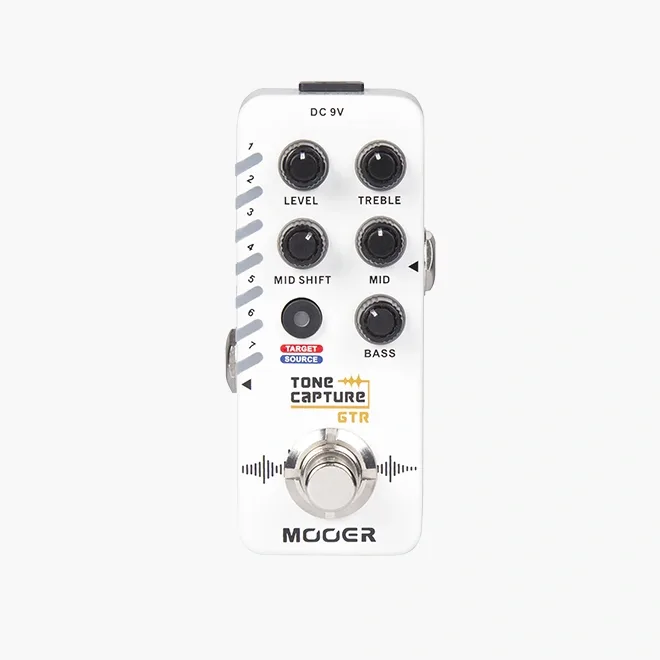
The E7 is the second pedal of Mooer's New Micro series, following the company's return to the mini pedal format17. MusicRadar noted it is a similar size and format to Mooer's Tone Capture GTR pedal6. Mooer built its reputation on small-format stompboxes, and the E7 carries that approach into synth territory: Delicious Audio's synth pedal buying guide called it the first synth pedal in mini format, released in late 20195.
Videos
MOOER Audio
Brett Kingman
TheGuitarGeek
Questions
Is the Mooer E7 truly polyphonic?
Yes. Mooer describes the E7 as a Polyphonic Guitar Synth Pedal, and press coverage including Guitar World and Delicious Audio confirms it tracks polyphonically. It needs no special pickups or cables, so chords come out as chords rather than collapsing into a single synth voice.
How many presets can the Mooer E7 save?
The E7 has seven preset slots. A Save button stores your edited sound, and saving is per sound or preset rather than global, so each of the seven synth voices keeps its own stored settings.
Does the Mooer E7 have a resonance control?
No. The pedal has high and low pass filters, controlled by the High Cut and Low Cut knobs, but Delicious Audio's coverage notes there is no Resonance function, so you cannot add the resonant peak that many filter-based synth pedals offer.
What power supply does the Mooer E7 use?
A 9V DC power supply is recommended. Like most of Mooer's Micro series pedals, the E7 is a small-format stompbox, so plan on a standard pedalboard power supply rather than a battery.
Can the Mooer E7 firmware be updated?
Yes. The firmware is upgradeable via USB, according to Mooer's product page and press coverage, so the pedal's sounds and behavior can be revised by the maker after purchase.
What synth sounds does the Mooer E7 include?
Seven analog-style synth voices: Trumpet, Organ, Sea wave, Weeyo, Saw wave, 8bits, EDM and Pad, plus a built-in arpeggiator. The range runs from organ-like effects and ambient pads to an 8-bit setting reminiscent of classic video game soundtracks.
Sources (7)
- E7_MOOER Audio, MOOER Audio
- Mooer E7 Polyphonic Synth Micro Pedal, Delicious Audio, 2021-10-19
- Mooer E7 Synth Micro Pedal: Synthesis for guitarists (with added trumpet), gearnews.com, 2019-10-30
- Best mini-pedals for guitarists: top space-saving stomps, Guitar World, 2020-09-25
- Best Synth Pedals For Guitar In 2025 (Monophonic & Polyphonic), Delicious Audio, 2025-02-21
- Mooer Audio launches the small-format E7 Synth pedal for guitar, MusicRadar, 2019-10-30
- Introducing the E7, the second member in the New Micro Series of Pedals from MOOER, MusicPlayers.com, 2019-10-30