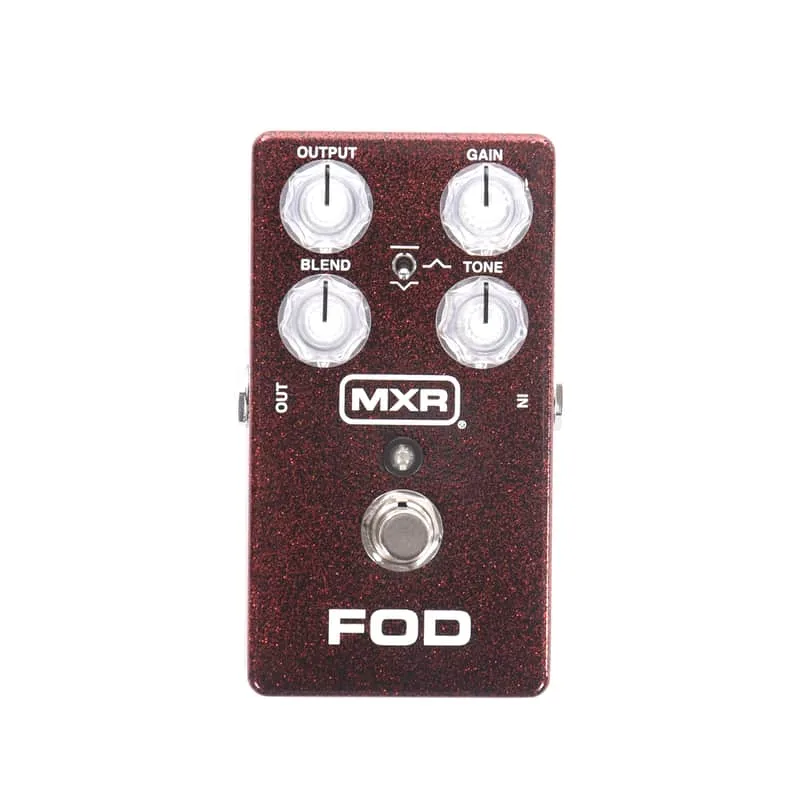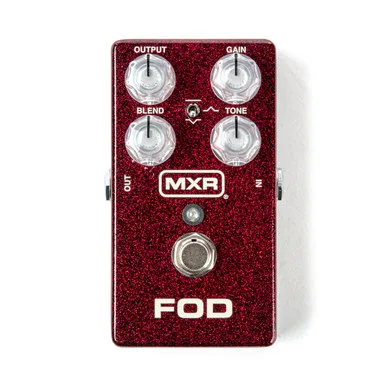


The MXR FOD Drive is an overdrive pedal from MXR that puts two drive channels in one housing: a High Gain channel and a Crunch Gain channel, each with its own Gain and Volume controls. A Blend control mixes the two signals, which MXR describes as recreating the experience of blending the overdriven sounds of two highly coveted amp stacks from your pedalboard1.
The circuit is based on a pair of heavily customized guitar amplifiers, one modified for super scooped high-gain saturation and one for punchy midrange crunch, which the MXR team fit into a single box as separate channels1. MXR does not say which amps were modeled2. The pedal was announced in September 2020, and Dunlop now lists it as a legacy product, no longer in production1.
Where it came from
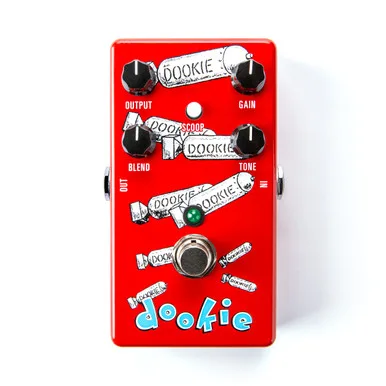
Guitar World's reviewer, Trevor Curwen, places the FOD Drive in MXR's line as a variant of the MXR Dookie Drive concept, which was based on the rig of modified Marshalls that Billie Joe Armstrong used on Green Day's third album, but with no artist affiliation3. Delicious Audio goes further, reporting that the circuit lineage traces back to Armstrong's two custom Marshall 100w Plexi Super Lead amps5.
MXR itself stays quiet on the subject: the company does not say which amps were modeled, only that its engineers worked from a pair of heavily customized amplifiers of "legendary make and model"12. So while the FOD Drive shares its DNA with the Dookie Drive idea of blending two modified amp voices, it is sold as a straight MXR pedal rather than a signature model.
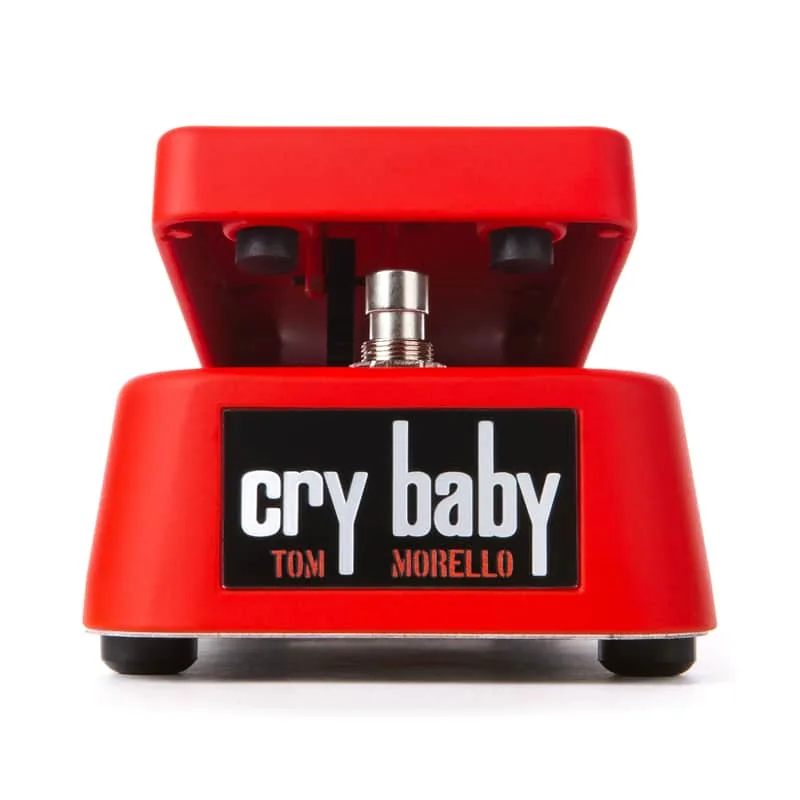
The pedal was announced in September 2020 alongside the Tom Morello Cry Baby Wah, with an MSRP of $242.84 and a street price of $169.994. Guitar World reported it available for preorder at Sweetwater at $169.996.
The controls
The front panel is organized around the two channels. To the right sits the High Gain channel, with Gain controlled by a front-panel knob3. Each channel has its own Gain and Volume controls, so you can dial in a different sonic signature for each side14.
| Control | What it does |
|---|---|
| High Gain Gain and Volume | Set the drive level and output of the high-gain channel1 |
| Crunch Gain Gain and Volume | Set the drive level and output of the crunch channel1 |
| Blend | Sets the mix ratio of the two signals1 |
| Tone | Sets the EQ for the overall output signal1 |
| Scoop switch | Chooses flat, scooped, or boosted midrange voices1 |
The Blend control is the heart of the concept. As MXR puts it, it "allows you to set the mix ratio of the two signals, just like having two separate amps running into a mixing box"1. Run the Crunch side louder for a mid-forward push, lean on the High Gain side for scooped saturation, or set them evenly for a blended voice neither channel gives alone.
The Scoop switch shapes the midrange in three positions. The manual describes it plainly: it "selects flat, scooped, or boosted midrange frequencies"7. That gives you a mid-cut for a heavier rhythm voice, a flat setting for a neutral response, or a mid boost to push a solo through a band, all without rebalancing the Tone knob.
Guitar World's reviewer also notes that the Output knob adds tailored EQ and extra boost, adding to the options on top of the two channels3.
Powering it
The FOD Drive runs on a 9V battery or a 9V DC adapter, drawing 11mA3. Dunlop specifies its ECB003 9-volt adapter, or the DC Brick, Iso-Brick and Mini Iso-Brick power supplies, none of which come in the box1.
Dunlop lists the FOD Drive as a legacy product that is no longer in production1. Since it is discontinued, new-old-stock and secondhand listings are the realistic ways to find one.
What reviewers said
Published reactions to the launch were measured, since several outlets wrote before playing one. Gearnews' writer thought the concept held up: "as on paper, it sounds very promising"2. On price, the same writer allowed that "It may not be the cheapest mass produced pedal out there, but if it does what it claims to, I think it will be worth it," comparing its cost against the expense of blending two real amps2.
Guitar World's review listed the pedal's price among its pluses, calling it a "Good price"3, and the launch street price of $169.99 sat below several other dual-voice drives of the era46.
"The Blend control then allows you to set the mix ratio of the two signals, just like having two separate amps running into a mixing box."
Videos
Sweetwater
jimdunlopusa
Guitar Bonedo
News
Questions
Is the MXR FOD Drive discontinued?
Yes. Dunlop lists the FOD Drive as a legacy product that is no longer in production. It was launched in 2020 with a $169.99 street price, and secondhand units are the main way to find one now. Its circuit concept carries on from the earlier MXR Dookie Drive, but without any artist affiliation.
Is the MXR FOD Drive a Billie Joe Armstrong pedal?
Not officially. Guitar World describes it as a variant of the MXR Dookie Drive concept, which was based on Billie Joe Armstrong's modified Marshalls, but the FOD Drive has no artist affiliation. Delicious Audio reports the circuit lineage traces to Armstrong's two custom Marshall 100w Plexi Super Lead amps, while MXR itself does not name the amps it modeled.
What power supply does the MXR FOD Drive need?
It runs on a 9V battery or a 9V DC adapter, drawing about 11mA. Dunlop specifies its ECB003 9-volt adapter, or the DC Brick, Iso-Brick and Mini Iso-Brick power supplies, none of which are included with the pedal.
What does the Scoop switch on the FOD Drive do?
The Scoop switch selects between three midrange voices: flat, scooped, or boosted. The manual describes it as selecting flat, scooped, or boosted midrange frequencies, so you can shape how present or cut the mids sit without touching the Tone knob.
Sources (7)
- MXR® FOD™ DRIVE, Dunlop (jimdunlop.com)
- The MXR FOD Drive gives you two amp tones in one pedal, gearnews.com, 2020-09-16
- MXR FOD Drive review, Guitar World, 2021-04-08
- New Dunlop Tom Morello Cry Baby Wah & MXR FOD Drive, Premier Guitar, 2020-09-21
- MXR FOD Drive, Delicious Audio, 2022-10-15
- Harness dual-amp power in a compact pedal with MXR's new FOD Drive, Guitar World, 2020-09-16
- M251.pdf, Jim Dunlop, 2020
 Tom Morello