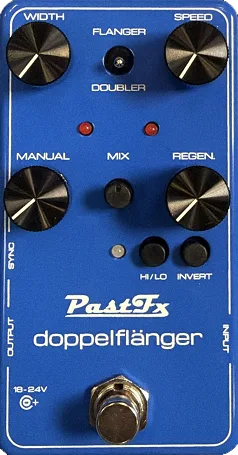
The PastFx doppelflänger is a modern take on a vintage 1970s Flanger/Doubler rack effect, rebuilt as a compact analog pedal1. It packs the two functions of the original MXR Flanger/Doubler rack unit into a 1590B style enclosure measuring 120 x 94 x 50mm: a through-zero style flanger and a doubler, selected by a front panel toggle1. Where the original rack circuit used two obsolete Reticon bucket brigade devices, the SAD1024 for flanging and the RD5101 for doubling, PastFX substitutes currently available Panasonic-family BBDs to keep the circuit all analog1.
Guitar Pedal X unveiled the pedal on 25 September 2026, reporting a price of $399 AUD, or $280 USD equivalent2.
Where the circuit comes from
The original 1970s MXR Flanger/Doubler was a rack unit, and Jim Dunlop, which now owns MXR, describes that circuit as all analog, "authentically capturing classic all-analog flanger and doubler effects featured on hallmark recordings from the '70s"31. Gearnews notes that the pedal format recreation of that unit contains the Flanger/Doubler circuit of the original, based on its bucket brigade circuitry4.
PastFX's approach is to rebuild the circuit with equivalent parts rather than emulate it digitally. The original used two Reticon BBDs that are now obsolete, so the doppelflänger uses a NOS Panasonic MN3007 with 1024 stages for the Flanger mode and an Xvive MN3005 with 4096 stages for the Doubler mode2. PastFX states it does not use low voltage BBDs such as the MN3207, MN3204 or MN3208, which the maker says results in higher headroom when the effect is engaged1.
The maker is candid about one vintage trait: the circuit has floor noise just like the original, particularly at longer doubler delay times, though on most occasions slightly lower floor noise than PastFX's own vintage unit1.
The controls
The front panel carries four knobs, a mode toggle, and two pushbuttons:
| Control | What it does |
|---|---|
| Speed | LFO speed control1 |
| Manual | Sets the fixed delay time; clockwise is shortest, counterclockwise is longest; no impact if Width is fully clockwise1 |
| Mix | Wet/dry blend; flanging works best at a 50:50 mix (12 o'clock)1 |
| Regen | Feedback/color; increases clockwise for more intense flanging or doubling1 |
| Flanger/Doubler toggle | Selects between the two modes1 |
| Hi/Lo pushbutton | Instrument (Lo) or Line level (Hi); pushed in is Line level1 |
| Invert button | Below Regen; allows negative feedback for what the maker calls pleasant tubular sounds; a blue LED illuminates1 |
On the Hi/Lo switch, PastFX notes a tradeoff: noise will be lowest in Lo mode, but Hi mode gives better headroom1. For the Doubler mode, the maker suggests doubling generally sounds best in fixed manual mode with Regen set to taste1.
The pedal also has a single CV port that serves as either CV In or CV Out, with the function chosen by an internal slider switch2.
What reviewers said
Guitar Pedal X's Stefan Karlsson reviewed the doppelflänger at launch. On the flanger side he was positive about its character2:
"The Flanger voicing is superb though, while it doesn't have the full versatility of my favourite PastFX Flanger - the 80/A"
That comparison places it against PastFX's own 80/A Flanger, which the reviewer prefers for versatility, while crediting the doppelflänger with a distinct voice of its own2.
How it differs from the alternatives
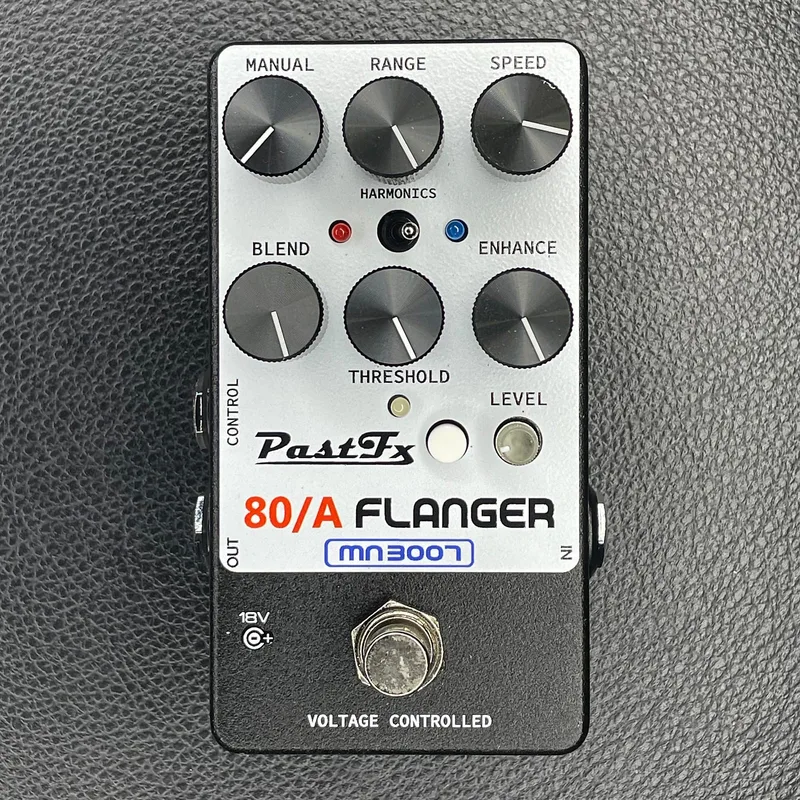
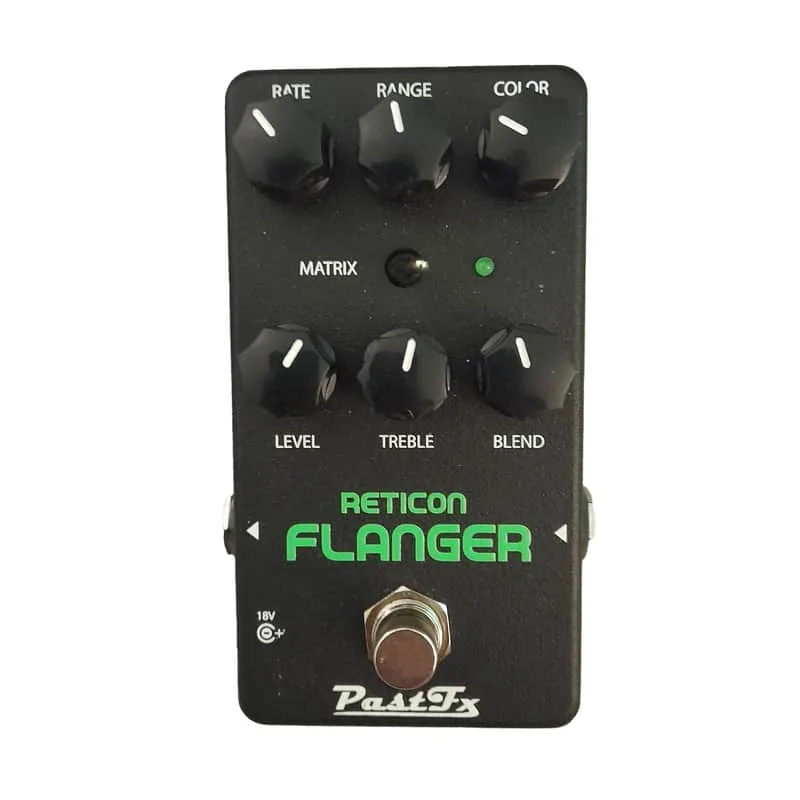
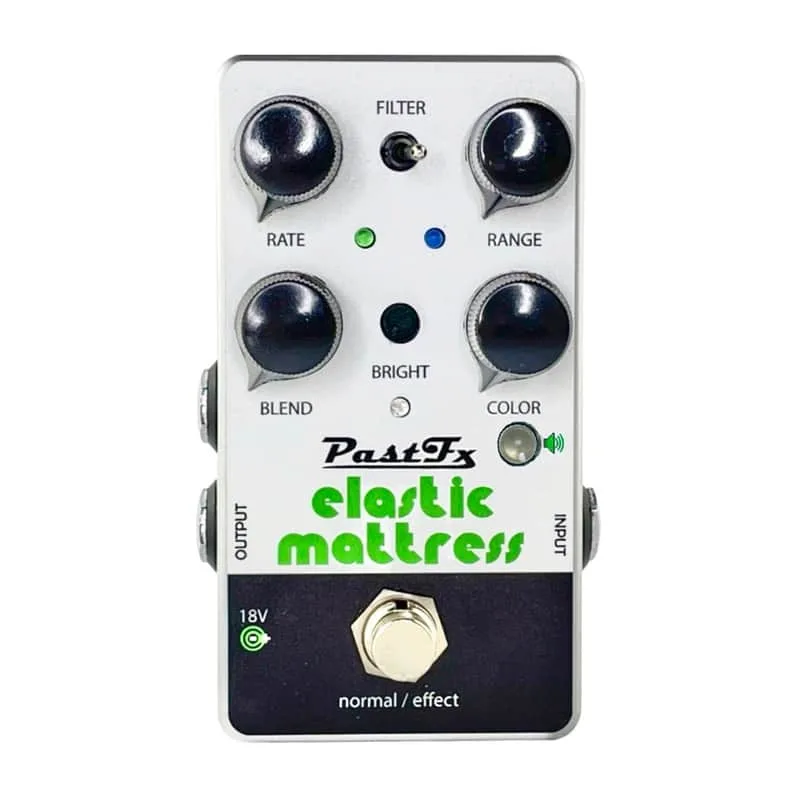
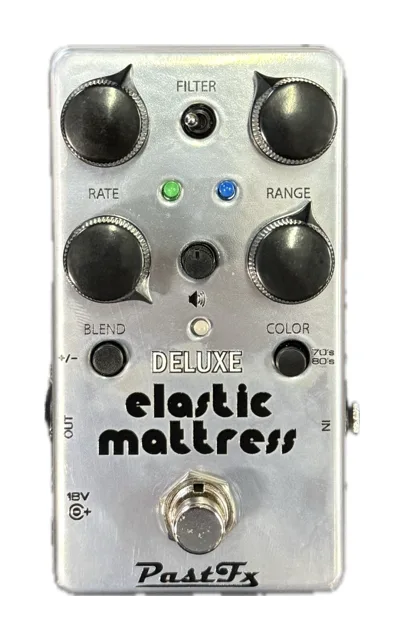
Compared with the MXR pedal format Flanger/Doubler that Dunlop builds from the same lineage, the doppelflänger is PastFX's independent recreation of the same 1970s rack circuit, using substitute BBDs for the unobtainable Reticon chips14. Its 18 to 24V DC requirement and 160mA draw set it apart from most modern flangers, and it offers no battery option1. Players comparing compact analog flangers can also look at PastFX's own Reticon Flanger and Elastic Mattress, or the wider field of flanger pedals.
The doppelflänger cannot run on a battery or a daisy chain. PastFX specifies a high quality 18 to 24V DC regulated supply with a Boss style negative tip only1.
Questions
Does the PastFx doppelflänger have true bypass?
Yes. PastFX specifies true bypass operation for the doppelflänger, so with the effect switched off your signal passes through without the circuit coloring it.
Can the PastFx doppelflänger run on a battery?
No. PastFX states there is no battery option. The pedal needs an 18 to 24V DC regulated power supply with a Boss style negative tip, drawing 160mA, which rules out a standard 9V supply.
What power supply does the doppelflänger need?
An 18 to 24V DC regulated supply with a center negative, Boss style negative tip connector. Current draw is 160mA. PastFX advises using only a high quality regulated supply.
Is the PastFx doppelflänger analog or digital?
It is all analog. The circuit uses two bucket brigade devices: a Panasonic MN3007 with 1024 stages for the Flanger mode and an MN3005 with 4096 stages for the Doubler mode.
What does the Hi/Lo switch do on the doppelflänger?
The Hi/Lo pushbutton selects instrument level (Lo, button out) or line level (Hi, pushed in). Noise is lowest in Lo mode, but Hi mode gives better headroom, which suits hotter signals or line level gear.
Is PastFx related to Buffalo FX?
No. PastFX is a separate maker. Beginning in Spring 2020 customers contacted PastFx asking whether it was a new offshoot of Buffalo FX that could fulfill outstanding orders, which it is not.
Sources (4)
- Flanger/Doubler, pastfx.com, 2026
- Guitar Pedal X, Guitar Pedal X, 2026-09-25
- MXR® FLANGER/DOUBLER, Jim Dunlop (jimdunlop.com)
- MXR Flanger/Doubler: Analog BBD Modulation, gearnews.com, 2026-08-11