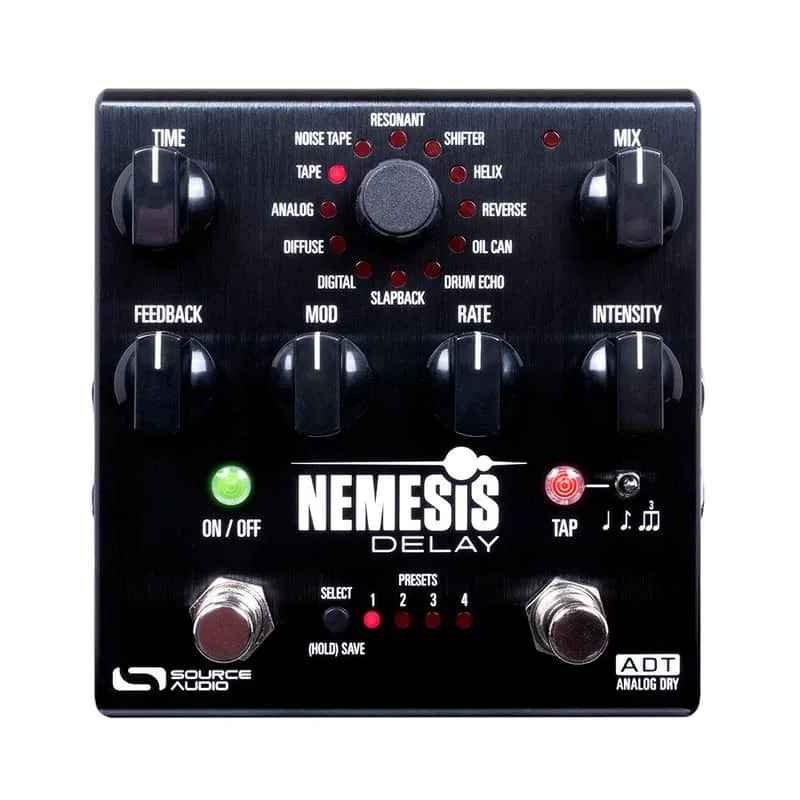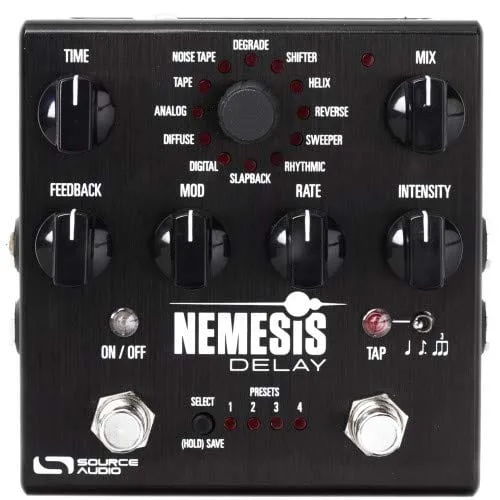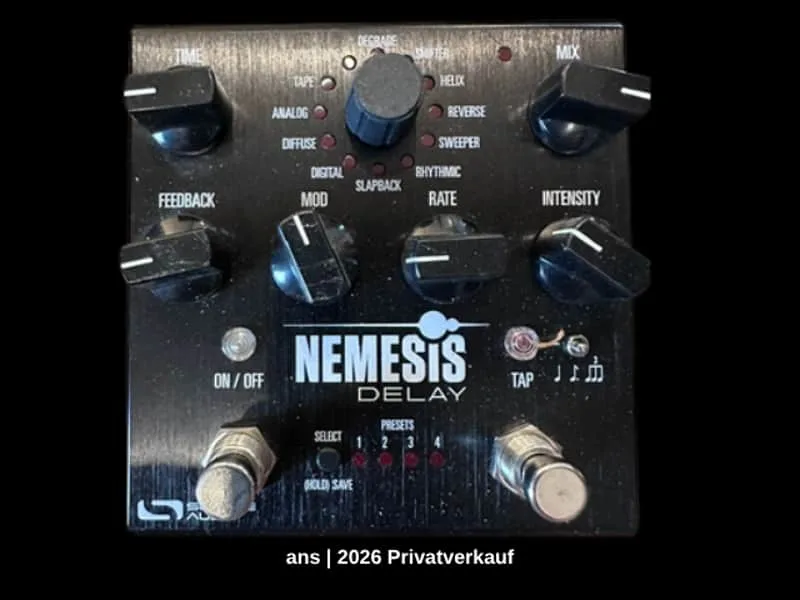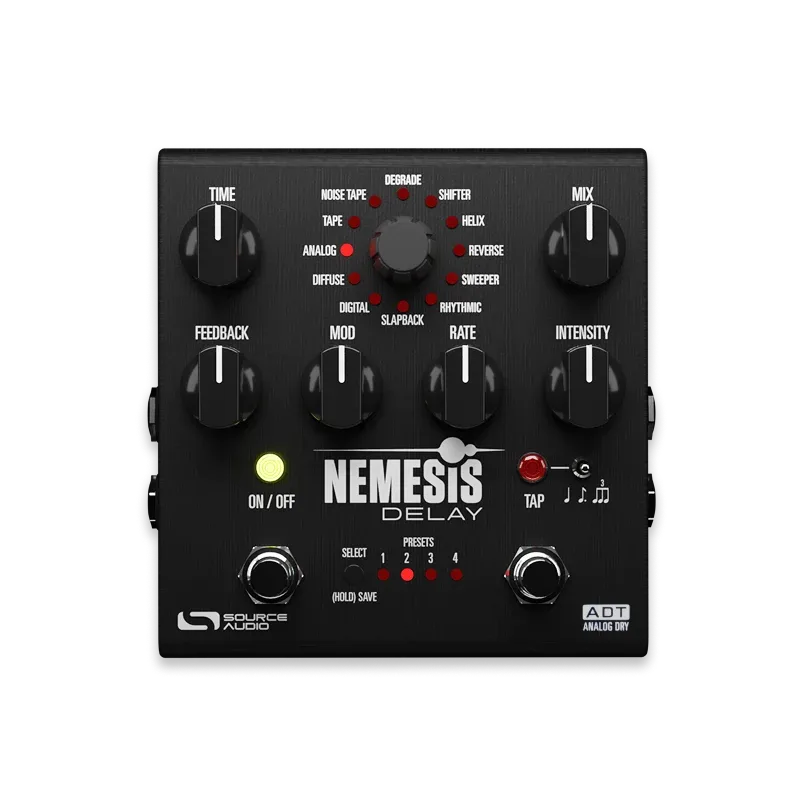


The Source Audio Nemesis Delay ADT is a stereo multi-delay pedal covering everything from tape and analog style echoes to pitch-shifting and reverse delays. It carries 26 delay engines, 128 preset memory, full MIDI control and an analog dry through signal path, the feature that gives the ADT version its name1.
The 26 delay engines
Source Audio describes the Nemesis as "a powerful multi-delay pedal with unmatched tone and flexibility," and the engine count is the heart of that: 26 delay engines in total, with twelve loaded on the pedal and the rest available through the free Neuro software for Mac and Windows or the Neuro Mobile App for iOS and Android1. The range runs, in Source Audio's words, "from classic tape and analog inspired sounds to modern pitch-shifting and reverse delays"1.
One example of the onboard engines is Slapback, which "delivers a short single-repeat echo based on early tape delay machines"1.
Controls, presets and MIDI
The pedal carries over the control layout of the original Nemesis: knobs for time, feedback, mod, rate, intensity and mix2.
| Control | What it does |
|---|---|
| Time | Sets the delay time |
| Feedback | Sets the number of repeats |
| Mod | Modulation on the repeats |
| Rate | Speed of the modulation |
| Intensity | Depth of the modulation |
| Mix | Balance of dry and delayed signal |
Controls on the Nemesis Delay ADT, carried over from the original model2.
Preset and control options include:
- 128 preset memory, with 8 presets accessible from the pedal's own controls and all 128 available over MIDI1
- 5-pin MIDI DIN and USB MIDI: program change messages recall up to 128 presets, continuous controller messages control multiple knob parameters, and MIDI clock syncs the delay time1
- A tap tempo switch for tapping in delay time, with beat divisions including quarter notes, dotted eighths and triplets1
- A Freeze control that loops a small portion of the delay continuously using the tap tempo switch1
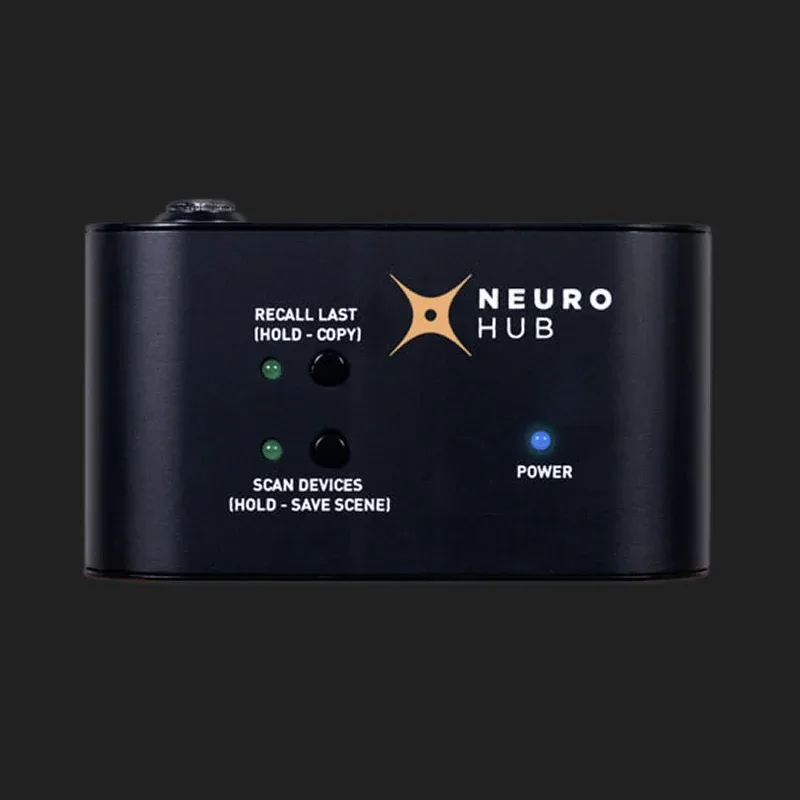
- External expression control: with a Neuro Hub connected, any TRS (tip hot) expression pedal can be assigned to any combination of knob parameters1
- A rear input that can be set to either expression or switch functionality2
- A Source Audio Control Input on a mini jack, for syncing directly with other Source Audio pedals2
On the MIDI side, gearnews notes that "up to 128 presets are available which you can switch between with an additional MIDI expression pedal"2.
Stereo operation and bypass
The Nemesis Delay ADT has stereo input and output. That supports stereo ping-pong delays, stereo phase inversion, or placing external effects loops before or after the delay1. For bypass, the pedal uses Source Audio's Universal Bypass, which uses high-quality signal relays for true bypass and transparent buffers for analog bypass, so the pedal can sit in either kind of rig1.
The ADT version and the One Series Nemesis
The Nemesis Delay ADT is the updated version of the One Series Nemesis Delay, sold by Source Audio as the SA 260A One Series Nemesis Delay ADT2. Like the original, it covers delay sounds from tape and analog voicings to pitch-shifting and reverse delays1. The ADT version also carries the Source Audio Control Input in mini-jack format, known from other Source Audio pedals, which allows direct syncing with other Source Audio pedals2.
The ADT version differs from the original Nemesis Delay in its analog dry through path and its engine count: 26 engines rather than the original's 24, with twelve on the pedal in both versions2.
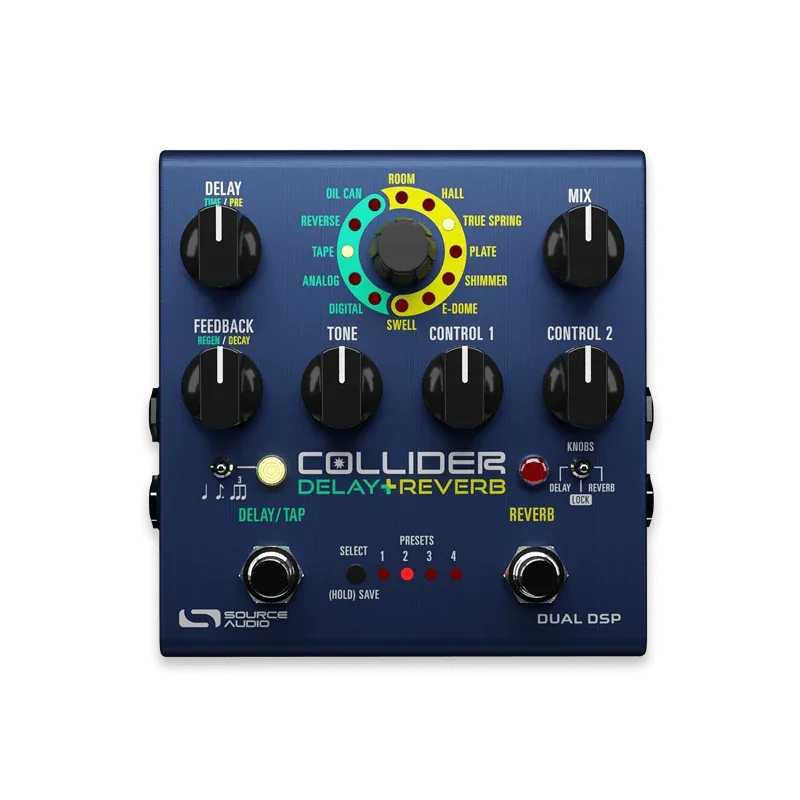
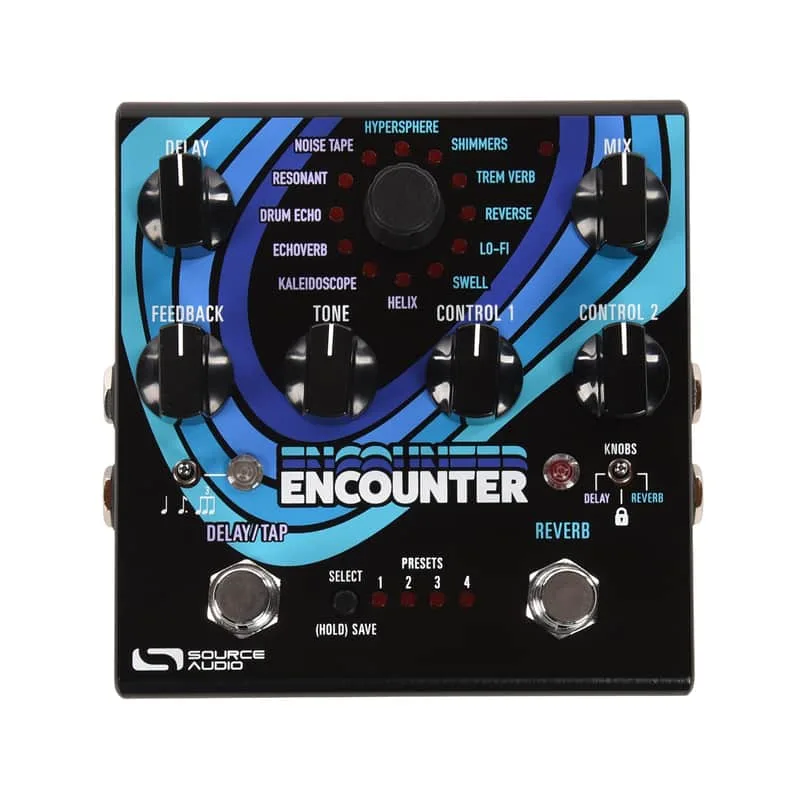
Players comparing it within Source Audio's current range should also know the Collider Delay + Reverb and the newer Encounter Ambient Delay+Reverb, which combine delay and reverb engines in one enclosure2.
Videos
sourceaudioeffects
Do Noise
Leon Todd
Sources (2)
- Nemesis Delay ADT, Source Audio
- Source Audio SA 260A, gearnews.com, 2023-11-20