
The Vertex Effects Vertex Buffer Module is a buffer module for pedalboards: a small enclosure holding four separate buffers that sits on your board and keeps the guitar signal strong through long cable runs and multiple pedals. Vertex describes its buffers as designed to have no sound of their own, "totally transparent, no color, no EQ, no distortion"1. The company also sells a related Buffer Interface; the Module version is the one built to bolt into a Vertex board.
What it does on a board
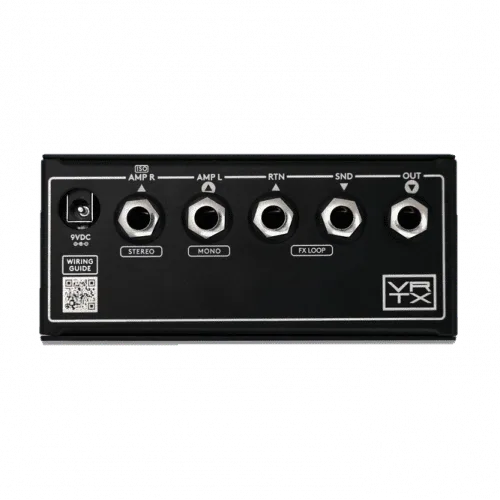
The four buffers are arranged around the signal path: one on the guitar input, one on each amp output, and one on the return. That layout supports mono, stereo, four cable method and wet/dry wiring, which is how the module is presented in Vertex's demo material2. The connections cover a guitar input/output, send and return, left and right amp feeds, and a 9VDC power input1.
The right amp output is transformer isolated, and it carries a polarity switch (push/push) so you can flip the phase of that feed1. The two outputs also differ in bandwidth: the left output is rated at 80 ohms with a frequency response of 5Hz to 50kHz at -3dB, while the right output is 80 ohms with a response of 10Hz to 11kHz at -3dB, a consequence of its transformer isolation1.
| Output | Impedance | Frequency response (-3dB) | Isolation |
|---|---|---|---|
| Left | 80 ohms | 5Hz to 50kHz | None listed |
| Right (AMP R) | 80 ohms | 10Hz to 11kHz | Transformer based1 |
Vertex describes its buffers as having no sound of their own: totally transparent, with no color, no EQ and no distortion1.
Mounting and power
The enclosure is designed specifically for Vertex pedalboards, which are sold separately. It comes pre-drilled and mounts to the front of the board with three machine screws, so no drilling is required1. In the Sweetwater demo video, Vertex's Mason Marangella describes it the same way:
"is designed explicitly for our Vertex pedal board systems and mounts into your pedal board using the three machine"
In that video, Marangella presents the Buffer Interface and Buffer Module as two versions of the company's four-buffer interface, developed over more than a decade, and walks through mono, stereo, four cable method and wet/dry/wet wiring1.
Power is 5.5V to 30V DC, center negative, drawing 150mA1. That current draw is well above what most daisy chain supplies handle per output, so plan for a dedicated supply output.
A QR code is laser-etched into the enclosure, showing all possible wiring and signal routing configurations1.
Where it sits among buffers
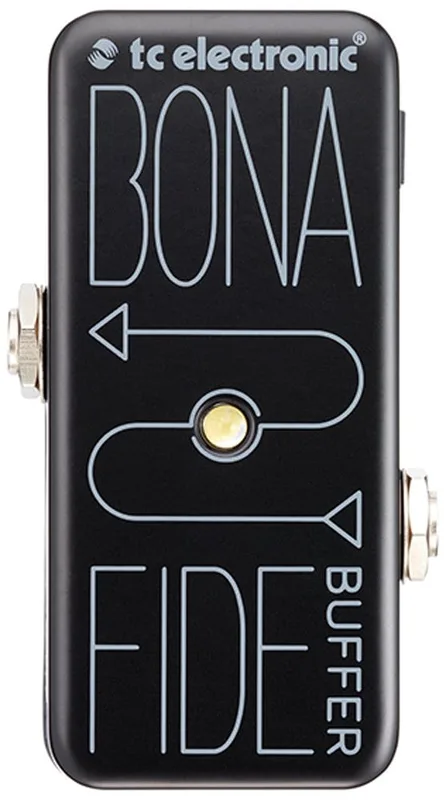
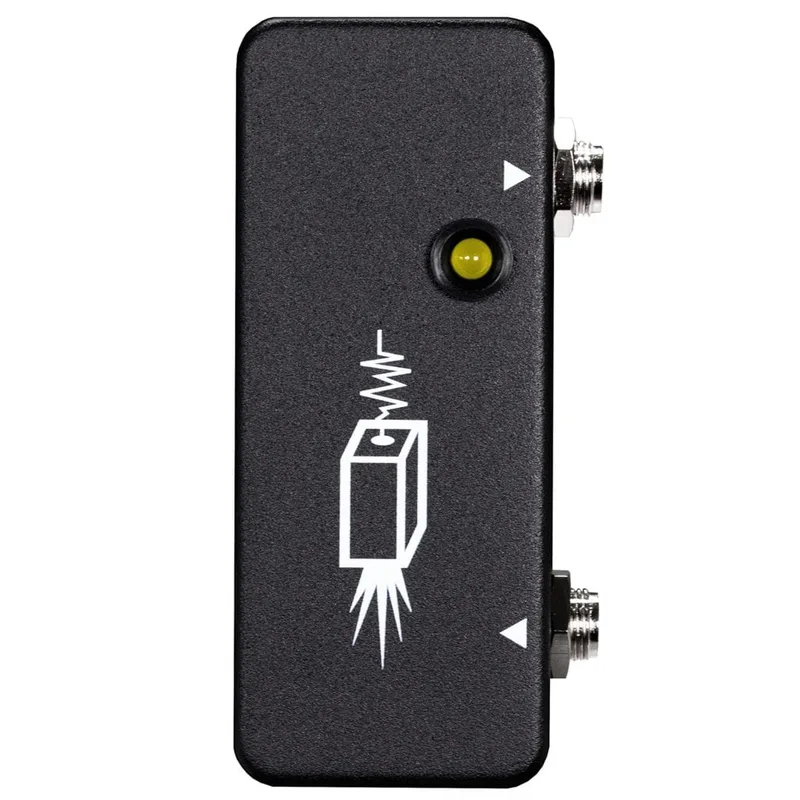
Most buffers, like the TC Electronic Bonafide Buffer or the JHS Pedals Little Black Buffer, are single-buffer pedals placed at one point in the chain. The Vertex Buffer Module instead puts four buffers at the points where a complex rig loses signal: the input, both amp feeds and the return, in an enclosure that bolts to the board itself rather than taking pedalboard real estate. For players comparing options, the buffer pedals page covers the wider field12.
Videos
Vertex Effects
Questions
How many buffers are in the Vertex Buffer Module?
Four. Vertex lists them as the Input buffer, the Amp L Out buffer, the Amp R Out buffer and the Return buffer. That arrangement lets the module buffer the guitar signal going into your pedals, both feeds going out to a stereo or wet/dry amp pair, and the signal coming back from an effects loop or wet amp.
Does the Vertex Buffer Module need a Vertex pedalboard?
It is designed for Vertex pedalboard systems, which are sold separately. The enclosure is pre-drilled and mounts to the front of a Vertex board with three machine screws, so no drilling is needed. In the Sweetwater demo video, Vertex's Mason Marangella says it is designed explicitly for Vertex pedalboard systems.
What does the polarity switch on the Vertex Buffer Module do?
The polarity switch sits on the AMP R output and is a push/push switch. It flips the phase of the right amp output, which matters in stereo and wet/dry rigs where one amp's phase relationship to the other affects how the two signals combine.
What is the input impedance of the Vertex Buffer Module?
1M ohms. That is a high input impedance, the kind of figure buffer designers aim for so the guitar's pickups see a consistent load and high-frequency content is not rolled off by cable capacitance and pedal loading.
Sources (2)
- Vertex Buffer Module, www.vertexeffects.com
- Vertex Effects Buffer Interface and Buffer Module, Sweetwater (YouTube), 2022-11-15