Brian May's guitar sound rests on three pieces of gear that have barely changed across Queen's entire discography: the Red Special guitar he built himself, Vox AC30 amplifiers, and a treble booster that stays on in front of the amp's Normal channel1. The Red Special is a single coil based guitar, built by May from a piece of wood and a lot of hand work2. The amps are run loud, and the booster pushes them into the sustained, singing overdrive that carries everything from the early albums to the stadium years.
What surprises many players is how little else is in the rig. On stage between 1972 and 1992 his setup was almost the same throughout, built around a Pete Cornish pedalboard and a wall of AC30s2. The effects that are there, tape echo, phaser, chorus and a harmonizer, do specific jobs rather than filling a board.
The sound: Red Special, AC30 and a treble booster
The starting point is the guitar. The Red Special's single coils feed a booster, which feeds the Normal channel of AC30 combos set at three quarters of full volume23. That is the whole engine of the classic tone: no distortion pedal, no master volume, just a booster driving an already loud amp into compression and sustain.
The AC30s are not stock. May performs with eleven VOX AC30 amplifiers on stage, three of them fully cranked, plus three sidefills, and the amps are modified to remove the tremolo and EQ for the live rig4. All the AC30s used by May were modified by Pete Cornish to improve their reliability; he removed the valves in the Bright and Vib/Trem preamps along with the Vib/Trem oscillator and modulator valves2.
The booster itself changed over time, which matters to anyone chasing the sound by era:
| Era | Booster | Notes |
|---|---|---|
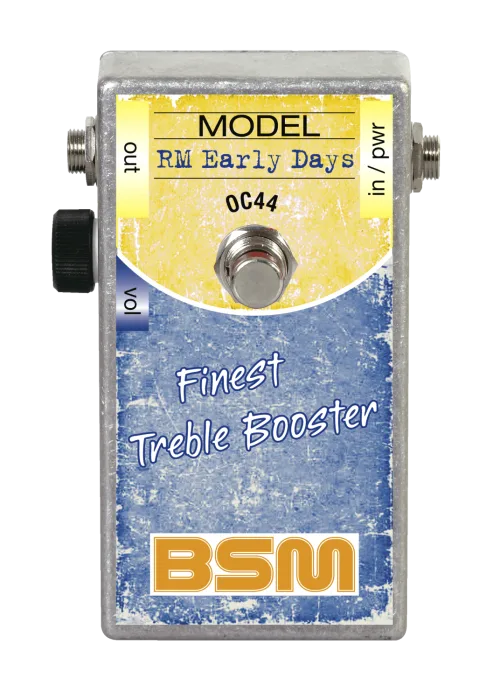
| Early days to about 1977 | Dallas Rangemaster, a modified unit on the Cornish board | Germanium design, produced between 1965 and 196925 |
| Mid-phase Queen | Silicon treble booster design | Switched for more bite6 |
| Since 1998 | Fryer Brian May Treble Booster, the red Touring model | Built by Gregg Fryer7 |
The Rangemaster was one of the first treble boosters used by guitarists in the 1960s8, and May came to it through Rory Gallagher, who inspired him to make it part of his signature sound9. May asked Gallagher how he got his sound, and the next day went to a guitar shop and found two secondhand AC30s at £30 each1. That pair of amps, with the booster in front of the Normal channel, set the pattern for the next fifty years10.
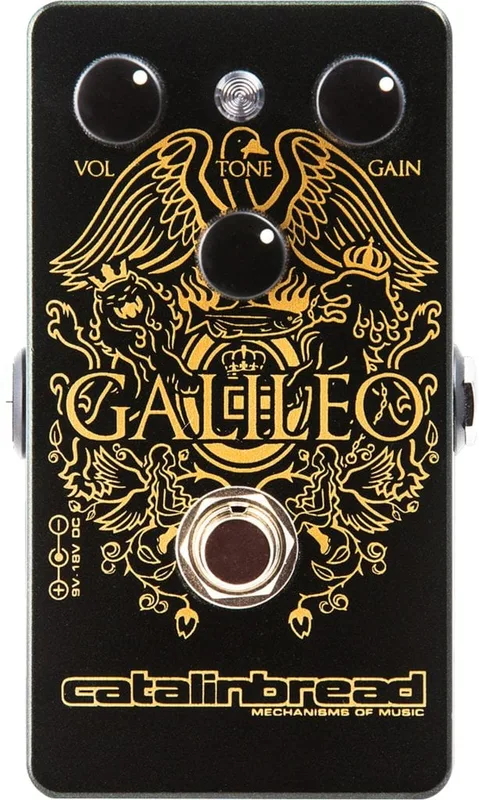
For players who want the whole chain in one box, several makers have built May-style pedals. The Catalinbread Galileo MKII is described as a "Queen in a box" pedal replicating May's famous signal chain of an always-on treble booster into a Vox AC3011. The Jeds Peds May I? is a DIY kit whose circuitry emulates a custom tuned Range Master styled treble booster hitting a Vox AC30 preamp12. Vox makes an amPlug Brian May headphone amp modeled on the AC30 sound with treble booster, plus built-in delay, phaser and chorus, which May designed and voiced in collaboration with Vox13. May's own words on it:
"I want people to be able to get the sounds you make in a stadium show into your living room, and this achieves that. I hope that people find them inspiring."
Early Queen: a Rangemaster type booster into the AC30
In the earliest Queen recordings and shows, the chain was simple: the Red Special into a Dallas Rangemaster type treble booster, into a couple of VOX AC30 combos with the booster in front of the Normal channel1415. May used the British Range Master Germanium Treble Booster in his early days, a unit produced between 1965 and 19695.
A treble booster does two jobs in this chain. It shapes the sound of the guitar and reduces issues with impedance mismatch between the guitar and what follows16, and it hits the amp's Normal channel hard enough at high volume to push it into overdrive. That is why the amp volume matters as much as the pedal: the booster is not a distortion pedal, it is the shove that makes a loud AC30 distort.
The sound of this era is what several modern boosters aim at. Premier Guitar's reviewer found that the Fryer Brian May Treble Booster Touring with P-90 pickups produced the closest thing to the rangy crunch and woolly thickness of May's early-70s work on songs like "Modern Times Rock 'n' Roll" and "Son & Daughter"7. Guitar Pedal X called the Hello Sailor Effects Brian May style Treble Booster, which uses a transformer input stage, "a great tone-enhancer" that "can sound really immense and intense"1718.
The modified AC30s and the Pete Cornish pedalboard
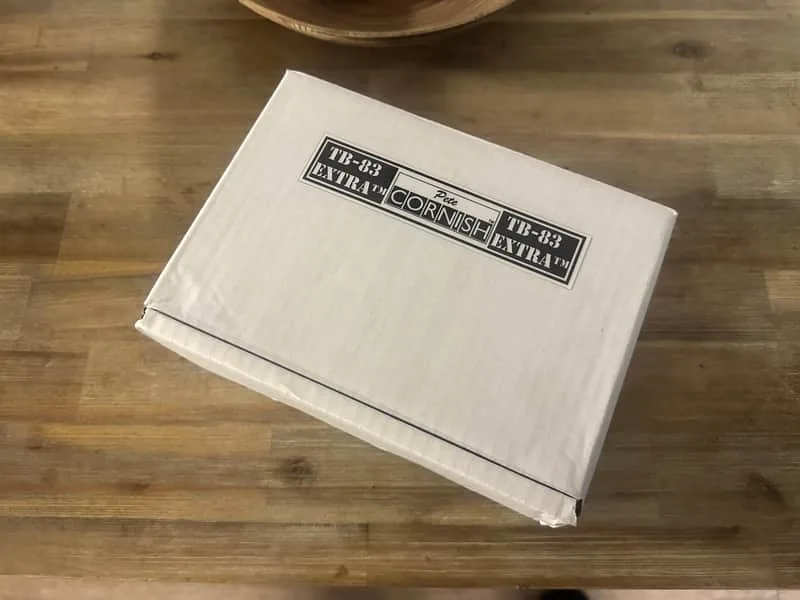
In 1972 May asked Pete Cornish, a British technician involved in Queen's touring, to design and build a pedalboard for him2. From left to right it carried:
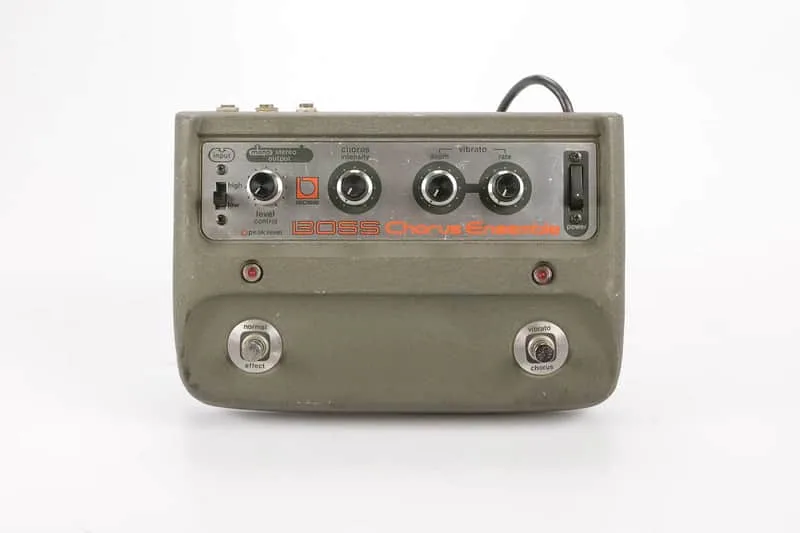
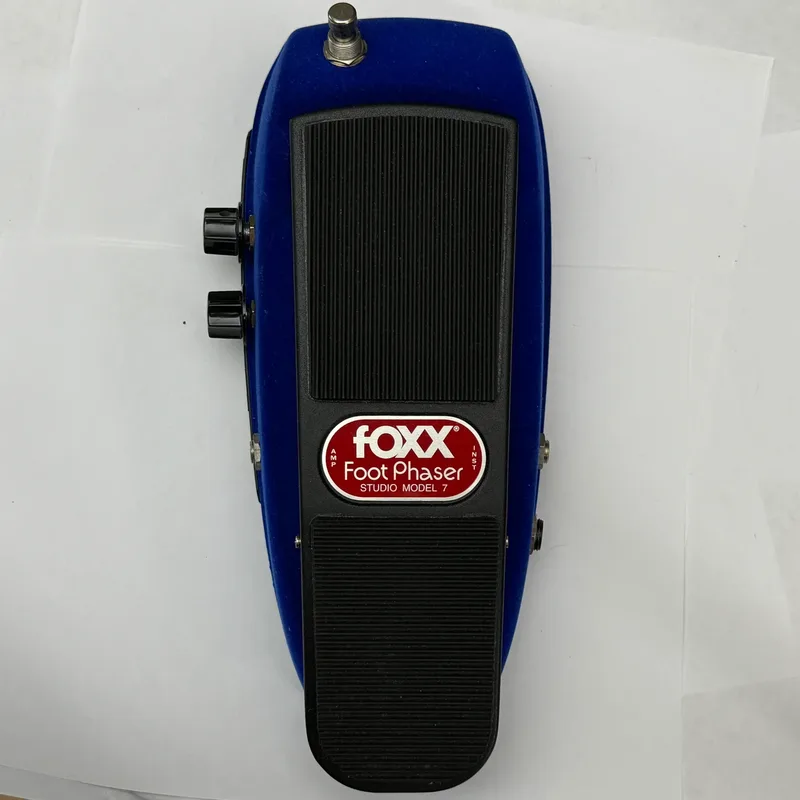
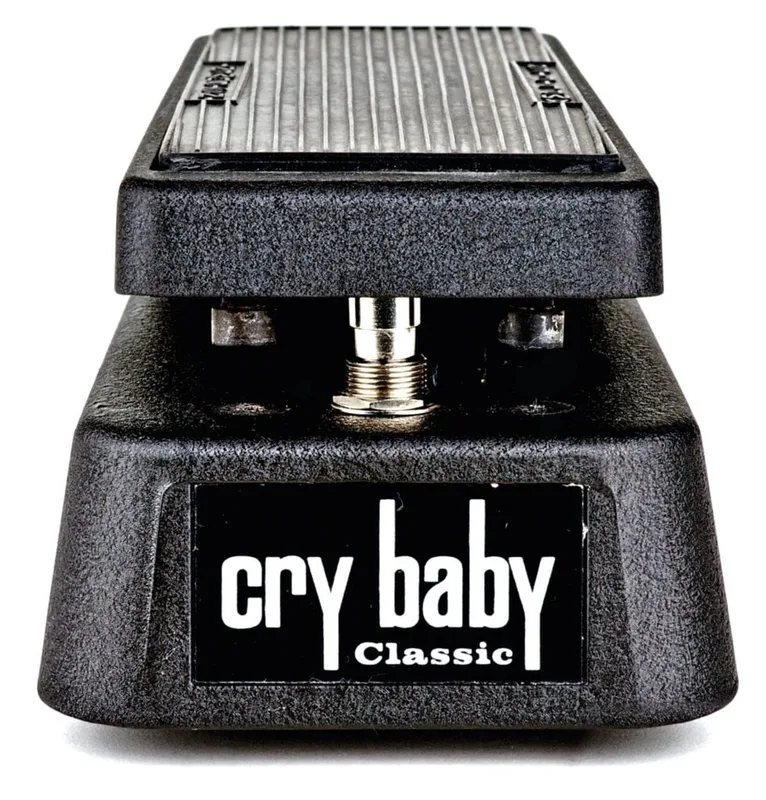
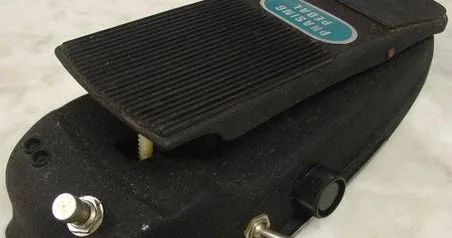
That board, with the AC30s behind it, is what he used on stage between 1972 and 1992, almost unchanged2. The phaser on the board was a Foxx Foot Phaser; the control labeled "Cry Baby" on his pedal board is the Foxx Phaser speed control19. The Foxx Foot Phaser studio model 7 was used by May to create "Bohemian Rhapsody"20.
By 1982 the system had grown into two units: a pedalboard on stage and a large rack unit off stage behind the AC30s, as pictured in the August 1986 issue of Guitarist USA19. Pete Cornish documents the signal chain in detail19:
- Pete Cornish Line Driver on the guitar strap, fed by a 100ft special cable with power for the Line Driver
- Pete Cornish Treble Boost, then a second Treble Boost with bypass switch
- Foxx Phaser with bypass switch
- Foxx output to three AC30 Normal channel amps via a Line Driver and Hum Loop Buster
- Foxx also to an MXR DDL II feeding three Delay 1 amps, and to a second MXR DDL II feeding three Delay 2 amps
- Foxx also to a Roland CE-1, seriously modified by Pete Cornish, feeding three chorus amps19
The Line Driver on the strap is the key to driving long cable runs without losing the top end the booster is there to preserve, and the multiple amp groups let delay and chorus run on their own amps rather than in front of everything.
Eventide gear and the harmonized sound
The harmonizer on the 1972 board is the piece most players ask about. May used tape delays together with the harmonizer to put parts of the huge overdubbing studio work into live performances, as heard on "Brighton Rock"2. At the 1992 Wembley concert he used three Vox AC30s, a ping-pong delay and three-part harmonization21.
His layered guitar orchestras in the studio were built by overdubbing, and his playing technique supports it: he normally plays the lower strings with the pick and the higher strings with the fingers, hybrid picking2.
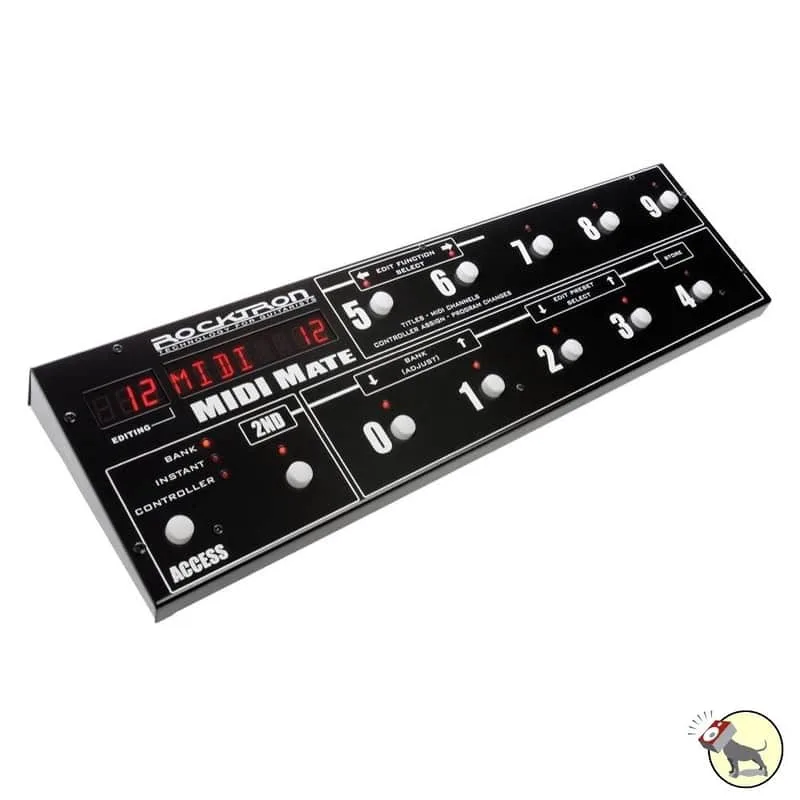
Eventide, the maker whose name became shorthand for harmonizer effects, counts May among the players who used Eventide gear in their rigs in the '70s and '80s, alongside Jimmy Page, Frank Zappa, Eddie Van Halen and Steve Vai2223. In the later rack years, his rig included Rocktron units: the Rocktron Intellifex multi-effect unit, along with the Rocktron Patch Mate and Rocktron MIDI Mate foot controller24.
Modeling the sound in a pedal
May's position on amp modeling is straightforward: he would not use it live. He prefers his amps to interact with his guitar physically25. But he has put his name on modeling in pedal form. The DigiTech Brian May Red Special signature pedal reproduces 14 of his most famous tones21, modeling his Red Special guitar and Deacy amp, his customized Vox AC30, treble booster, Foxx Foot Phaser, acoustic and Telecaster guitars and more21. DigiTech's engineers built it with their Production Modeling process, with recording engineer Eddie Kramer as the project's lead production modeling consultant21. Its Flexible Output Mode offers mono, stereo to mixer and stereo to amplifier, with the mixer output usable as a direct injection device at correct mixing board impedance levels21. May calls it:
"Pure genius, for which I take no credit."
He has also pointed players to the Catalinbread Galileo as a way to replicate his sound for under $20025, saying of such pedals:
"There's a great simulator; it's a pedal that really does a very good job of simulating my sound."
Questions
What treble booster does Brian May use?
In his early days he used a Dallas Rangemaster, a modified version of which sat on his Pete Cornish pedalboard from 1972. In mid-phase Queen he switched to a silicon treble booster design for more bite. Since 1998 he has used a red Fryer Brian May Treble Booster, the Touring model of the three Fryer versions.
Does Brian May use amp modeling live?
No. He has said he could not do the modeling thing live on stage, preferring his amps to interact with his guitar physically. He does endorse modeling in pedal form: he calls the DigiTech Red Special signature pedal pure genius, and says a pedal can do a very good job of simulating his sound.
How did Brian May get his harmonized guitar sound?
Much of it was studio overdubbing, with tape delays and a harmonizer used to put parts of the layered work in place, as heard on "Brighton Rock". Live at the 1992 Wembley concert he used a ping-pong delay and three-part harmonization alongside three Vox AC30s. His playing also uses hybrid picking, pick on the lower strings and fingers on the higher strings.
Who built Brian May's pedalboard?
Pete Cornish, a British technician involved in Queen's touring. In 1972 May asked him to design and build a pedalboard with two tape echoes, a phaser, a modified Dallas Rangemaster treble booster, a Boss CE-1 chorus and a harmonizer. Cornish also modified May's AC30 amps and built his 1982 stage system.
What treble booster does Brian May use?
In his early days he used a Dallas Rangemaster, a modified version of which sat on his Pete Cornish pedalboard from 1972. In mid-phase Queen he switched to a silicon treble booster design for more bite. Since 1998 he has used a red Fryer Brian May Treble Booster, the Touring model of the three Fryer versions.
Does Brian May use amp modeling live?
No. He has said he could not do the modeling thing live on stage, preferring his amps to interact with his guitar physically. He does endorse modeling in pedal form: he calls the DigiTech Red Special signature pedal pure genius, and says a pedal can do a very good job of simulating his sound.
How did Brian May get his harmonized guitar sound?
Much of it was studio overdubbing, with tape delays and a harmonizer used to put parts of the layered work in place, as heard on Brighton Rock. Live at the 1992 Wembley concert he used a ping-pong delay and three-part harmonization alongside three Vox AC30s. His playing also uses hybrid picking, pick on the lower strings and fingers on the higher strings.
Who built Brian May's pedalboard?
Pete Cornish, a British technician involved in Queen's touring. In 1972 May asked him to design and build a pedalboard with two tape echoes, a phaser, a modified Dallas Rangemaster treble booster, a Boss CE-1 chorus and a harmonizer. Cornish also modified May's AC30 amps and built his 1982 stage system.
Sources (25)
- Joe Bonamassa now owns Rory Gallagher's Number 1 Rangemaster, Guitar World, 2025-02-28
- Brian May, treblebooster.net, 2025
- Neutral_neu, BSM, 2025
- Gitarren-Boutique: Stone Deaf QBoost und warum Brian May elf AC30 braucht, gearnews.de, 2020-12-24
- Neutral_neu, BSM (treblebooster.net), 2025
- BM-Q Treble Booster, treblebooster.net, 2025
- Fryer Sound Ltd. Brian May Treble Boosters Review, Premier Guitar, 2009-03-17
- TONEHOME, TONEHOME, 1960
- Tony Iommi on the modified treble booster his tech threw out, GuitarPlayer (www.guitarplayer.com), 2025-06-30
- Neutral_neu, treblebooster.net, 2025
- The 20 Best Vox-Style Pedals & Vox-In-a-Box Overdrives In 2024, Delicious Audio, 2024-12-02
- May I? | DIY Guitar Effects Pedal Kits, Jeds Peds (jedspeds.co.uk)
- amPlug Brian May, Vox Amps, 2026-06-03
- bsm-treble-boosters-2019.pdf, treblebooster.net, 2019
- RM Majestic Treble Booster, treblebooster.net, 2025
- Effects > Dallas Rangemaster : DIY Fever, DIY Fever (diy-fever.com)
- Guitar Pedal X, Guitar Pedal X, 2025-06-24
- Guitar Pedal X, Guitar Pedal X, 2025-12-04
- Pete Cornish: The Queen Years, Pete Cornish, 2025
- FOOT PHASER studio model 7 (B-STOCK), Godlyke Distributing, Inc.
- DigiTech Brian May Red Special Signature pedal, Guitar World, 2008-02-06
- Eventide Unveils the H9 PitchFuzz Algorithm, Premier Guitar, 2017-05-18
- Eventide Demos PitchFuzz, a New Multi-Effect Algorithm for the H9 Harmonizer, Guitar World, 2017-08-22
- Rocktron Artist News, Rocktron (www.rocktron.com), 2024-08-28
- Brian May reveals the amp-in-a-box that best captures his signature Queen tone, Guitar.com, 2024-06-14