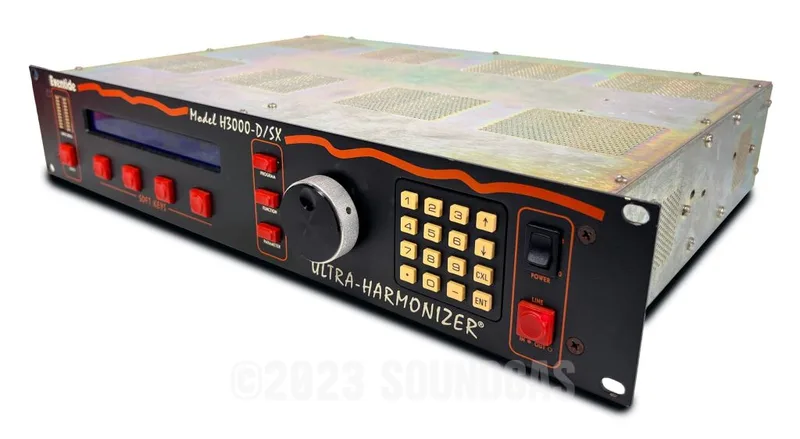


The Eventide H3000 is a digital rack multi-effects unit released in 1987, marketed at the time as an "intelligent pitch-changer" that could generate stereo harmonies1. Alongside pitch-shifting it carries modulation effects and reverbs, including the well-known patch 211 CANYON, and it further enhanced Eventide's MicroPitch algorithm12. Premier Guitar's reviewer calls it "one of the all-time great multi-effects units" territory in MusicRadar's words, and the H3000 Harmonizer "may be Eventide's most famous rack unit and arguably the most famous harmonizer"342.
What it does to your sound
When it debuted in 1987, the H3000 was marketed as an intelligent pitch-changer that could generate stereo harmonies1. Beyond pitch-shifting, it offers modulation effects and reverbs, and Premier Guitar's reviewer found it versatile enough that "it's also my first call when I want a stereo chorus for guitar"1. The unit was also the first Eventide processor to include an algorithm with the name Ultra-tap, later carried into Eventide's UltraTap delay pedal5.
The H3000's sound is not without vintage quirks. Premier Guitar's reviewer found that "Extreme pitch-shifting exhibits a lot of aliasing (think: bit-crusher sounds)"1. On the other side of the ledger, the analog Murata filter modules in the circuit "impart a hint of warmth that many plug-in versions don't quite capture"1.
"the analog Murata filter modules impart a hint of warmth that many plug-in versions don't quite capture"
Patching MIDI controllers to parameters
The H3000 lets you patch MIDI CC controllers to effect parameters from the front panel, using a set of softkeys. The manual's example uses the "Layered Shift" algorithm, program #1013.
- Load "Layered Shift" (program #101)3.
- Press the Patch softkey. Initially there will be nothing patched3.
- Press Parmtr to select the effects parameter to be controlled; turning the knob scrolls through the list of controllable parameters3.
- Press Source to select the controller that will be patched to the effect parameter, scrolled with the knob3.
- Set the response with the range, per note or amount softkey3.
| Softkey | What it does |
|---|---|
| Patch | Opens the patching screen; initially shows nothing patched3 |
| Parmtr | Selects the effect parameter to be controlled, scrolled with the knob3 |
| Source | Selects the controller patched to the parameter3 |
| range | Sets how much the parameter changes over the controller's full range3 |
| per note | Sets the effect of the smallest change in controller data; mainly used for MIDI notes3 |
| amount | Appears in some cases instead of range or per note; shows modulation depth as a percentage of the parameter's adjustment range3 |
In the manual's example, patching the function generator to the 1 Pitch parameter with a mod range of 1200 cents means that if the function generator changed from zero to maximum, the pitch would increase by 1200 cents3.
Versions and software emulations
The H3000 went through several revisions. Later versions like the H3000B and H3000D/SE added even more functionality, and comprehensive EPROM chips containing every patch from all generations of H3000, plus the later H3500, are readily available for a modest cost and a fairly straightforward install1.
For players who don't want to maintain old hardware, software emulations exist, including Eventide's own plugin that models the H3000's Murata filters1. Premier Guitar's reviewer is blunt about the hardware's character in 2025: "many guitarists won't be eager to care for what is essentially an expensive, cranky, decades-old computer"1.
The H3000 is decades-old vintage hardware. Premier Guitar describes it as expensive and cranky by modern standards, and many players opt for the software emulations instead1.
Where it came from and who used it
Steve Vai is the player most associated with the H3000. He was an early adopter and proponent of the first edition in the late 1980s, so much so that Eventide asked him to contribute 48 signature sounds1. Premier Guitar describes the H3000 Harmonizer as "used famously and extensively by Steve Vai"4, and Guitar Player has documented Vai's involvement in the evolution of what it calls this legendary digital effects unit6.
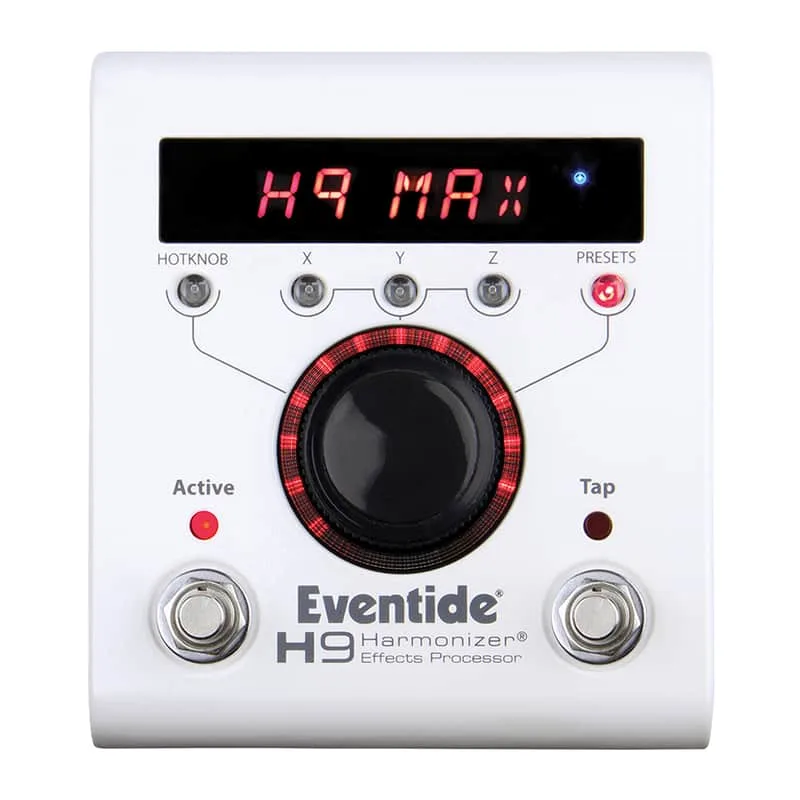
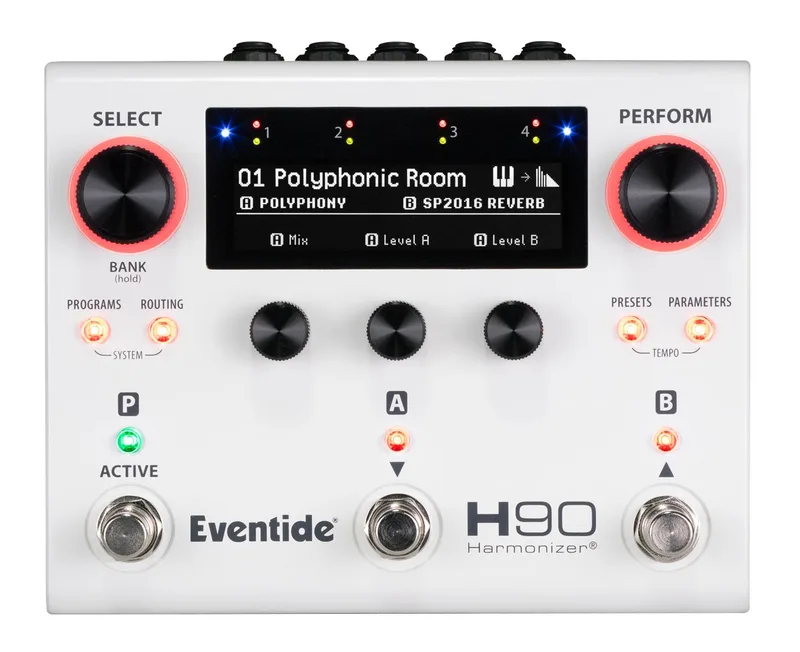
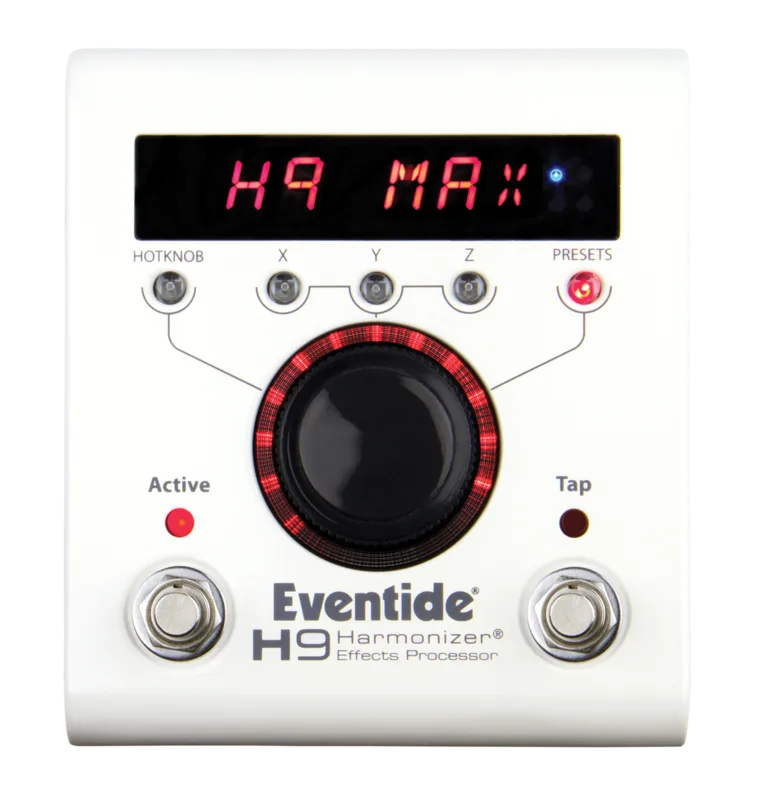
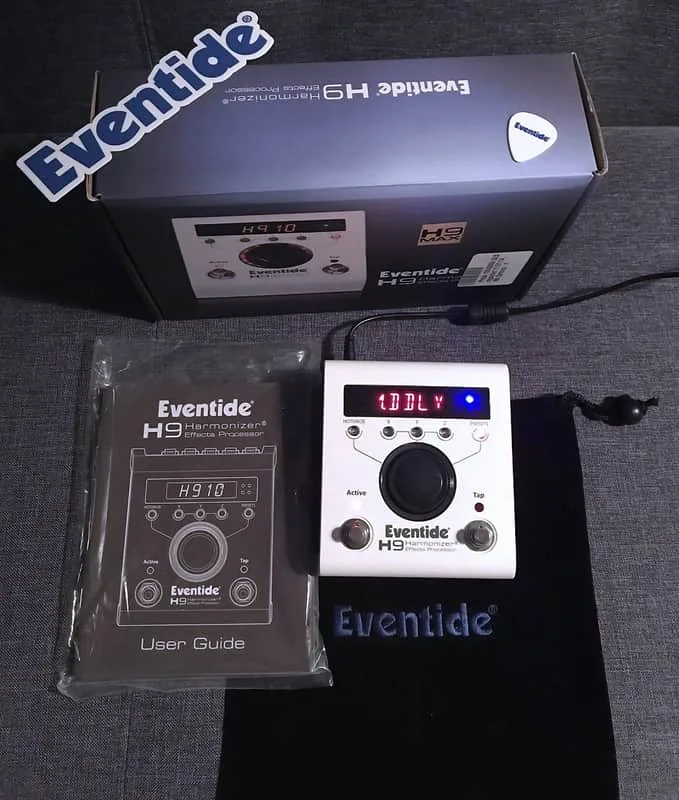
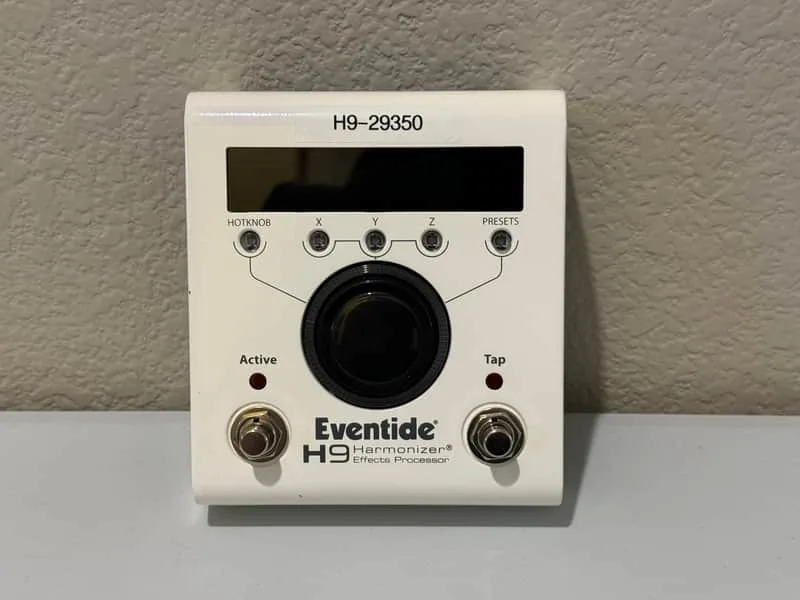
The H3000's lineage runs forward as well as back. Gearnews describes it as the 1990s monolithic ancestor of the Eventide H9000, noting its ancestors "already had a grip on pretty much everything imaginable"7. The H3000 UltraHarmonizer also earned a TECnology Hall of Fame honor in 2016, according to Eventide8. Its algorithms live on in modern Eventide pedals such as the H9 Harmonizer and H90 Harmonizer, and it stands in the wider family of multi-effects pedals.
Videos
Nickstermc
Michael Nielsen - Big Hairy Guitars
thebrightsideok
Questions
Is the Eventide H3000 a rack unit?
Yes. The H3000 is a vintage rack unit, a digital effects processor that sits in a rack rather than on a pedalboard. Premier Guitar calls it a legendary vintage rack unit, and it may be Eventide's most famous rack unit and arguably the most famous harmonizer of all.
What is the Eventide H3000 MicroPitch algorithm?
MicroPitch is Eventide's dual-pitch-shift algorithm that layers two detuned voices for a thick stereo chorus or doubling effect. MusicRadar describes it as further enhanced by the DSP-based H3000, one of the all-time great multi-effects units. Premier Guitar's reviewer calls the H3000 his first call for a stereo chorus for guitar.
Are there software versions of the Eventide H3000?
Yes. Premier Guitar notes that software emulations are available, including Eventide's own plugin that models the H3000's analog Murata filter modules. The reviewer adds that the hardware's analog filters impart a hint of warmth that many plug-in versions don't quite capture.
Does the Eventide H3000 use analog filters?
Yes, in part. Although the H3000 is a digital effects unit, it uses analog Murata filter modules in its circuitry. Premier Guitar's reviewer found these impart a hint of warmth that many plug-in versions don't quite capture.
Who is known for using the Eventide H3000?
Steve Vai is the player most associated with it. He was an early adopter and such a proponent of the first edition that Eventide asked him to contribute 48 signature sounds. Premier Guitar describes the H3000 Harmonizer as used famously and extensively by Vai.
Sources (8)
- The Eventide H3000: Break Out of the (Stomp) Box, Premier Guitar, 2025-04-18
- Eventide MicroPitch Delay pedal review, MusicRadar, 2021-12-31
- Voes | MIDI-CC, Voes, 2024
- Eventide Eclipse V4 Effects Unit Review, Premier Guitar, 2010-12-16
- Eventide UltraTap Delay review, MusicRadar, 2021-05-28
- “'Any Means Necessary' Is My Philosophy”: Forget Analog Versus Digital, GuitarPlayer (www.guitarplayer.com), 2023-05-18
- The Eventide H9000 gets a Major Update, www.gearnews.com, 2024-10-08
- Eventide DDL 1745 Inducted into TECnology Hall of Fame, Eventide Audio, 2016
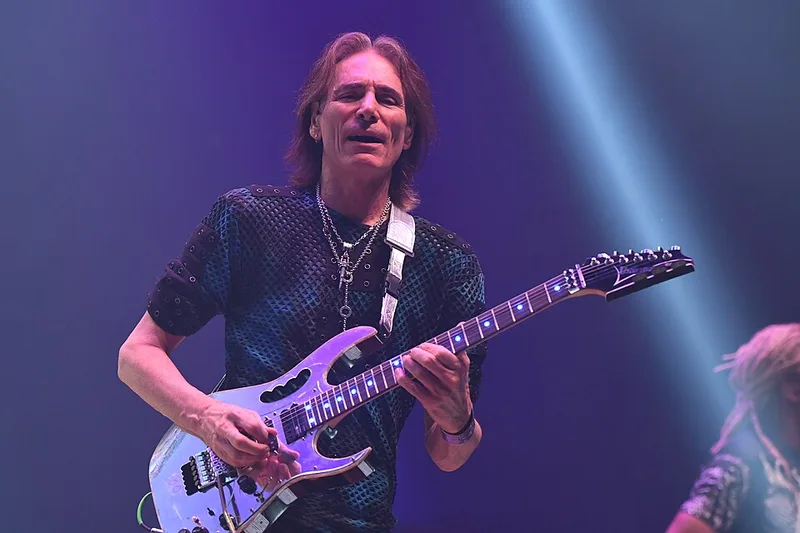 Steve Vai