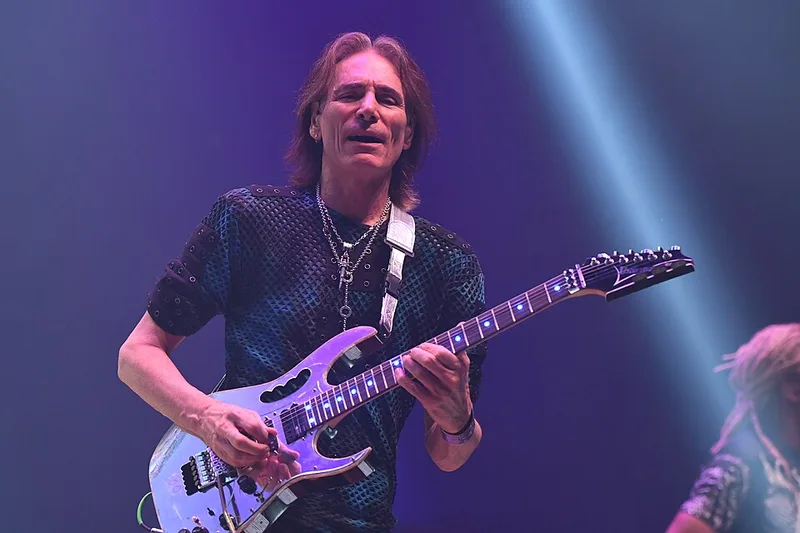
Steve Vai is a guitarist whose solo work is built as much on effects as on technique. BOSS's editorial team credits him with having "pioneered intricate harmonies and expressive pitch bends in his virtuoso solos"1, and his records from the late 1980s onward are full of the delays, harmonizers and wah sounds that later players still chase. When Guitar Player filmed him at his home studio in LA for the Pedalpocalypse series, he talked through his favorite pedals and demonstrated how he uses them to get the Steve Vai sound2.
His taste in pedals is blunt. Asked which three he could not live without, he answered: "I like wah-wahs," he says, "Delay, distortion and wah-wah. I just like it!"2. He is also a collector by temperament. "I've always been a sucker for pedals," he confides. "The more colourful they look, the better they sound!"3
Wah, delay and distortion: the sound Vai describes
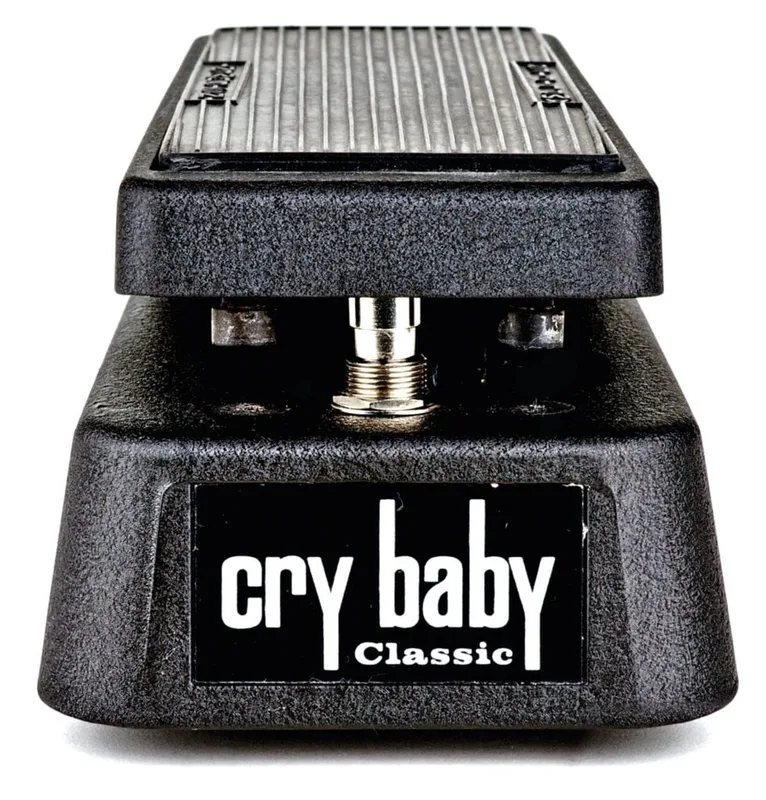
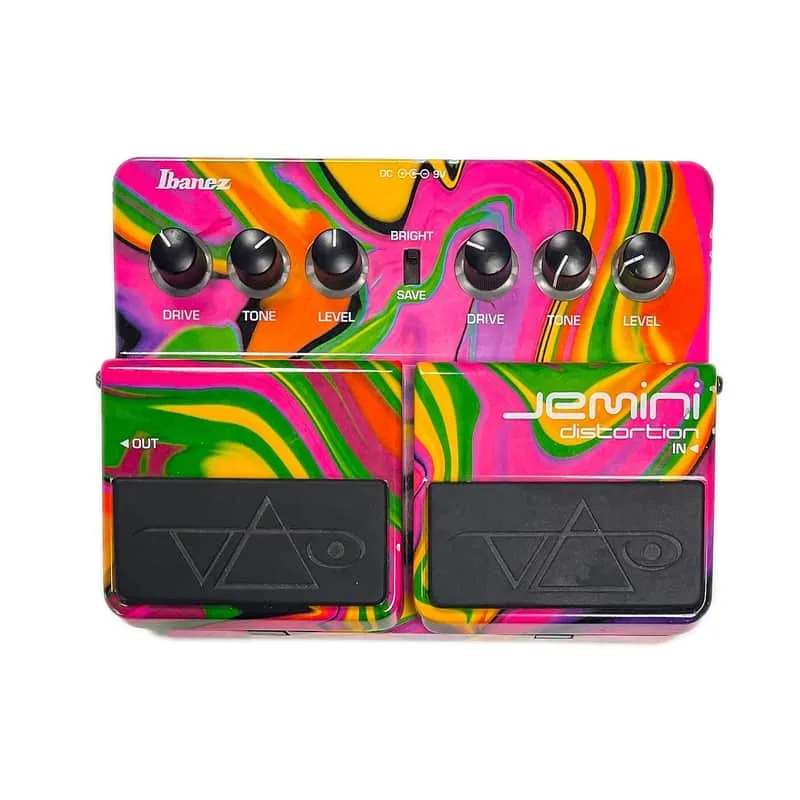
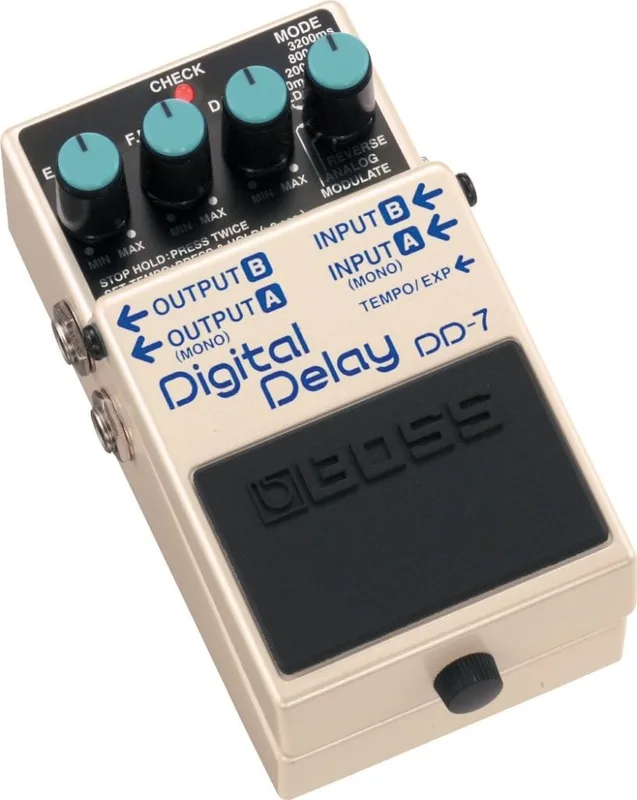
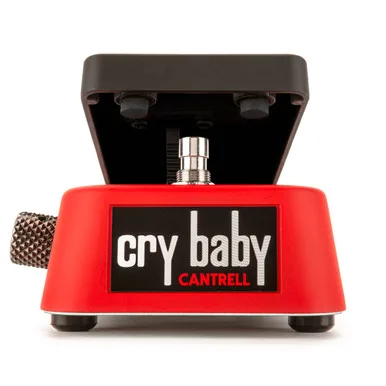
Vai's three-pedal answer in Pedalpocalypse maps directly onto the wah, delay and distortion families. His picks there were the Ibanez Jemini Distortion pedal, his own signature model, the Boss DD-7 digital delay, which he called "a beautiful workhorse", and the Jim Dunlop Cry Baby Wah2. MusicRadar's rig rundown from the same period names the same three as his favored pedals3.
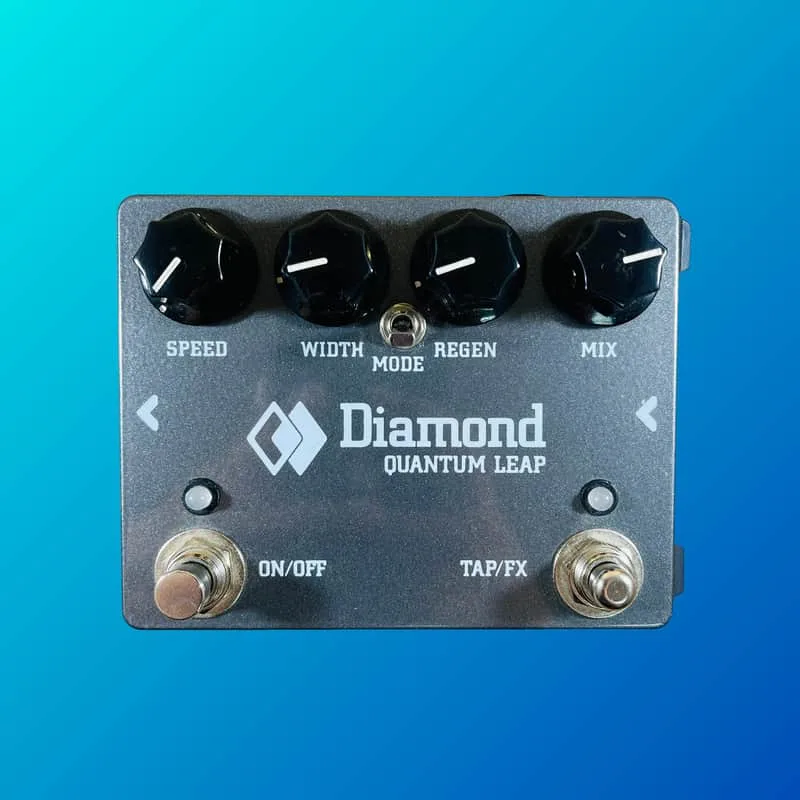
The wah is the effect most tied to his playing style in the press. Guitar World's history of the Cry Baby notes that "players can even emulate talking, like Steve Vai did on Yankee Rose"8, and General Guitar Gadgets points to him as a player who "provides some excellent examples on a regular six string electric"9. His use of delay and harmonizers together has become a reference point for reviewers: writing about the Diamond Pedals Quantum Leap's harmonic delay mode, Premier Guitar's reviewer said "The sound reminded me a bit of some of Steve Vai's creative use of delays and harmonizers"10.
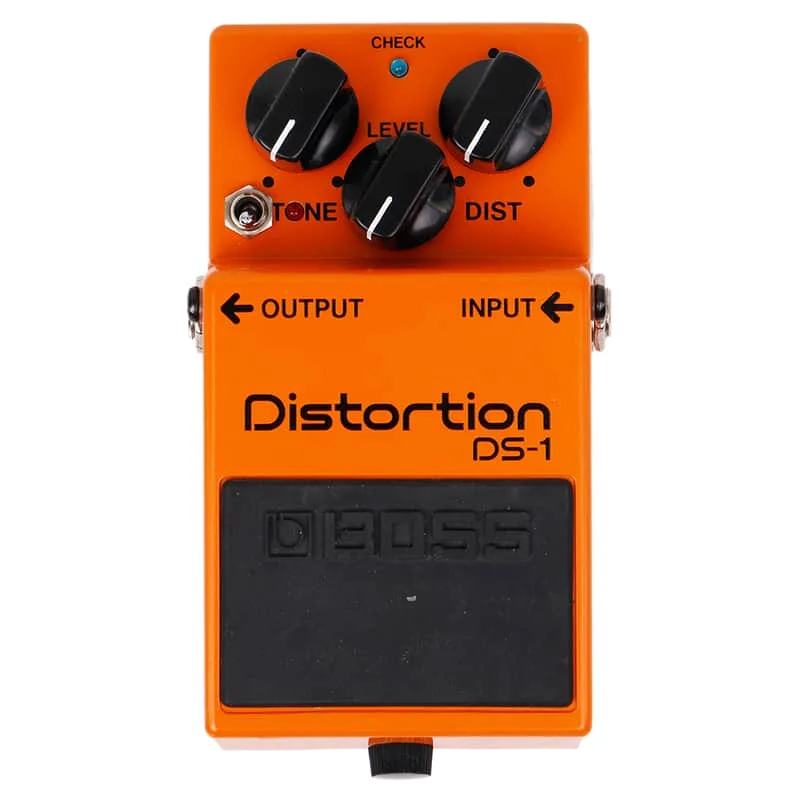
On the distortion side, Vai uses a distortion pedal in a way many players will recognize. Vein-Tap's guide to running distortion into an already-dirty amp notes that "You'll hear Steve Vai do this regularly with a Keeley modified Boss DS-1," using the pedal as a dirty boost rather than as the main source of gain11. His amp background matters here too: by the 1980s, Jose-modded Marshalls were his amp of choice12.
Eventide gear in the '70s and '80s rig
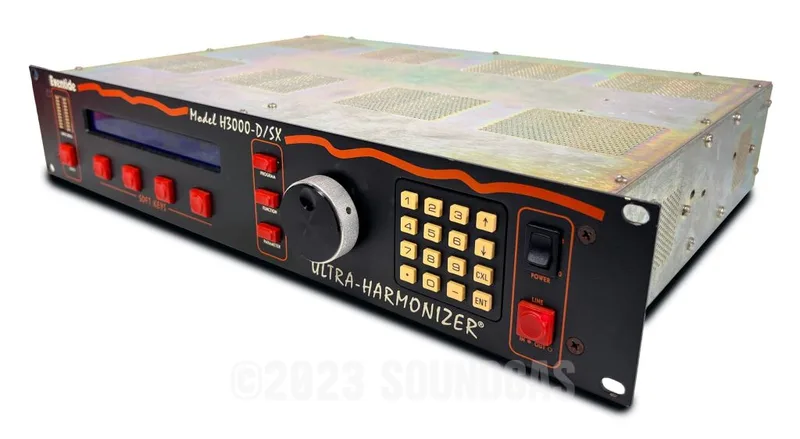
Vai's rack history runs deep with Eventide. Eventide Product Specialist Alan Chaput grouped him with players "all of whom used Eventide gear in their rigs in the '70s and '80s"1314. He was an early adopter of the Eventide H3000 specifically: "Early-adopter Steve Vai was such a proponent of the first edition that Eventide asked him to contribute 48 signature sounds for the new model (patches 700-747)"15.
His relationship with the Harmonizer went beyond using it. In a Guitar Player interview about Passion and Warfare and the H3000 Ultra Harmonizer, Vai described pushing Eventide on the concept itself: "I explained to them that they should create diatonic pitch shift"16. He went further on the design idea: "And then why only one note? Why not nine? And then why not be able to affect each voice that's contained in the harmony?"16. That thinking points straight at the multi-voice, per-voice-control harmonies that octave and pitch processors later offered.
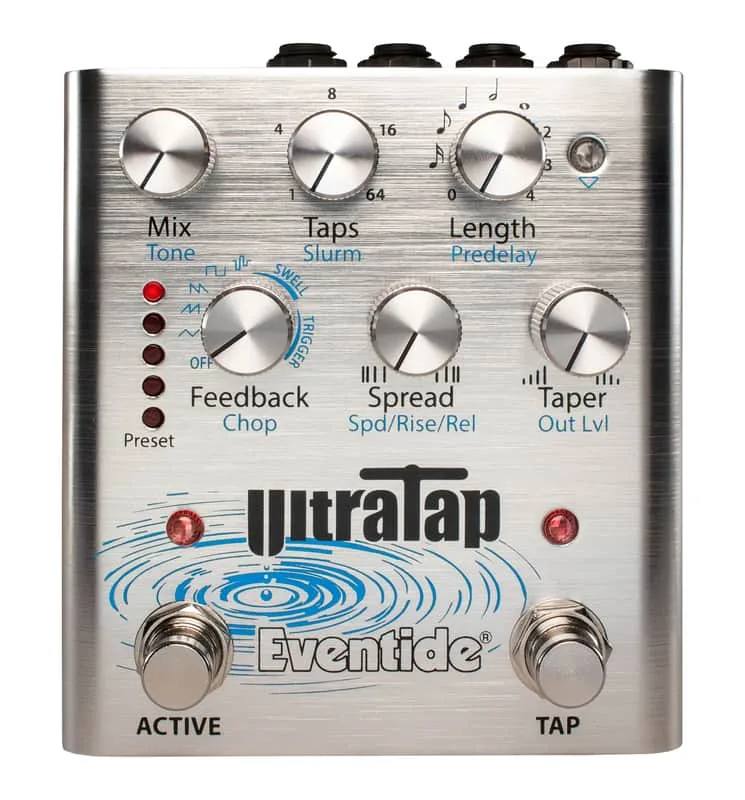
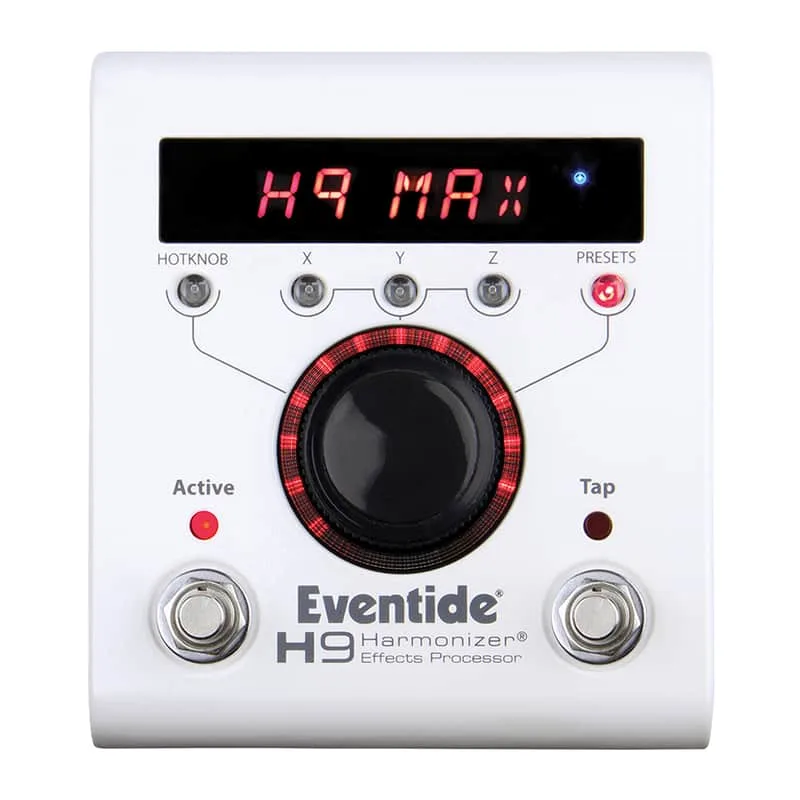
The H3000's algorithms have since come back to the pedalboard, and Vai's name is attached to that lineage too. Premier Guitar's review of the Eventide UltraTap notes it "puts the multi-tap delay power of the company's famous late-'80s H3000 rack unit (which attracted players like Eddie Van Halen and Steve Vai) into a streamlined, single-effect pedal format"17. Eventide's H9 carries the same heritage, and guitarist Pete Thorn said in his demo that "Most recently I used crystals on the Steve Vai Joe Satriani Satriani band tour"18.
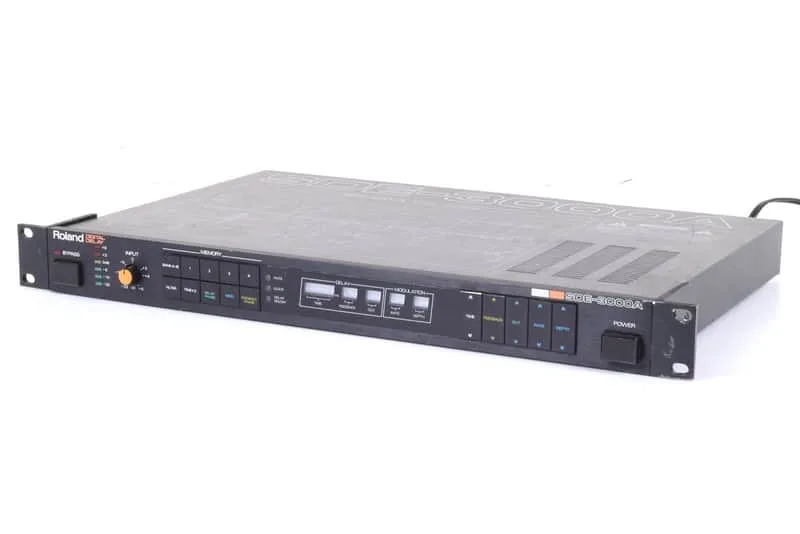
Delay in the rack era was not only Eventide. Guitar World's history of the Roland SDE-3000 digital delay records that "The SDE-3000 remained a permanent fixture in the stage racks of Eddie Van Halen and Steve Vai from 1985 onwards"19. Of that period's sound, Vai said: "I think P&W is my best-sounding record, and I put that down to everything being analog, as it was the peak of the analog movement"16.
Signature pedals
Vai's signature gear spans four makers and four effect types, from a 1996 wah to a 2017 preamp pedal and a free 2013 TonePrint.
| Pedal | Maker | Type | Released |
|---|---|---|---|
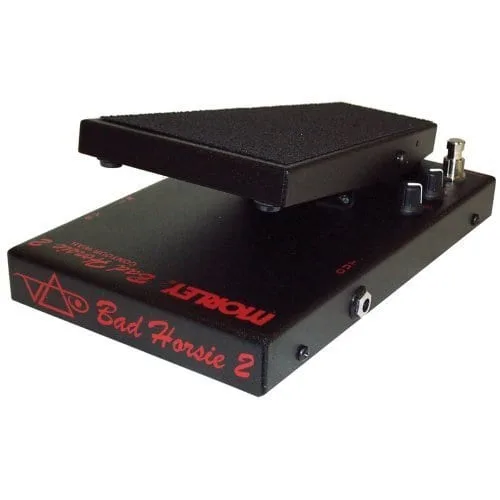
| Bad Horsie | Morley | Wah | 19964 |
| Jemini | Ibanez | Distortion | 20085 |
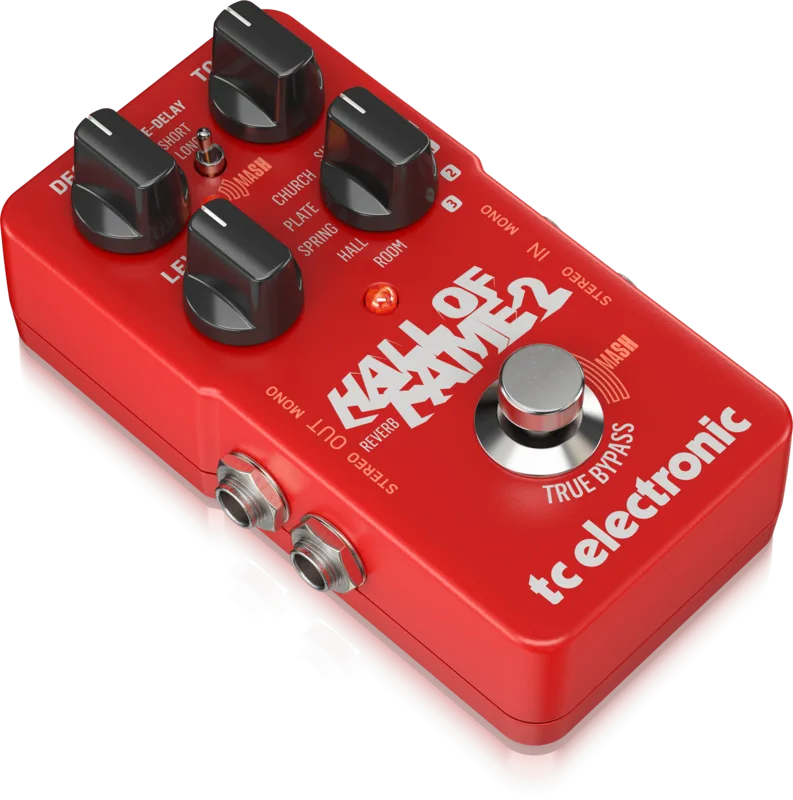
| Ocean Machine | TC Electronic | TonePrint for the Hall Of Fame Reverb | 20137 |
| VLD1 Legacy Drive | Carvin | Tube preamp pedal | Available February 16, 20176 |
Morley Bad Horsie
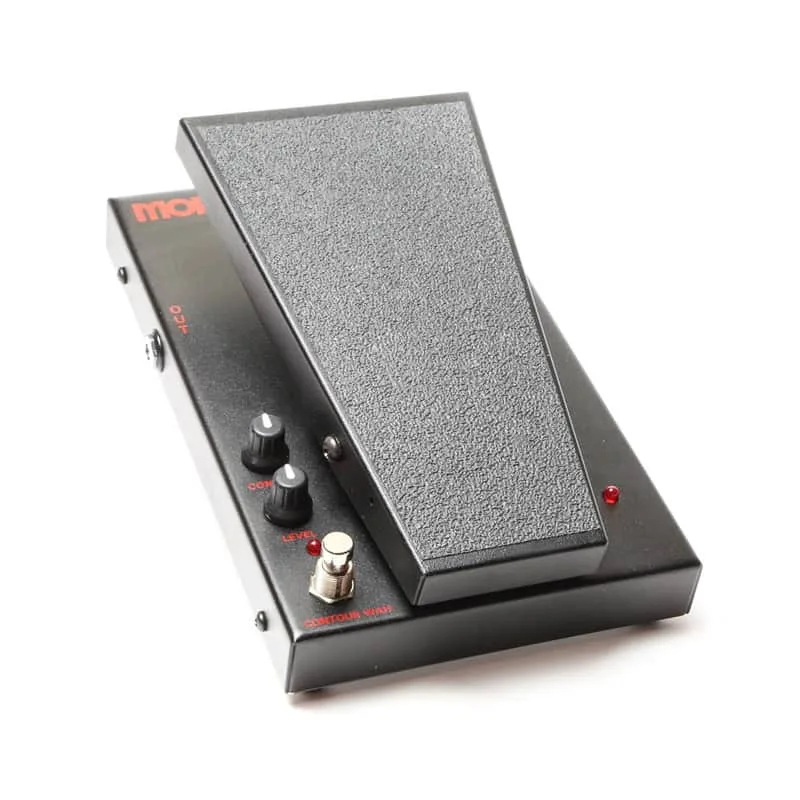
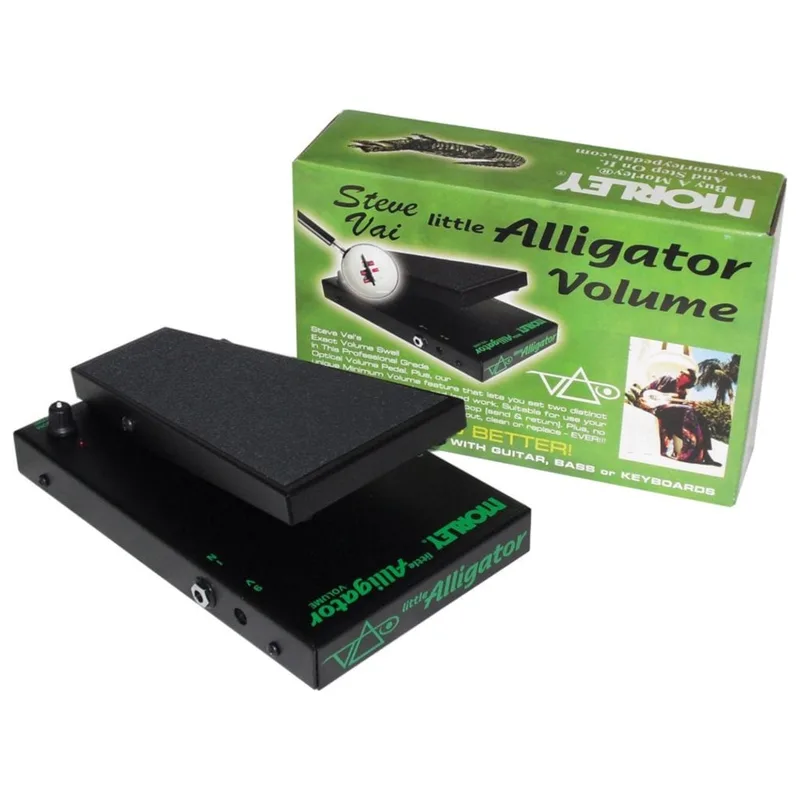
Morley's own history of the pedal says the company "spent years working with Steve Vai taming this Bad Horsie and in 1996 released what would become one of the first artist signature pedals, and our best-selling Wah of all-time"4. The pedal is optical and switchless, with two wah modes: Bad Horsie and Contour Mode20. Morley also later released The Little Alligator Volume pedal with Vai21, and MusicRadar calls him "the most famous Morley user"22.
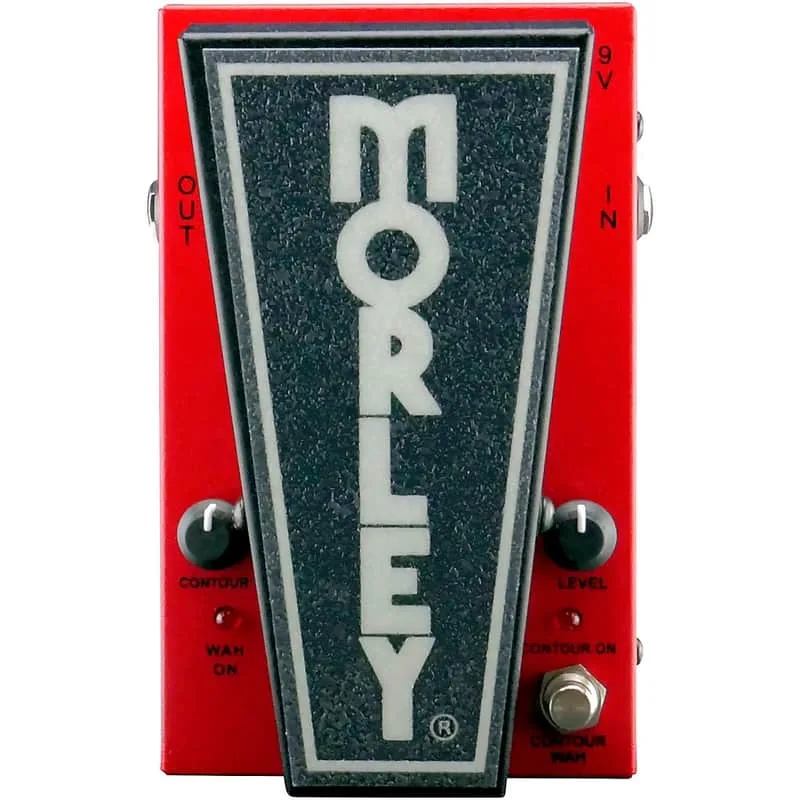
The line continued with the Bad Horsie 2 and then a Custom Shop Mini version. MusicRadar's review of the Morley Custom Shop Mini Steve Vai Bad Horsie 2 Wah describes the family: "The Steve Vai Bad Horsie wah has always been a huge pedal - from the 22-year-old original to the newer Bad Horsie 2 - so a smaller version is a most welcome addition to Morley's roster"23. The mini is limited to 500 pieces and "features Vai's own artwork," a psychedelic look with luminous logos on the front and on the treadle23.
Its two modes work like this:
- Default mode: set to Vai's preferred tone and sweep, the same as the original Bad Horsie23.
- Contour Wah mode: footswitchable, with a Contour knob that shapes the effected frequencies, "from subtle and subdued to gnarly with a strident peaky top end with the toe down"23.
On sound, MusicRadar's Trevor Curwen found the default mode "a nicely expressive classic wah with plenty of chewy midrange - particularly vocal with distortion sounds"23, and listed the two distinct wah modes as a reason to buy23. In a separate MusicRadar wah buying guide, Alex Lynham notes the pedal "has a darker tone than the standard Cry Baby, although when push comes to shove, it functions in a similar way"22.
Ibanez Jemini
The Jemini is Vai's signature distortion pedal with Ibanez. Premier Guitar reported its release: "Ibanez is releasing Steve Vai's first signature distortion pedal, the Jemini -- a unique, multi-colored stompbox that combines overdrive and distortion in one rigid zinc die-cast case"5. Vai's own site announced it as "now widely available at your local music retailer," with a demonstration video showing how the pedal works and sounds24.
When Guitar Player asked him about it for Pedalpocalypse, his comment was short: "I love tube screamers"2. That fits the pedal's combined overdrive and distortion design, and it fits his history: Gearnews notes that "Guitarists as diverse as The Edge, Steve Vai, Joan Jett, Kirk Hammet and Steve Ray Vaughan (amongst many, many others) have all used the Tube Screamer"25.
Carvin VLD1 Legacy Drive
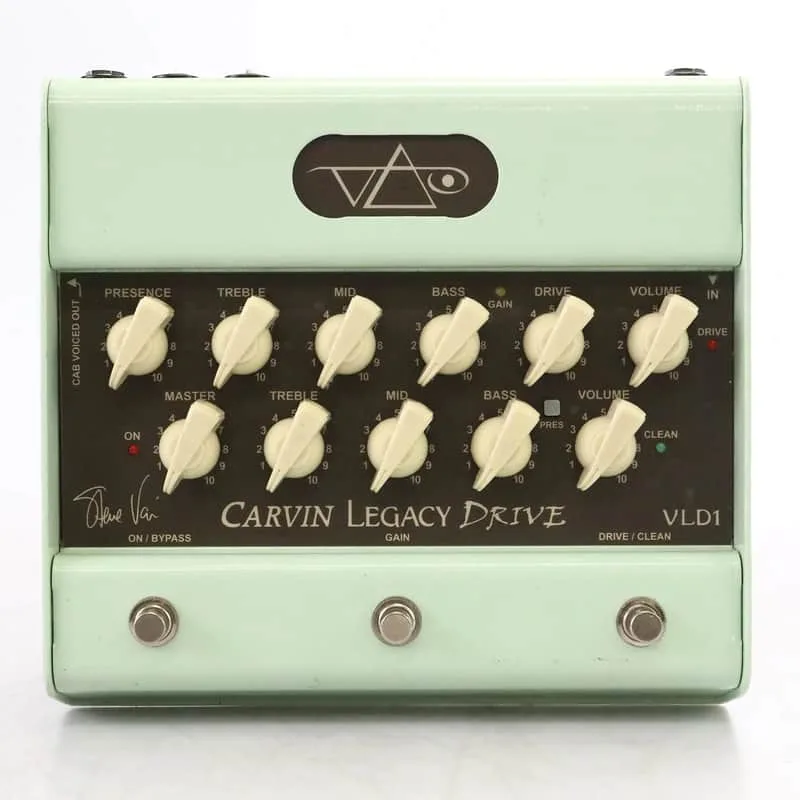
The Legacy Drive is a preamp pedal rather than a distortion stompbox. Premier Guitar's review explains its origin: "The nifty foam-green VLD1 Legacy Drive tube preamp pedal was created at Steve Vai's request so the shred supremo could pack his familiar Carvin Legacy amp tone into a carry-on bag and plug into any available power amp or DI situation"26. MusicRadar tells the same story from Vai's side: "Guitar legend Steve Vai recently set Carvin the challenge of cramming the tone of his signature Legacy amp in a format he could pack in a carry-on; the result is the new Legacy Drive pedal"27. Guitar World adds that Carvin Audio worked with him to create it, and that Vai discusses the pedal and his history with Carvin in a video interview286. The pedal went on sale February 16, 20176.
TC Electronic Ocean Machine TonePrint
In 2013 Vai joined TC Electronic's TonePrint artist roster, which MusicRadar called "one of the biggest names on the TonePrint artist roster yet"729. His contribution is a TonePrint for the Hall Of Fame reverb pedal called Ocean Machine729. MusicRadar described the sound as "a very natural sounding reverb, with a bit of chorus and Steve's artistically precise parameter and EQ settings"29. It was free of charge and available through tcelectronic.com or the free TonePrint app for iOS and Android phones729.
The three pedals he named in Pedalpocalypse
Pedalpocalypse was a series in which Guitar Player, MusicRadar and Guitar World asked players which pedals they could not live without, zombie apocalypse or no zombie apocalypse. Vai was the third installment, after episodes featuring Josh Smith and Scott McKeon2. The episode was recorded at his home studio in LA, where he talked through his favorite pedals and gave a look at his extensive collection2.
His three picks, and his words on two of them:
- Ibanez Jemini Distortion, his signature pedal ("I love tube screamers")2
- Boss DD-7 digital delay ("a beautiful workhorse")2
- Jim Dunlop Cry Baby Wah2
MusicRadar's own report of the series names the same three as his favored pedals3.
Pedal order: Vai's own view
Vai recorded a video for Musician's Friend's series of webinars titled "Perfect Pedal Order with Steve Vai," in which he addresses the question directly30. His conclusion is permissive rather than prescriptive: "There are no mistakes you can make" when putting together your pedal chain, "except run out of batteries"30.
That matches the philosophy he expressed in his Guitar Player interview on the H3000: "Any means necessary" is my philosophy16. For players who want a conventional starting point, JHS Pedals' guidance on wah placement gives one: "you put your wah pedal first, and then you put all your other pedals after it"31. Vai's own answer is that the order serves the sound, not the other way around.
Questions
What wah pedal does Steve Vai use?
Vai has a long signature relationship with Morley. The original Morley Bad Horsie wah, released in 1996 after years of development with Vai, was one of the first artist signature pedals and Morley's best-selling wah of all time. In his Pedalpocalypse picks he also named the Jim Dunlop Cry Baby Wah among the three pedals he could not live without.
Does Steve Vai use a Tube Screamer?
Vai has used the Ibanez Tube Screamer, and when Guitar Player asked about his Ibanez Jemini signature distortion pedal he said simply, "I love tube screamers." He also regularly uses a distortion pedal as a dirty boost, which Vein-Tap notes he does with a Keeley modified Boss DS-1.
What is the Steve Vai Bad Horsie wah?
The Morley Bad Horsie is a Steve Vai signature wah pedal released in 1996, described by Morley as one of the first artist signature pedals and its best-selling wah of all time. It is optical and switchless, with two wah modes: Bad Horsie and Contour Mode. A Custom Shop Mini Bad Horsie 2 version, limited to 500 pieces with Vai's own artwork, followed.
What order does Steve Vai put his pedals in?
In Guitar World's "Perfect Pedal Order with Steve Vai" video, Vai said there are no mistakes you can make when putting together your pedal chain, except running out of batteries. His own view is that any routing works if it gets the sound you want, a philosophy he sums up as "any means necessary."
What is the Carvin Legacy Drive pedal based on?
The Carvin VLD1 Legacy Drive is a tube preamp pedal created at Steve Vai's request, so he could pack his familiar Carvin Legacy amp tone into a carry-on bag and plug into any available power amp or DI situation. Carvin Audio worked with Vai to reproduce his signature Legacy tube tone in pedal format.
What is Steve Vai's Ocean Machine TonePrint?
Ocean Machine is a free TonePrint Steve Vai contributed for the TC Electronic Hall Of Fame reverb pedal, released in 2013. MusicRadar described it as a very natural sounding reverb with a bit of chorus and Vai's artistically precise parameter and EQ settings, available through tcelectronic.com or the TonePrint app.
Sources (31)
- An Introduction to Pitch Shifter Pedals, BOSS (articles.boss.info), 2025-12-17
- Pedalpocalypse: Steve Vai And The Pedals He Couldn't Live Without, Guitar Player (www.guitarplayer.com), 2022-09-16
- Steve Vai reveals the pedals he couldn't live without, zombie apocalypse or no zombie apocalypse, MusicRadar, 2022-08-04
- Classic Bad Horsie Wah, Morley
- Steve Vai's Ibanez Signature Distortion/Overdrive, Premier Guitar, 2008-03-26
- Carvin Audio Announces Steve Vai Legacy Drive Preamp Pedal, Guitar World, 2017-02-13
- TC Electronic Announces New Steve Vai TonePrint, Ocean Machine, Guitar World, 2013-06-12
- The Cry Baby wah: game-changing and still (kinda) underrated, Guitar World, 2026-01-05
- Talkbox Fundamentals: How a Talk Box Works, General Guitar Gadgets, 2014-06-29
- Diamond Pedals Quantum Leap Review, Premier Guitar, 2012-09-26
- Why Put a Distortion Pedal Before a Distorted Amp?, Vein-Tap.com, 2016-09-10
- TECH TIPS: Hot Rods, Origin Effects, 2021-12-17
- Eventide Unveils the H9 PitchFuzz Algorithm, Premier Guitar, 2017-05-18
- Eventide Demos PitchFuzz, a New Multi-Effect Algorithm for the H9 Harmonizer, Guitar World, 2017-08-22
- The Eventide H3000: Break Out of the (Stomp) Box, Premier Guitar, 2025-04-18
- “'Any Means Necessary' Is My Philosophy”: Forget Analog Versus Digital, GuitarPlayer (www.guitarplayer.com), 2023-05-18
- Eventide UltraTap Review, Premier Guitar, 2021-08-31
- NEW AND IMPROVED EVENTIDE H9 Gen2! KILLER MULTI FX, YouTube (Pete Thorn channel), 2026-08-03
- Why Roland's SDE-3000 was a game-changer for digital delay, Guitar World, 2023-09-01
- Classic Series Pedals Press Release, Morley, 2020-01
- The Morley History, Morley (www.morleyproducts.com)
- 5 great wah pedals guitarists need to try, MusicRadar, 2021-06-24
- Morley Custom Shop Mini Steve Vai Bad Horsie 2 Wah review, MusicRadar, 2018-11-10
- Vai.com - The Official Steve Vai Website, Vai.com - The Official Steve Vai Website, 2008-08-24
- Best Overdrive Pedals: Top 5 classic stompboxes to heat up your tone, gearnews.com, 2021-05-28
- Carvin VLD1 Legacy Drive Review, Premier Guitar, 2017-08-30
- Steve Vai reveals Carvin Legacy Drive Preamp pedal, MusicRadar, 2017-02-14
- Steve Vai Talks About His New Carvin Audio Legacy Drive Preamp Pedal, Guitar World, 2017-02-22
- TC Electronic launches Steve Vai TonePrint, MusicRadar, 2013-06-12
- Steve Vai's Guide to Perfect Pedal Order, Guitar World, 2018-07-31
- 5 REASONS TO WAH, JHS Pedals