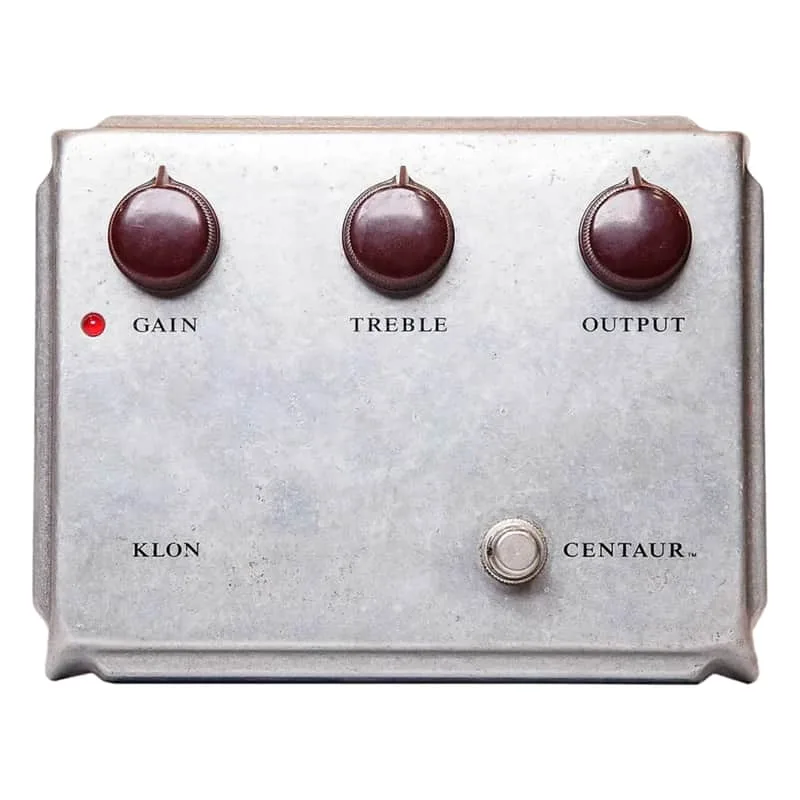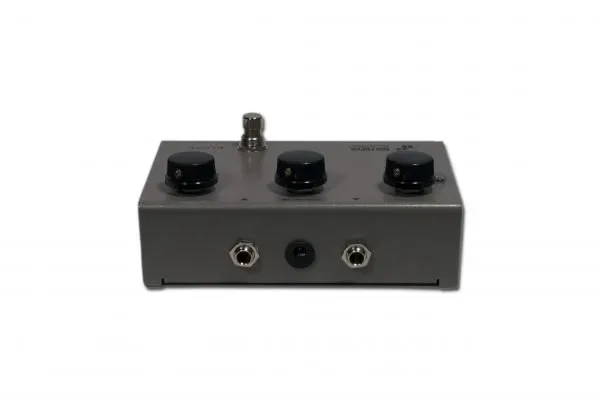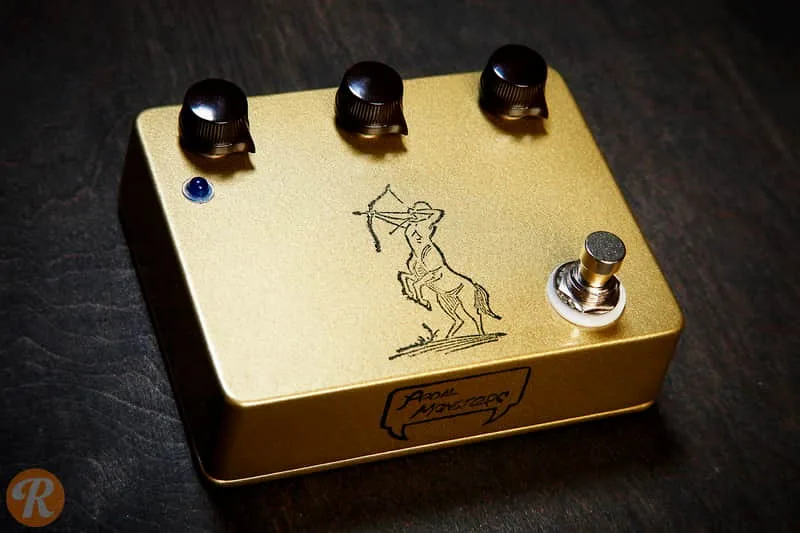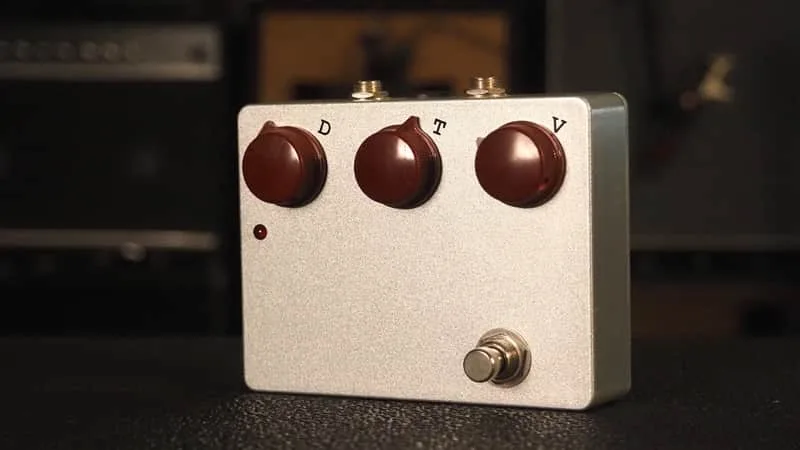


The 68 Pedals Klone is a boost overdrive pedal from small builder 68 Pedals, built on the circuit of the Klon Centaur, the 1990s overdrive whose original units became expensive collector items. Like the Klon itself, it sits in the boost and overdrive family: at low gain settings it works as a clean-ish boost that pushes an amp harder, and as the Drive control comes up the germanium clipping diodes shape the signal into overdrive1.
Pedal of the Day reviewed it in February 2020 and came away impressed, writing that the pedal "passed the test with flying colors"1. The review also noted the price: about $100 through the builder's Reverb.com shop at the time1.
A Klon-style boost overdrive
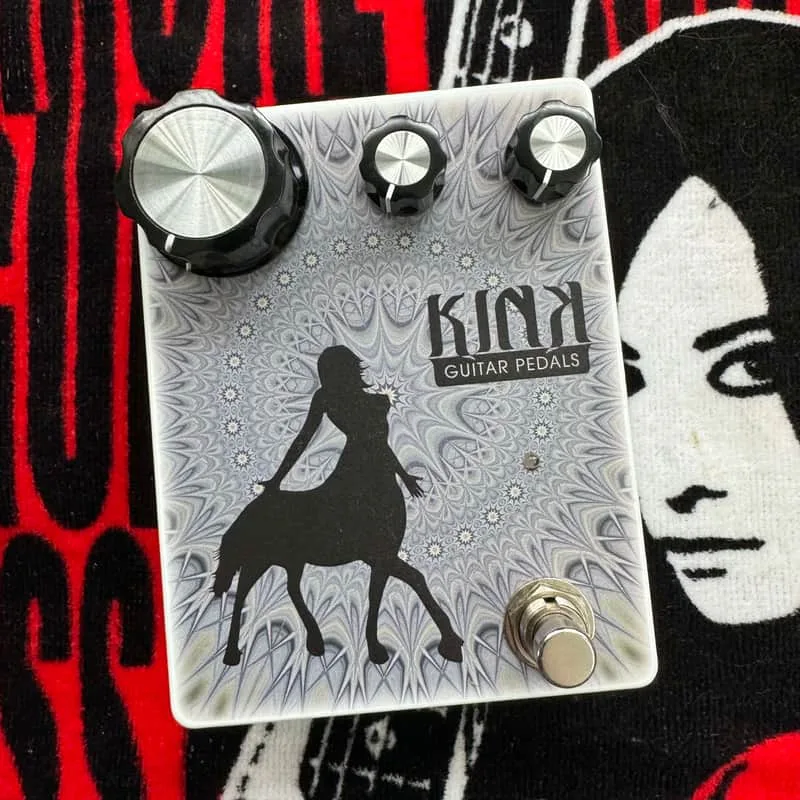
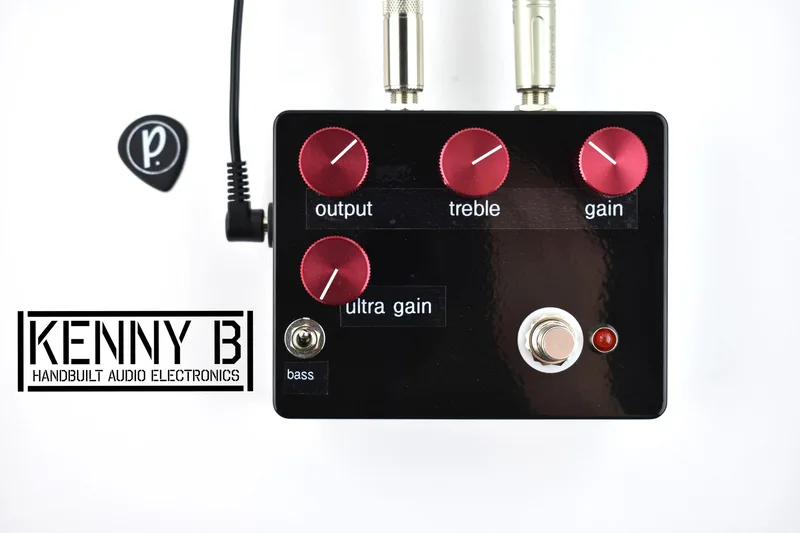
The Klon Centaur set the template for a whole category of pedals, and a number of small builders make their own versions of the circuit. The 68 Pedals Klone is a boost overdrive built in the Klon style, with a dipswitch that in the Up position selects a 1n34a germanium diode, which the maker describes as representing "the original style and sound of a Klon"1. Other builders with their own Klone boost overdrives include Kenny B Pedals, Old-Fx Custom Pedals, Pedal Monsters, DCW Pedals, JedsPeds and Pedal Projects2.
What the Klon circuit does, and what a pedal like this inherits, is combine a clean boost path with a clipped overdrive path, blending them so the low end stays firmer than a simple diode-clipped overdrive. The germanium diodes in the clipping stage are a key part of the recipe: germanium clips at a lower forward voltage than silicon, so the overdrive character arrives earlier and with a softer edge as the Drive control rises.
The 68 Pedals Klone keeps the original's three-knob format. Pedal of the Day put it plainly: "The Drive, Treble and Volume controls are present here, as they have to be to warrant a klone"1.
| Control | What it does |
|---|---|
| Drive | Sets the amount of gain feeding the clipping stage |
| Treble | Shapes the high end, as on the original Klon |
| Volume | Sets the overall output level |
The internal dipswitch and clipping modes
The feature that separates the 68 Pedals Klone from a straight reproduction is a dipswitch inside the enclosure that selects between two clipping modes1. In the Up position, the pedal uses a 1N34A germanium diode, which the review describes as representing "the original style and sound of a Klon"1. The second position gives an alternate clipping character, so a player can compare two diode setups without swapping components.
Pedal of the Day found both settings usable, writing that both modes capture "the essence and power of the Klon in all its glory"1:
"Both are extremely useful modes, capturing the essence and power of the Klon in all its glory."
For a player who wants to experiment with clipping character, an internal switch is a simpler route than soldering, though it does mean opening the enclosure to change modes1.
How it compares with other Klones
The 68 Pedals Klone sits in a crowded field of small-builder Klon replicas, several of which take slightly different approaches to the same circuit. Comparing them side by side shows where the 68 Pedals version fits:
| Pedal | Clipping | Notable feature |
|---|---|---|
| 68 Pedals Klone | 1N34A germanium in Up mode | Internal two-mode dipswitch1 |
| Kenny B Pedals Klone | Germanium D9E Russian diodes | Output, Treble and Gain controls3 |
| DCW Pedals Klone | Vintage NOS Russian military grade D9E germanium diodes | Gain, Treble and Output controls4 |
| Old-Fx Custom Pedals Klone | Klon-style layout | Several color schemes available5 |
| Pedal Monsters Klone | Klon-style layout | Output, Treble and Gain knobs6 |
The diode choice is where most of these builders differ. The Kenny B and DCW versions both use Russian D9E germanium diodes, with DCW calling them "the key elements" of its build34. The 68 Pedals Klone instead uses a 1N34A germanium diode in its Klon-voiced position and adds the dipswitch so a player can move between two setups1. Pedal Projects' Klone, reviewed back in 2014, took the straightforward route with the same controls as the Klon, and its reviewer praised its range, from "an amazing boost" to "a downright gorgeous overdrive"7.
Price and availability
When Pedal of the Day reviewed the 68 Pedals Klone in February 2020, it sold through the builder's Reverb.com shop for about $1001. That made it one of the less expensive small-builder Klones at the time: the DCW Pedals Klone, for comparison, cost less than $140 when reviewed in November 20194. As a small-builder product sold through an online shop, availability depends on the maker's production runs, and the 2020 price should be read as a historical figure rather than a current one.
Videos
Pedal of the Day
Pedal of the Day
Questions
Is the 68 Pedals Klone a Klon clone?
Yes. It is a boost overdrive built on the Klon Centaur circuit, one of many pedals that replicate the original 1990s Klon design. Pedal of the Day reviewed it as part of the wider family of Klon clones, and its control layout and diode options follow the original's pattern.
What does the dipswitch inside the 68 Pedals Klone do?
Inside the pedal there is a dipswitch that selects between two modes. In the Up position the pedal uses a 1N34A germanium diode, which Pedal of the Day describes as representing the original style and sound of a Klon. The second position gives the alternate clipping character.
What kind of clipping diodes does the 68 Pedals Klone use?
In the dipswitch's Up position it uses a 1N34A germanium diode, the type associated with the original Klon's germanium clipping. Germanium diodes clip at a lower voltage than silicon, which shapes how the overdrive breaks up as you raise the gain.
What controls does the 68 Pedals Klone have?
It has three knobs: Drive, Treble and Volume. That is the same three-control layout as the original Klon Centaur and of most pedals built on its circuit, with the Treble control acting as the tone shaping between the gain and output stages.
How much does the 68 Pedals Klone cost?
When Pedal of the Day reviewed it in February 2020, the 68 Pedals Klone sold through the builder's Reverb.com shop for about $100. That price is from 2020, and small-builder pricing can change, so treat it as a historical figure rather than a current one.
Sources (7)
- 68 Pedals Klone Boost Overdrive, Pedal of the Day, 2020-02-13
- The KLONE Project: 24 Klon-ish Pedals You Never Knew You Needed, Pedal of the Day, 2025-06-12
- Kenny B Pedals Klone Boost Overdrive, Pedal of the Day, 2019-11-21
- DCW Pedals Klone Boost Overdrive, Pedal of the Day, 2019-11-09
- Old-Fx Custom Pedals Klone Boost Overdrive, Pedal of the Day (www.pedal-of-the-day.com), 2019-12-12
- Pedal Monsters Klone Overdrive Boost, Pedal of the Day, 2017-03-02
- Pedal Projects Klone Drive, Pedal of the Day, 2014-04-18