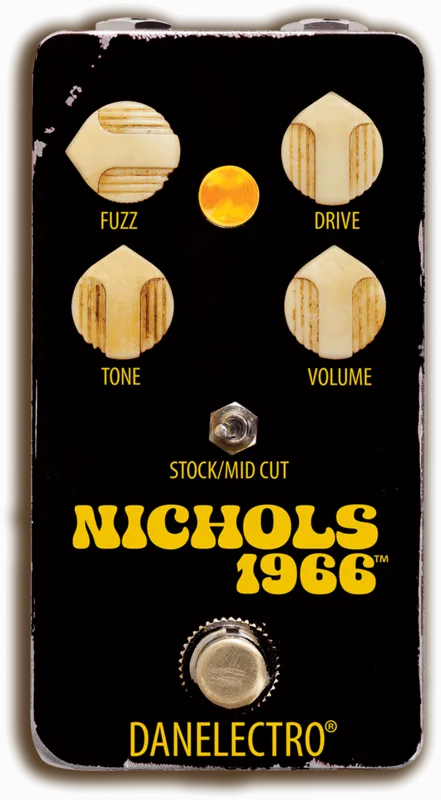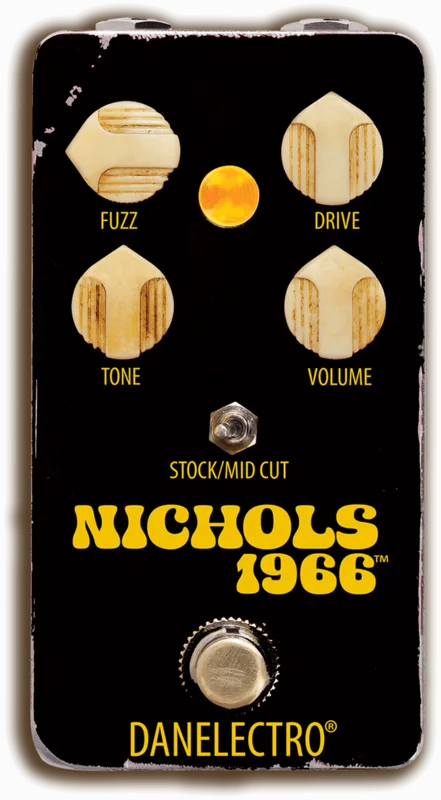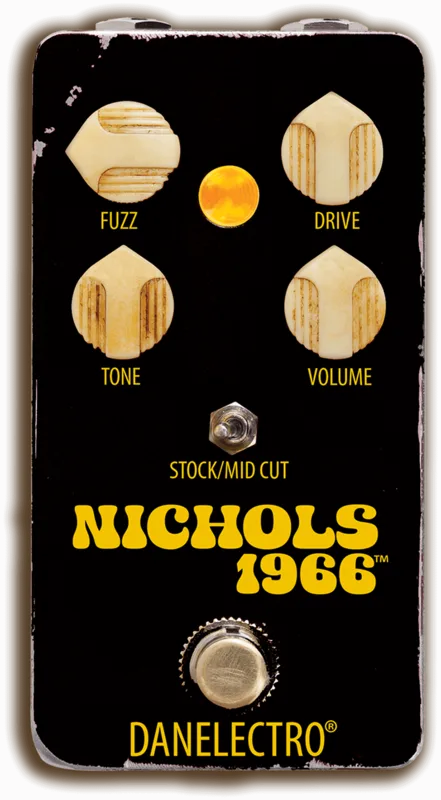


The Danelectro Nichols 1966 is a fuzz pedal from Danelectro that blurs the lines between fuzz and overdrive. It is a modern re-creation of the Liverpool Fuzz-Tone, a rare three-transistor fuzz first designed in 1966 by Steve Ridinger, the founder of FOXX pedals and Danelectro's current owner123. Depending on where you set the controls, it straddles somewhere between a fuzz and a distortion4.
The pedal was released in early 20245.
Danelectro states on its product page that it is not affiliated with any current owners of the Liverpool or Fuzz Tone trademarks1. The pedal has also appeared under different names in coverage: gearnews called it the Nichols 1966 Fuzz Drive4, Pedal of the Day reviewed it as the Nichols 1966 Distortion Fuzz4, and Guitar Pedal X listed it as the Nichols 1966 Liverpool Fuzz Tone4. All refer to the same pedal.
Where the circuit came from
The original Liverpool Fuzz-Tone was invented in the late 1960s by Steve Ridinger, then a teenager. It was in the garage of his family home on Nichols Canyon Place that Steve created his first effects pedal, which he named "The Liverpool Fuzz Tone"16. A year later he had a company make them for him and shifted hundreds of them3.
Ridinger went on to found FOXX pedals and later became the owner of Danelectro. He also designed the 1972 Foxx Tone Machine5. The Nichols 1966 is a reissue of his own original-design dirt pedal, meticulously crafted under his direction67. Guitar Pedal X described the original 1966 Liverpool Fuzz-Tone as rare, and Pedal of the Day noted it has been elusive since the 1960s86.
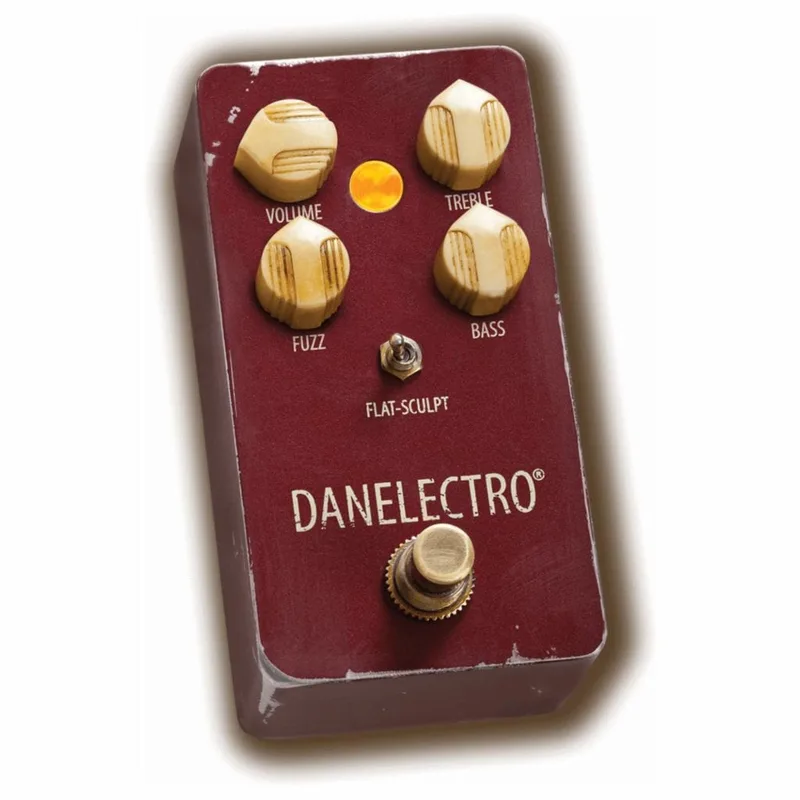
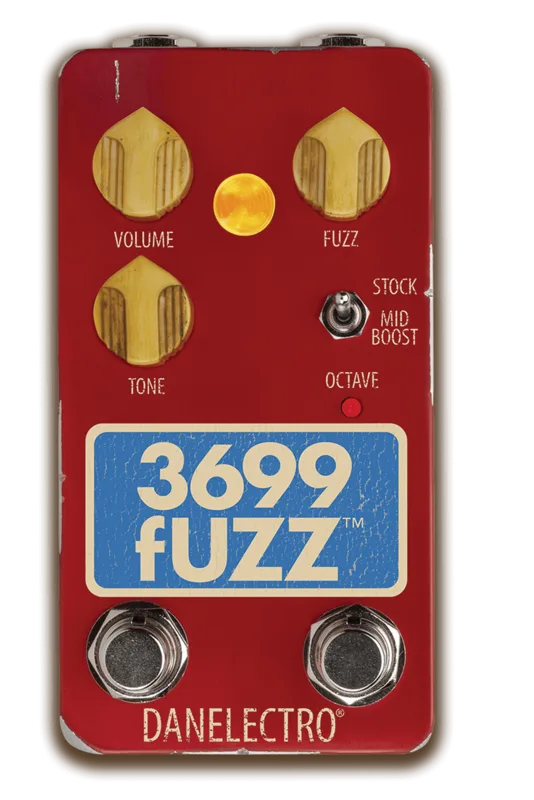
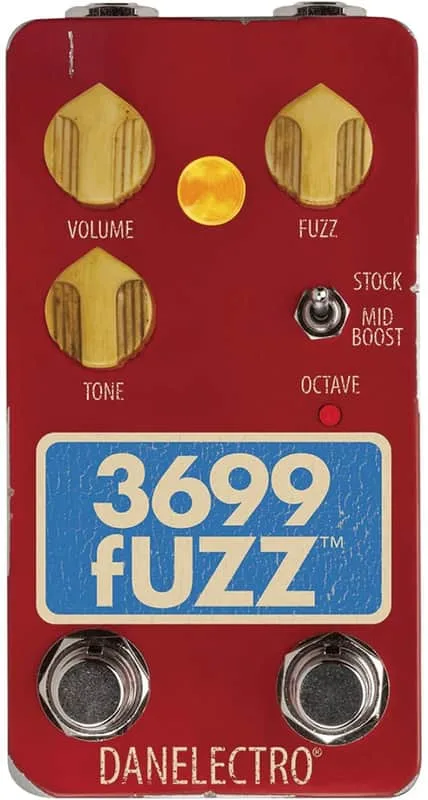
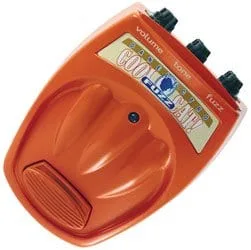
The pedal joins two other Danelectro re-creations in the series:
The controls
The control set is where coverage of this pedal disagrees, and it is worth knowing before you shop for one.
| Source | Controls reported |
|---|---|
| GuitarPCB build document (maker-based) | Fuzz, Drive, Tone, Volume, interactive2 |
| gearnews (Fuzz Drive) | Fuzz, Drive, Tone, Volume, plus Stock/Mid Cut toggle4 |
| Pedal of the Day (Distortion Fuzz) | Interactive Fuzz and Drive knobs, Tone and Volume, Stock/Mid Cut switch6 |
| Delicious Audio | Interactive Fuzz and Drive knobs, Tone and Volume9 |
| Guitar Pedal X (Liverpool Fuzz Tone) | Tone, Fuzz, Level10 |
Most sources agree on four knobs: Fuzz, Drive, Tone and Volume, with the Fuzz and Drive knobs interacting with each other, plus a Stock/Mid Cut toggle switch for added sonic flexibility469. Guitar Pedal X's year-end listing instead describes a simpler set of Tone, Fuzz and Level10. The build document describes the result as a versatile palette from subtle overdrive to saturated fuzz2.
In GuitarPlayer's review, Art Thompson found the blend of the two dirt types mattered most7:
The four knobs are interactive, so adjusting one changes how the others respond. A practical way to approach them is to set Fuzz and Drive around the halfway point and then fine-tune Tone and Volume from there, since the Stock/Mid Cut toggle gives two voicing options to dial in against those settings7
What reviewers said
Reviewers broadly found the pedal more versatile than a typical one-knob vintage fuzz reissue4.
- gearnews' Jef wrote that it "does appear to have a pretty distinct drive tone and one that sounds pretty versatile," and that the demo videos "all sound pretty good," coming across as "a lot more than a one-trick pony"4.
- Pedal of the Day called it "a fantastic re-creation of this elusive stompbox, meticulously crafted under the directio[n] of Steve himself"6.
- GuitarPlayer's Art Thompson found a blend of the two distortion types best suited his ears, starting with fuzz and drive about halfway up7.
- Guitar Pedal X's Stefan Karlsson found it "part novelty obviously but actually delivers some wiry / buzzy / spitty flavours of fuzz," a little raw around the edges overall10.
gearnews also noted that the pedal "has a unique voice, rather than being a take on another classic fuzz design," since it comes from Ridinger's own first design rather than a copy of a better-known circuit4.
How it differs from other Danelectro fuzzes
Videos
Premier Guitar
Guitar World
Soul String
Questions
What is the Liverpool Fuzz Tone?
The Liverpool Fuzz-Tone is a fuzz pedal first designed in 1966 by Steve Ridinger, then a teenager, who built his first one in his family's garage on Nichols Canyon Place. A year later he had a company manufacture them and sold hundreds. It has been elusive since the 1960s, and the Danelectro Nichols 1966 is a modern re-creation of its three-transistor circuit.
How much does the Danelectro Nichols 1966 cost?
The Nichols 1966 was released in 2024 at a list price of $199, or £199 in the UK. A Thomann listing reported by gearnews in February 2024 showed it at $136.00 / £124.00 / 145.00€, so street pricing can differ from the launch list price.
Who is Steve behind the Nichols 1966 pedal?
Steve Ridinger is the founder of FOXX pedals and the current owner of Danelectro. He designed the original 1966 Liverpool Fuzz-Tone as his first pedal, and later the 1972 Foxx Tone Machine. The Nichols 1966 is a reissue of his own original-design dirt pedal, crafted under his direction.
What is the difference between the Nichols 1966 Fuzz Drive and the Distortion Fuzz?
They are the same pedal under different names used by different outlets. Both describe a re-creation of the Liverpool Fuzz-Tone with interactive Fuzz and Drive knobs, Tone and Volume controls, and a Stock/Mid Cut toggle. Depending on where the controls are set, it straddles fuzz and distortion.
Is Danelectro affiliated with the Liverpool or Fuzz Tone trademarks?
No. Danelectro states plainly on its product page that it is not affiliated with any current owners of the Liverpool or Fuzz Tone trademarks. The pedal is a re-creation of a circuit Steve Ridinger designed himself in 1966.
Sources (10)
- Nichols 1966™, Danelectro (danelectro.com)
- Danelectro-Nichols-1966-Build-Document.pdf, GuitarPCB, 2025-10
- “This incredible box dishes out delicious tones unlike those of any pedal ever made”: Danelectro unearths long-lost Steve Ridinger fuzz design from the '60s and releases it as the Nichols 66, MusicRadar, 2024-02-07
- Danelectro Nichols 1966 Fuzz Drive, gearnews.com, 2024-02-08
- Guitar Pedal X, Guitar Pedal X, 2024-01-30
- Danelectro Nichols 1966 Distortion Fuzz, Pedal of the Day, 2024-04-21
- “The Nichols keeps the sounds of your guitars intact while running at distortion levels that you can control for lead and rhythm right from the guitar”: Danelectro Nichols 1966 review, GuitarPlayer, 2024-08-23
- Guitar Pedal X, Guitar Pedal X, 2024-11-12
- Danelectro Nichols 1966 Fuzz, Delicious Audio, 2024-04-22
- Guitar Pedal X, Guitar Pedal X, 2024-12-18