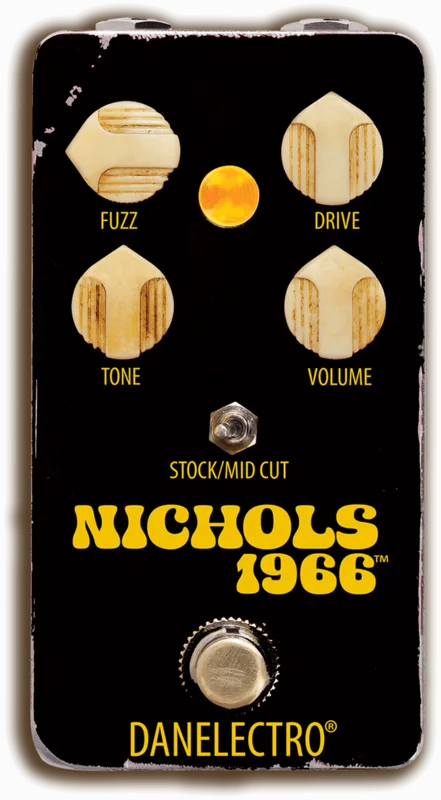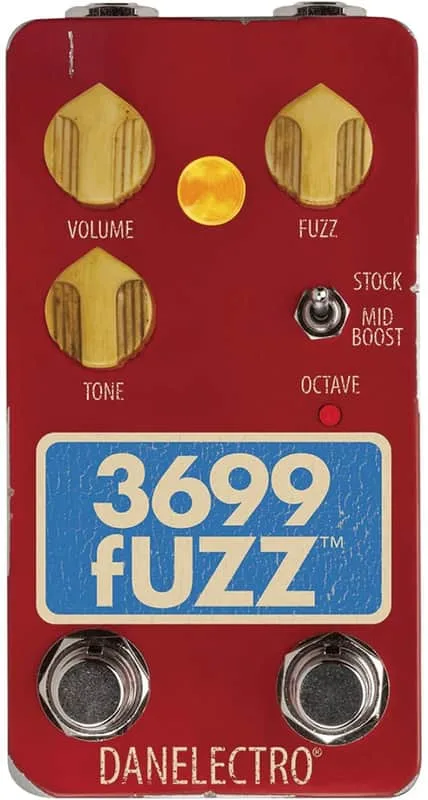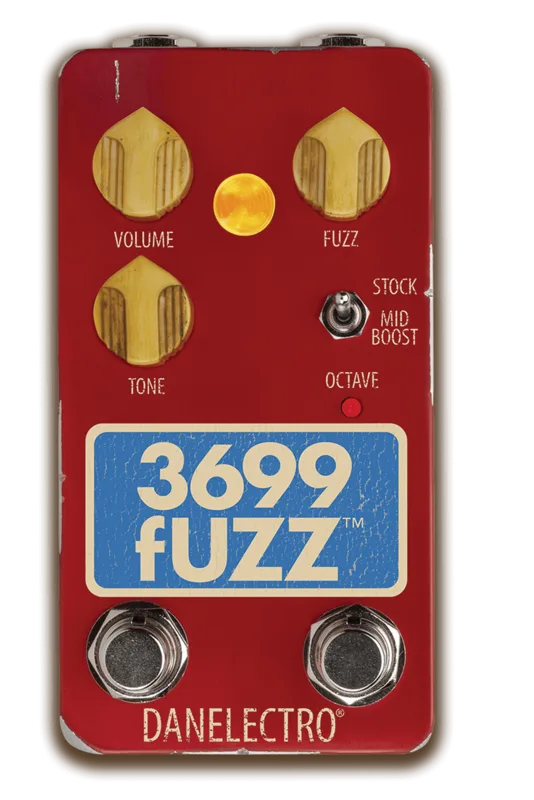


The Danelectro 3699 Fuzz is an octave fuzz pedal that reissues the circuit of the FOXX Tone Machine, a fuzz Steve Ridinger, the owner of Danelectro, originally designed in 19721. Released in 2020, it keeps the original analog circuitry and adds two things the 1970s pedal did not have: a footswitchable octave effect and a mid-boost toggle that removes the mid-frequency scoop of the original234. The name is a nod to the source: 3699 are the numbers that represent the letters FOXX on a vintage telephone dial5.
Danelectro describes the result as having "Velvet tone for sure! Play one!"6
What the 3699 Fuzz does
The pedal is a faithful recreation of the vintage FOXX Tone Machine of the 1970s4. It produces fuzz with an octave on top, and MusicRadar described the promise at launch as "warmer octave fuzz fun with switchable mid boost"3. The octave is more pronounced than on the original pedal, a change Ridinger made deliberately when he brought the circuit back6.
The mid-boost toggle is the other change from the 1970s design. The original Tone Machine had a mid cut, and the 3699's toggle counteracts it, which Delicious Audio framed as a way to cut through a live mix64. Guitar Player's review called the octave effects and the mid-boost feature what make the pedal practical rather than just aggressive8.
"More than just a gnarly, aggressive fuzz, the Danelectro 3699's octave effects and very useful mid-boost feature make it a practical, dynamic and fun addition to your pedalboard."
Controls and footswitches
The pedal has three knobs, a toggle, and two footswitches.
| Control | What it does |
|---|---|
| Volume | Sets the output level9 |
| Fuzz | Sets the amount of fuzz9 |
| Tone | Guitar World's reviewer found it wide-ranging, moving clockwise from thick and sludgy, adding top-end texture through to an aggressive rasp that cuts through5 |
| EQ toggle | Stock or Mid Boost; the boost removes the mid cut of the original16 |
| Left footswitch | Toggles the pedal on and off8 |
| Right footswitch | Activates the octave effect8 |
The dual footswitches mean you can leave the fuzz engaged and bring the upper octave in and out on its own switch, which Guitar World's review listed as a reason to buy, along with the toggle-switched mids boost and "very cool old-school fuzz tones"15.
The 3699 Fuzz has no provision for battery power. It runs on a nine-volt DC adapter, sold separately, so plan on a power supply or pedalboard power brick8.
The enclosure is an antiqued red housing with "arrow" knobs, a look Guitar Player's reviewer called "a very different-looking machine"8.
History: a reissue of the FOXX Tone Machine
The FOXX Tone Machine was a fuzz pedal produced in the early to mid 1970s and re-issued in the 2000s10. Steve Ridinger created the FOXX pedal line in the 1970s and designed the Tone Machine in 1972, when it cost $4961. Original units became highly sought-after on the used market, which made the 3699 a quasi-reissue of a desirable fuzz9.
The 3699, released in 2020, is a reissue of the 1972 FOXX Tone Machine, with designer Steve Ridinger bringing back his original circuit with some important tweaks21. The original FOXX Tone Machine was produced in the early to mid 70s and re-issued in the 2Ks, and it remains highly sought-after on the used market10.
What reviewers said
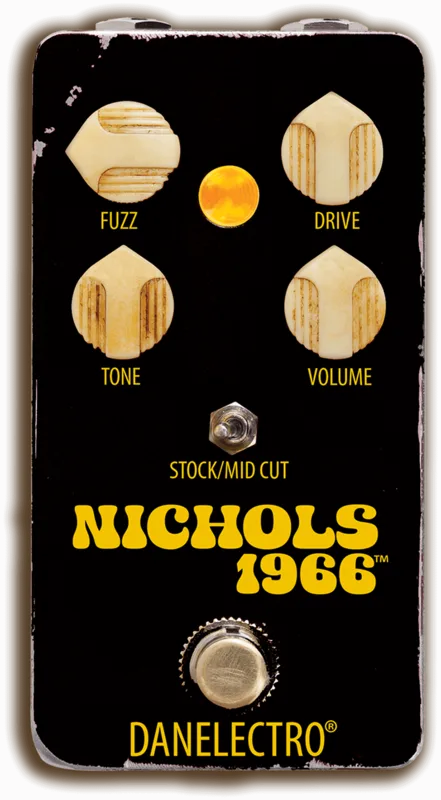
Guitar Pedal X's Stefan Karlsson reviewed the 3699 alongside the Nichols 1966 and found Ridinger had carried the FOXX flavor into a slimmed-down, pedalboard-friendly format, calling it "a perfect ambassador for the Foxx Tone Machine sound in a pedalboard friendly format overall"1. Pedal of the Day presented it as the final pedal of Danelectro's vintage lineup at the time, "improving on the classic FOXX Tone Machine"11.
Videos
Premier Guitar
Danelectro Official
R.J. Ronquillo
News
Questions
What does 3699 mean on the Danelectro fuzz?
3699 are the numbers that represent the letters FOXX on a vintage telephone dial. The pedal is named after the FOXX Tone Machine, the 1972 fuzz that Danelectro owner Steve Ridinger originally designed, whose circuit the 3699 Fuzz reissues with some tweaks.
Can the Danelectro 3699 Fuzz run on a battery?
No. The pedal has no provision for battery power. It runs on a nine-volt DC adapter, which is sold separately, so you will need a power supply or a pedalboard power brick before you can use it.
Is the Danelectro 3699 Fuzz true bypass?
Yes. Guitar World's review lists true bypass among the pedal's features, so with both footswitches off the signal passes through without the circuit coloring your tone.
Who designed the original FOXX Tone Machine?
Steve Ridinger, the owner of Danelectro, created the FOXX pedal line in the 1970s and designed the Tone Machine fuzz in 1972, when it sold for $49. He brought back his original circuit for the 3699 Fuzz with some changes.
Where is the Danelectro 3699 Fuzz made?
The 3699 Fuzz is made in China, according to Guitar World's review. Danelectro is a United States company, and the pedal is part of its run of vintage-circuit reissues that includes the Eisenhower Fuzz and the Nichols 1966.
Sources (11)
- Guitar Pedal X, Guitar Pedal X, 2024-11-12
- Danelectro gets Foxxy again with its new 3699 fuzz pedal, MusicRadar, 2020-03-11
- The best new effects pedals of NAMM 2020, MusicRadar, 2020-01-24
- Danelectro 3699 Fuzz, Delicious Audio, 2020-10-20
- Danelectro 3699 Fuzz review, Guitar World, 2020-09-09
- 3699 fUZZ™, Danelectro Guitars, 1970
- NAMM 2020: Danelectro unveils boutique-styled 3699 Fuzz, Back Talk Reverse Delay and Roebuck Distortion, Guitar World, 2020-01-06
- Danelectro 3699 Fuzz review, GuitarPlayer (www.guitarplayer.com), 2020-08-13
- NAMM 2020: Danelectro 3699 fUZZ, a fOXX Tone Machine clone and more, gearnews.com, 2020-01-05
- TONEHOME, TONEHOME - the World of Vintage Guitar Effect Pedals
- Danelectro 3699 fUZZ Octaver, Pedal of the Day, 2021-02-08