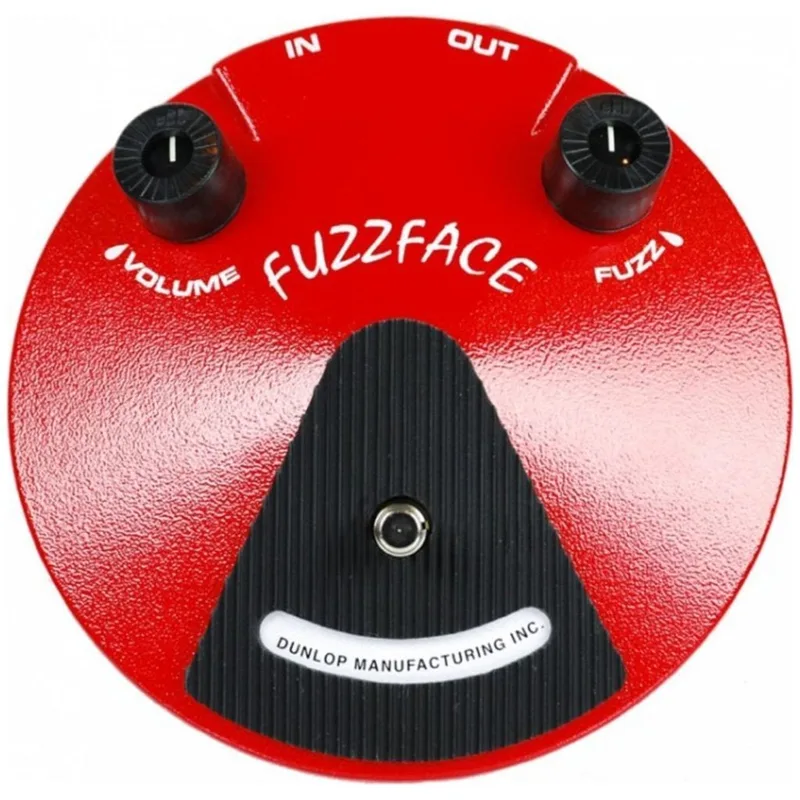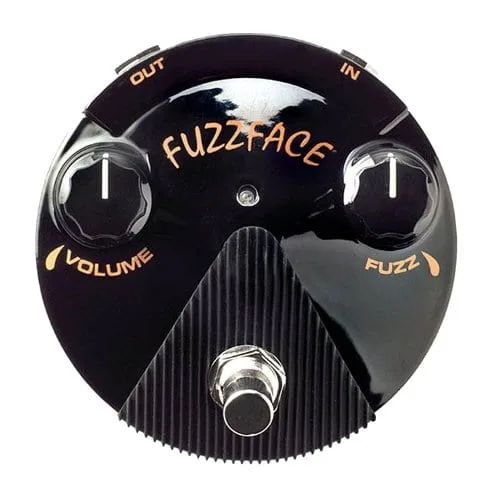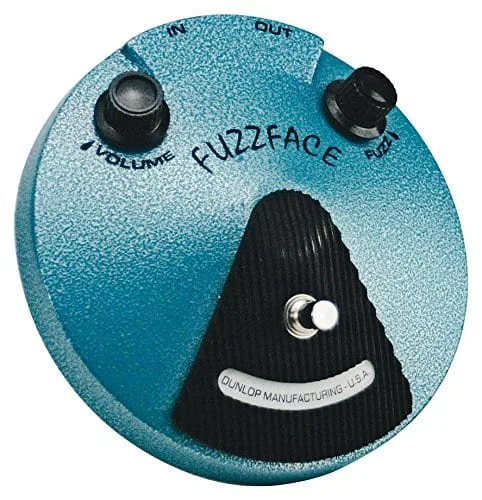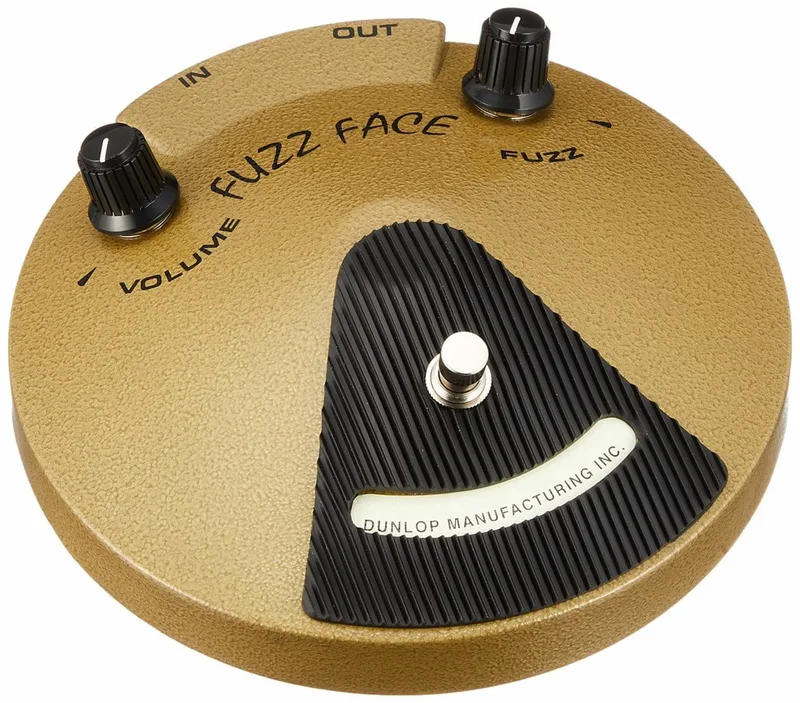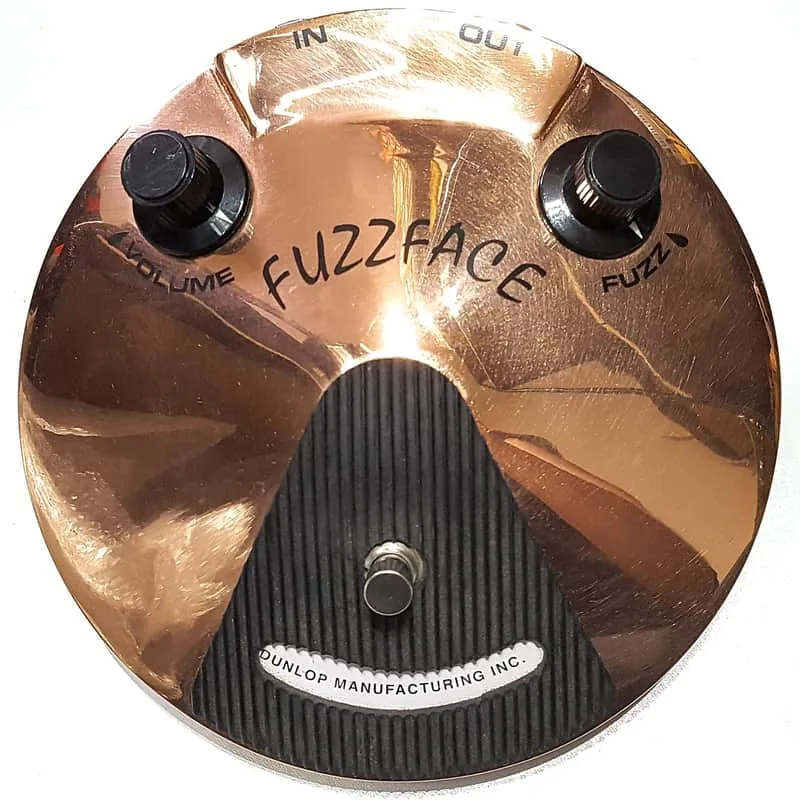


The Dunlop JBF-3 Joe Bonamassa Signature Fuzz Face is a hand-wired germanium fuzz pedal built by Dunlop, who have made the Fuzz Face since the '90s, in conjunction with blues guitarist Joe Bonamassa12. It is a tweaked positive ground Fuzz Face using matched NOS Russian military germanium transistors, with its components laid out just like an Arbiter original, housed in a polished copper shell12.
Dunlop describes the pedal as voiced specifically for Joe's humbucker-driven tone, adding sustain and thickness for a rich, creamy fuzz2. Premier Guitar's review called it a singing but aggressive and growling fuzz, and noted it is an interesting convergence of tones that would be considered typical of both germanium and silicon Fuzz Faces of old1. Bonamassa himself uses the pedal with the Volume and Fuzz set to maximum1.
The controls: Fuzz and Volume
The control set is as simple as a Fuzz Face gets. There's a knob for Fuzz, one for Volume, and an on/off footswitch, and that is it1. The pedal also uses classic Omeg pots, the same type found on vintage units2.
One thing worth knowing about the Volume control: it is a log pot whose resistance drops aggressively rotating counterclockwise from full, so the pedal gets quiet quickly when you lower it2. Players who like to ride the Volume knob for cleanup will find the useful range sits close to the top of the sweep.
| Control | What it does |
|---|---|
| Fuzz | Sets the amount of fuzz and drive1 |
| Volume | Sets output level; log taper drops off quickly below full2 |
| Footswitch | On/off, true bypass12 |
Power: positive ground germanium
This is the part of the JBF-3 that most affects how it fits on a pedalboard. Premier Guitar's review described it as a strictly 9V battery-powered affair1. The circuit is positive ground, which means the supply polarity is the reverse of a standard pedal: negative to the supply's red wire, positive to ground on the black wire2.
Because it is a positive ground circuit, the JBF-3 cannot share a daisy-chained supply with negative ground pedals. One builder suggests a negative voltage inverter to supply the -9V, which allows a 0V ground and daisy chaining with negative ground pedals2.
An owner of the 2013 LE black version reported that powering it via a conversion cable, a 9V battery clip to a standard Boss-style 9V adapter plug, only works with center negative polarity2. The bypass wiring itself remains the same as any true bypass pedal; only the power and battery wiring changes for positive ground2.
Inside: NOS Russian germanium and two bias trimmers
Inside the copper shell, the hand-wired circuitry is built around matched NOS Russian military germanium transistors, chosen for their character, with the array of transistors, capacitors, and resistors laid out just like an Arbiter original12.
The circuit includes two bias trimmers for setting the transistors:
- A 10k trimmer in series with a 3k16 resistor to the Q2 collector, putting the resistance at about 8.2k2
- A 25k trimmer with 20k to the Q1 collector2
The builder who traced the circuit set the bias at Q1 to 0.9V and Q2 to 6.6V on the collector2. An owner measuring an original Dunlop unit found Q1 higher than 0.9V and Q2 at 4.25V after moving an 18p cap towards Q2 to eliminate oscillation caused by leakage in the transistors2. Another commenter noted Q2 in their unit was a GT308V rather than a GT308B, with the Q2 collector at 4.5V2.
On the sound of a DIY build with lower gain transistors, the builder found it an interesting sound for a Fuzz Face, nice and not so over the top, with the circuit definitely working as it should, and especially good in front of a dirty amp like a Vox AC-15 or a Marshall2. The same builder found a buffer before it makes a huge difference, preferring it with one in front for much more hair2.
"A buffer before it makes a huge difference. I prefer it with one before it, it has much more hair that way."
Where it came from and how it fits the range
Dunlop, who have made the Fuzz Face since the '90s, worked with Bonamassa to create what Premier Guitar called the ultimate Fuzz Face for his searing blues style1. MusicRadar's history of the Fuzz Face, writing in Total Guitar, described the JBF3 as Joe Bonamassa's thick-sounding, copper-colored germanium fuzz bomb3. The pedal also appeared in That Pedal Show's video on classic fuzz tones and where to begin4.
Production is limited to a single batch each year2. A 2013 limited edition run included a black version alongside the copper one2. Dunlop also makes a smaller-format Joe Bonamassa Fuzz Face Mini, alongside other signature Fuzz Faces such as the Jimi Hendrix Signature Fuzz Face and the Eric Johnson Signature Fuzz Face.
Videos
ProGuitarShopDemos
jimdunlopusa
Tom Marcozzi BLUES GUITAR
Questions
Can I power the JBF-3 from a daisy chain with other pedals?
No. The JBF-3 is a positive ground circuit, so its power wiring is the opposite of a standard negative ground pedal. Sharing one supply with negative ground pedals will not work. One builder's workaround is a negative voltage inverter to supply the -9V the circuit needs, which then allows a 0V ground shared with other pedals.
Is the Bonamassa Fuzz Face germanium?
Yes. The JBF-3 is a hand-wired germanium fuzz built around matched NOS Russian military germanium transistors, laid out like an original Arbiter Fuzz Face. Premier Guitar's review described it as an interesting convergence of tones typical of both old germanium and silicon Fuzz Faces.
Does the JBF-3 copper finish tarnish?
Yes. The pedal comes in a polished copper finish that will patina over time, so the shell darkens and ages with use. Premier Guitar noted the gleaming copper shell will repel some purists and thrill more flash-fascinated fuzz fans.
Is the JBF-3 a limited edition?
In effect, yes. Production of the Joe Bonamassa Signature Fuzz Face is limited to a single batch each year, so availability comes and goes. A 2013 limited edition run included a black version alongside the copper one.
How much does the Dunlop JBF-3 cost?
Premier Guitar listed the JBF-3 at street $199 in its September 2023 review. Because production is limited to a single batch each year, actual availability and pricing on the secondhand market can vary.
Does the JBF-3 need a buffer in front of it?
Not need, but one builder who traced the circuit found a buffer before it makes a huge difference, giving much more hair and sounding great across many bias settings. Like other Fuzz Faces, how it reacts to what feeds it is part of the design.
Sources (4)
- Joe Bonamassa Signature Fuzz Face Pedal Review, Premier Guitar, 2010-12-21
- Guitar FX Layouts: Dunlop JBF-3 Joe Bonamassa Fuzz Face, tagboardeffects.blogspot.com (Guitar FX Layouts), 2014-07-14
- IN PRAISE OF: Fuzz Face, MusicRadar, 2012-12-05
- That Pedal Show, That Pedal Show, 2016-11-11
 Joe Bonamassa