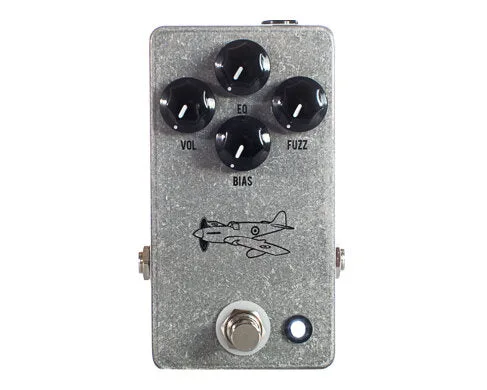


The JHS Firefly is a fuzz pedal from JHS Pedals, built around a classic three-transistor germanium fuzz circuit and modeled after the vintage Tone Bender MKIII of the late 1960s1. Its three hand-matched germanium AC128 transistors give it the character of the old British boxes, while a Bias knob lets you tune that character to the room you are playing in1. JHS describes it as a versatile piece of gear that can reach from blues to rock to heavy grinding distortion1.
The pedal is analog, with four knobs: Volume, EQ, Fuzz and Bias2. It measures 2.2" x 4.3" x 1.5"1.
What the Firefly does to your sound
The Firefly is JHS's take on the Tone Bender MKIII, a classic fuzz from the late 1960s3. Where a silicon fuzz tends toward a tighter, more aggressive grind, a germanium three-transistor circuit like this one sits somewhere between an overdriven amp and a full fuzz, which is why JHS says the pedal can reach from blues to rock to heavy grinding distortion depending on how you set it1.
The Bias knob is central to that range. Rolling it to the left produces loud and powerful tones; rolling it to the right produces dirtier, more saturated tones1. Because germanium transistors sound different in various temperatures and environments, having a Bias control on the outside of the pedal lets you compensate on the gig instead of opening the box1.
The controls: Volume, EQ, Fuzz and Bias
| Control | What it does |
|---|---|
| Volume | Standard master volume. JHS says the Firefly has an enormous amount of headroom, so it can be used as a boost that hits extremely hard if needed1. |
| EQ | Operates as a cut: rotating to the right removes highs and fattens the tone1. |
| Fuzz | Simply adds more distortion and fuzz, making the signal dirtier1. |
| Bias | Fine-tunes the power going to the hand-matched germanium AC128 transistors. Left is loud and powerful, right is dirtier and more saturated1. |
Two things are worth knowing before you dial it in. First, the EQ works backwards from what many players expect: it cuts highs as you turn right, rather than adding brightness1. Pedal of the Day's reviewer, Mike B, noticed the same thing on his unit in 2014, writing that the highs disappeared as he turned the knob to the right, "not the LEFT like usual"3. Second, the knobs interact: MusicRadar's reviewer Trevor Curwen found that all the knobs are interactive, so tweaking one influences another4.
"All the knobs are interactive - tweaking one influences another"
Power: 9V DC, under 100mA
The Firefly requires standard 9V DC negative power and consumes less than 100mA1. RockBoard's PedalPedia lists the same requirement as 9V DC, center negative, with a 100mA current figure2.
Vintage germanium Tone Bender circuits were positive-ground, which normally rules out sharing a power supply with modern pedals. JHS internally adjusts the voltage and polarity in the Firefly so it runs on a normal 9V supply, meaning it can sit on a standard pedalboard power brick alongside your other pedals1.
A Tone Bender MKIII tribute, and the hand-painted edition
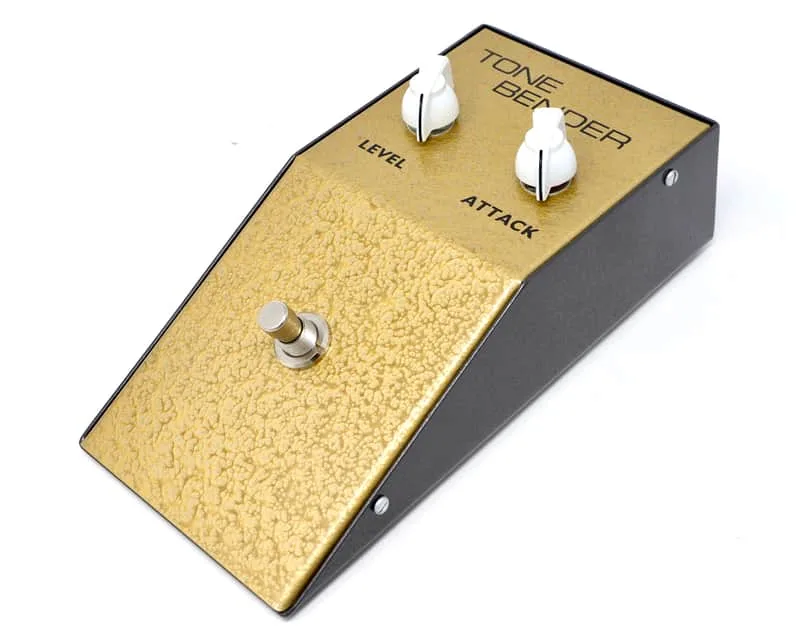
JHS calls the Firefly a tribute to the Tonebender MKIII model of the late 1960s1. The lineage behind that circuit goes back further: in 1965 the Sola Sound Tone Bender MKI arrived on the London music scene, and Jimmy Page was photographed using a gold Tone Bender in a very early cast aluminum enclosure during the Yardbirds years15. The MKIII added a tone control and a different cast-metal housing6, and Aion FX notes that the MKIII was itself a variation of the Baldwin-Burns Buzzaround7.
The Firefly is also available as a Hand Paint edition, the same circuit in a hand-painted enclosure8. It shares the standard version's controls, power requirement and AC128 transistors8.
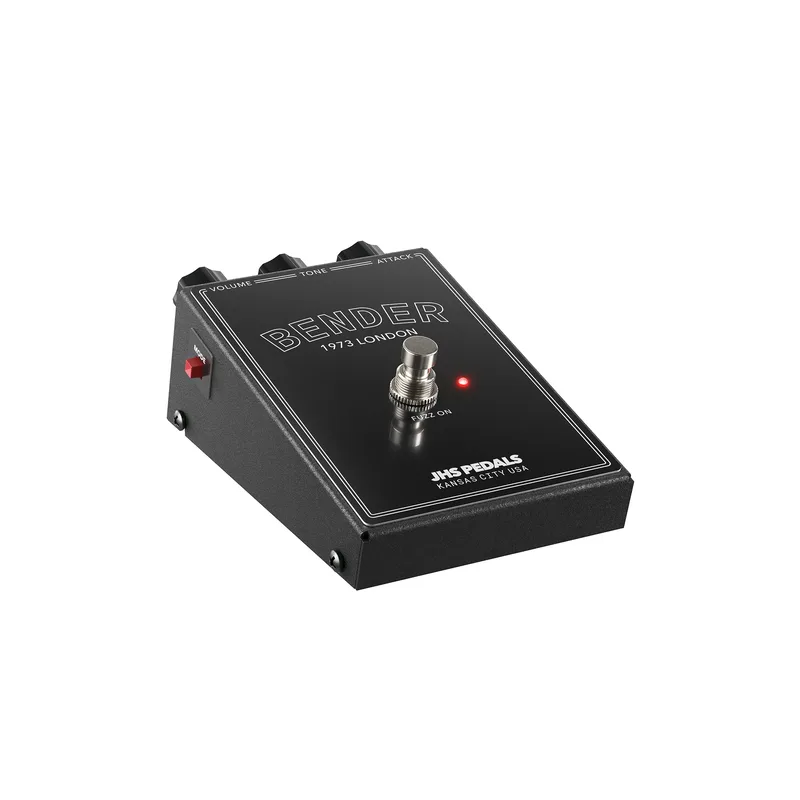
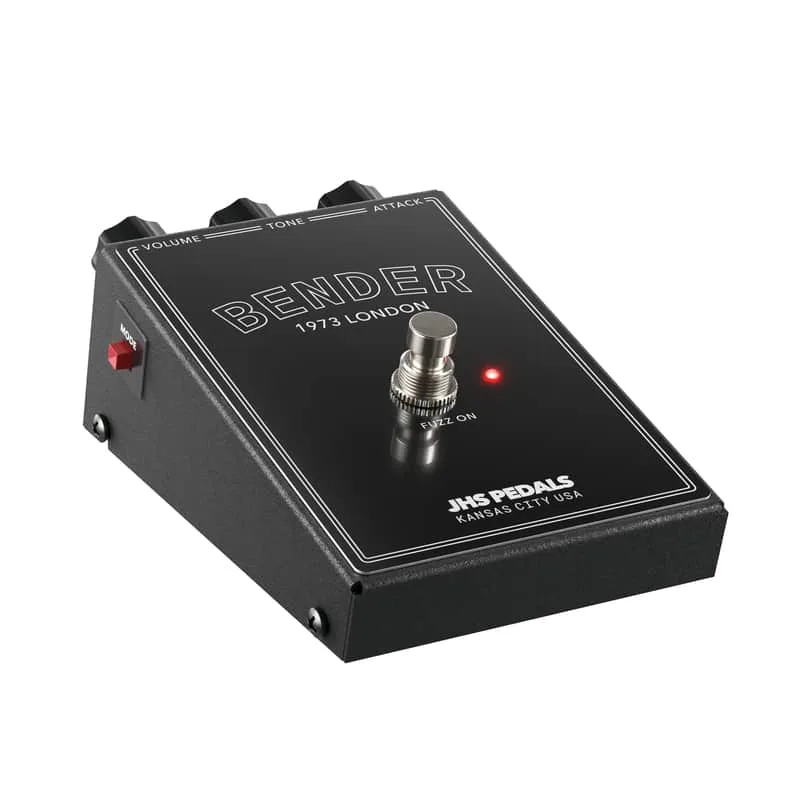
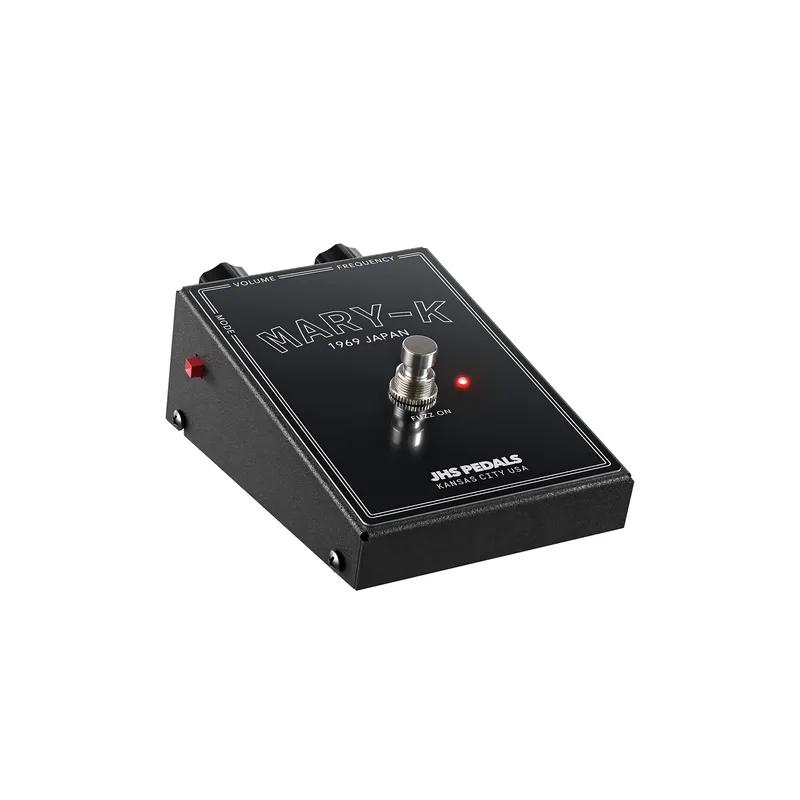
For players comparing JHS fuzzes, the Firefly sits alongside other Tone Bender-inspired pedals in the range such as the JHS Bender and the JHS Legends of Fuzz Bender, and the MKI-inspired JHS Mary-K.
What reviewers said
Published reviews of the Firefly have been positive. One reviewer praised its great build quality4. Another wrote that "the Firefly does a pretty good job keeping up with the MKIII, for sure," comparing it against the Tonebender MKIII3.
"the Firefly does a pretty good job keeping up with the MKIII, for sure."
Videos
ProGuitarShopDemos
ProGuitarShopDemos
Sweetwater
Questions
What transistors are in the JHS Firefly?
The Firefly is built around hand-matched germanium AC128 transistors, three of them in the classic three-transistor fuzz circuit. JHS matches the transistors by hand, and the Bias knob lets you fine-tune the power reaching them so they sound right in different temperatures and environments.
Can the JHS Firefly be used as a boost?
Yes. JHS says the Firefly has an enormous amount of headroom, so the Volume control lets it be used as a boost that can hit the front of an amp extremely hard if needed. With the Fuzz control rolled down it works like a loud, powerful germanium boost.
Why does the EQ knob on the Firefly cut highs to the right?
The EQ operates as a cut rather than a boost. Rotating it to the right removes highs and fattens the tone, the opposite of what many players expect from a tone knob. Pedal of the Day's reviewer noticed the same behavior on his unit and flagged it as backwards compared with the usual convention.
Does the Firefly need a positive-ground power supply?
No. Although vintage germanium Tone Bender circuits were positive ground, JHS internally adjusts the voltage and polarity so the Firefly runs on a normal 9V DC center-negative supply, the same as most modern pedals. No special power arrangement is needed.
What does the Bias knob do on the Firefly?
It controls the power going to the germanium AC128 transistors. Rolling it to the left gives loud and powerful tones; rolling it to the right gives dirtier, more saturated tones. It also helps compensate for germanium transistors sounding different in various temperatures and environments.
Sources (8)
- FIREFLY - JHS Pedals, JHS Pedals
- FireFly by JHS, RockBoard PedalPedia, 2026
- JHS Pedals Firefly Fuzz Effects Pedal, Pedal of the Day (www.pedal-of-the-day.com), 2014-10-16
- JHS Firefly review, MusicRadar, 2015-06-02
- Tone Bender 'MKI' players list • Fuzzboxes, fuzzboxes.org, 2026-02-22
- Stompbox Classics: Tone Bender, Part 2, Premier Guitar, 2009-10-21
- Phobos Germanium Fuzz / Tone Bender Mk. III, Aion FX, 2020-07-03
- FIREFLY HAND PAINT, JHS Pedals