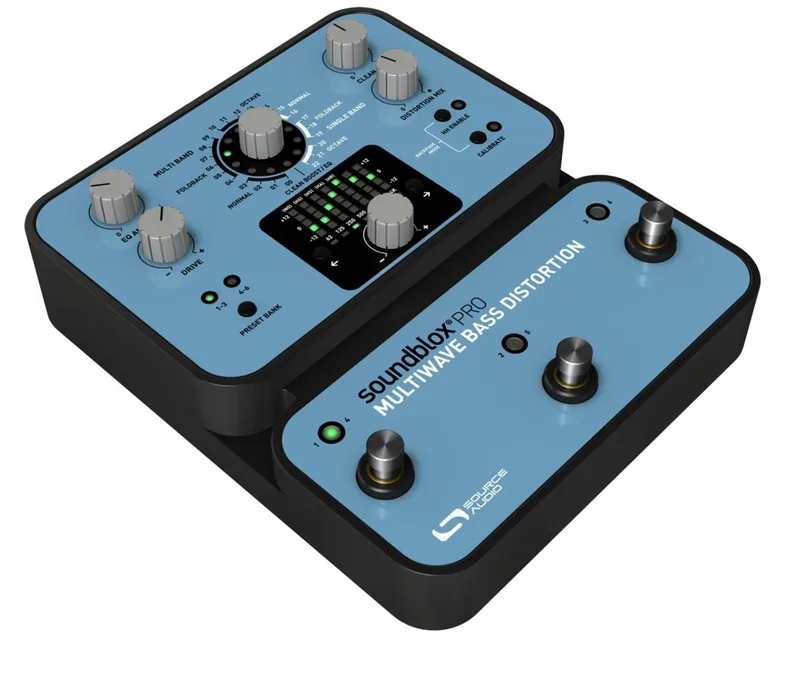


The Source Audio Soundblox Pro Multiwave Bass Distortion is a programmable bass distortion pedal that Source Audio introduced at the NAMM show in January 2010. What sets it apart from most bass distortion boxes is multiband processing: instead of pushing the whole signal through one clipping stage, it divides the signal into multiple frequency bands and distorts each band individually, an approach Source Audio adapted to the bass guitar's frequency range1. The company pitched it as delivering "the advantages of multiband processing to bass players"1.
The point of that design is clarity and low end. Multiband processing offers a clear distortion with note articulation1, and the pedal's separate mix knobs for clean and dirty signals let you keep your low end, which No Treble noted is unlike many distortion boxes2. It shipped with an MSRP of $299 and a street price of $219 as of January 20101.
How multiband distortion works on bass
Most distortion pedals clip the entire signal at once, which on bass tends to thin out the bottom end. The Multiwave approach is different: multiband processing breaks the signal into multiple bands and distorts them individually for more clarity and articulation2. The tones are based on new proprietary algorithms, and they range from basic overdrive to aggressive synth-like, octave-heavy and extreme foldback settings1. Premier Guitar described the range as running "from normal, for a somewhat traditional distortion curve, to extreme foldback and octave settings for more aggressive and synth-like tones"3.
On top of the band splitting, the pedal lets you mix your direct bass signal in parallel with the distorted signal, as reviewed at MusicPlayers.com4. That parallel clean blend is the other half of keeping a bass sounding like a bass under gain: the distorted bands supply the grind while your untouched low end supplies the weight.
Delicious Audio's reviewers made the underlying point directly: this is technology "that would only be available in the digital domain"5. Splitting a signal into bands, clipping each one separately and recombining them is not something an analog distortion circuit does, which is why the pedal is built around a 56-bit digital signal processor with 24-bit converters14.
Presets, MIDI and the seven-band EQ
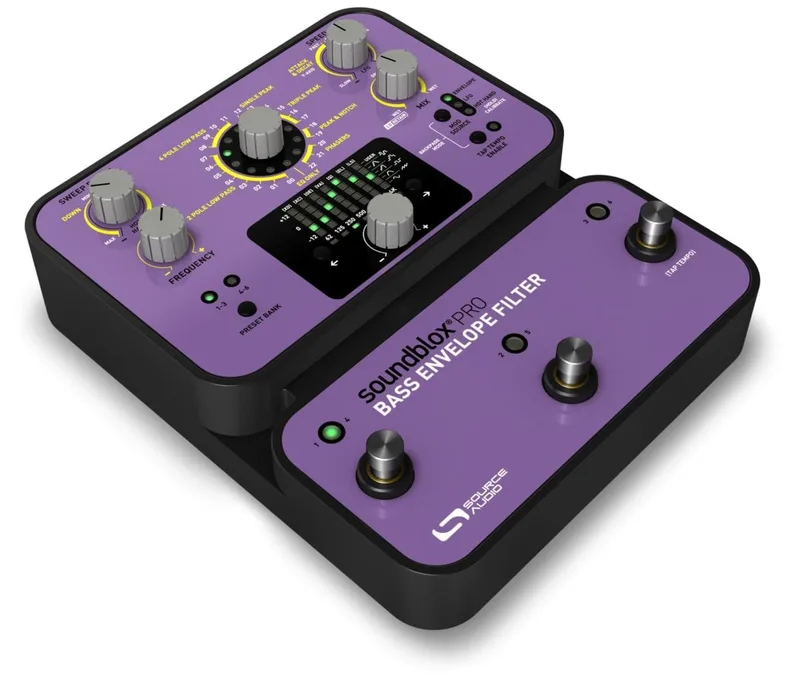
The Pro model is the programmable version of the pedal. It gives you access to 23 modern and distinctive presets plus an additional clean boost/EQ mode1, and you can save six of your own sounds as user presets, recalled quickly through its three footswitches2. Each preset is then customizable using the 7-band graphic EQ, the drive control and the separate mix knobs for clean and distorted signals2.
| Feature | What it does |
|---|---|
| 23 presets + clean boost/EQ mode | Factory distortion types, from overdrive to foldback and octave settings1 |
| 6 user presets, 3 footswitches | Save and quickly recall your own sounds2 |
| 7-band graphic EQ | Shape each preset's tone in depth24 |
| Drive control | Further customizes each distortion type13 |
| Clean and dirty mix knobs | Blend direct bass signal in parallel with the distorted signal4 |
| MIDI input | External access to presets and parameters1 |
| Expression pedal input | Seamless morphing from one user preset to another1 |
The MIDI input allows external access to presets and parameters1, which puts the pedal in the company of other MIDI-enabled distortion pedals like the TC Electronic Nova Drive, as a Molten Voltage technical analysis noted6. The expression pedal input is the performance-friendly counterpart: rather than switching between sounds, you can morph continuously between two user presets with your foot1.
The Soundblox line: Pro, standard and Soundblox 2 versions
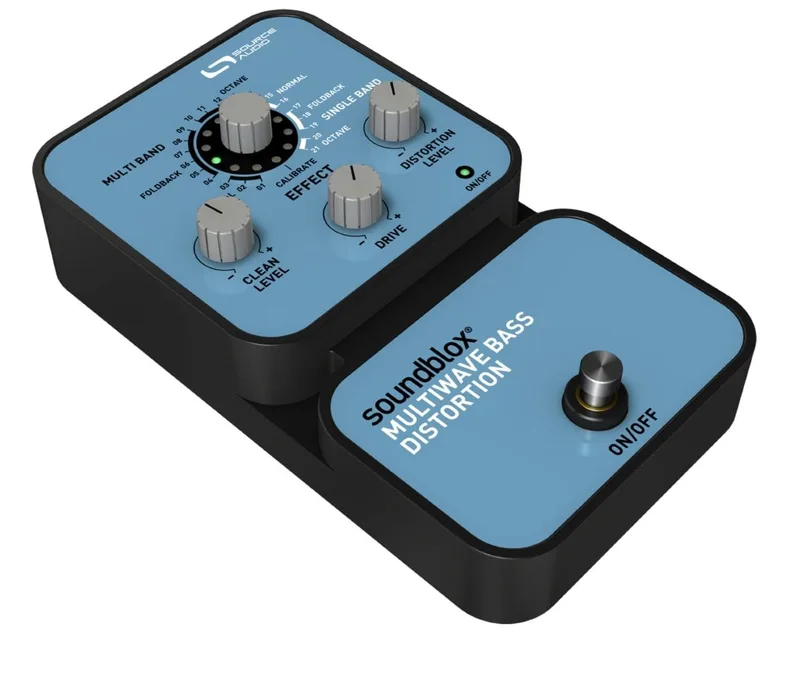
The pedal comes in two versions at launch. The Soundblox Pro Multiwave Bass Distortion is the full programmable unit; it is also available in a scaled down, non-programmable version called the Soundblox Multiwave Bass Distortion1. Both the Pro and the standard version feature the same 56-bit digital signal processing with 24-bit converters1, so the difference is the programming, the EQ, the presets and the MIDI, not the core sound engine.
The standard version still carries plenty of sounds: MusicPlayers.com found its presets are selected by rotary dial, grouped into Multi band mode and Single band mode4. Reviewer John Montalbano gave it an overall rating of 3.6, which earned it a WIHO Award4.
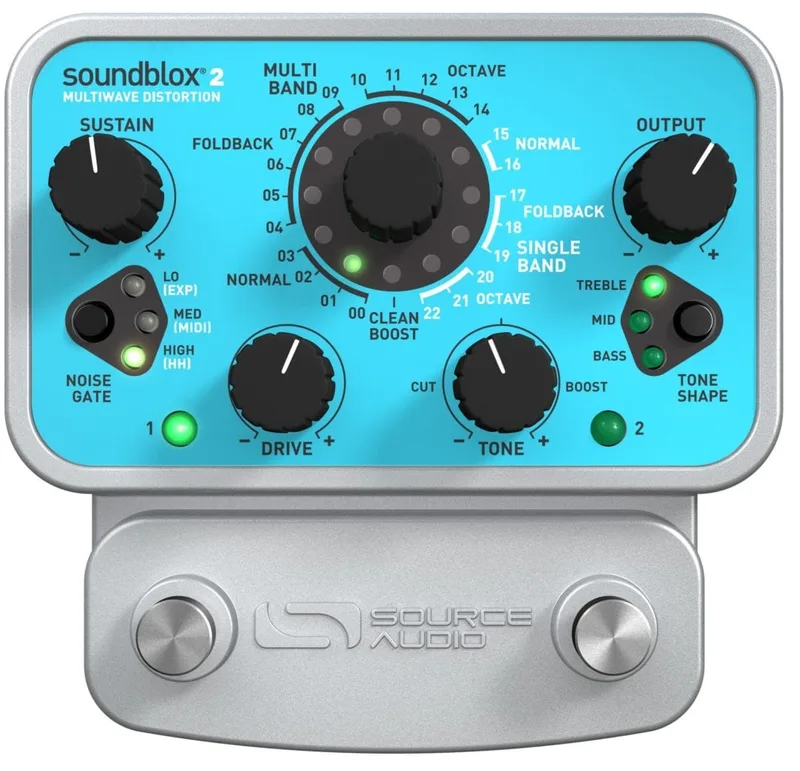
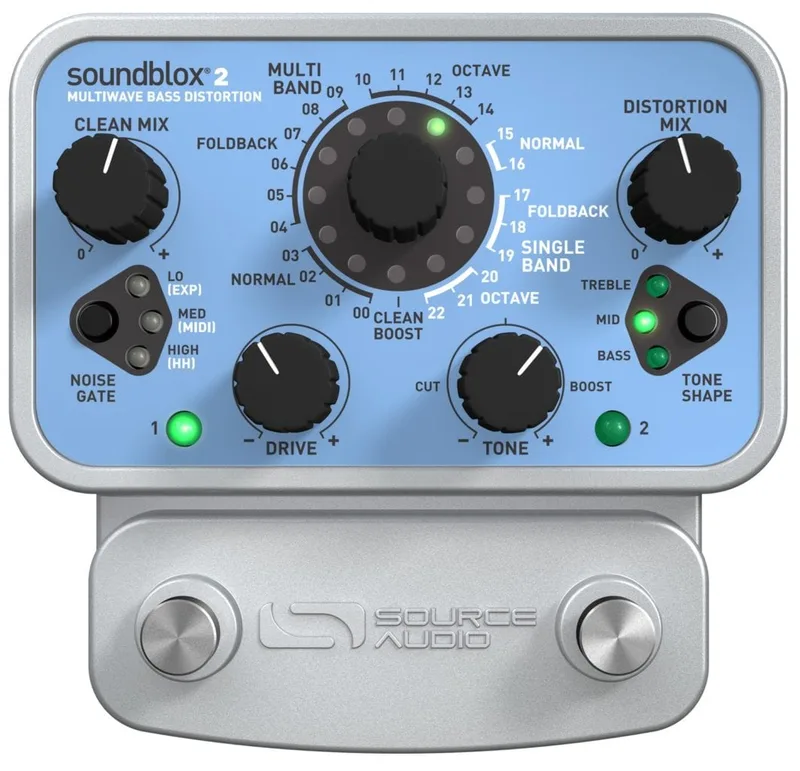
In 2012 Source Audio carried the concept into its Soundblox 2 line, repackaging the Multiwave Bass Distortion into a smaller and more affordable unit, the Soundblox 2 Multiwave Bass Distortion7. That version trims the feature set considerably, with fewer programmable presets and 3-band tone shaping instead of the Pro's 7-band graphic EQ81. Its multi-band modes split the signal into ten frequencies and distort them individually, and it adds an adjustable multi-level noise gate8.
| Pro (2010) | Standard (2010) | Soundblox 2 (2012) | |
|---|---|---|---|
| Programmable | Yes, 6 user presets2 | No1 | Yes8 |
| Factory sounds | 23 presets + clean boost/EQ1 | Presets grouped into Multi band and Single band modes4 | Multi-band and single-band modes124 |
| EQ | 7-band graphic EQ48 | Rotary preset selection4 | 3-band tone shaping8 |
| MIDI | Yes1 | No | Not stated |
| Noise gate | Not stated | Not stated | Adjustable multi-level8 |
Premier Guitar's review of the Soundblox 2 version found that its multi-band modes are "just the ticket for keeping even the wildest distortions tight and crisp," and called the pedal "an excellent tool for adding grind and grit to your bass tone, a" with more than enough sonic options to carve a place in a rock or metal band's mix8.
"Tons of range. Great response. Multi-band modes are just the ticket for keeping even the wildest distortions tight and crisp."
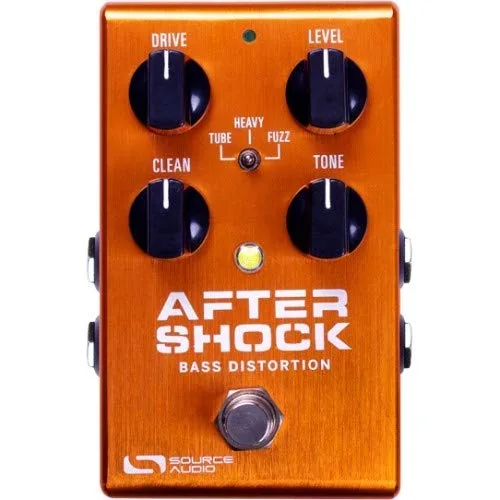
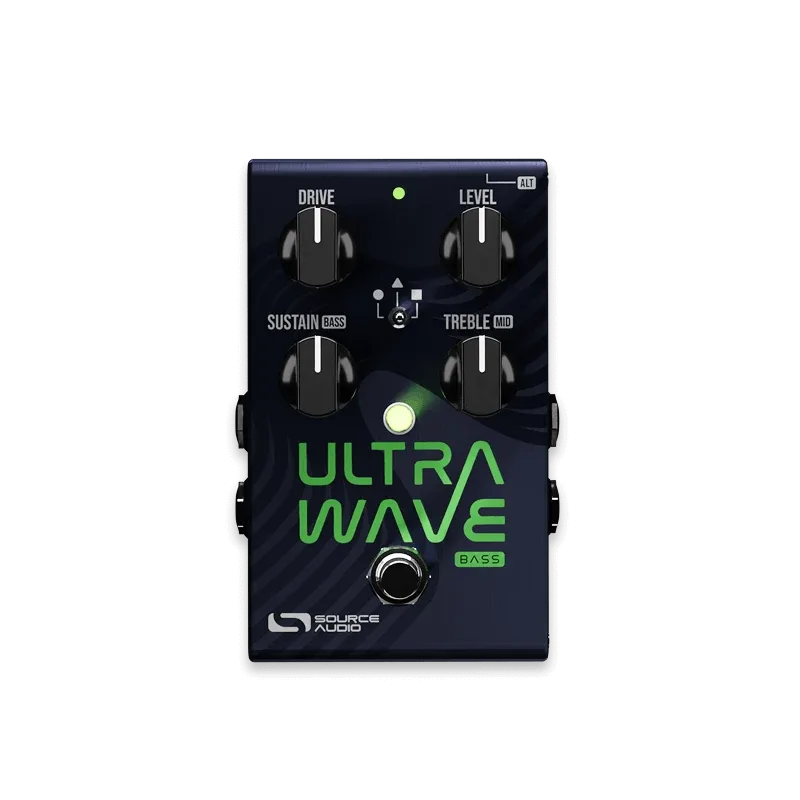
The multiband idea has since run through Source Audio's bass line, from the Soundblox Pro Bass Envelope Filter to later pedals like the Aftershock and the Ultrawave Multiband Bass Processor, but the Soundblox Pro Multiwave Bass Distortion is where the company first brought that processing to bass players1.
Videos
sourceaudioeffects
sourceaudioeffects
Andres Rotmistrovsky
Questions
What is the difference between the Multiwave Bass Distortion and the Pro version?
The standard Soundblox Multiwave Bass Distortion is a scaled down, non-programmable version of the Pro. Both share the same 56-bit DSP and 24-bit converters and the same multiband distortion concept, but the Pro adds six user presets on three footswitches, a 7-band graphic EQ, a MIDI input and an expression pedal input for morphing between presets.
How many presets does the Soundblox Pro Multiwave Bass Distortion store?
It gives you access to 23 factory presets plus an additional clean boost/EQ mode, and you can save six of your own sounds as user presets, recalled quickly through its three footswitches. Each preset can be customized with the 7-band graphic EQ, the drive control and separate mix knobs for the clean and distorted signals.
Is the Source Audio Multiwave Bass Distortion analog or digital?
It is digital. Both the Pro and the standard Multiwave Bass Distortion use 56-bit digital signal processing with 24-bit converters, which is what makes the multiband approach possible: splitting a signal into bands and distorting each one individually is a technique that, as reviewers have noted, would only be available in the digital domain.
How does multiband distortion work on bass?
Multiband processing divides your signal into multiple frequency bands and distorts each band individually before recombining them. On bass this keeps the low end from disappearing under heavy distortion, because the low frequencies are handled separately from the mids and highs. The pedal also lets you mix your direct clean bass signal in parallel with the distorted signal.
Sources (8)
- Source Audio Unveils Soundblox Pro Pedals at NAMM 2010, Premier Guitar, 2010-01-06
- Gear Watch: Soundblox Pro Multiwave Bass Distortion Pedal, No Treble, 2010-01-12
- NAMM-Source Audio Multiwave Distortion Demo & More, Premier Guitar, 2010-02-18
- Source Audio Soundblox Multiwave Bass Distortion Pedal, MusicPlayers.com, 2011-08-11
- Review: Audio Source Multiwave Bass Distortion, Delicious Audio, 2012-07-22
- MIDI PedalBoard Devices: MIDI PedalBoard and Guitar Effect Essentials, Molten Voltage (blog.moltenvoltage.com), 2014-08-15
- Source Audio Unveils Soundblox 2 Series at NAMM, No Treble, 2012-01-28
- Soundblox 2 Multiwave Bass Distortion Pedal Review, Premier Guitar, 2012-09-05