| Type | Dual-channel overdrive pedal2 |
| Maker | Analog Man Guitar Effects, hand made in the USA12 |
| Released | 2003, first version; current version is Version 432 |
| Status | In production, very long waiting list1 |
| List price | $335 plus options (2026)1 |
| Circuit | Modified Blues Breaker circuit, analog3 |
| Controls | Each side has an on/off switch, LED, and three independent knobs1 |
| Input impedance | 1 Mega ohm1 |
| Options | Buffer, second output jack, second power jack ($15)1 |
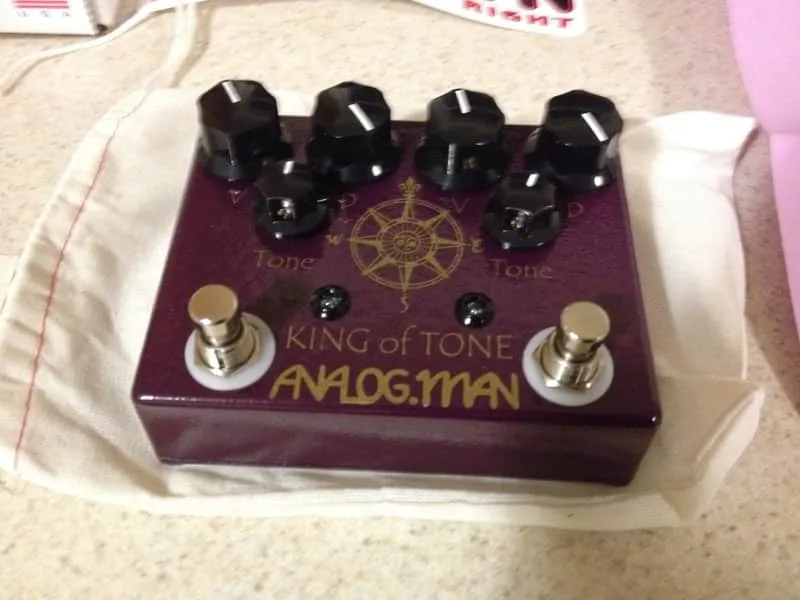
The King of Tone is a dual-channel overdrive pedal made by Analog Man Guitar Effects, hand-built in the USA. Mike Piera, the builder behind Analog Man, released the first version in 2003, and the pedal is currently in Version 4123. It is best known for three things: a circuit that refines the Marshall Bluesbreaker overdrive, a purple hand-stamped enclosure, and a waiting list so long that Analog Man warns some orders may never be filled13.
The pedal has two independent sides, each with its own on/off switch, LED, and three knobs, so a player can run two drive settings at once, stack them, or set one side clean-ish and the other for leads1. Inside, the circuit uses a special JRC chip designed for audio tone controls, which Analog Man says has a warm yet clear sound, and the chips sit in sockets so they can be swapped1.
A boutique refinement of the Bluesbreaker circuit
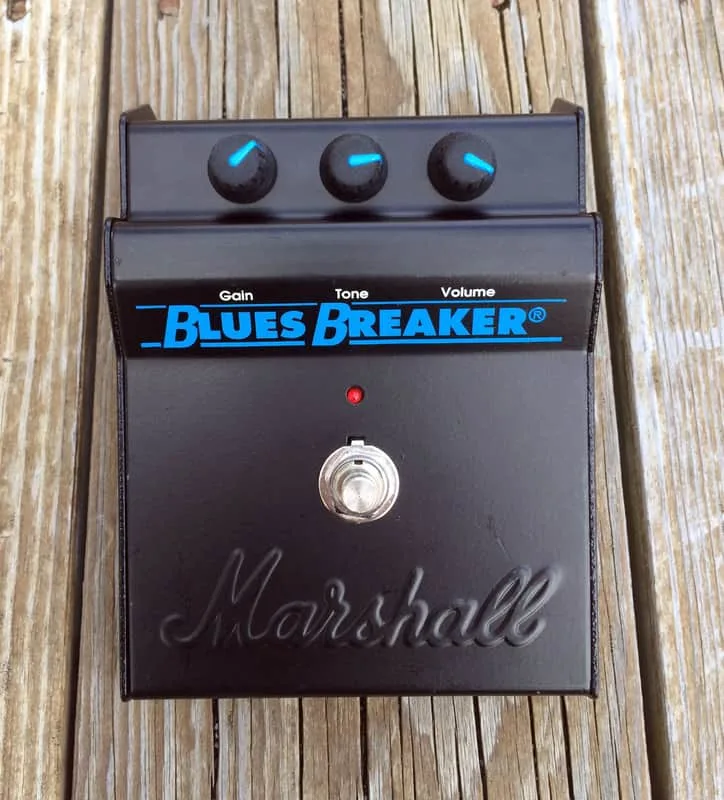
The King of Tone's family tree runs through the Marshall Bluesbreaker, a low-gain overdrive from the late 1980s. General Guitar Gadgets, which sells a Bluesbreaker-based project board, describes that circuit as "the low-gain overdrive from the late 1980s that boutique builders copied into the King of Tone and Morning Glory"4. Origin Effects puts it more directly: in 2003 Mike Piera "released the first version of the now-legendary King of Tone: a modded Blues Breaker circuit"3.
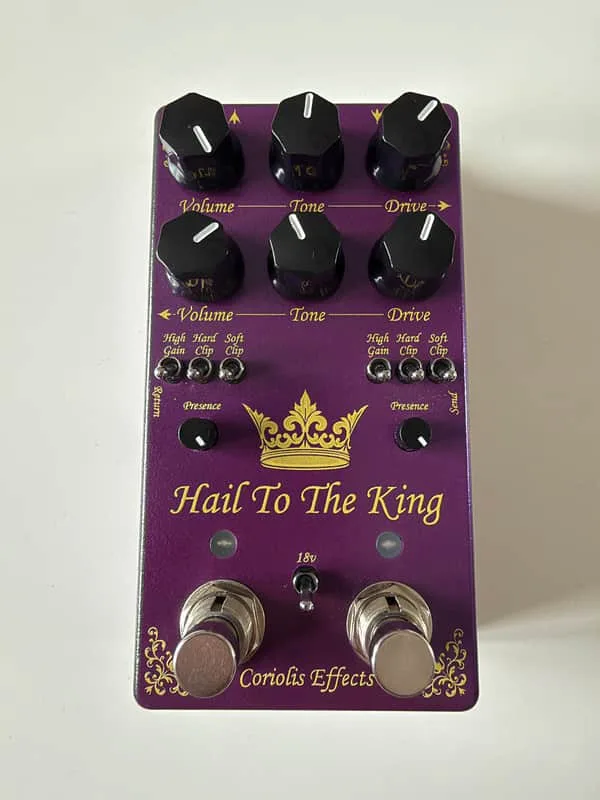
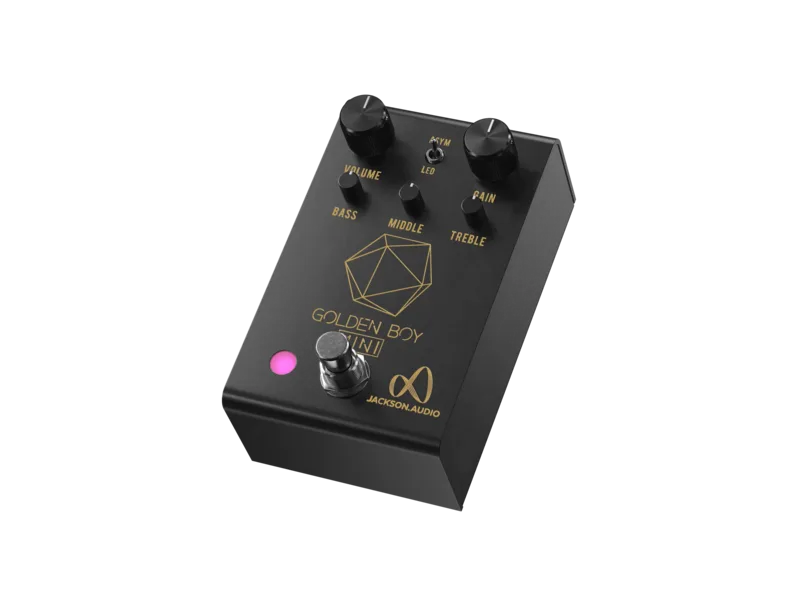
So it is a modified Bluesbreaker rather than a copy. The distinction matters to players comparing circuits, because the whole family shares a recognizable character: a dual op-amp stage with diodes in the feedback path producing smooth, symmetrical soft clipping. RockBoard's PedalPedia entry for the Coriolis Effects Hail to the King, a King of Tone-based build, describes that topology as "a dual-op amp circuit that produces smooth symmetrical clipping and a responsive feel"5. Jackson Audio's Golden Boy manual groups the King of Tone with the Timmy as an example of symmetrical silicon-diode clipping: "Four symmetric silicon diodes will clip the top and bottom portions of your guitar signal evenly for a more focused and direct tone"6.
"In 2003, Mike Piera, the man we all lovingly know as Analog Man, released the first version of the now-legendary King of Tone: a modded Blues Breaker circuit."
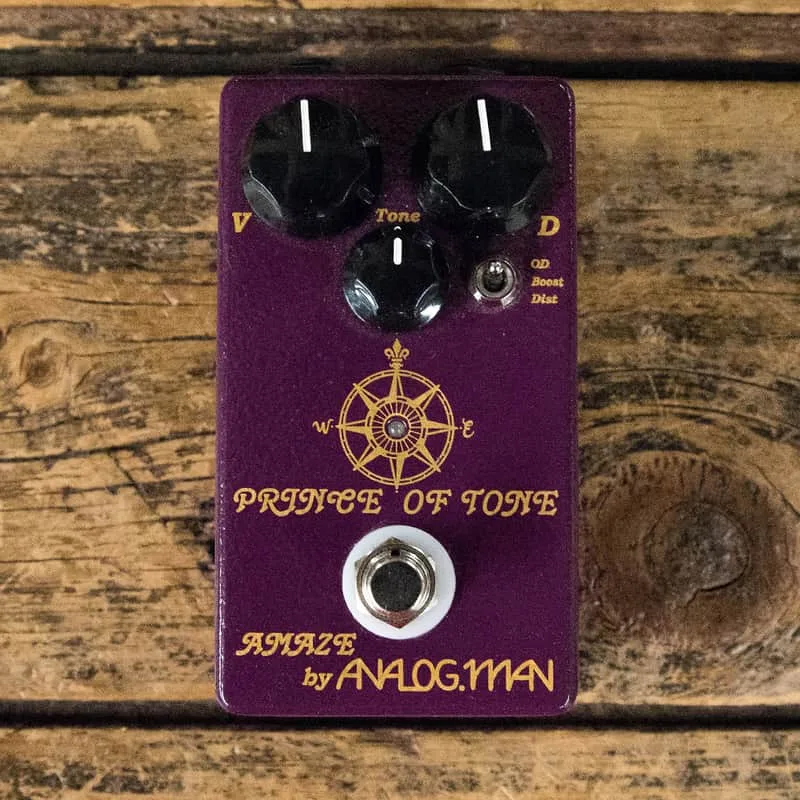
The Bluesbreaker lineage has since become its own branch of the pedal family tree. Vertex Effects ran a "top 5 Blues Breaker clones" feature that included Analog Man's own Prince of Tone, a single-channel sibling of the King of Tone7, and builders from kit suppliers to commercial makers have followed the same path.
How it works: soft clipping with Panasonic diodes
The King of Tone is a soft-clipping overdrive. In this topology, clipping diodes sit in the feedback loop around an op-amp rather than after it, which rounds off the signal's peaks instead of slicing them flat. The result is a moderate, amp-like overdrive rather than the heavier, more compressed character of hard diode clipping. Function f(x) describes the same trade-off in its MicroFracture pedal: hard clipping gives heavier drive with more compression, while soft clipping gives more moderate overdrive like the original circuit8.
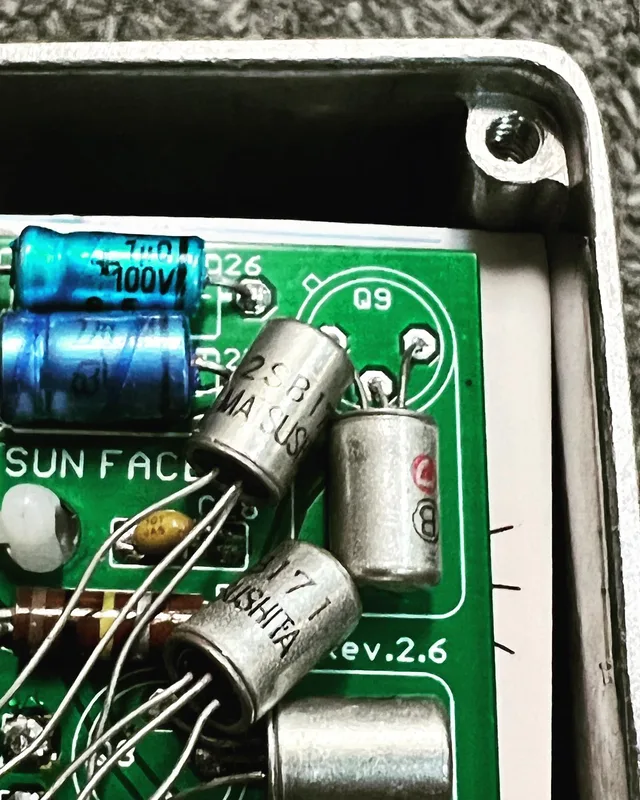
The diodes themselves are a point of dispute. RockBoard's PedalPedia entry states: "The original KOT supposedly used Panasonic MA856 diodes, but the diodes actually have two stripes like the MA858"9. So the part is reported as an MA856, possibly an MA858, and players discussing the circuit should treat the exact type as unsettled.
The op-amp is a JRC chip designed for audio tone controls. Analog Man says it was preferred by Ohbayashi san and "has a warm yet clear sound"1. Both chips are installed in sockets, one upside down, with the dot on the chip's corner aligned to the socket's cutout at pin 1. The manual adds that either chip works fine on either side regardless of the higher gain option, and that players "can also try other standard dual op-amp chips in the King of Tone"2. That socketing is unusual: most pedals solder the chip in place, and it makes the King of Tone one of the few overdrives where swapping op-amps is a designed-in feature rather than a mod.
Controls and internal trimmers
Each side of the pedal has three knobs, an on/off switch, and an LED1. A higher gain option is available at build time, which J Mascis uses for his live clean tones1.
| Control | Location | What it does |
|---|---|---|
| Three knobs per side | Top panel | Independent drive settings for each channel1 |
| On/off switch and LED per side | Top panel | Switch each channel independently1 |
| Socketed JRC op-amps | Inside | Swappable; other standard dual op-amp chips can be tried12 |
The input presents a high 1 Mega ohm impedance, which Analog Man says keeps the guitar signal strong and clean1.
Building and availability: hand-built by Analog Man
Every King of Tone is hand made in the USA by Analog Man1. Chase Bliss, which worked with Analog Man on the Brothers AM pedal, describes that level of care as unmatched since the 1990s, noting the maker's use of near-unobtainable parts10. That hand-built approach is the direct cause of the pedal's availability problem.
Analog Man states the waiting list is very long, that some parts were discontinued years ago and new-old-stock parts are scarce, and that there is a chance a pedal ordered now can never be made1.
The enclosure is purple and hand-stamped, part of the pedal's identity alongside its sound and its wait list, which Origin Effects notes is "at risk" of closing3. The current list price is $335 plus options1.
Options
- Buffer option: fitted after both sides, just before the output jack1
- Second output jack: with the buffer option, one output can be buffered and the other normal1
- Second power jack: $151
- Higher gain option: chosen at build time1
The buffer option in detail
The King of Tone has room in its battery compartment, which is why Analog Man offers a buffer option or modification for it and the Prince of Tone11. The buffer sits after both sides of the pedal, just before the output jack, so it drives the signal down long cable runs or into later pedals without the treble loss a high-impedance output causes1.
A few practical points from the maker:
- With the buffer and the second output jack option, one output can be buffered and one normal, so a player can feed two amp setups differently1.
- The buffer works well at higher voltages, like 12V or 18V1.
- There is no room for a battery with the buffer option1.
- With the 4-jack option used to split the pedal into two, the buffer is on the left side11.
For players who want to understand what a buffer does in a signal chain, see buffer pedals.
Related pedals and circuit descendants
The King of Tone's influence shows up across the industry, in official collaborations, digital versions, and outright builds of the circuit12139.
| Product | Maker | Relationship |
|---|---|---|
| Prince of Tone | Analog Man | Single-channel sibling; listed by Vertex among Blues Breaker clones7 |
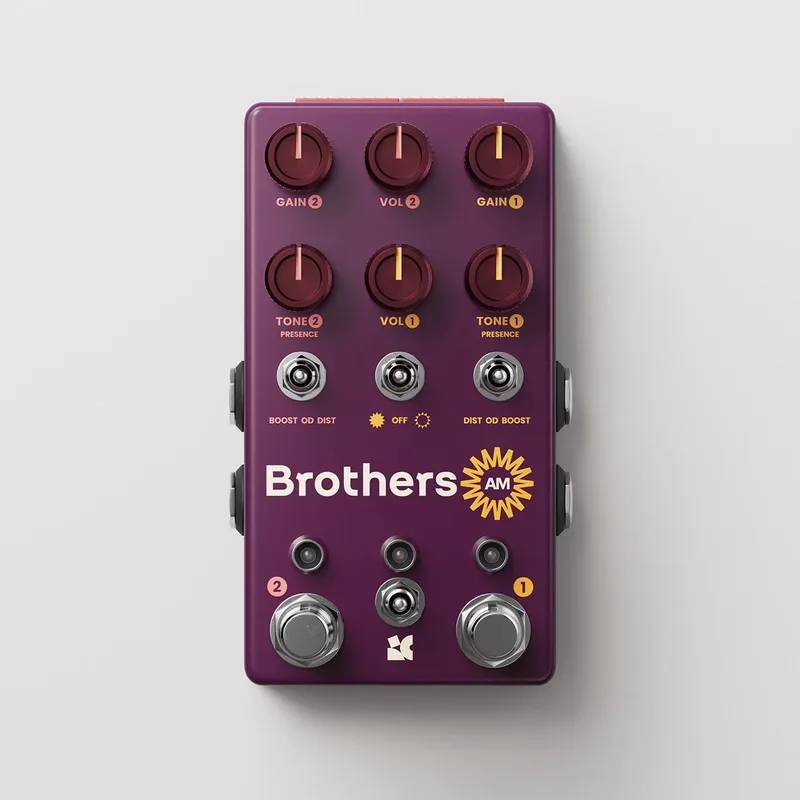
| Brothers AM | Chase Bliss | An expanded counterpart built with Analog Man rather than a clone10 |
| Kemper Drive | Kemper | Modeled on the Analog Man King of Tone12 |
| Queen of Crow | GUPtech | Dual overdrive based on the King of Tone14 |
| #kingof Dual | Jeds Peds | Kit that compares to the King of Tone15 |
| Paragon | PedalPCB | Project board that compares to the King of Tone16 |
| R-20 King of Kings | JOYO | Dual-channel pedal with independent diode clipping circuits per channel17 |
| Hail to the King, Ultimate Edition | Coriolis Effects | A King of Tone-based build9 |
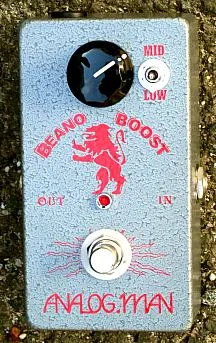
Chase Bliss's Brothers AM is the most direct official relative. Rather than copying the circuit, Chase Bliss says it "worked closely with Analog Man to create an expanded counterpart"10. In the announcement, Joel Korte named the King of Tone alongside the Sun Face and the Beano Boost as the Analog Man pedals that set the standard, saying of the King of Tone: "It's effortless to use, it always sounds right"18.
Kemper's profiling amplifiers include a Kemper Drive based on the King of Tone, giving players the circuit in digital form12. On the DIY side, General Guitar Gadgets sells a King of Tone add-on kit for its Bluesbreaker board that adds extra clipping diodes after the op-amp, a presence control, and clipping-select switches, turning the project into a two-mode drive4.
Who uses the King of Tone?
Analog Man's own page names two players. J Mascis uses King of Tone pedals live for his clean tones, with the higher gain option, and Slim, Lady Antebellum's normal guitarist, also uses one1.
Pedals on this page
News
Questions
Is the King of Tone a Bluesbreaker clone?
It is a modified Bluesbreaker circuit rather than a straight copy. Origin Effects describes the first 2003 version as a modded Blues Breaker circuit, and General Guitar Gadgets notes that boutique builders copied the late-1980s low-gain overdrive into the King of Tone and the Morning Glory. Analog Man refined the design with its own chip choice, diodes, and dual-channel layout.
What diodes are in the King of Tone?
The original King of Tone reportedly used Panasonic MA856 diodes, but RockBoard's PedalPedia notes the diodes actually carry two stripes like the MA858, so the exact part is disputed. They provide soft clipping in the circuit, the same general approach used in other Bluesbreaker-family overdrives.
Why is the King of Tone so hard to buy?
Analog Man builds each pedal by hand in the USA, and the waiting list is very long. The maker states that some parts were discontinued years ago and new-old-stock parts are scarce, so there is a chance a pedal ordered now can never be made. The enclosure is purple and hand-stamped.
How much does a King of Tone cost?
The list price is currently $335 plus options, as stated on Analog Man's product page. Options include a second output power jack at $15. The buffer option and other add-ons carry additional cost, and prices are subject to change.
Can you add a buffer to the King of Tone?
Yes. Analog Man offers a buffer option fitted after both sides of the pedal, just before the output jack. With the buffer and a second output jack, one output can be buffered and the other normal. There is no room for a battery with the buffer option, and the buffer works well at 12V or 18V.
Who uses the King of Tone?
Analog Man's page names J Mascis, who uses King of Tone pedals live for his clean tones with the higher gain option, and Slim, Lady Antebellum's normal guitarist. Chase Bliss's Joel Korte cites the King of Tone alongside the Sun Face and Beano Boost as an Analog Man benchmark.
Sources (18)
- King Of Tone, Analog Man (analogman.com), 2026
- KingofToneManualV4-2020.pdf, Analog Man Guitar Effects, 2020-11
- Green, Gold & Blue, Origin Effects, 2026-09-08
- Marshall™ Bluesbreaker™ Clone Kit: Low-Gain Overdrive, General Guitar Gadgets, 2014-05-12
- The Very Thing by Snake Oil Fine Instruments, RockBoard PedalPedia, 2026
- Golden Boy User Manual, Jackson Audio
- OGorwannabe-bluesbreaker, vertexeffects.com, 2021-03-26
- MicroFracture, Function f(x), 2025-12-15
- Hail to the King, RockBoard PedalPedia, 2026
- Brothers AM, Chase Bliss
- Analog Man Buffer Pedal, Analog Man (analogman.com), 2020
- KEMPER Distortion Effects, Kemper GmbH
- MXR / Analog Man Duke of Tone Overdrive Distortion Boost - Pedal of the Day, Pedal of the Day, 2025-05-13
- GUPtech - Queen of Crow Dual Overdrive (King of Tone Tribute), GUPtech
- #kingof Dual, Jeds Peds (jedspeds.co.uk)
- Tommy III, PedalPCB.com
- R-20 KING OF KINGS_JOYO, JOYO
- Brothers AM Story, Chase Bliss