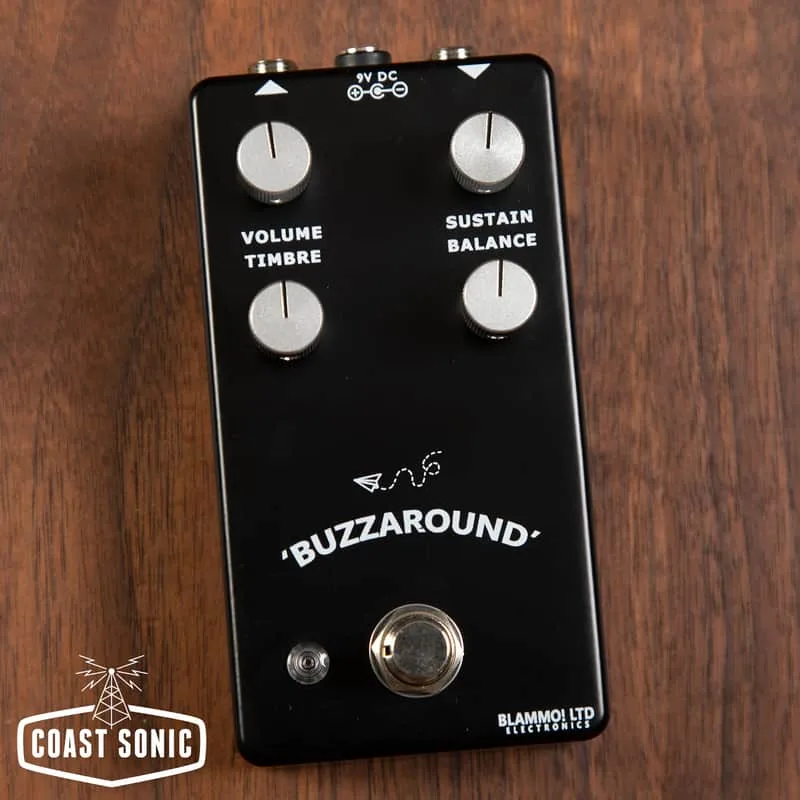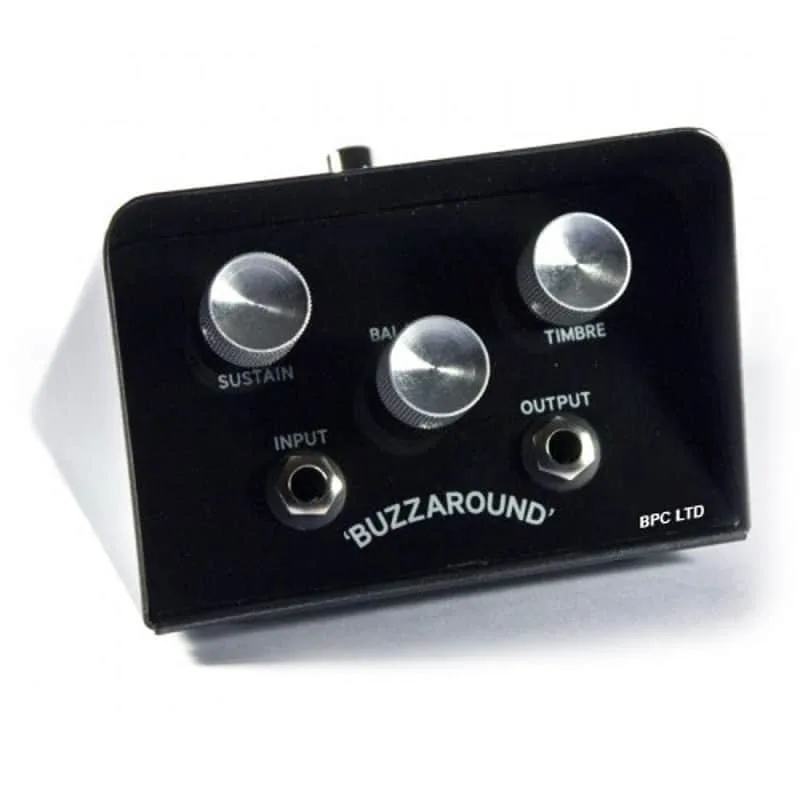



The Burns Baldwin Buzzaround is a British fuzz pedal built by hand on tag board from 1966 to 1968 in England by Baldwin-Burns Ltd.1 It is a three-transistor germanium fuzz in the Tone Bender family, and it is renowned for a gritty, aggressive tone that Delicious Audio describes as "not too dissimilar from the Tone Bender (but heavier-sounding)"2. Only a small number were ever made, which has made the original one of the most sought-after vintage fuzz pedals, and most players today encounter it through reissues and clones.
A vintage fuzz built on the Tone Bender
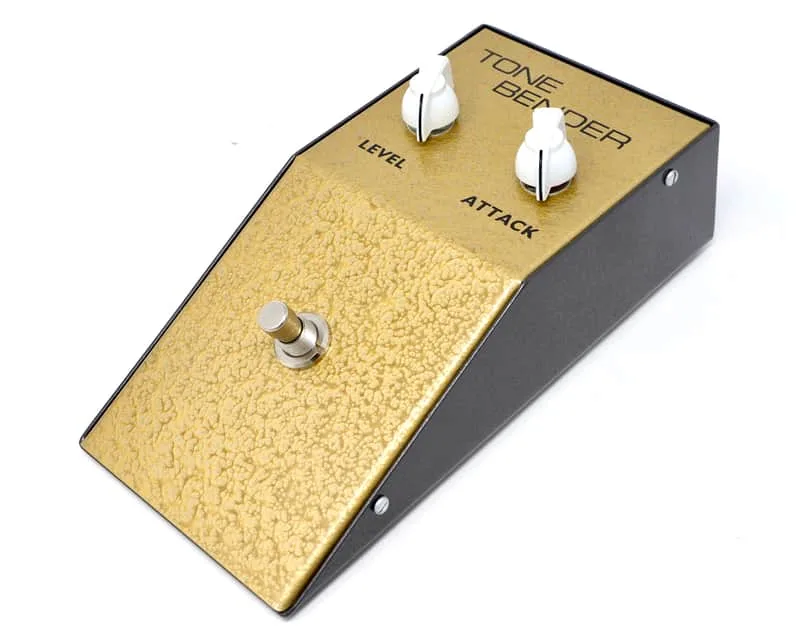
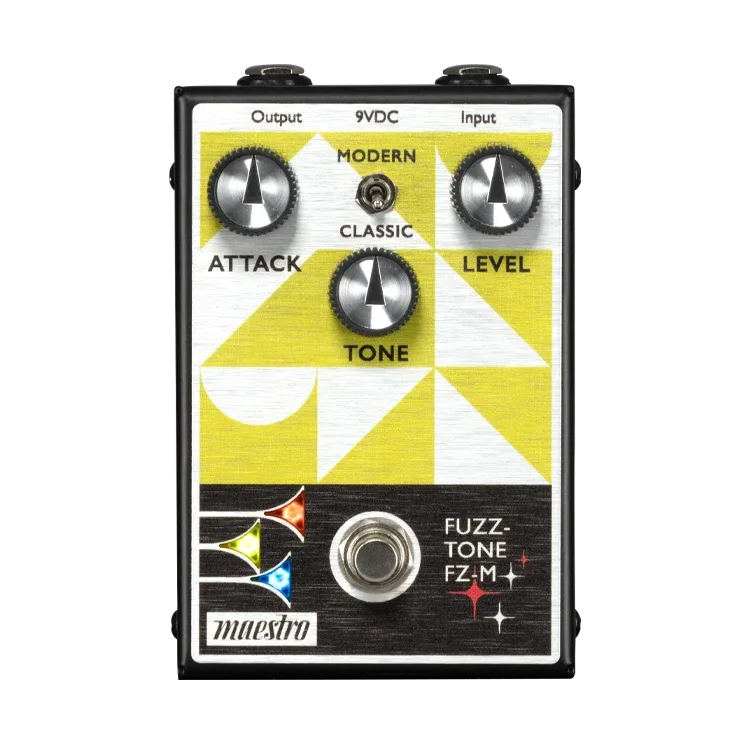
The Buzzaround was designed in 1966 for the Baldwin-Burns Company, and British Pedal Company's history says it was very different from its competitors6. Its roots run through the Tone Bender line: the early Sola Sound Tone Bender MKI was itself a three-transistor fuzz circuit based on Gibson's 1962 Maestro Fuzz-Tone, and the Buzzaround's circuit is extremely close to the three-knob Tone Bender circuit10.
The question of who actually designed it has two answers. The long-standing attribution is to Gary Hurst, the Tone Bender designer, and British Pedal Company's history still credits him6. But BLAMMO! Electronics, whose pedal is built from the original circuit, states that conventional wisdom had it wrong:
"conventional wisdom said Tone Bender guy Gary Hurst designed it but actually it's an unauthorized copy of a much more ob"1
BLAMMO! Electronics1
The circuit it copies is the Harmonic Generator by Gerry Pope of G.P. Electronics, a discovery dated to 2021 by the fuzz history site fuzzboxes.org, and Guitar Pedal X likewise reports that "Baldwin Burns then somewhat copied the circuit for their own Buzzaround Fuzz"119. Eddie Cross designed the pedal's front panel7.
Production was brief. British Pedal Company says only a handful of units were produced between 1966 and 1968, making them almost mythical to some collectors5. Delicious Audio gives a figure of about 100 original units, which explains the exorbitant prices originals command8. Surviving examples carry serial numbers spanning 6134 to 79937. The pedal appeared by name in a Burns price list dated April 1966, and the November 1966 issue of Beat Instrumental reported it redesigned with a "special sustain effect"7. A single "Baldwin" fuzz box found in the United States, believed to be a prototype for an American version, runs from a lower supply voltage but follows the British schematic7.
The controls and circuit
The Buzzaround kept the Tone Bender's three-transistor, all-germanium approach but changed the details. It was constructed on tag board and used a new configuration of transistors, with Hurst deploying NKT213 units, which British Pedal Company credits with rich, smooth sustain6. The controls were updated from the Tone Bender to give the user a larger sonic scope than its predecessors6.
| Control | What it does |
|---|---|
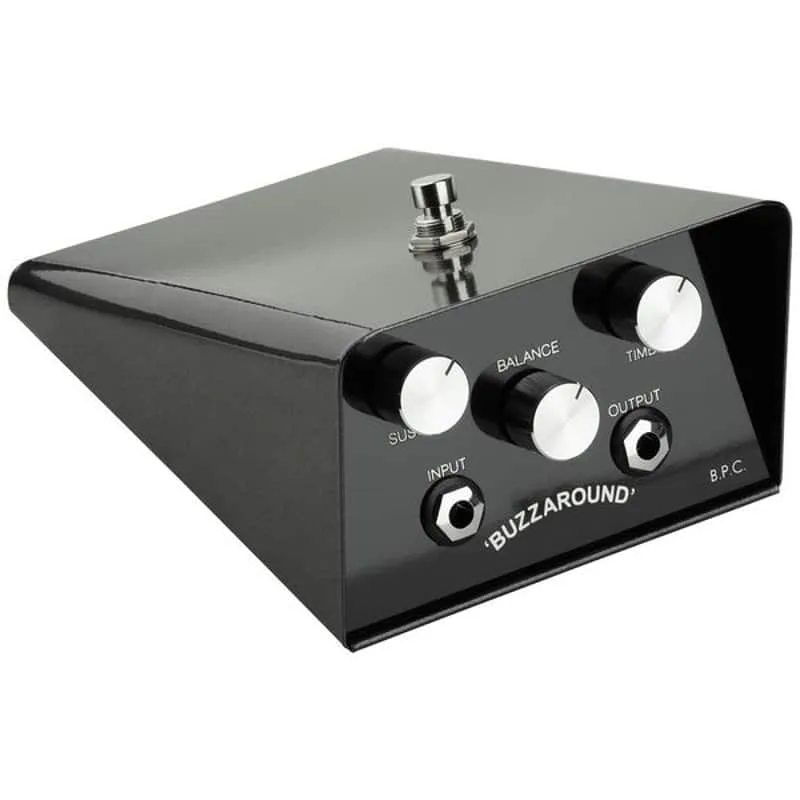
| Sustain | The fuzz or gain control812 |
| Balance | A bias control for Q3, acting as a bias starve on one of the transistors48 |
| Timbre | A volume and tone contour control8 |
The pedal was housed in a wedge-shaped casing with a sliding tray, similar to the Dallas Rangemaster6. That bulky wedge is distinctive enough that modern replicas have kept it8.
The circuit's influence ran forward as well as backward. TONEHOME's analysis of the vintage units finds that the Sola Sound Tone Bender MKIII is basically the Buzzaround circuit with the addition of a tone control, and fuzzboxes.org concludes the MKIII circuit was very likely based on the earlier Buzzaround design47.
Robert Fripp and the Buzzaround
The player most associated with the Buzzaround is Robert Fripp. Fuzzboxes.org records that Fripp confirms it was the Buzzaround he used on the earlier Giles, Giles and Fripp recordings, and tru-fi notes he used it in the early days of King Crimson713. In a 1974 Guitar Player interview quoted by British Pedal Company, Fripp was direct about his preference:
"The best fuzz-box to use is a Burn's Buzz-around which they discontinued making in England about six years ago5."
Robert Fripp, Guitar Player, 19746
In the same interview Fripp described his stage setup at the time: three pedals on a pedalboard, a volume pedal, fuzz-tone and wah-wah6. One myth gets corrected along the way: Fripp refutes the claim that the Buzzaround was used for his guitar parts on David Bowie's "Heroes"7. Other groups photographed using the Buzzaround include the Troggs and the Soft Machine7.
Reissues and clones
Because originals are scarce, the Buzzaround lives on mainly through modern versions. The original was discontinued in England around 1968, about six years before a 1974 account noted it had gone out of production6.
| Version | Year | Details |
|---|---|---|
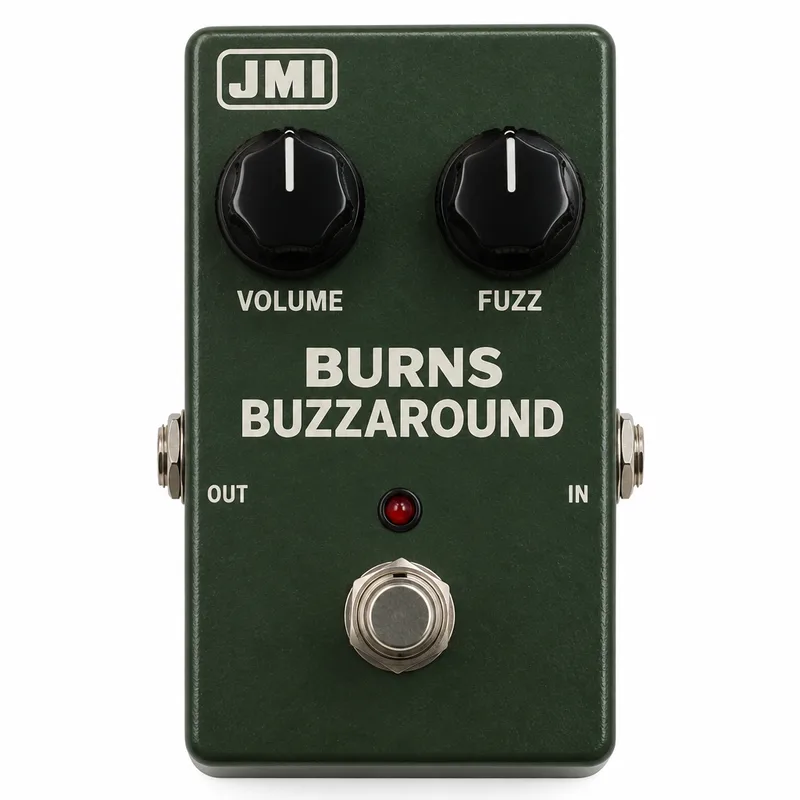
| JMI Burns Buzzaround reissue | 2010 | Limited series of 50 faithful reproductions, hand-built in England under license from the Baldwin company, using a steel chassis, tag board circuit and new old stock germanium transistors4 |
| British Pedal Company Buzzaround Fuzz | current | A detailed replica of the original that keeps the wedge-shaped casing8 |
| BLAMMO! Buzzaround | 2022 | Limited run of 25 units, handmade in Portland, Oregon, using MP38A NOS germanium transistors and the original component values, with a master volume control added for usability112 |
The JMI reissue was commissioned by British JMI Amplification and built to provide "look, sound and tone almost identical to the original unit"4. The BLAMMO! version stays true to the original by using NOS transistors and keeping all the component values the same, while the added master volume improves usability1. Delicious Audio's 2023 guide to Buzzaround clones and evolutions lists ten modern pedals inspired by the circuit12.
What it sounds like
Descriptions of the Buzzaround's character come from makers and press rather than the site's own ears. Tru-fi calls it renowned for its gritty, aggressive tone3. Delicious Audio's buying guide is more specific:
"With its tight low end, strong mids, and prolonged sustain, the Buzzaround is a kind of fuzz that cuts through the mids"814
The same guide notes it cuts through the mids better than others like the Big Muff, which is part of why the design keeps inspiring boutique builders8.
Videos
blondegraemey
pinstripedclips
Happy Mag
Questions
Who designed the Burns Baldwin Buzzaround?
It has long been attributed to Gary Hurst, the designer behind the Tone Bender, and British Pedal Company's history still credits him. However, research published in 2021 showed the circuit was an unauthorized copy of the Harmonic Generator by Gerry Pope of G.P. Electronics, a more obscure designer. Eddie Cross designed the pedal's front panel.
How many Buzzarounds were made?
Estimates vary. British Pedal Company says only a handful were produced between 1966 and 1968, while Delicious Audio reports about 100 original units were manufactured. Surviving examples carry serial numbers spanning 6134 to 7993. Either way, the short production run makes originals rare and expensive on the used market.
What is the difference between the Buzzaround and the Tone Bender?
The circuit is extremely close to the three-knob Tone Bender, but the Buzzaround uses a new configuration of transistors and its Balance, Timbre and Sustain controls gave players a larger sonic scope. Reviewers describe it as heavier-sounding than the Tone Bender, with tight low end, strong mids and prolonged sustain. The Tone Bender MKIII was likely based on the Buzzaround.
Are there reissues or clones of the Buzzaround?
Yes. JMI Amplification built a limited run of 50 faithful reproductions in England in 2010 under license from the Baldwin company. British Pedal Company makes a detailed replica that keeps the wedge-shaped casing, and BLAMMO! Electronics released a limited 25-unit version in 2022 that adds a master volume control.
Which transistors does the Buzzaround use?
The original used three germanium NKT213 transistors, which British Pedal Company credits with a rich, smooth sustain. The JMI reissue uses new old stock germanium transistors, and the BLAMMO! version uses MP38A NOS germanium transistors while keeping the original component values.
Sources (15)
- Buzzaround, BLAMMO! Electronics
- Soundslice FX X-Ray Box (Buzzaround Fuzz), Delicious Audio, 2023-02-15
- Elka Dizzy Tone and Buzzround, tru-fi.com
- TONEHOME, TONEHOME
- Buzzaround History, British Pedal Company, 1966
- Buzzaround History, British Pedal Company, 1974
- Baldwin-Burns Buzzaround • Fuzzboxes, fuzzboxes.org, 2021-05-13
- Best Burns Buzzaround Fuzz Clones & Evolutions In 2023, Delicious Audio, 2023-02-15
- BPC-Product-Manual-2021-V1.pdf, British Pedal Company, 2021
- BENDER - JHS Pedals, JHS Pedals
- Guitar Pedal X, Guitar Pedal X, 2024-06-28
- BLAMMO! Electronics Buzzaround Fuzz, Delicious Audio, 2022-06-08
- Dizzy Buzz Fuzz NEW, tru-fi.com
- Wilson Effects Mordant Fuzz V2 | Delicious Audio, Delicious Audio, 2022-04-11
- BOSS TB-2W Tone Bender, Delicious Audio, 2024-10-03
 Robert Fripp