The Harmonic Generator is a British fuzz box, one of the very earliest fuzz offerings in the UK, designed by Gerry Pope of GP Electronics. It was reportedly conceived around 1964, after somebody referred Pope to an "American recording" of a fuzz sound, and it was available to the general public by around late 1965 or early 19661. Today the pedal itself is obscure, but its circuit has a long afterlife: the Baldwin-Burns Buzzaround, one of the most collectable British fuzzes, is an unauthorized copy of it, as is the Elka Dizzy Tone12.
For a player, the Harmonic Generator matters mostly as a piece of fuzz history. It sits at the start of a family tree that runs through the Buzzaround and into a string of modern recreations, and it is often confused with the entirely separate Harmonic Percolator, a different circuit with its own descendants341.
Where the Harmonic Generator came from
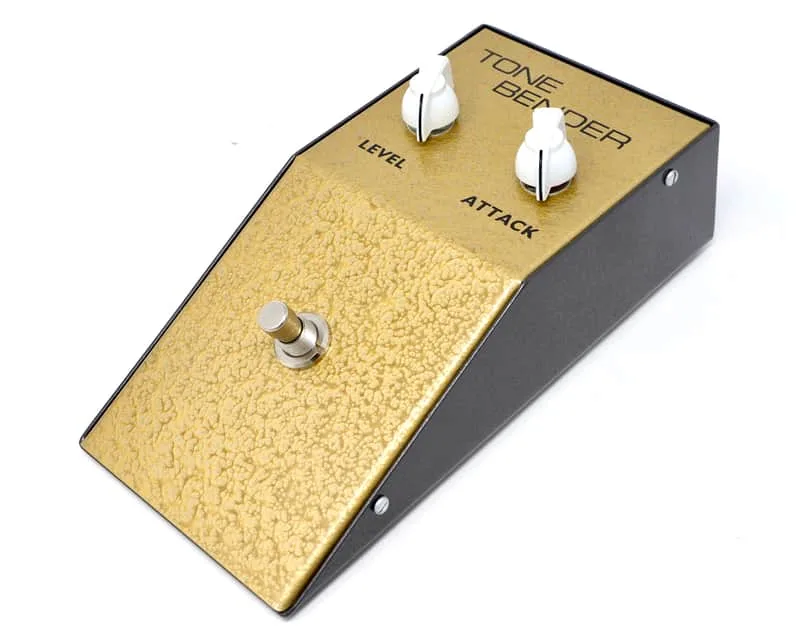
The story begins with the American fuzz records that reached British players in the early 1960s. The Maestro FZ-1, the Maestro Fuzz-Tone, started what BLAMMO! Electronics calls the Great British Fuzz Pedal Boom by inspiring Gary Hurst to modify Vic Flick's fuzz sound, which led him to the Tone Bender64. Gerry Pope arrived at his own fuzz from a similar starting point: somebody referred him to an "American recording" of a fuzz sound, and the Harmonic Generator was reportedly conceived around 19641.
GP Electronics then put the Harmonic Generator into production, and Tru-Fi's history of the Elka Dizzy Tone and Buzzaround describes G.P.'s fuzz box as being among the very earliest offerings in the UK1. The circuit's fate took an unusual turn. According to the same history, both the Elka Dizzy Tone and the Baldwin-Burns Buzzaround "where actually stole or reproduced without permission from the original production by GP Electronics"1. Tru-Fi's Dizzy Buzz page puts it another way: the GP Harmonic Generator "was then actually booted by the Burns company for the more famous Buzzaround Fuzz"5.
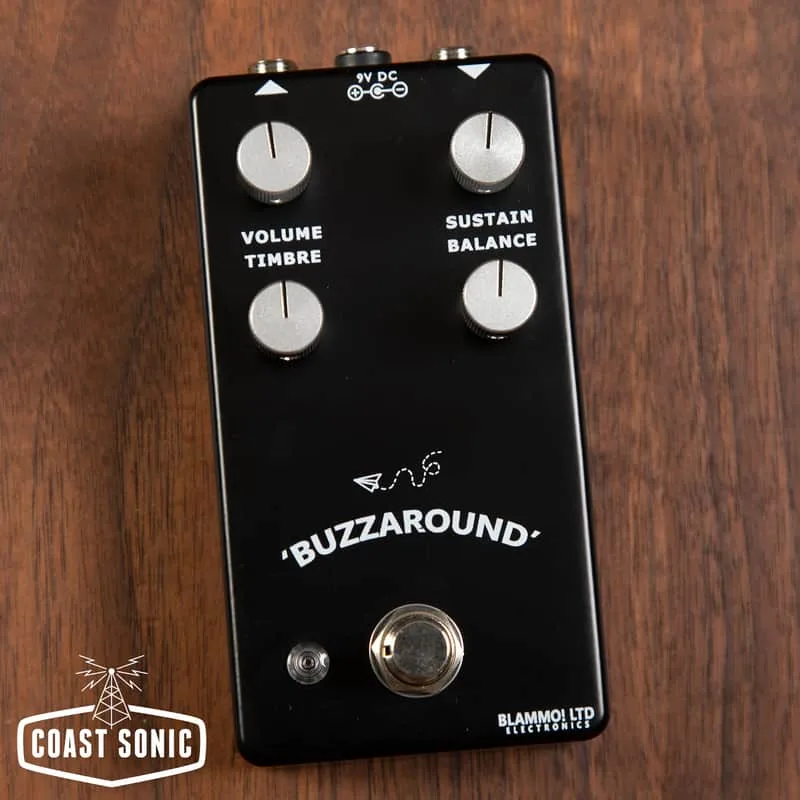
The Buzzaround's designer attribution is a good example of how fuzz history gets rewritten. BLAMMO! Electronics, which builds a Buzzaround recreation, notes that conventional wisdom long said Tone Bender designer Gary Hurst created it, but that it is actually an unauthorized copy of the Harmonic Generator by Gerry Pope of G.P. Electronics2.
"conventional wisdom said Tone Bender guy Gary Hurst designed it but actually it's an unauthorized copy of a much more obscure circuit called the Harmonic Generator by Gerry Pope of G.P. Electronics"
How it works
Fuzz pedals of this era are transistor circuits. Anasounds' technical comparison of overdrive, distortion and fuzz explains that fuzz pedals were invented earlier than op-amp pedals and use transistors in their gain stage, with simpler structures, different impedance ranges, and the noise that comes with them7. That is the world the Harmonic Generator belongs to: a small box of discrete components pushing a guitar signal hard enough to clip.
The British fuzzes around the Harmonic Generator show what these circuits looked like. The Tone Bender MKI was a three-transistor circuit, modified by Hurst to produce more sustain than its American counterpart8. General Guitar Gadgets' three-knob ToneBender project, built on that classic circuit, specifies three PNP germanium bipolar junction transistors9. BLAMMO!'s Buzzaround recreation, a copy of the Harmonic Generator's descendant, uses three NPN germanium transistors, hand tested for gain and leakage so that proper values sit in each position2. Germanium parts of that era vary widely from unit to unit, which is why builders still test and match them.
For comparison, other fuzz circuits of the period went further: the Univox Super-Fuzz used six transistors and two germanium diodes10, and later designs like the Pete Cornish G-2, a four-stage overdriven discrete transistor Class A circuit with additional germanium components, show how the same building blocks carried on into overdrive territory11.
The UK's first fuzz pedal debate
Which British fuzz came first is a running argument, and the Harmonic Generator is one of the contenders. Tru-Fi's history places G.P.'s fuzz box among the very earliest UK offerings, conceived around 1964 and on sale by around late 1965 or early 19661. The Tone Bender, though, has the clearer commercial record: British Pedal Company dates the UK fuzz box phenomenon to 1965, when electronics engineer Gary Stewart Hurst designed the pedal, and says Hurst re-housed the Tone Bender circuit into a metal casing during that year128.
So the two timelines run close together. The Harmonic Generator was reportedly conceived first, around 1964, but the Tone Bender reached the market in 1965, before the GP Electronics model was available to the general public112. Hurst's own path ran through the American fuzz that started the boom: his modifications of the Maestro FZ-1 led him to design his own circuit, the Tone Bender12.
A player comparing the two circuits today would find them related in spirit but distinct in design. The Tone Bender MKI was a three-transistor circuit modified for more sustain than its American counterpart8, while the Harmonic Generator's design survived through its unauthorized copies in the Buzzaround and Dizzy Tone1.
The Harmonic Generator and the Harmonic Percolator
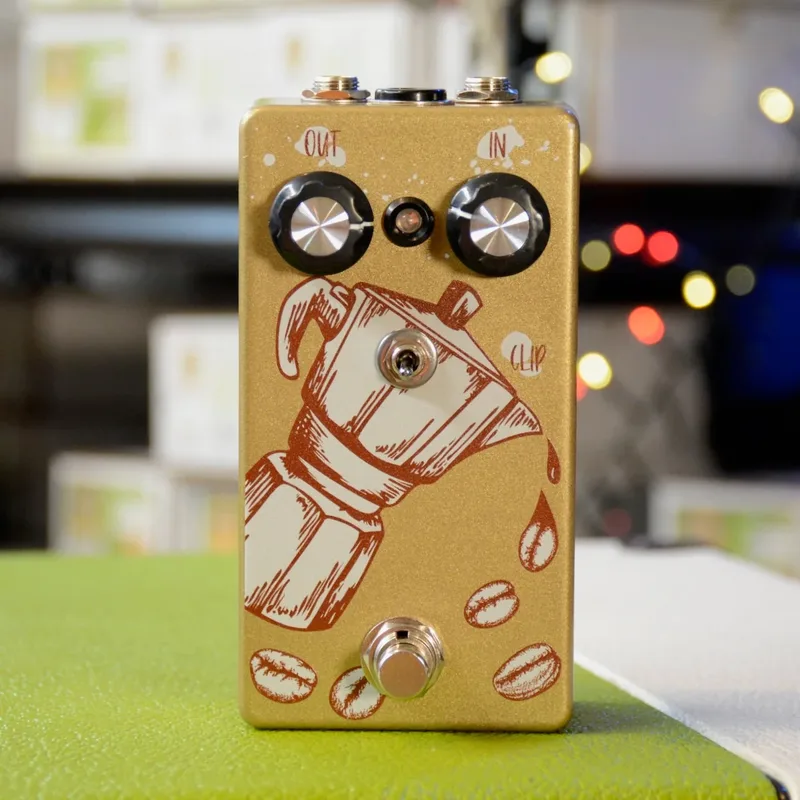
The name invites confusion, but the Harmonic Generator and the Harmonic Percolator are separate circuits. The Percolator has its own modern lineage, and none of it runs through GP Electronics. Electro-Harmonix builds the EHX Percolator, which it calls a Harmonic Saturator, with a HARMONICS knob that controls the gain at the input; turning it clockwise makes the signal more saturated and distorted13. GUP Tech built its Lab #61 Percolator after "hearing about the Harmonic Percolator for such a long time", working from the classic schematic14, and its MOKA Pot Douche Edition is based on the same circuit15. The FTElettronica Even Harmonics Emphasizer is likewise based on the Harmonic Percolator16, and Zander Circuitry's Custom Shop Cafetiere references the original Harmonic Percolator circuit's gain level for its low-gain transistor pairing17.
The Harmonic Generator's descendants, by contrast, run through the Buzzaround and the Elka Dizzy Tone1. Different circuit, different designer, different family tree, however similar the names sound.
Pedals descended from the Harmonic Generator
The direct line runs through the copies. The Baldwin-Burns Buzzaround and the Elka Dizzy Tone both reproduced the GP Electronics original without permission1, and Tru-Fi's own Dizzy Buzz is built on the Baldwin Burns Buzzaround fuzz, making it a recreation of the recreation5. BLAMMO! Electronics builds a Buzzaround of its own, with the three NPN germanium transistors hand tested for gain and leakage2.
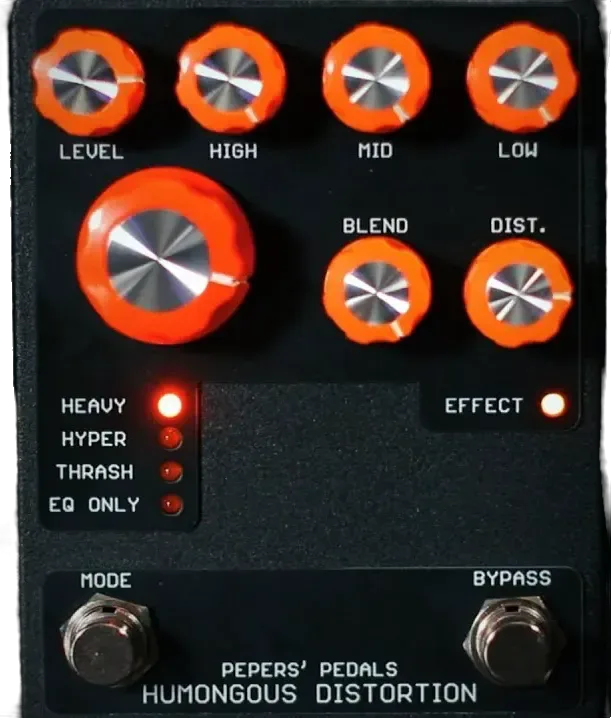
Modern makers have also returned to the source. The Buzzaround's circuit was taken straight from the original GP Electronics production, reproduced without permission from the Harmonic Generator, and Pepers Pedals carries the lineage forward with its Humongous Distortion, which offers Level, Distortion, High, Mid and Low controls118.
| Pedal | Relationship to the Harmonic Generator | Maker |
|---|---|---|
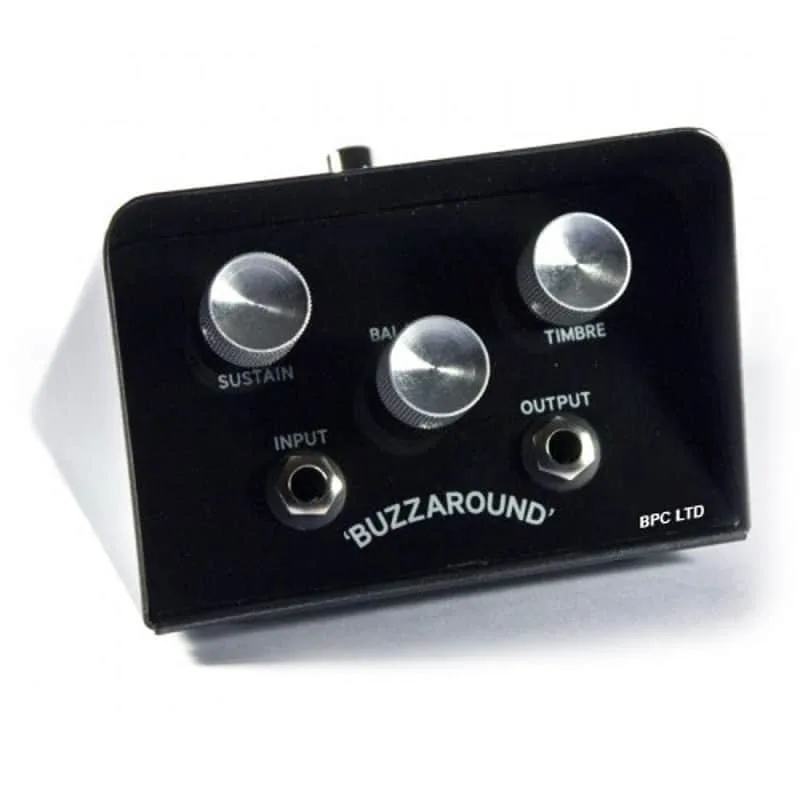
| Baldwin-Burns Buzzaround | Unauthorized copy of the GP Electronics original1 | Baldwin-Burns |
| Elka Dizzy Tone | Reproduced without permission from GP Electronics1 | Elka |
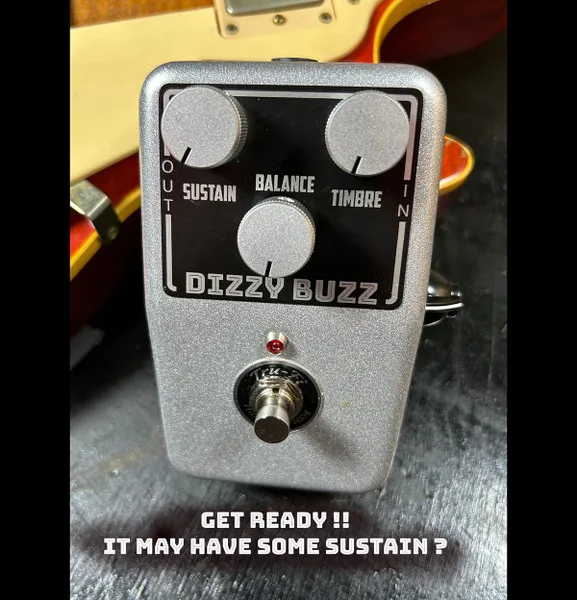
| Tru-Fi Dizzy Buzz | Built on the Baldwin Burns Buzzaround fuzz5 | Tru-Fi |
| BLAMMO! Buzzaround | Recreation of the Buzzaround, three NPN germanium transistors2 | BLAMMO! Electronics |
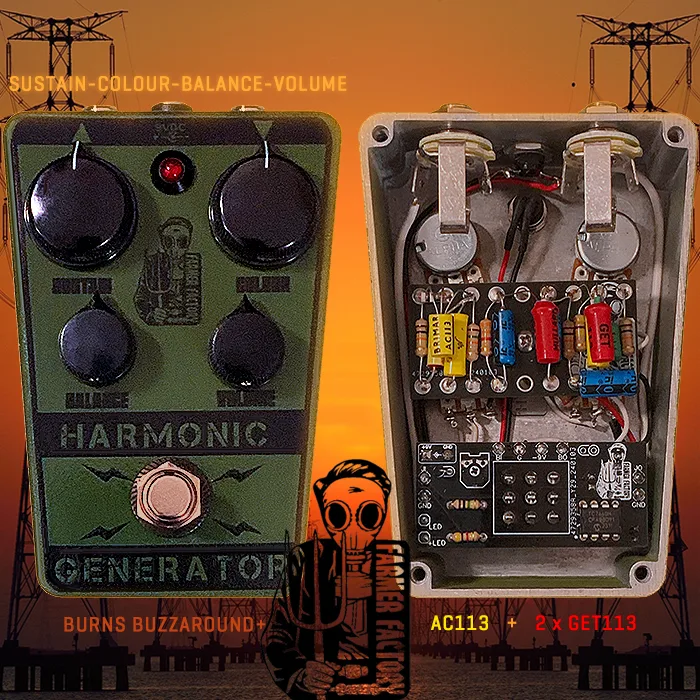
| Farmer Factory Harmonic Generator | Modern take with Sustain, Color, Balance and Volume controls3 | Farmer Factory |
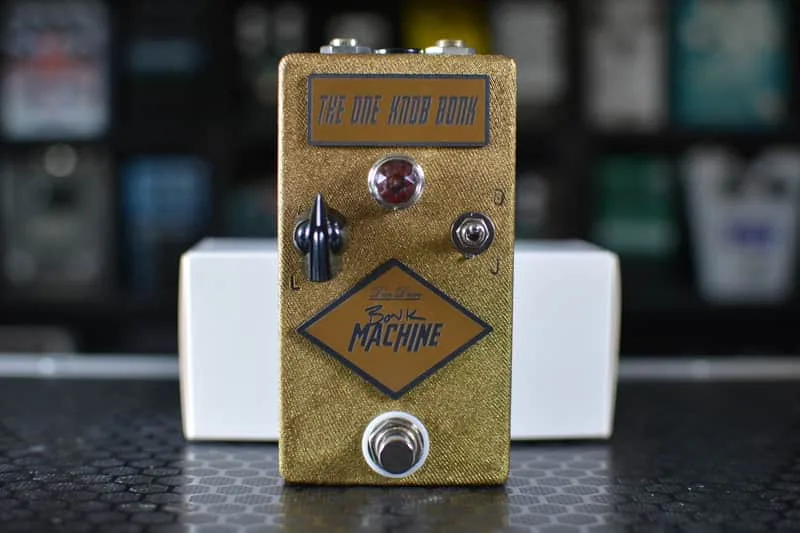
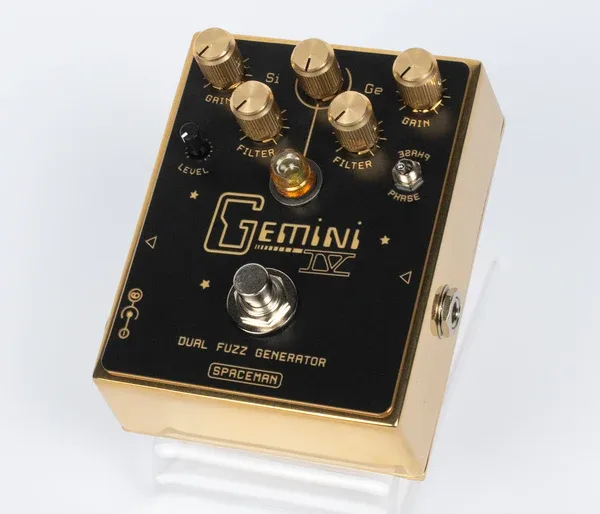
The Harmonic Generator's name has also echoed in a looser sense, in pedals that generate harmonics by other means. Spaceman Effects' Gemini IV Dual Fuzz Generator is a handmade, hand-wired circuit with vintage germanium transistors19, and DanDrive's Bonk Machine uses three temperature-stable germanium transistors aimed at gigging musicians20. These are fuzz generators in name and approach rather than copies of Pope's circuit, but they show how the idea of a box whose job is harmonic generation, the thing the Harmonic Generator was named for, still shapes how fuzz pedals are described.
Pedals on this page
Questions
Who designed the Harmonic Generator fuzz?
Gerry Pope of G.P. Electronics designed the Harmonic Generator. It was reportedly conceived around 1964, after somebody referred Pope to an American recording of a fuzz sound, and the model was available to the general public by around late 1965 or early 1966. The design was later copied without permission for the Baldwin-Burns Buzzaround.
Is the Harmonic Generator the same circuit as the Harmonic Percolator?
No. They are two separate circuits. The Harmonic Generator is the GP Electronics fuzz by Gerry Pope that the Buzzaround and Elka Dizzy Tone copied. The Harmonic Percolator is a different circuit with its own line of modern builds, including the EHX Percolator, GUP Tech's Lab #61 and MOKA Pot, the FTElettronica Even Harmonics Emphasizer, and Zander Circuitry's Cafetiere.
Did the Harmonic Generator come before the Tone Bender?
Not quite. The Harmonic Generator was reportedly conceived around 1964, but Gary Hurst's Tone Bender circuit was re-housed into a metal casing during 1965, and the UK fuzz box phenomenon is dated to that year. The Harmonic Generator reached the general public by around late 1965 or early 1966, so the Tone Bender beat it to market.
What controls did the Harmonic Percolator have?
On the EHX Percolator, a modern Harmonic Saturator built around the Percolator idea, the HARMONICS knob controls the gain at the input: turning it clockwise makes the signal more saturated and distorted. Farmer Factory's take on the Harmonic Generator, a different circuit, carries Sustain, Colour, Balance and Volume controls.
Sources (20)
- Elka Dizzy Tone and Buzzround, tru-fi.com
- Buzzaround, BLAMMO! Electronics
- Guitar Pedal X, Guitar Pedal X, 2024-06-28
- Baldwin-Burns Buzzaround • Fuzzboxes, fuzzboxes.org, 2021-05-13
- Dizzy Buzz Fuzz NEW, tru-fi.com
- Skronk Machine, BLAMMO! Electronics
- OD/Disto/Fuzz : The key differences between these 3 effect pedals, anasounds.com, 2019-04-04
- Wooden Case Prototype MKI Tone Bender, britishpedalcompany.com
- 3-Knob Tone Bender™ Clone: DIY Fuzz Kit, PCB & Schematic, General Guitar Gadgets, 2014-05-15
- Univox™ Super-Fuzz™ Clone Kit: Octave Fuzz with Tone Switch, generalguitargadgets.com, 2014-06-02
- G-2 by Pete Cornish, RockBoard PedalPedia, 2026
- Tone Bender History, British Pedal Company
- EHX Percolator, Electro-Harmonix (ehx.com)
- Lab #61 - Percolator, GUP Tech
- MOKA Pot Douche Edition, guptech.ca
- Even Harmonics Emphasizer by FTelettronica, RockBoard PedalPedia, 2026
- Custom Shop Cafetiere, Zander Circuitry, 2024-11-22
- Humongous Distortion by Pepers Pedals, RockBoard PedalPedia, 2026
- Gemini IV: Dual Fuzz Generator, Spaceman Effects
- Bonk Machine by Dandrive, RockBoard PedalPedia, 2026