| Type | Transistor-based boost/drive pedal with 2-band tonestack2 |
| Circuit | Three-transistor preamp with a two-band Baxandall EQ1 |
| Designer | Gary Hurst, around 19681 |
| Maker | Sola Sound, London, sold through the Macaris music store23 |
| First sold | 1970 (Tru-Fi dates the release to 1969; Macaris' website says 1968)234 |
| Power | 18V from two batteries in series2 |
| Transistors | BC184L, NPN silicon7 |
| Controls | Volume, Tone, and Sustain (gain)5 |
| Status | Original vintage units are sought after by collectors; the circuit survives in reissues and clones5 |
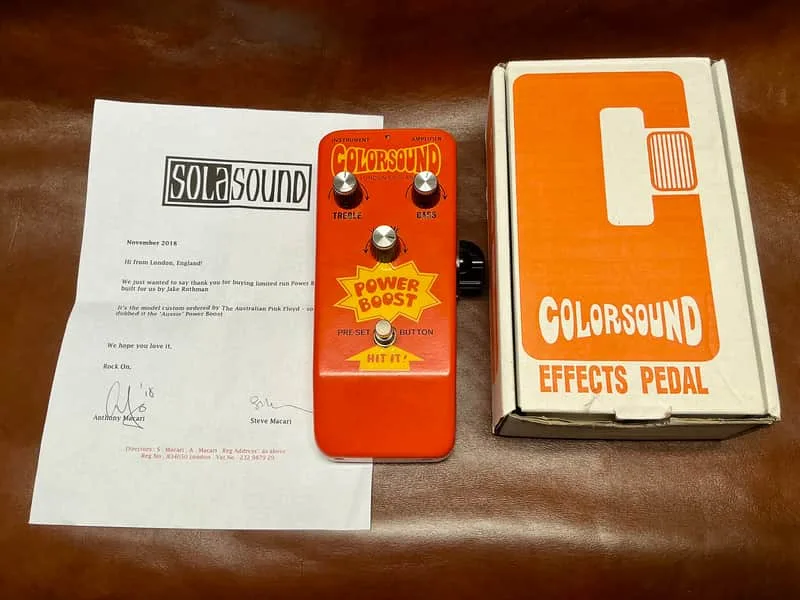
The Colorsound Power Boost is a transistor-based boost and drive pedal with a two-band tonestack, built around a simple three-transistor preamp and a two-band Baxandall EQ12. It was created around 1968 by Gary Hurst1, released by Sola Sound, the London company behind the Tone Bender3, and first sold in 1970 through the Macaris music store in London2. Tru-Fi dates the release to 19693, and Macaris' own website says 1968, so the exact year is disputed4.
The design goal was not distortion of its own but push: Tru-Fi's history describes it as a clean, high-headroom booster created to drive the front end of guitar amplifiers into overdrive5. At 18 volts it had enormous output, and before a master volume mod was added later, the pedal was, in Tru-Fi's words, "TOO LOUD"6. David Gilmour used it extensively during the 1970s5, and Jeff Beck is also named as a user3, which is why the circuit is still copied today.
How the circuit works
The Power Boost is a simple three-transistor preamp feeding a two-band Baxandall EQ1. A Baxandall tone stage is the classic cut-and-boost shelving arrangement found in hi-fi equipment: instead of a single passive tone control that only rolls off treble, it gives independent bass and treble controls that can either boost or cut each band from a flat center position. In the Power Boost that two-band tonestack sits in the signal path of a high-gain silicon preamp, so the pedal can shape the pushed signal as well as amplify it.
The three controls on the pedal were Volume, Tone, and Sustain, with Sustain acting as the gain control5. One quirk matters to anyone playing an original: the knob labeled Volume is really a gain control rather than a true volume control, so turning it up raises both drive and output level together7. The original units shipped in a distinctive orange enclosure, though later versions came in different colors5.
The transistors are ordinary NPN silicon parts. The original came with BC184L transistors, but as Tagboardeffects' Zach notes from his own builds, any NPN silicon transistor can work in the circuit7. Builders have substituted BC169C and 2N5088 successfully; Zach reports that "2n5088s, which match well with the hfe of bc184l and they sound great"7. One detail matters for anyone building the circuit: BC184L parts can arrive in ECB pinout order, in which case the legs need to be crossed7.
Power: 18 volts from two batteries
The Power Boost ran at 18V using two batteries in series2, which is the heart of both its sound and its reputation for being loud. The higher headroom is what lets the preamp stay clean and then deliver a very large signal to the amp. Tru-Fi notes that before the master volume mod, the pedal was simply too loud at 18V, which is why the 9V Overdriver was released to tame it6.
For DIY builders, the 18V supply has practical consequences. Electrolytic capacitors must be rated above the supply: Zach advises that "25v caps would be fine. As long as the max voltage of the caps is higher than the power going in"7. Interestingly, not every builder prefers the higher voltage. Zach tried the circuit at 18 volts and concluded, "I actually think it sounds much better at 9 volts"7.
The 18V requirement rules out a single 9V battery or a standard 9V power supply. Original units needed two batteries in series2, and modern recreations handle this differently: some run at 9V, and some, like the Tru-Fi Colordriver 18 Volt Version, keep the original voltage8.
Early and later versions, and the Overdriver
The Power Boost exists in at least two known variants, an early one and a later one, with a few different parts between them24. Later versions also came in different enclosure colors, and some variations featured slight modifications to the circuitry or controls5.
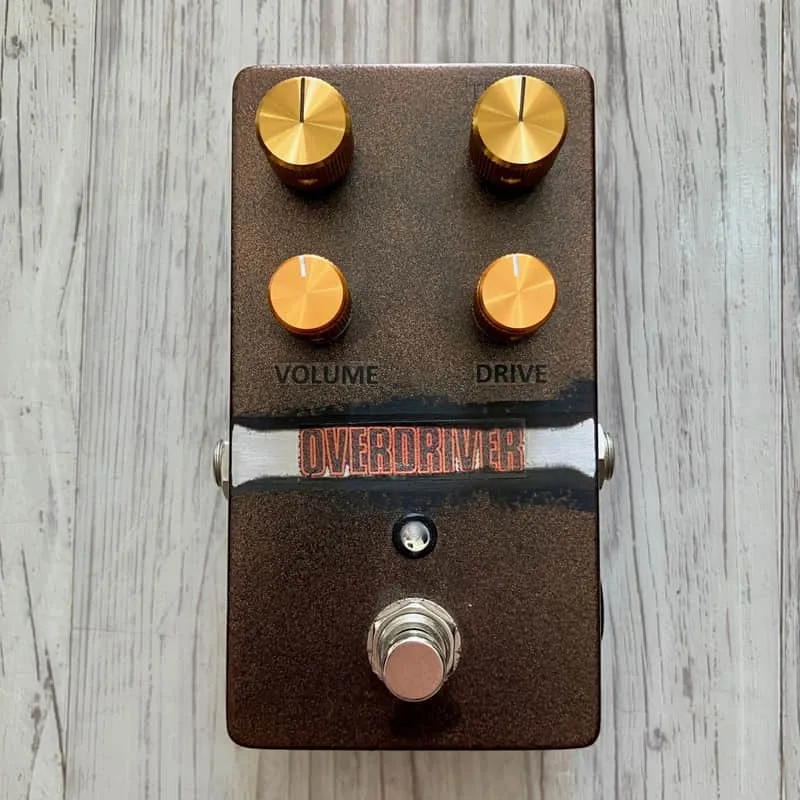
The bigger story is the Colorsound Overdriver. Aion FX describes it as an updated version of the circuit, a third revision from 19722, while Tru-Fi dates the change to 1971, when Colorsound changed the Power Boost to the 9V Overdriver8. Macari's account is that the Power Boost was taken to a trade show in the United States4. The circuit topology is the same as the Overdriver's, but the Power Boost ran at 18V7, and the Overdriver dropped the second battery and ran on a normal 9V supply4.
| Power Boost | Overdriver | |
|---|---|---|
| Power | 18V, two batteries in series2 | 9V, single battery4 |
| Revision | Early and later variants2 | Third revision, 1972 (Tru-Fi says 1971)28 |
| Volume control | None originally; Volume knob is really a gain pot7 | None originally; sorely lacking a true volume control4 |
| Origin | Gary Hurst design, around 19681 | Renamed/revised after US trade show interest4 |
The missing volume control is the shared flaw of both originals. Aion FX notes that "the one thing that was sorely lacking in all of the original Power Boosts and the Overdriver was a true volume control"4. Colorsound later added a master volume mod8, and a 1996 reissue Overdriver incorporated an output volume pot, though it included a minimum-volume resistor that prevented the output from going to zero4.
Is it a fuzz or an overdrive?
It is neither a fuzz in the Fuzz Face sense nor a modern overdrive in the Tube Screamer sense. It was designed as a clean, high-headroom booster to push amplifiers5, and PastFx calls it "one of the first overdrive effects pedals made available to the masses"9. Tru-Fi describes it as known for its powerful overdrive and incredible boost factor8.
At full gain, though, it can get aggressive enough that players reach for the f-word. Zach of Tagboardeffects writes that the sound "to my ears boarders on a fuzz"7. Builders also report that the drive control bunched up at the end of its rotation; one fixed this by swapping the 10k volume pot for a 1k, giving full gain clockwise with a controllable response, and another found a 5k pot made the fuzz side kick in earlier, though still at massive volume7.
Pedals based on the Power Boost
Because of the original's popularity, there have been reissues and clones from various manufacturers5, and vintage units are sought after by collectors5. The circuit has become a small family of its own:
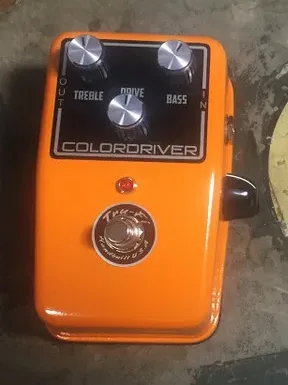
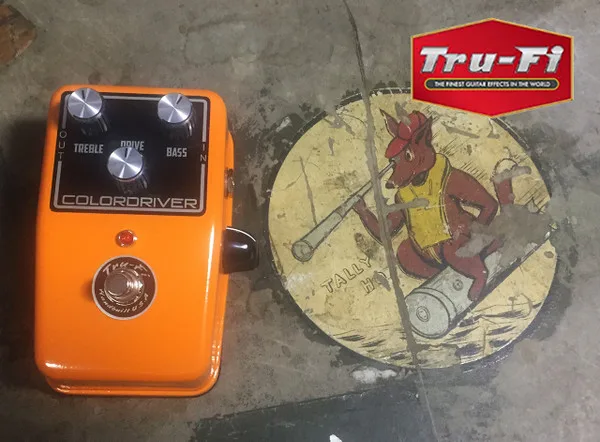
- Tru-Fi Colordriver: a handmade recreation of the vintage Power Booster / Overdriver circuit10, built in both an 18-volt version done, per Tru-Fi, "to a true Power Boost replica done to the correct BC184 Transistors"8, and a 9V version108. Tru-Fi also makes a compact version in the original orange color5.
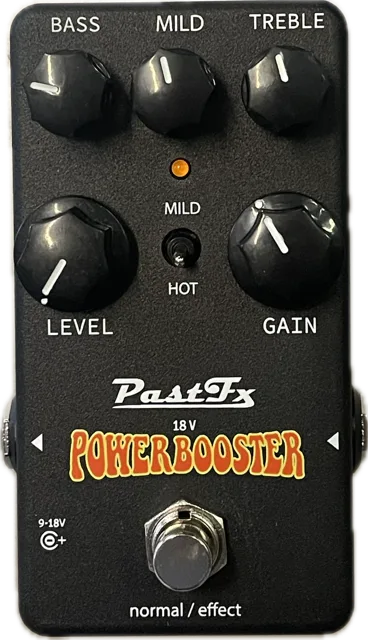
- PastFx 18V Power Booster: described by its maker as inspired by the legendary Colorsound Power Booster circuit, and as a pedalboard-friendly recreation and expansion of the Buffalo FX Power Booster11.
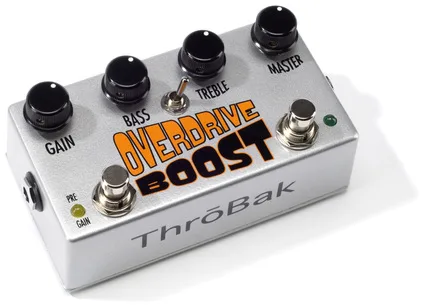
- ThroBak Overdrive Boost: ThroBak has reproduced and improved the circuit of the original, which it identifies as also known as the Colorsound Overdriver12.
- BLAMMO! Voltage Booster: "recreates that classic Power Boost circuit"1.
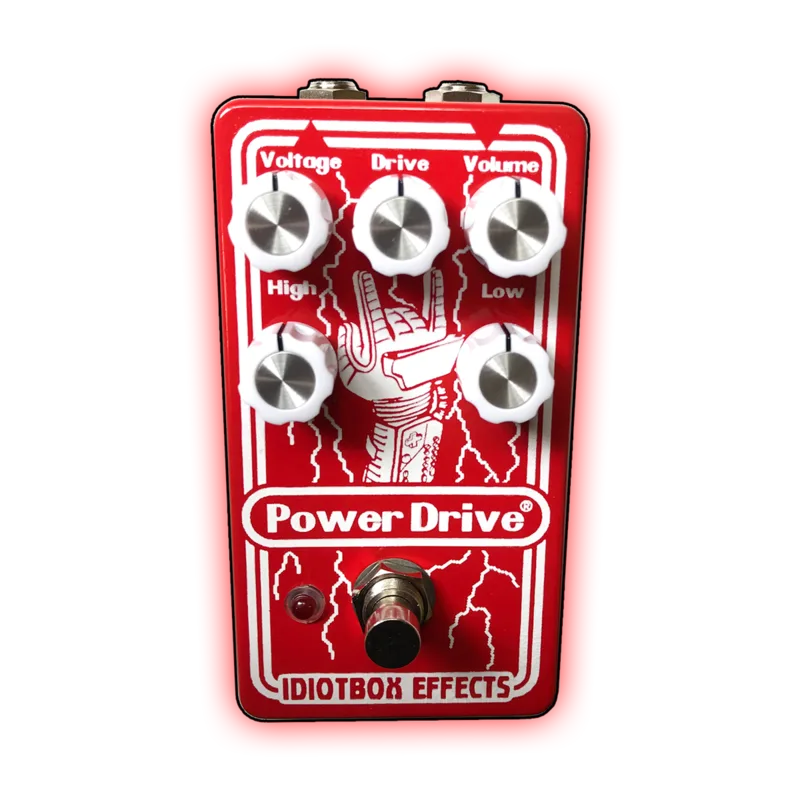
- IdiotBox Power Drive: built around the old Colorsound Power Boost13.
- GUP Tech Lab Series #23 Power Booster: based on the early 70's Colorsound power booster14.
- PedalPCB Powersound Overdrive: a DIY PCB to compare to the Colorsound Overdriver15.
- Aion FX Nucleus and Plasma: DIY projects for the Power Booster and the Overdriver respectively24.
For DIY builders, Tagboardeffects published four stripboard layouts in September 2017: two identical to the original early and late versions, and two with an added master volume pot, so gain can be maxed while the output level is controlled7. The layouts went through corrections from the builder community, including a short link that prevented power reaching Q3 and a reversed 22uF filter cap, before being marked verified7.
Where the circuit sits in history
The Power Boost sits between the British fuzz tradition Sola Sound helped establish with the Tone Bender and the later overdrive pedals that followed it. PastFx credits it with being popularized in the 1970s and imprinted on the recordings of various classic rock guitar legends of the era9. RockBoard's PedalPedia entry for the ThroBak Overdrive Boost sums up the lineage: "The original was used by David Gilmour, Jeff Beck and other pros to become an integral part of 70's signature tones"816.
Its influence also shows up in how often the Baxandall EQ it used reappears in later designs, and in the number of makers, from boutique builders to PCB suppliers, who still offer the circuit in some form. The Overdriver itself has seen different variations and reissues over the years, some with slight modifications to the circuit or enclosure design17.
Pedals on this page
Questions
Who designed the Colorsound Power Boost?
The circuit is credited to Gary Hurst, created around 1968. It was released by Sola Sound, the London company behind the Tone Bender, and first sold in 1970 through the Macaris music store in London. Macaris' own website dates production to 1968, while other research dates the Colorsound brand to 1970, so the exact year is disputed.
Did David Gilmour use a Colorsound Power Boost?
Yes. According to Tru-Fi's history of the pedal, David Gilmour of Pink Floyd used the Power Boost extensively during the 1970s, which contributed to the pedal's popularity and its association with his sound. Jeff Beck is also named as a user, with Tru-Fi crediting it for his thick, explosive lead tone.
What is the difference between the Power Boost and the Overdriver?
The Overdriver is a revised version of the same circuit, generally dated to 1971 or 1972. Its biggest change is power: it dropped the Power Boost's two-battery 18V requirement and ran on a single 9V battery. Neither original pedal had a true volume control, so the gain knob also set the output level, which could get very loud.
What transistors does the Colorsound Power Boost use?
The original came with BC184L transistors, which are NPN silicon types. Builders report that any NPN silicon transistor can work in the circuit, and common substitutions include BC169C and 2N5088, the latter chosen because its gain matches the BC184L well. BC184L parts can come in ECB pinout order, in which case the legs need to be crossed.
Is the Colorsound Power Boost a fuzz or an overdrive?
It was designed as a clean, high-headroom booster meant to push the front end of a guitar amplifier, and it is known for its powerful overdrive and boost factor. At full gain through a driven amp, some builders hear it border on fuzz, but it is not a fuzz circuit in the Fuzz Face or Tone Bender sense.
Sources (17)
- Voltage Booster, BLAMMO! Electronics
- Nucleus Vintage Boost / Colorsound Power Booster, Aion FX, 2020-07-03
- Tru-Fi '69 Colordriver Pedalboard Mini Version Guitar Pedal, Tru-Fi
- Plasma Vintage Drive / Colorsound Overdriver, Aion FX, 2020-07-03
- The Creation of the Colorsound Power Booster, tru-fi.com
- Tru-Fi Colordriver 9V version, loved by guitar pedal fuzz lovers worldwide, used by Jeff Beck and David Gilmour in the 70s, Tru-Fi
- Guitar FX Layouts: 18v Colorsound Power Boost, Tagboardeffects (tagboardeffects.blogspot.com), 2024-02-22
- Tru-Fi Colordriver 18 Volt Guitar Pedal like the original Colorsound Power Booster, Tru-Fi, 1971
- 18V Power Booster, PastFx, 2026
- Colordriver by Tru-Fi Pedals, RockBoard PedalPedia, 2026
- 18V Power Booster by PastFx, RockBoard PedalPedia, 2026
- ThroBak Overdrive Boost, ThroBak Electronics, 2026
- Power Drive, IdiotBox Effects
- Lab Series #23, GUP Tech
- Powersound Overdrive, PedalPCB.com
- Overdrive Boost by ThroBak, RockBoard (PedalPedia), 2026
- The Colordriver Overdriver, Tru-Fi (tru-fi.com)