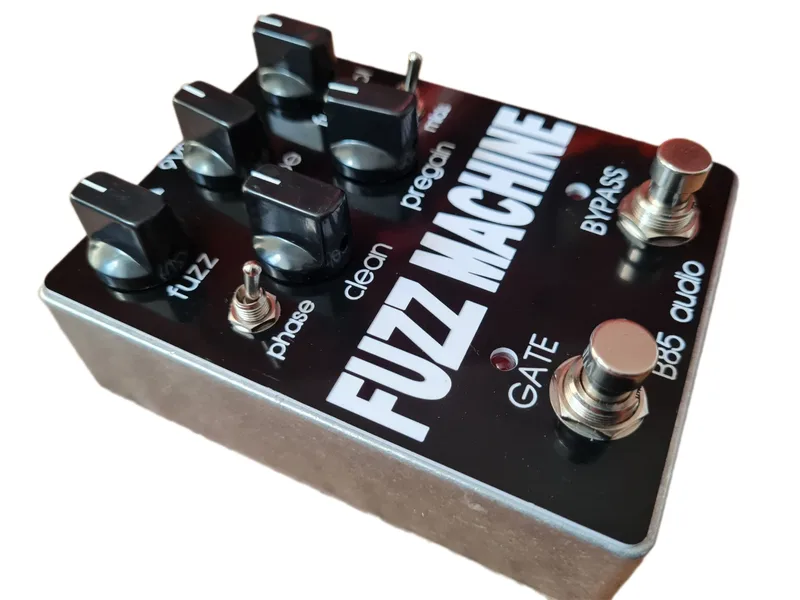


The B85 Audio Fuzz Machine is a floor-standing fuzz pedal with a hybrid circuit: it uses both silicon and germanium transistors in one box, and it mixes a clean signal track in with the fuzz1. RockBoard's PedalPedia says it is primarily designed for bass guitar, but that it doesn't get lost with guitar either1. The whole effect is handmade, including the circuit board, and the front panel is engraved in two-layer plastic1.
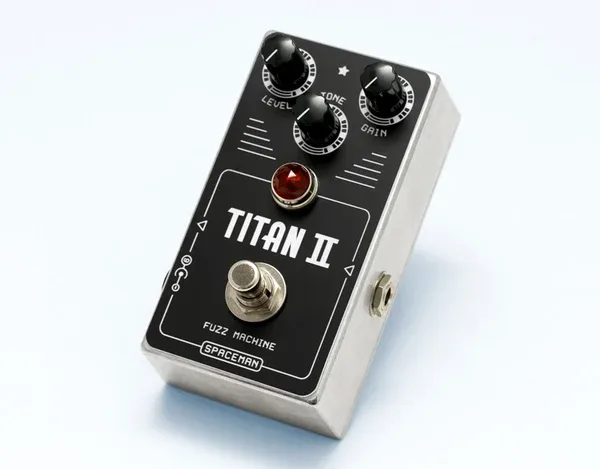
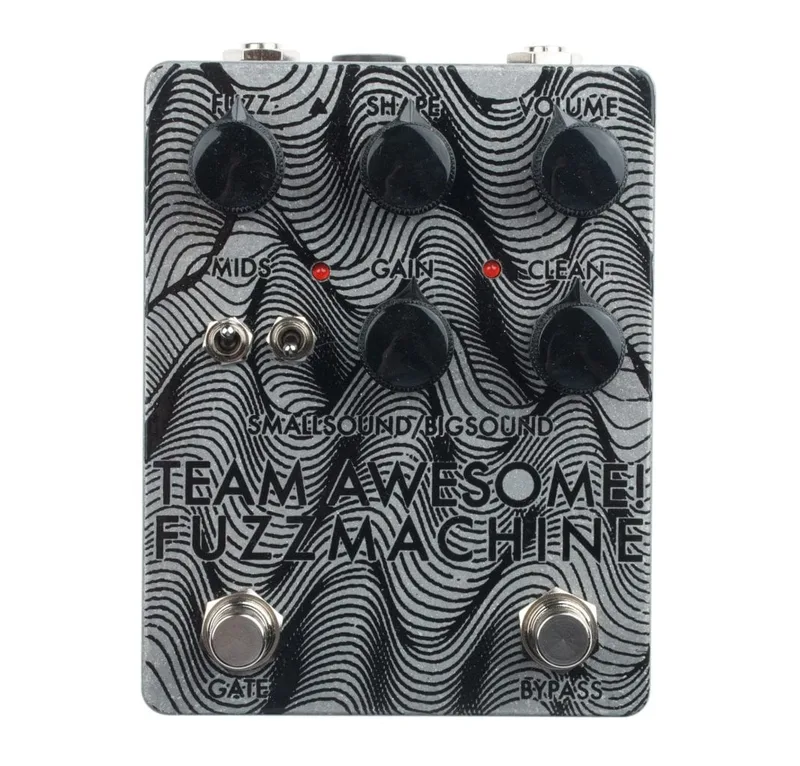
The hybrid approach is the interesting part for a player comparing fuzzes. Most fuzz pedals commit to one transistor type: all silicon designs, like the Spaceman Titan II: Fuzz Machine, or all germanium designs, like the smallsound/bigsound Team Awesome Fuzz Machine. The B85 unit uses both, and the clean track mixing means some of your dry signal survives alongside the fuzz, which matters most on bass, where a fuzz on its own can thin out the low end123.
A hybrid silicon/germanium fuzz with clean track mixing
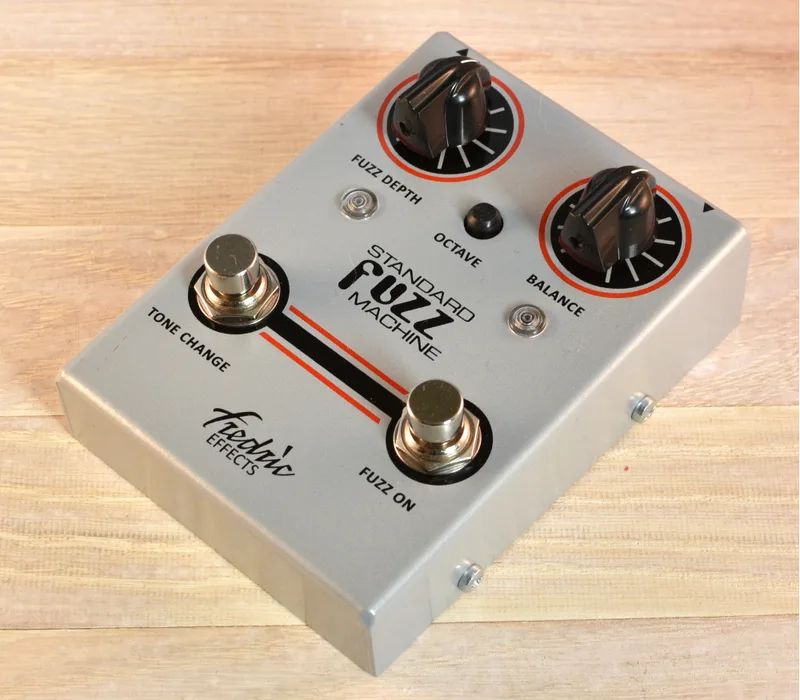
Silicon and germanium transistors behave differently in a fuzz circuit, and builders have long picked one or the other for its character. Germanium transistors, as in the Team Awesome Fuzz Machine, are the old-school option; silicon transistors, as in the Fredric Effects Standard Fuzz Machine with its five silicon transistors, are the more common modern choice34. The B85 Audio Fuzz Machine takes both in a single analog circuit1.
The clean track mixing is the other half of the design. Instead of the fuzz replacing your dry tone, a clean signal runs alongside it. The Team Awesome Fuzz Machine uses a similar idea, with a clean blend that retains low end alongside the fuzz, so the thick, gnarly fuzz is complemented by a slightly gritty clean signal3. For a bass player, this is what keeps the fundamental intact while the fuzz layer does its work on top.
Other makers have taken the hybrid route too. Aion FX describes its Flare Fuzz Machine as a glitchy silicon/germanium hybrid fuzz known for its dizzying array of controls and untamed sounds, and MusicRadar reported that the Flare circuit is a silicon/germanium hybrid in the style of a Fuzz Factory56. Hybrid designs in general tend toward the less predictable end of fuzz, and the B85 pedal's Gate and Phase switches, covered below, fit that pattern.
The controls
The Fuzz Machine puts one main knob and three switches in front of you, plus a pregain potentiometer and a bypass footswitch1.
| Control | What it does |
|---|---|
| Fuzz | Changes the strength of the fuzz and the harmonic structure1 |
| Pregain | Sets the drive into the fuzz circuit; interacts with the Phase switch1 |
| Mids switch | Adjusts the mid frequencies1 |
| Gate switch | Adds an upper harmonic that can be used to achieve a very aggressive sound1 |
| Phase switch | Works with the pregain control; down it acts like a saturation of the pregain potentiometer, up it acts like an overdrive fuzz1 |
| Bypass footswitch | Turns the whole effect on and off1 |
The Phase switch is the one that changes the pedal's basic character. With the switch down, it acts like a saturation of the pregain potentiometer; with it up, it acts like an overdrive fuzz1. That gives you two broad modes out of one pedal, from a saturated fuzz to something closer to overdrive.
The Gate switch is about aggression rather than noise control, despite the name. RockBoard's PedalPedia says it adds an upper harmonic that can be used to achieve a very aggressive sound1. If you were expecting it to silence hum between notes, the way a noise gate would, that is not what this switch does here.
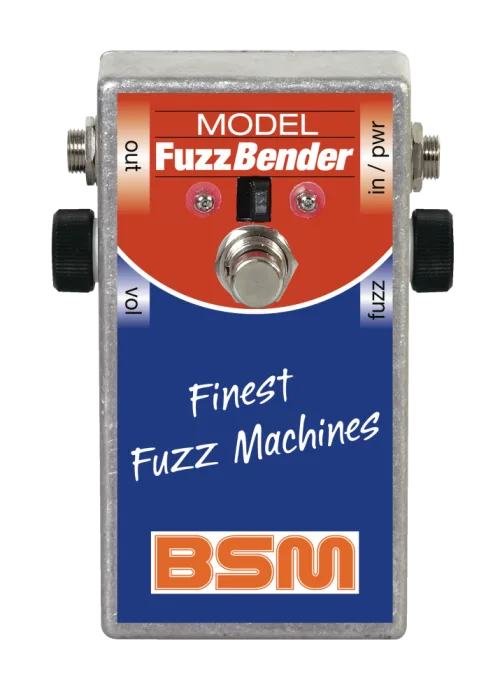
For comparison, switch-based fuzzes elsewhere do different jobs. The BSM FuzzBender Fuzz Machine uses a lever switch to choose between a Fuzz Face circuit and a Vox/Sola Sound Tone Bender Mk1.5 circuit, two complete classic circuits in one box7. The B85 pedal's switches instead shape one hybrid circuit from the inside.
Power and build
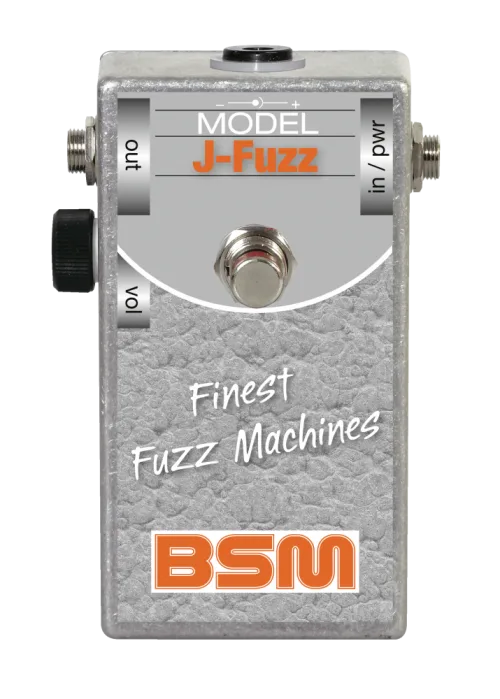
The Fuzz Machine runs on 9V DC with a center negative plug1, the same arrangement as most modern pedals, so it fits a standard pedalboard supply. The maker's page does not give a current draw. By contrast, the BSM J-Fuzz Fuzz Machine also runs on a 9V external power supply but supports a 9V battery as well8.
The build is unusual for a fuzz pedal at any level: the entire effect is handmade, including the circuit board, and the front panel is engraved in two-layer plastic1. That puts it in the boutique camp rather than mass production.
Where it sits among fuzz machines
The name "Fuzz Machine" has a history. The Hornby Skewes Zonk Machine, one of the early British fuzzes, offered a Fuzz control and a volume control, a much simpler control set than what RockBoard's PedalPedia gives you910. The BSM J-Fuzz, a take on that vintage Jennings circuit, uses two NOS silicon transistors from the Japanese Micro Electronics company and aims for a warm, full, fat tone reminiscent of old germanium fuzzes118.
The B85 Audio Fuzz Machine sits apart from all of these by combining the two transistor types in one analog circuit and adding a clean track, a Mids switch, a Gate switch for an aggressive upper harmonic, and a Phase switch that turns the pedal from saturated fuzz toward overdrive fuzz1. For a bass player who wants fuzz without losing the low end, the clean track mixing is the feature that answers that problem directly.
Videos
B85 Audio
the wetter bass
Questions
What power supply does the B85 Audio Fuzz Machine use?
It runs on 9V DC with a center negative plug, the standard arrangement for most modern pedalboard power supplies. That means it shares a supply with the majority of 9V pedals, though the maker's page does not state a current draw.
Is the B85 Fuzz Machine analog or digital?
It is an analog pedal. B85 Audio lists it as a hybrid fuzz circuit, meaning it uses both silicon and germanium transistors in one analog signal path, with a clean track mixed in alongside the fuzz.
What does the Gate switch do on the Fuzz Machine?
According to B85 Audio, the Gate switch adds an upper harmonic that can be used to achieve a very aggressive sound. It is one of three switches on the pedal, alongside Mids and Phase.
Does the Fuzz Machine use silicon or germanium transistors?
Both. B85 Audio describes the Fuzz Machine as a hybrid silicon/germanium fuzz, so the circuit combines the two transistor types rather than choosing one, which sets it apart from all silicon or all germanium designs.
Sources (11)
- Fuzz Machine by B85 Audio, RockBoard PedalPedia, 2026
- Titan II: Fuzz Machine - Spaceman Effects, Spaceman Effects
- Guitar FX Layouts: Smallsound/Bigsound Team Awesome Fuzz Machine, Guitar FX Layouts (tagboardeffects.blogspot.com), 2016-11-17
- Guitar Pedal X, Guitar Pedal X, 2025-03-18
- Flare Fuzz Machine / ZVEX Fuzz Factory, Aion FX, 2021-03-19
- Build your own Fuzz Face? Aion FX releases 6 circuits for DIY stompbox enthusiasts, MusicRadar, 2022-02-08
- FuzzBender Fuzz Machine, BSM - Finest Treble Booster (treblebooster.net), 2025
- J-Fuzz Fuzz Machine, BSM (treblebooster.net), 2025
- Zonk Machine History, British Pedal Company
- Zonk Machine History, britishpedalcompany.com
- J-Fuzz Fuzz Machine, BSM (treblebooster.net), 2025