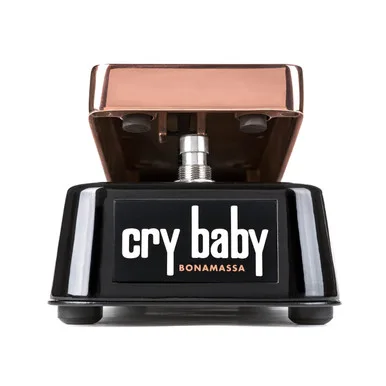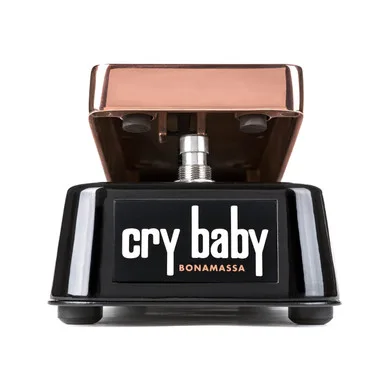


The Dunlop Joe Bonamassa Signature Model Crybaby, model number JB95, is a wah pedal developed by Dunlop with blues-rock guitarist Joe Bonamassa. Dunlop says Bonamassa steps on a Cry Baby wah when he really wants to express himself in a solo, and the company worked with him to build a signature version of the pedal1. Premier Guitar describes the JB95 as modeled on Bonamassa's own custom wah, packed with special modifications to capture his distinctly vintage tone2.
What sets the JB95 apart from a standard Cry Baby is its voicing. Dunlop voices it with a vintage-style Halo inductor for added harmonic content and growl, and it wears a copper top finish over the familiar Cry Baby chassis13. Bonamassa himself describes the pedal as "an extension of the guitar as a human voice"4.
A Cry Baby with a Halo inductor
The inductor is one of the parts that shapes a wah's voice, and it is the heart of the JB95's design. Dunlop's product page says the pedal "is voiced by a vintage-style Halo™ Inductor for added harmonic content and growl"1. On Dunlop's artist page, Bonamassa describes it as "equipped with a Halo Inductor for an incredibly vocal and expressive sound"4.
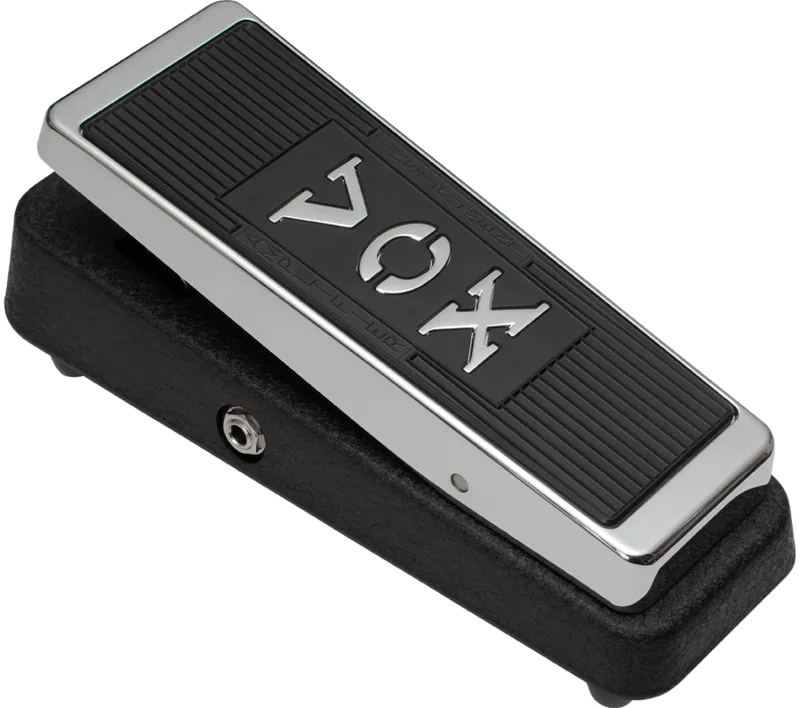
The Halo inductor has a history that reaches back to the earliest wahs. Premier Guitar's reviewer notes that "Halos appeared in the early Vox wahs and are considered one of the keys to their rich, vocal capability"2. Guitar World's Paul Riario, writing in his top-five pedals of 2012, described the component in the JB95 as "a 'haloed' component that adds the vocal-like quality found in the very desirable" vintage Vox Clyde McCoy wahs6.
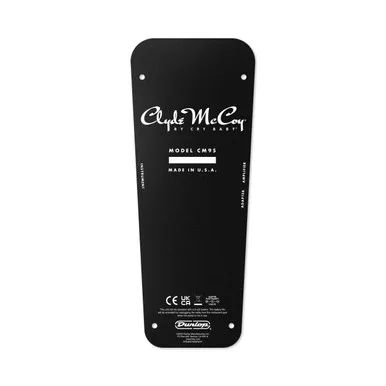
Dunlop also uses a Halo inductor in its Clyde McCoy Cry Baby Wah Wah reissue, where Guitar World identified it as the HI01 Halo inductor, "which produces the incredibly expressive midrange of the original, but without its microphonic problems"7. The same component appears in Dunlop's Custom Badass Cry Baby wah8. Players comparing inductors may also encounter Fasel inductors in other signature Cry Babys, such as the Buddy Guy signature model.
True bypass, or not: the internal switch
The JB95 gives the player a choice of bypass configurations. Dunlop's product page specifies "an internal switch for true bypass/non-true bypass operation"1, and the manual states that the internal switch "enables TRUE HARDWIRE BYPASS"9. Premier Guitar's reviewer called it "a unique truebypass toggle inside that allows you to switch the operation on and off"2.
Which setting you choose changes how the pedal behaves in a chain:
- True bypass: the signal passes around the circuit when the pedal is off, leaving it untouched.
- Non-true bypass: the circuit stays in the signal path, which Bonamassa prefers. Dunlop says "Joe prefers non-True Bypass as it darkens the high end"1. Premier Guitar's reviewer found a practical benefit too: "Leaving the wah in nontrue-bypass mode means you can engage the on/off switch almost noiselessly"2.
Dunlop's own buying guide describes the feature as "switchable true bypass/buffered bypass operation," framing the buffered setting as the alternative to true hardwire bypass10. For players who leave a wah on the board full time, the choice between a clean bypassed signal and a buffered, quieter-switching path is one of the practical decisions this pedal puts in your hands.
Joe Bonamassa and the JB95
Joe Bonamassa is a blues-rock guitarist with a long relationship to the Cry Baby. Dunlop's product page says that "when he really wants to express himself in a solo, he steps on a Cry Baby wah," which is why the company worked with him to develop the signature model1. Premier Guitar calls him a blues-rock legend with his own custom wah, and says the JB95 is modeled on that custom pedal2.
The pedal was announced in December 2011 and shown at Winter NAMM 2012. MusicRadar reported in December 2011 that the pedal had been added to Bonamassa's webstore, with a copper top finish and a true-bypass switch, and that it could be pre-ordered for $169.99 including a free Joe Bonamassa signature Cry Baby t-shirt35. At NAMM 2012, Dunlop introduced it among several new products, and Guitar World's demo video called out its "truly vintage sounds and awesome looks"5. By December 2012, Guitar World listed the pedal at $298.686.
The copper look ties into another Bonamassa signature. Premier Guitar notes that "Like his signature Fuzz Face, Bonamassa's JB95 Cry Baby sports a shiny copper rocker"2, and Dunlop's manual lists the Joe Bonamassa Signature Fuzz Face as a related product9.
Hooking it up
The manual covers the practical side of using the pedal:
- Run a shielded instrument cable from your guitar to the Cry Baby's Input Instrument jack9.
- Power options include a Dunlop DCB10 DC Brick power supply9.
What reviewers said
Published reviewers were positive about the JB95. Premier Guitar's reviewer focused on the inductor as "one of the most critical components in Bonamassa's signature wah" and concluded on value2:
"the Bonamassa Cry Baby is a bargain."
Premier Guitar's reviewer, judging it against what you could pay for a vintage unit or a high-end clone2.
Related Dunlop wahs
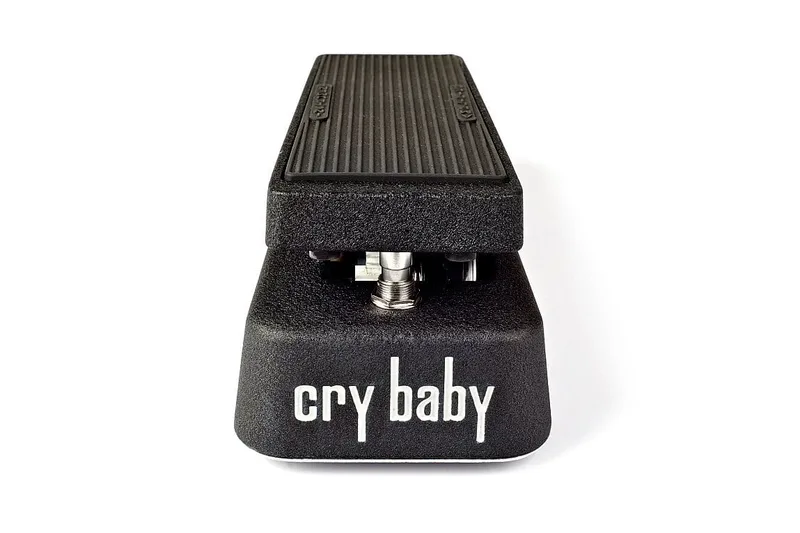
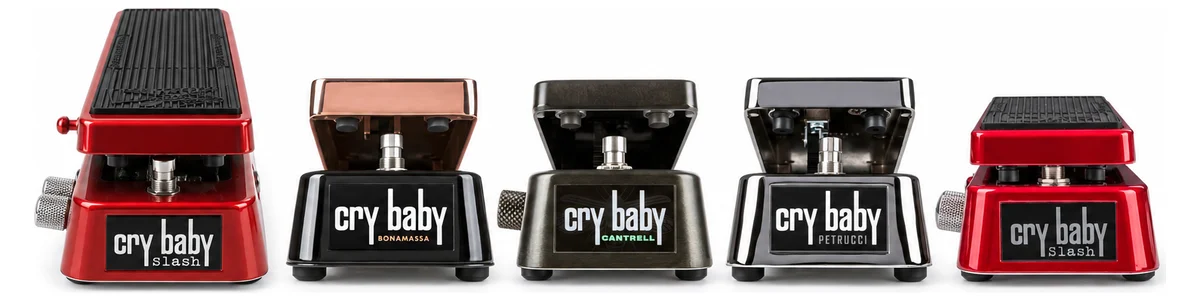
The JB95 sits in a wide signature Cry Baby lineup. Players comparing it against other Dunlop wahs can look at models such as the John Petrucci Signature Cry Baby Wah, the Kirk Hammett Signature Cry Baby Wah Wah, the Jerry Cantrell Signature Wah, and the Eric Clapton Cry Baby Wah, alongside the standard GCB95 Original Cry Baby.
Videos
Guitar World
Sweetwater
N Stuff Music
Questions
What is the model number of the Joe Bonamassa Cry Baby?
The model number is JB95. Dunlop's product page and the printed manual both identify the pedal as the JB95 Joe Bonamassa Cry Baby, part of the company's signature Cry Baby wah line.
Is the Joe Bonamassa Cry Baby true bypass?
It is switchable. Inside the pedal there is an internal switch that enables true hardwire bypass or non-true bypass operation. Joe Bonamassa himself prefers the non-true bypass setting because it darkens the high end, and Premier Guitar's reviewer noted that mode lets you engage the pedal almost noiselessly.
What does the Halo inductor do in a wah?
The inductor is a core part of a wah's voice. Halo inductors appeared in the early Vox wahs and are considered one of the keys to their rich, vocal capability. Dunlop voices the JB95 with a vintage-style Halo inductor for added harmonic content and growl.
What was the launch price of the Joe Bonamassa Cry Baby?
When it was announced in December 2011, the pedal could be pre-ordered from Joe Bonamassa's website for $169.99, including a free signature Cry Baby t-shirt. By December 2012, Guitar World listed the Joe Bonamassa CryBaby Wah at $298.68.
Is the Joe Bonamassa signature wah modeled on his own wah?
Yes. Premier Guitar describes the JB95 as modeled on Joe Bonamassa's custom wah and packed with special modifications to capture his distinctly vintage tone. Dunlop developed the signature model with Bonamassa, who uses a Cry Baby wah for expression in his solos.
Sources (10)
- JOE BONAMASSA CRY BABY® WAH, Dunlop (www.jimdunlop.com)
- Joe Bonamassa Cry Baby Pedal JB95 Review, Premier Guitar, 2012-09-05
- NAMM 2012: Joe Bonamassa signature Cry Baby wah pedal, MusicRadar, 2011-12-07
- Joe Bonamassa is a Dunlop Artist., Jim Dunlop (www.jimdunlop.com)
- NAMM 2012: Dunlop Crybaby Joe Bonamassa Wah Pedal Video Demo, Guitar World, 2012-01-20
- Guitar World Staff Picks: Paul Riario's Top Five Effect Pedals of 2012, Guitar World, 2012-12-17
- Review: Dunlop Clyde McCoy Cry Baby Wah Wah, Guitar World, 2014-04-29
- Dunlop debuts double-inductor Custom Badass Cry Baby wah, gearnews.com, 2021-01-26
- JB95.pdf, Dunlop Manufacturing, Inc., 2019
- RANGE OF EXPRESSION: FIND YOUR CRY BABY® WAH, Dunlop (lifestyle.jimdunlop.com), 2021-10-08