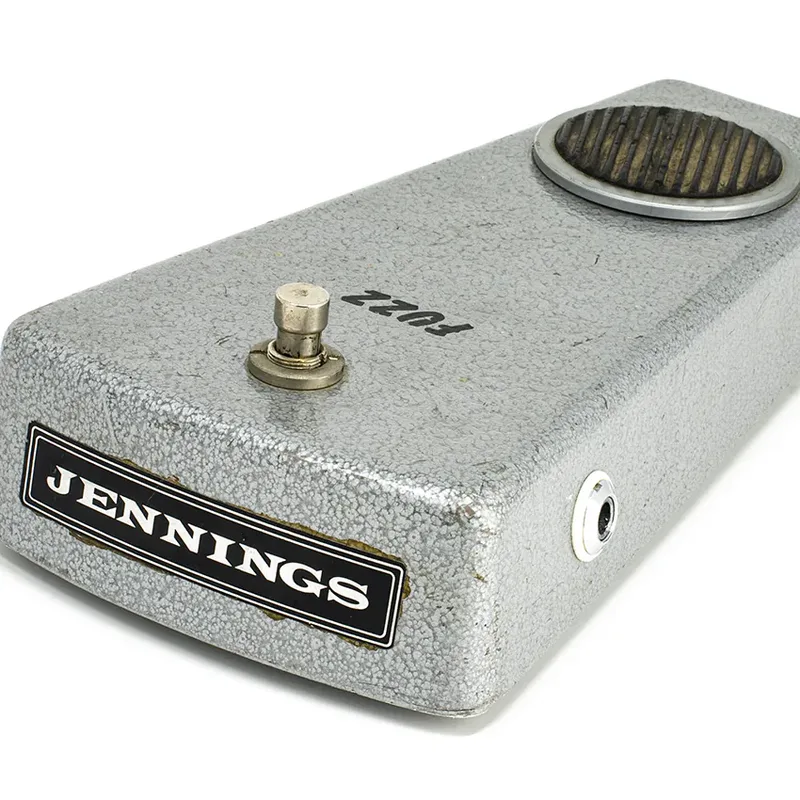
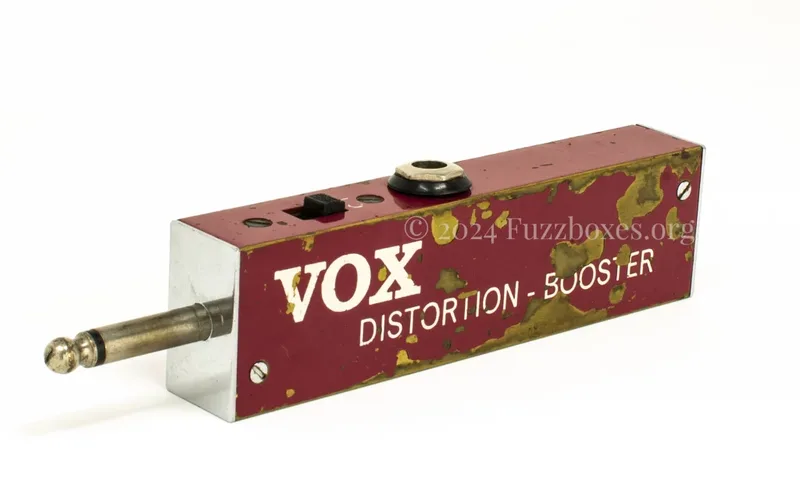
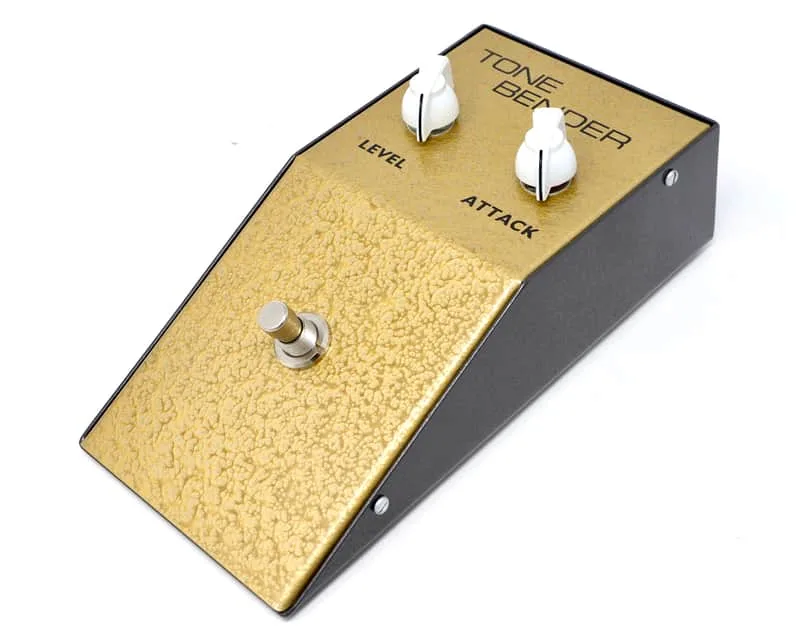
The Jennings Fuzz is a two-transistor silicon fuzz box built in England by Jennings Electronic Development (JEI), the company Tom Jennings and Dick Denney founded in 1969 after they left Vox. Denney, the engineer behind the Vox AC30 amp and the Vox Defiant transistor amp with its built-in fuzz circuit, designed the fuzz circuit, and BSM describes it as one of his masterpieces1. The basic unit, known as the Jennings F.1, was a simple standalone fuzz, and Fuzzboxes.org notes that its circuit was similar to other early British fuzz boxes such as Sola Sound's two-transistor Tone Bender "MK1.5", Arbiter's Fuzz Face, and certain versions of the Vox Distortion Booster2.
What set it apart from those contemporaries was its tone. BSM, the maker of a modern recreation, says that like most fuzz boxes of the time it used two silicon transistors, but had a much milder and rounder tone than similar products3.
Where the Jennings Fuzz came from: Dick Denney and Tom Jennings
The story starts at Vox. Tom Jennings ran the Vox operation, and Dick Denney was his engineer: BSM credits Denney with engineering the famous Vox AC30 amp as well as the Vox Defiant transistor amp, which had a built-in fuzz circuit1. Denney's fuzz work was not limited to Vox-branded gear either. GuitarPCB notes that the Colorsound Fuzz Box's "great chunky rhythm tone was the original design of Engineer/Guru Dick Denney"5.
After troubled times, Jennings sold the Vox label to the Royston Group in 1967 and left the company together with Denney1. Two years later, in 1969, Tom Jennings established his new label, Jennings Electronic Development, again with Dick Denney, building stompboxes, fuzzes and wah-wahs1. The Jennings fuzz of 1969 is the product this page is about, and BSM notes that it was different from the similar products other companies built at the time1.
"This fuzz circuit was engineered by Dick Denney, and is one of his master pieces."
How it works: two silicon transistors
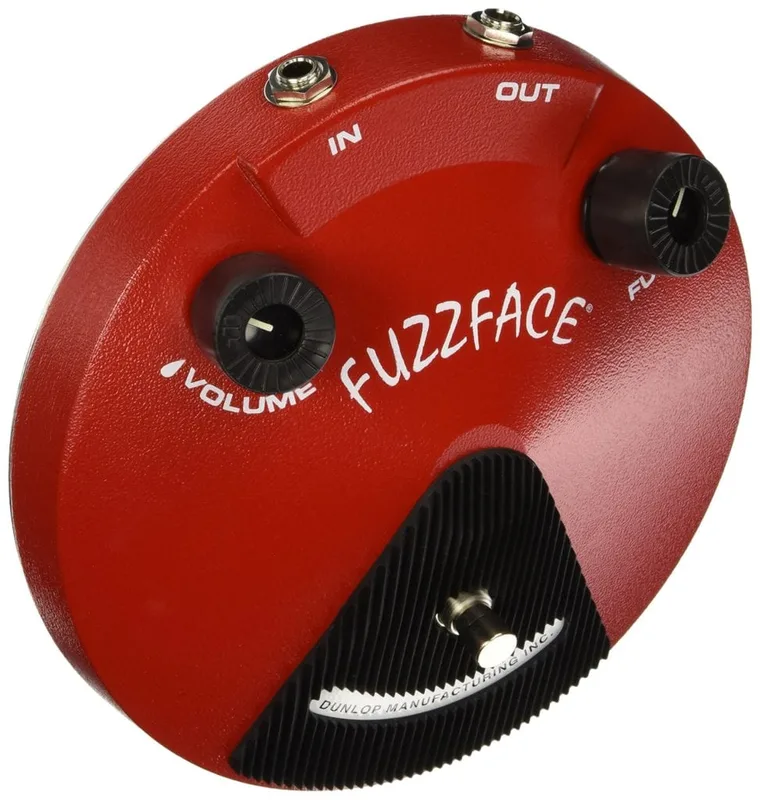
The Jennings Fuzz is a two-silicon-transistor circuit. Fuzzboxes.org describes the basic unit as built following a textbook shunt-series feedback amplifier circuit2. That topology places it in the same family as the other two-transistor British fuzzes of the era: the Fuzz Face, whose two transistors likewise form a voltage feedback biasing circuit, as described by R. G. Keen in a technical analysis hosted at Georgia Tech6, and Sola Sound's Tone Bender "MK1.5"2.
Despite the silicon transistors, the tone was not the aggressive silicon fuzz many players expect. BSM says the Jennings fuzz had a much milder and rounder tone than similar products, and that with the volume control fully opened the sound was warm, full and incredibly fat, a tone that reminds of an old germanium fuzz1. For a player comparing circuits, that is the interesting part: silicon transistors, usually associated with a harder, brighter fuzz, tuned here toward a rounder, warmer character.
The control scheme was unusual. On the rotary-control version, the patented rotary control determined the loudness of the fuzz sound2. There was also a foot-control version, the FP.1, built in a conventional treadle enclosure, with the volume of the fuzz controlled by the treadle. Fuzzboxes.org notes that the JEI pedal-control Fuzz features identical circuitry to the rotary-control Fuzz and functions in the same way2.
| Version | Form | Control | Circuit |
|---|---|---|---|
| Jennings F.1 (rotary) | Standalone fuzz box | Patented rotary control set the loudness of the fuzz | Shunt-series feedback amplifier, two silicon transistors2 |
| Jennings FP.1 (pedal) | Treadle enclosure | Fuzz volume controlled by the treadle | Identical circuitry to the rotary version2 |
| Jennings Growler (G.1) | More sophisticated standalone fuzz box | A more sophisticated version of the standalone fuzz box2 |
Early and later versions
The Jennings Fuzz went through at least two versions during its short production run, and the difference is in the transistors413.
- Early version: Denney used transistors from the Japanese "Micro Electronics" company3.
- Later version: Some time later, Denney substituted the Japanese transistors with a European type, overhauled the circuit, and as a result the sound changed1.
So a player trying to tell an early unit from a later one is really looking at two things at once: the transistor type (Japanese Micro Electronics versus a European type) and the circuit itself, which was overhauled for the later version4. BSM's own recreation reflects this split in how it is described: one BSM page calls the J-Fuzz a faithful recreation of the old original Jennings Fuzz from the late 60s3, while another calls it a faithful recreation of the well-known early 70s Jennings Fuzz, equipped with the original silicon transistors from "Micro Electronics" (Japan)7.
The Jennings line was broader than the fuzz alone. Pedals in the Jennings line were built with circuits similar to earlier Dick Denney designs2, and alongside the F.1 fuzz and the FP.1 treadle version there was the Growler, which Fuzzboxes.org describes as a more sophisticated version of the standalone fuzz box2. A suggested retail price list dated December 1972 confirms that the Jennings rotary foot control pedals were still in production at that point, with fuzz and wah-wah models offered in both rotary and pedal options at the same price2.
OEM versions such as Roto Sound
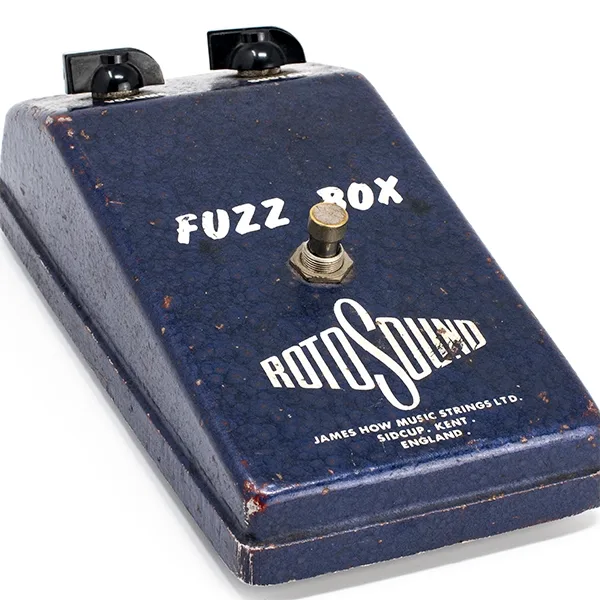
For some time, Jennings also built its products under OEM labels, for example "Roto Sound"4. The Rotosound story is documented in detail by Fuzzboxes.org.
Starting in November 1968, Rotosound formed a partnership with the newly founded Jennings company, and this resulted in some of the Jennings pedals being rebranded for Rotosound8. The Rotosound Fuzz, dated to around 1968 to 1969, is the key example: Fuzzboxes.org states that the Rotosound Fuzz is identical to the more familiar Jennings Fuzz, apart from bearing a different brand name8. The same holds for the Growler: the Fuzz and Growler pedals pictured in that article are otherwise identical to the more familiar Jennings F.1 and G.1, apart from the brand name2.
Other Rotosound-branded pedals were reported to have been built by Jennings at the time, including a wah-wah and the Growler (fuzz and wah) model, but no examples are known to have survived8.
Not every Rotosound Fuzz Box was a Jennings product. The earlier Rotosound Fuzz Boxes in cast metal enclosures, including the blue version of 1966, were supplied to Rotosound by Sola Sound and used Sola Sound's two-transistor "MK1.5" fuzz circuit, the same circuit more famously found elsewhere8. Only the Jennings-built Rotosound Fuzz is identical to the Jennings F.1.
The end of Jennings
Production of Jennings products stopped in 19731. The paper trail matches: the December 1972 price list still shows the fuzz and wah-wah models in both rotary and pedal options2, but the rotary series appears to have been discontinued by the time the JEI catalog and price list of 1973 was published2. That gives the Jennings Fuzz a production life of roughly four years, from the 1969 founding of JEI to the 1973 shutdown.
The Jennings Fuzz today: the BSM J-Fuzz
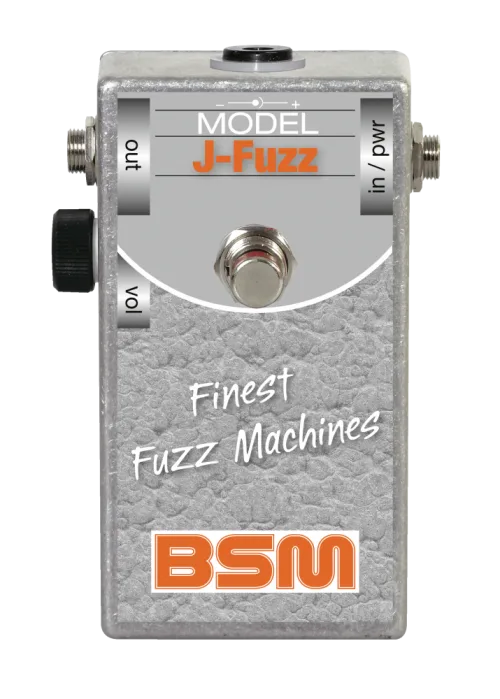
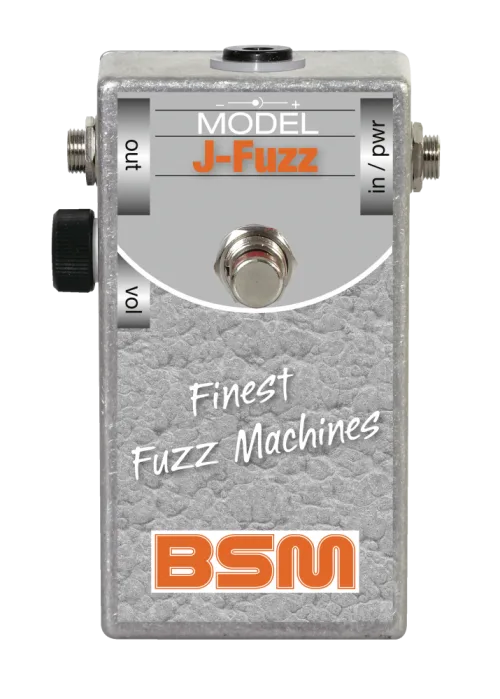
The circuit survives as a modern recreation. BSM (treblebooster.net) builds the J-Fuzz, described on one page as a faithful recreation of the old original Jennings Fuzz from the late 60s3 and on another as a faithful recreation of the well-known early 70s Jennings Fuzz, using the original silicon transistors from "Micro Electronics" (Japan)7. BSM says it uses NOS transistors from the Japanese Micro Electronics company exclusively in the J-Fuzz4, which ties the recreation to the early version of the original. For a player who wants the Jennings sound without hunting a fifty-year-old unit, the J-Fuzz is the direct descendant.
Pedals on this page
Questions
Who designed the Jennings Fuzz?
Dick Denney, the engineer best known for the Vox AC30 amp and the Vox Defiant transistor amp with a built-in fuzz circuit. He designed the Jennings fuzz circuit after leaving Vox with Tom Jennings, and BSM calls it one of his masterpieces.
Is the Jennings Fuzz germanium or silicon?
Silicon. Like most fuzz boxes of its time it used two silicon transistors, though BSM notes its tone was much milder and rounder than similar products, closer to what players expect from an old germanium fuzz. The early version used transistors from the Japanese Micro Electronics company.
What does the Jennings Fuzz sound like?
According to BSM, with the volume control fully opened the sound was warm, full and incredibly fat, much milder and rounder than other fuzzes of the era, a tone that reminds of an old germanium fuzz despite the silicon transistors.
How can you tell an early Jennings Fuzz from a later one?
By the transistors. The early version used transistors from the Japanese Micro Electronics company. Later, Dick Denney substituted a European transistor type, overhauled the circuit, and the sound changed as a result.
Was the Jennings Fuzz related to Vox?
Only through its founders. Tom Jennings sold the Vox label to the Royston Group in 1967 and left the company with Dick Denney. In 1969 they founded Jennings Electronic Development, which built the fuzz as its own product.
When did Jennings stop making the fuzz?
Production stopped in 1973. A suggested retail price list dated December 1972 shows the fuzz and wah-wah models still offered in both rotary and pedal options, but the rotary series appears to have been discontinued by the time of the 1973 JEI catalogue and price list.
Sources (8)
- untitled, BSM, 2025
- Jennings Fuzz • Fuzzboxes, Fuzzboxes.org, 2022-02-15
- J-Fuzz Fuzz Machine, BSM (treblebooster.net), 2025
- J-Fuzz Fuzz Machine, BSM (treblebooster.net), 2025
- One Knob Fuzz v2, GuitarPCB
- Microsoft Word, Georgia Institute of Technology (hosted at guitarpcb.com), 2006-05
- Special Units, BSM (treblebooster.net), 2025
- Rotosound Fuzz Box • Fuzzboxes, Fuzzboxes.org, 2021-05-19