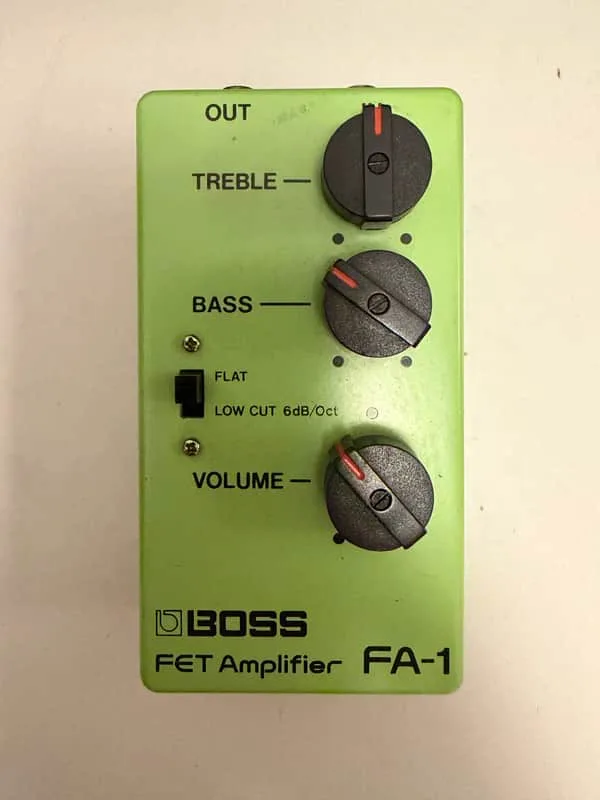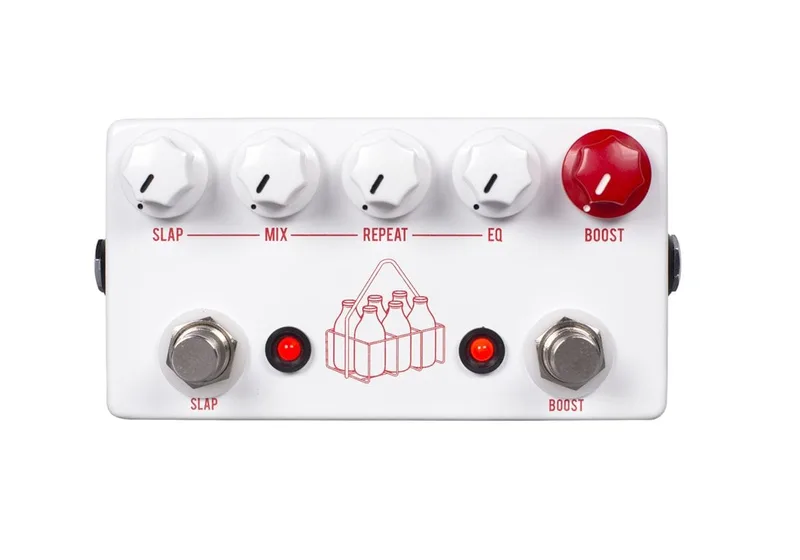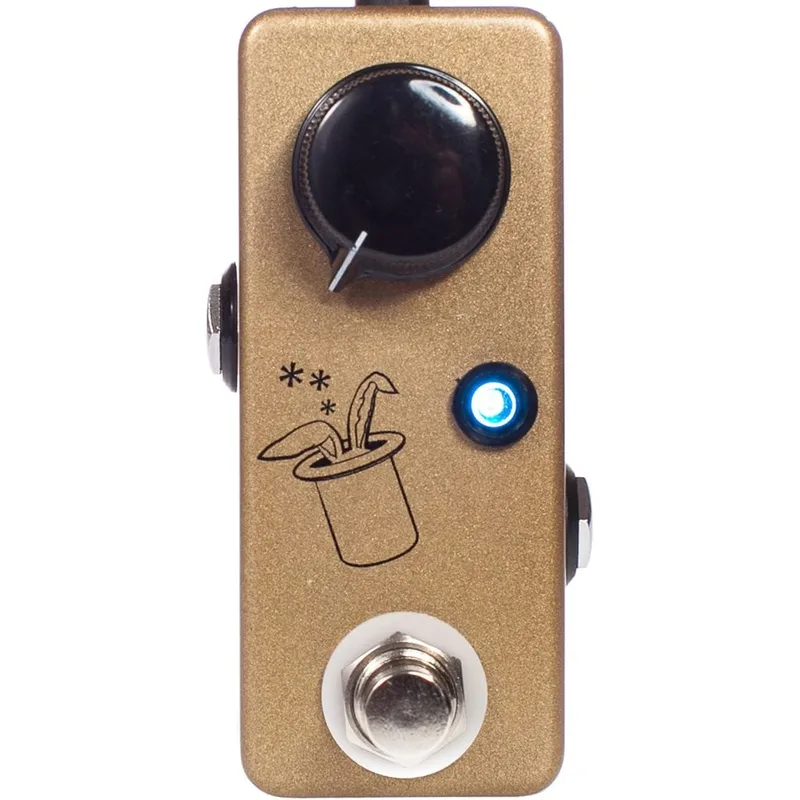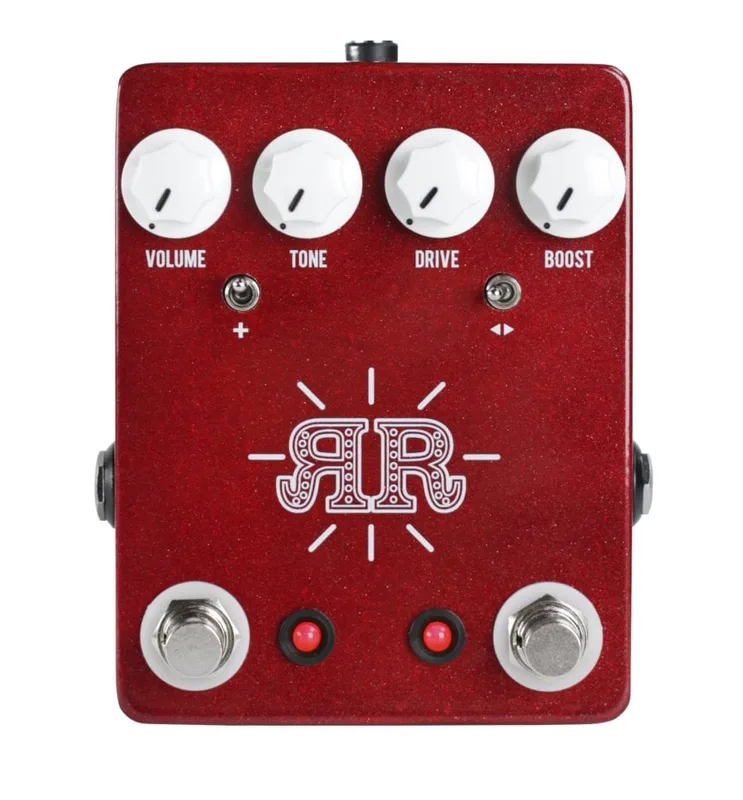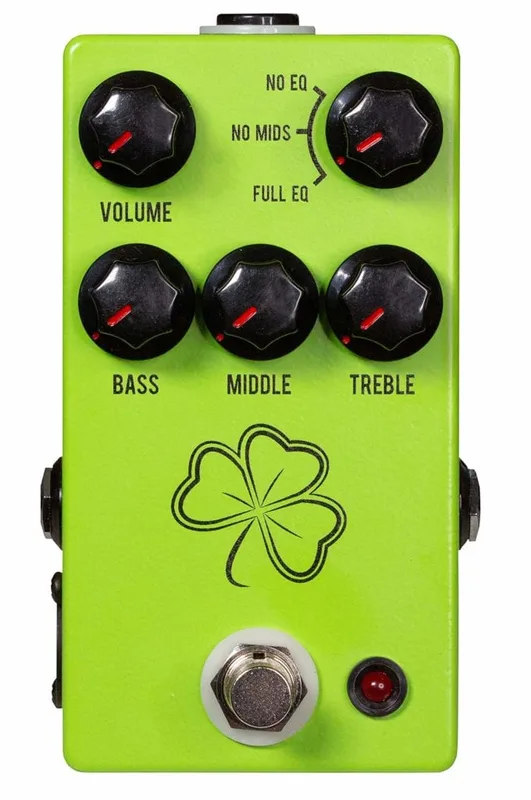


The JHS Pedals Clover is a preamp and boost pedal from JHS Pedals, built as the company's take on the rare Boss FA-1 FET Preamp of the 1980s. JHS calls it "our faithful interpretation of the FA-1 but with several additional features that we believe make this amazing circuit even better"12. Where the original was a small always-on box, the Clover packages the FET circuit in a full-size pedal with a three-band EQ, a mode switch, a low cut filter, and an XLR output that lets it double as an acoustic or bass preamp1.
As a boost, it has up to +24dB of gain on tap, which JHS lists as a multiplication factor of x16.4 with the EQ flat1. The Volume control can be set at unity, so the pedal simply sweetens your tone, or pushed to drive a tube amp or dirt pedals into saturation1. Guitar World's Matt described it as a pedal that "carries the spirit of the Boss FA-1 preamp" with "bags of volume to push a tube amp into saturation" and a versatile EQ3.
What the Clover does to your sound
The Clover sits in the preamp and boost family rather than the overdrive family. It is not a dirt pedal in itself: the Volume control sets the level at unity or as a boost, and the EQ section shapes the tone around it1. Pedal of the Day called it "a true tone-shaper / always on / can't-live-without-it pedal that will really sculpt and mold your sound"5. Because the FET circuit carries the character of the FA-1, reviewers describe it as a sweetening preamp as much as a gain stage: TONEHOME notes the original FA-1 "always adds a little dirt and fatness to the signal"6, and Guitar Pedal X's Stefan Karlsson points to "that fantastic sweet boost / overdrive that the FA-1 is so well known for"7.
The low cut switch, carried over from the top of the original FA-18, rolls off low frequencies with a -3dB point at 212Hz when engaged1. That is useful for tightening up a boomy amp or keeping an acoustic's low end controlled in a mix.
The controls
The Clover's face holds a Volume knob, a three-band EQ with Bass, Middle and Treble controls, a rotary EQ mode switch, and the low cut switch458.
| Control | What it does |
|---|---|
| Volume | Sets the level at unity or as a boost to push an amp or dirt pedals1 |
| Bass / Middle / Treble | Three-band EQ for shaping the overall tone5 |
| EQ mode rotary switch | Selects Full EQ, No Mids, or No EQ4 |
| Low cut switch | Carried over from the FA-1; -3dB point at 212Hz when engaged81 |
The rotary switch is the feature that sets the Clover apart from a simple boost. JHS explains the three positions plainly:
"In the top position ("No EQ"), we remove the entire EQ section and you just have a pure clean boost."
In No EQ mode the Clover acts like a straight boost pedal with only the Volume control in use5. No Mids removes the mid control, leaving the High and Low knobs active with the mids fixed4. Full EQ puts all three tone controls in operation for what JHS calls "full control over the full range of EQ available"1.
Power and connections
The Clover runs on standard 9V DC negative center power and draws 45.5mA at idle1. Input impedance is greater than 1M ohm and output impedance is 520 ohms1.
The Clover requires 9V DC negative power and has no battery option, so it needs a pedalboard power supply or a wall adapter1.
The connection story is where the Clover goes beyond a typical boost. Alongside the standard 1/4 inch input and output, there is an XLR output built into the side15. JHS states the two outputs "can be used individually or simultaneously if you want to go to a sound board or interface as well as an amplifier"1. Delicious Audio describes the XLR as a balanced output intended for use with acoustic guitar or bass, working in tandem with the standard output to feed a mixer or interface4. Gearnews also notes the XLR is handy for live situations where no suitable amp is available9.
History: the Boss FA-1 FET preamp
The Clover's circuit traces back to the Boss FA-1 FET Preamp, part of Boss's Pocket Series, released in 198419. The original was an unusual device: Jeds Peds notes it "was sold in the 80's as a unit that clipped onto your guitar strap to eliminate tone suck and act as a preamp"2, and RockBoard's PedalPedia describes an integrated belt clip, an always-on architecture, and a distinctive green enclosure10.
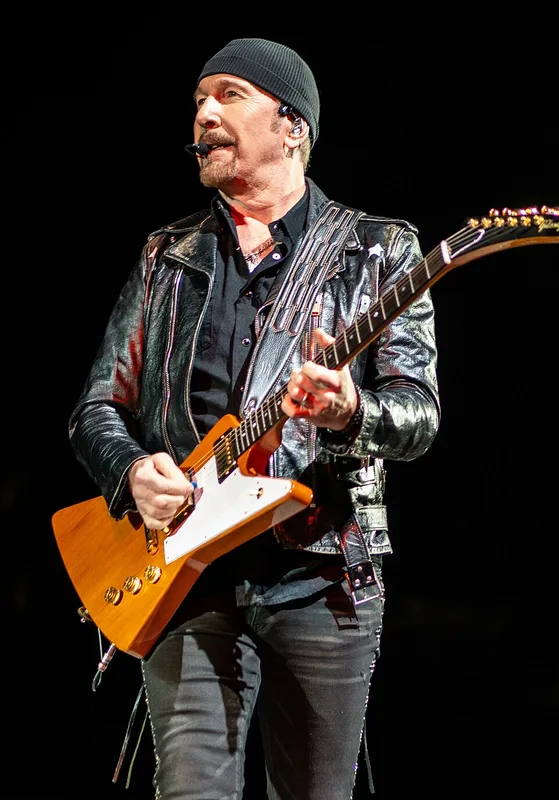
The FA-1 earned its reputation through one player in particular. JHS's own history of the pedal notes that "it quickly found its rightful place among the legends of tone when The Edge of U2 used it on the recording of 'Unforgettable Fire' as well as placing it in his following touring rigs"1. Guitar Pedal X adds that The Edge used the circuit on a number of tracks from that album, including "Pride (in the Name of Love)"7.
Because the original is rare and rarely discussed5, the FA-1 circuit has been revisited by several makers. Australia's Audio Blend offers the Edge EQ FA-1 FET Preamp, designed by Trevor Taylor, which uses the original NOS Hitachi HA1457W op-amp chips from the FA-17. The JHS Clover, at $1997, is the other widely known take, announced at NAMM in January 2019 alongside the Whitey Tighty compressor173.
Who the Clover suits
JHS positions the Clover as more than an electric guitar boost. According to the maker, the preamp is also intended for acoustic guitar and bass9, with the XLR output making those uses practical5. For an electric player, it works as an always-on tone shaper, a clean boost in front of an amp, or a way to push dirt pedals harder15. For acoustic and bass players, it functions as a dedicated preamp feeding a sound board or interface, with the three-band EQ and low cut available for tone control1.
Videos
Eirik Stordrange
We As A Company
Mike Hermans
News
Questions
Can the JHS Clover be used with acoustic guitar?
Yes. JHS gave the Clover an XLR output alongside the standard 1/4 inch output specifically so it can serve as an acoustic preamp. The two outputs can be used individually or at the same time, so you can send a balanced signal to a sound board or interface while still feeding an amplifier.
Does the JHS Clover work on bass?
Yes. JHS states the preamp is also intended for bass, and the XLR output on the side allows it to be used as a bass preamp feeding a mixer or interface. The three-band EQ and low cut switch give you tone shaping that suits lower frequencies.
How much gain does the JHS Clover have?
The Clover has up to +24dB of gain, which JHS lists as a multiplication factor of x16.4 with the EQ flat. The Volume control lets you set the pedal at unity volume or use it as a boost to push a tube amp or dirt pedals harder.
How much current does the JHS Clover draw?
The Clover draws 45.5mA at idle. It requires standard 9V DC negative center power, so it runs on a typical pedalboard power supply rather than a battery.
What is the JHS Clover based on?
The Clover is JHS's interpretation of the Boss FA-1 FET Preamp, a rare 1980s strap-clipped preamp that The Edge of U2 used on the recording of The Unforgettable Fire. JHS describes it as a faithful take on the circuit with several added features.
What does the EQ rotary switch do on the Clover?
The three-position rotary switch selects between Full EQ, where all three tone knobs are active; No Mids, where the mid control is removed and only the High and Low knobs work; and No EQ, which removes the entire EQ section and turns the Clover into a pure clean boost controlled only by Volume.
Sources (10)
- CLOVER - JHS Pedals, JHS Pedals
- Brush Strokes, Jeds Peds, 1980
- Attic Audio Putty Saturation Preamp review, Guitar World, 2026-08-13
- JHS Pedals The Clover Peramp/Boost, Delicious Audio, 2019-04-04
- JHS Pedals Clover Preamp EQ Boost, Pedal of the Day, 2020-01-23
- TONEHOME, TONEHOME
- Guitar Pedal X, Guitar Pedal X, 2024-07-09
- WHY YOU NEED A PREAMP, JHS Pedals
- NAMM 2019: JHS Clover and Whitey Tighty preamp and compressor pedals, gearnews.com, 2019-01-25
- FET Amplifier FA-1 by BOSS, RockBoard PedalPedia, 2026
 The Edge