

The Kilt V2 is a compact overdrive, distortion and fuzz pedal from JHS Pedals, and it is the second version of a drive box the company built with guitarist Stu G, founding member of the UK band Delirious?. JHS describes it as "a heavily tweaked Expandora style dirt box that gives you more tonal options than you might ever be able to use"1. In practice that means one pedal that runs from light, amp-like breakup to gated fuzz, with two clipping toggles choosing how far up the gain ladder you climb1.
The pedal came out of a collaboration that began around 2012. Stu G wanted a pedal that could cover any ground he needed for studio work and extensive touring, and JHS launched the original Kilt in 201523. The V2 arrived in 2017 in a smaller box with the Red Remote system added34. Since then it has been one of JHS's best-selling overdrive/distortion pedals year after year4.
An Expandora-style drive
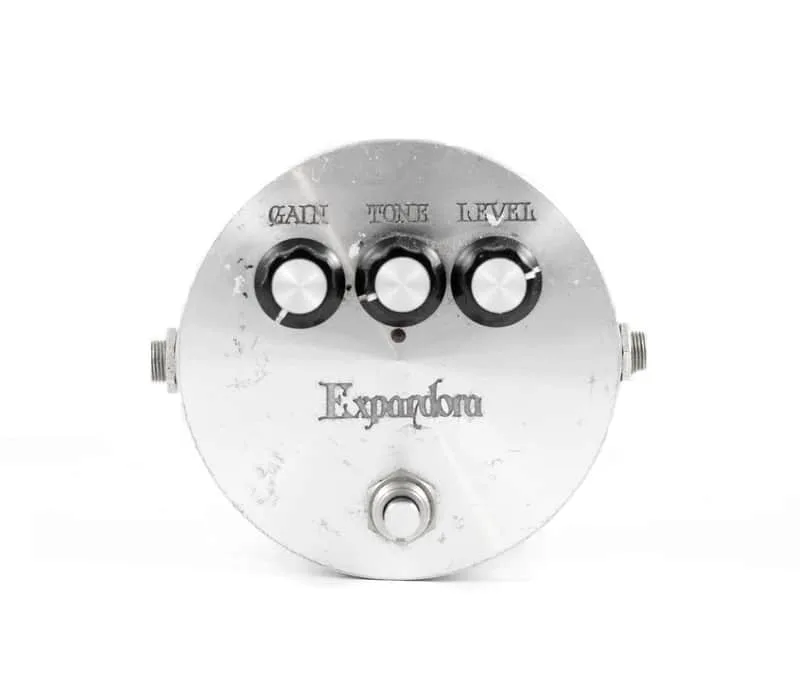
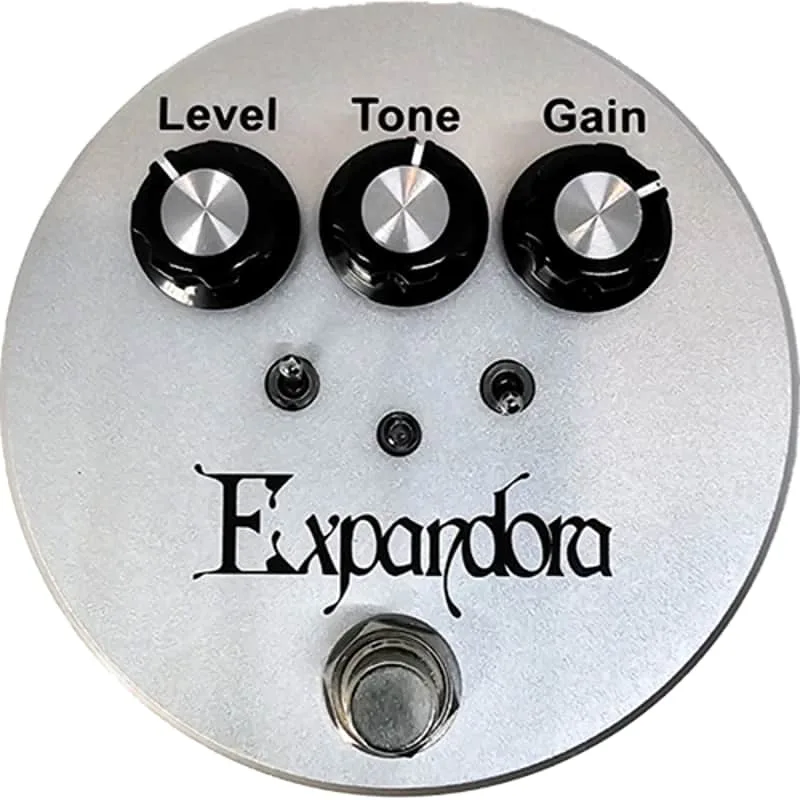
The Kilt's circuit traces back to the Bixonic Expandora, a Japanese-made boutique multi-distortion pedal from the mid-1990s, known for its round "hockey puck" enclosure and hidden internal dip switches, and for tones ranging from subtle overdrive to heavy fuzz78. Guitar Pedal X describes the Kilt as a take on that circuit with the Expandora's D1/D2 switches renamed G1/G2, working much the same way to give four voicings: overdrive, crunch, distortion and fuzz6. Aion FX goes further, calling the Kilt "the most notable commercial clone of the Expandora, designed in collaboration with Stu G"9.
It is not a straight copy, though. The Kilt brings all of the Expandora's internal switches to the surface as toggles, and it uses a specifically chosen op-amp that, in JHS's words, "offers super low noise, improved slew rate for a smoother structure, and a character that feels even better than the original Expandora"51. In the flat position of the cut/flat toggle, JHS says the bass response is much beefier than the original Expandora, which suits heavy riffs or bass grit1.
The controls
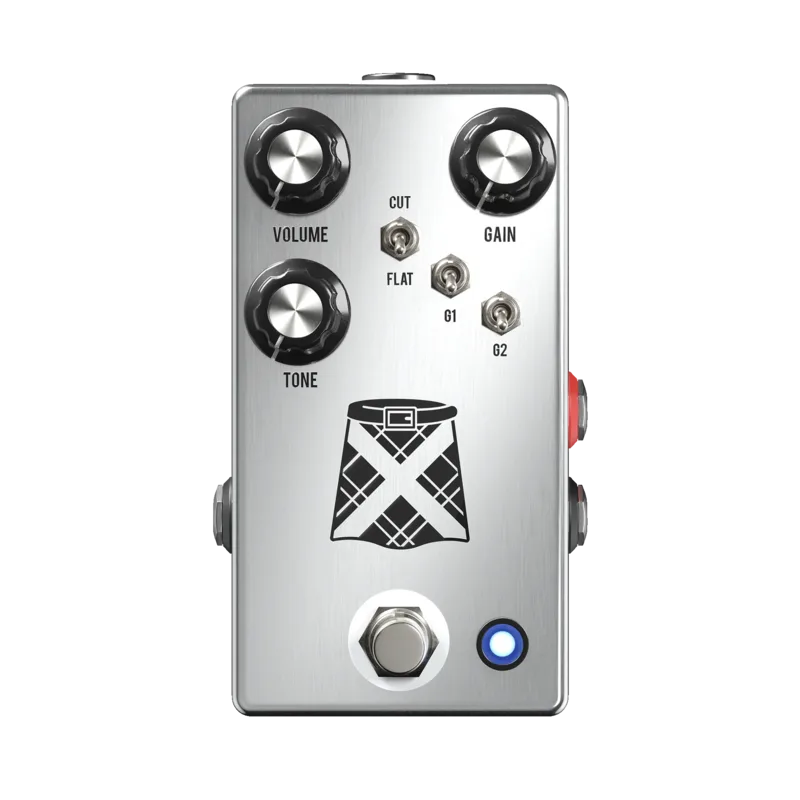
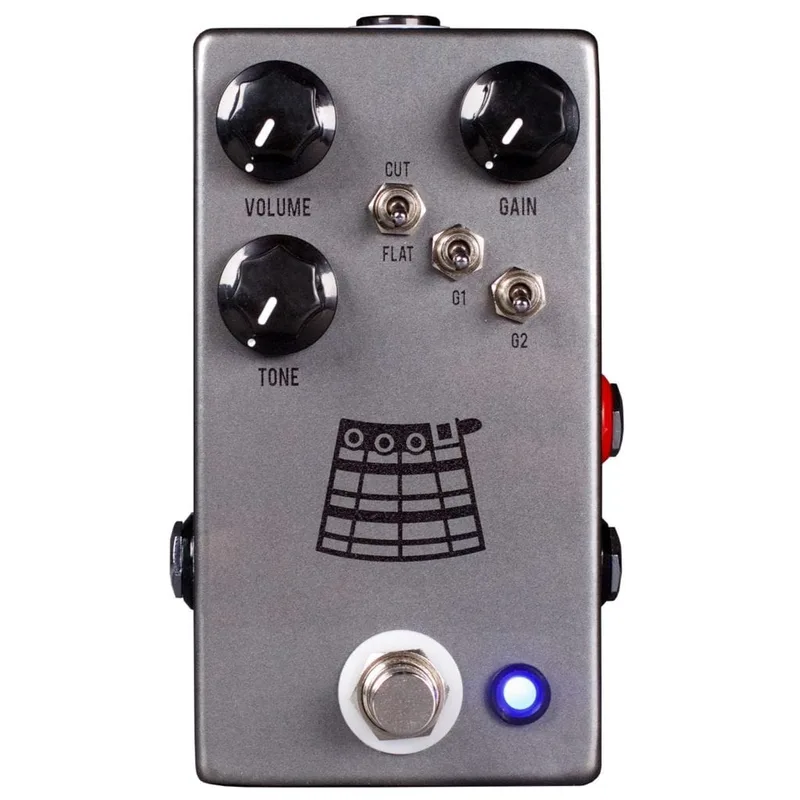
The V2 streamlines the original's four knobs and four toggles down to three knobs and three toggles8. Guitar Pedal X lists the control set as Volume, Gain, Tone, an EQ Hi-Cut/Flat toggle, and G1 and G2 up/down toggles6.
| Control | What it does |
|---|---|
| Volume | Output level |
| Gain | Drive amount |
| Tone | Treble response |
| Cut/Flat toggle | Cuts low end to sit in the mix; flat gives beefier bass1 |
| G1 toggle | Adds a touch of drive for more riffy grit1 |
| G2 toggle | Pushes close to distortion, with more saturation and sustain for leads1 |
The G1 and G2 toggles are the heart of the pedal. They work together to give up to four different resistance clipping options4. With both toggles down you are in the lightest gain setting, an amp-like chimey breakup that Josh Scott of JHS compares to "a first stage crunch type pedal"13. G1 up is more of an overdrive, stage-two vibe; G2 up is full-on distortion, a high gain mode3. Both up sends the Kilt V2 into what JHS calls "almost uncontrollable gated fuzz/distortion that will cut through anything"1.
The G naming has a double meaning. As Scott explains it, "Stew G, we just chose G because it also means gain"3. The cut toggle, meanwhile, is a low end cut, a bass cut, for tightening the bottom end3.
The Red Remote jack
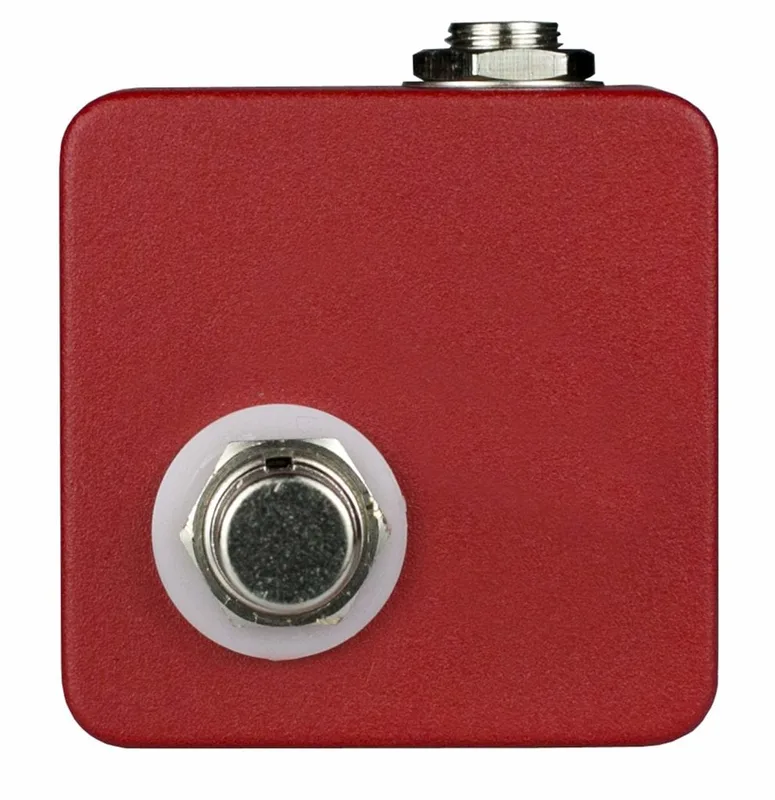
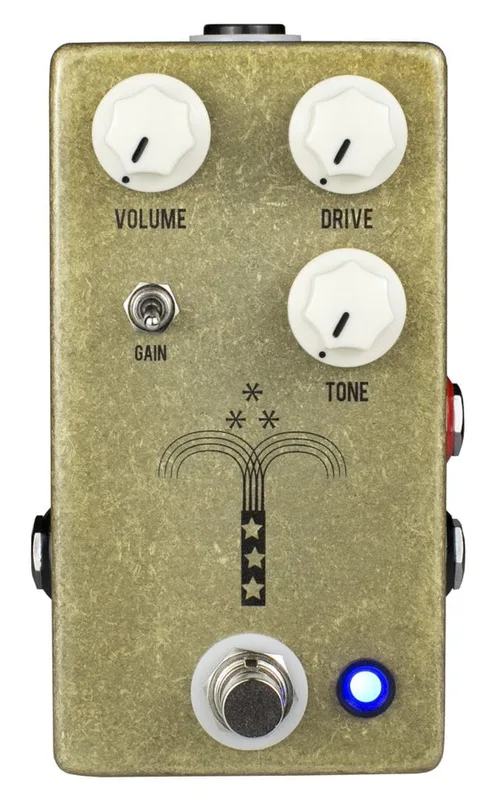
The V2's headline addition over the V1 is the Red Remote system8. The pedal has a red Remote jack: plug in a JHS Red Remote switch and it remotely activates G2, exactly as if you had flipped the toggle on the pedal itself3. That makes on-the-fly gain staging changes possible mid-song, moving from the both-down crunch setting to the high-gain G2 mode with one tap10. The same remote system appears on other JHS pedals, including the Morning Glory3.
Stu G uses it exactly this way. He keeps the pedal set on G1 around noon on the controls, then switches the Red Remote on to add G2, so both gains together give a fuzz5. He has used those sounds live and in the studio3.
History and versions
The Kilt story starts with Stu G. JHS got the opportunity to work with him and, as the company tells it, could not pass it up1. MusicRadar frames the brief simply: "He wanted a do-it-all drive box. The Kilt was it"11. The original launched in 20152.
| Version | Year | Enclosure and controls | Key changes |
|---|---|---|---|
| Kilt V1 | 20152 | Larger enclosure, two footswitches, four knobs, four toggles8 | Independent boost circuit on the right side8 |
| Kilt V2 | 20173 | Smaller enclosure, three knobs, three toggles4 | Red Remote system added4; EQ tuned slightly darker3 |
| Kilt 10 | 20252 | Same basic layout as V22 | Anniversary edition, "Think Kilt V2, but bigger"2 |
The V1's second footswitch ran what JHS called the mini bomb boost, an independent boost circuit whose knob controlled only the boost's volume level, not the main circuit312. The V1 also had an Order toggle for placing the boost before or after the drive circuit12. The V2 dropped the separate boost footswitch in favor of the smaller box and the Red Remote4.
The name itself comes from Stu G's stage wardrobe. As Josh Scott tells it, "The name kilt kind of comes from uh this thing where he wore a kilt on stage all the time"3.
In 2025, ten years after the original, JHS marked the anniversary with the Kilt 10, a continuing collaboration with Stu G2. It functions exactly like the Kilt V2 and has the same basic layout2, with G1 and G2 now providing a more touch-sensitive feel, increased compression, more intense distortion and a softer attack, and a Low-Cut toggle more compatible with a broader range of amplifiers including amp modelers8.
What reviewers and players said
Pedal of the Day reviewed the original Kilt in 2015 and found its range remarkable: "The Kilt's toggle and knob controls allow for the player to dial in clean to full out gated fuzz and anything in between"12. The same review concluded that "while most pedals that claim to be versatile have maybe one or two 'sweet spots,' the Kilt is special all the way through"12.
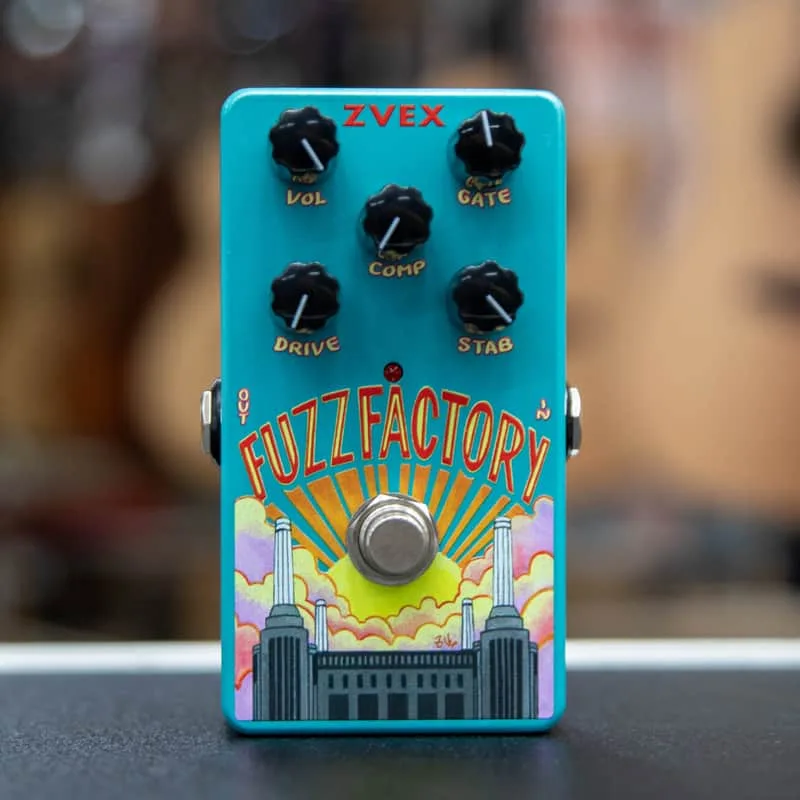
On the JHS YouTube channel, Josh Scott and Stu G walked through the V2's settings with single coils: the lowest setting is "this very accurate morning glory sound," a mid setting can land a JTM plexi sound, G2 alone gives "more of a rat sound," and both toggles up is "kind of like a ZX Fuzz Factory"3. Stu G's own low-gain verdict from a separate interview: through a loud Fender amp, "it kind of did a morning glory thing better than a morning glory"5.
Of the Kilt 10, Guitar Pedal X's Stefan Karlsson wrote that the new version "is improved in every way - for a fantastic multi-gain pedal," a much-improved Expandora take that is brighter, louder, warmer and more expressive than the compact Kilt, with extra headroom and polished aluminum1314. The Kilt 10 also took a Silver runner-up spot in Guitar Pedal X's 2025 boost and overdrive pedals of the year13.
For players comparing Expandora-family options, the original circuit is back in production too: Expandora Pedals offers a Vintage Reissue faithful to the original design, including its Crunch, Overdrive, Distortion and Fuzz modes, made in the USA7.
Videos
JHS Pedals
JHS Pedals
Questions
What do the G1 and G2 switches do on the JHS Kilt?
G1 and G2 are clipping switches that work together to give four gain settings. Both down is the lightest, amp-like breakup. G1 up adds drive for more grit, G2 up pushes toward distortion with more saturation and sustain, and both up sends the pedal into heavy gated fuzz. The G stands for gain as well as for Stu G.
What is the difference between the JHS Kilt V1 and V2?
The V1 (2015) used a larger enclosure with two footswitches, an independent boost circuit on the right side, and four knobs plus four toggles. The V2 (2017) moved to a smaller enclosure with three knobs and three toggles, dropped the separate boost footswitch, and added the Red Remote system for remote G2 switching. Its EQ was also tuned slightly darker.
Is the JHS Kilt a clone of the Bixonic Expandora?
It is JHS's take on the vintage Japanese-made Bixonic Expandora, and Aion FX calls it the most notable commercial clone of that pedal. But it is heavily tweaked: JHS brought the Expandora's internal switches to the surface and used a specifically chosen op-amp for lower noise and a smoother structure than the original.
How does the Red Remote work on the Kilt V2?
The Kilt V2 has a red Remote jack. Plug in a JHS Red Remote switch and it activates G2 remotely, exactly as if you had flipped the G2 toggle on the pedal. That lets you change gain staging on the fly from anywhere on your pedalboard. The same remote system appears on other JHS pedals, including the Morning Glory.
Why is the JHS Kilt called the Kilt?
The pedal was designed in collaboration with guitarist Stu G, founding member of the UK band Delirious?, who wore a kilt on stage. Josh Scott of JHS Pedals says the name comes from that stage habit, and the G in the G1 and G2 switch names doubles as a nod to Stu G and to gain.
How much current does the JHS Kilt V2 draw?
The Kilt V2 runs on standard 9V DC center negative power and consumes 64mA. It measures 2.6 by 4.8 by 1.6 inches. That current draw is modest by modern standards, so it is comfortable on most isolated pedalboard power supplies.
Sources (14)
- KILT V2 - JHS Pedals, JHS Pedals
- JHS Pedals The Kilt 10 Overdrive Distortion, Pedal of the Day, 2025-11-25
- Most Versatile JHS Drive Pedal: The Kilt Overdrive / Distortion / Fuzz / Boost And Red Remote, JHS Pedals (YouTube), 2023-07-03
- KILT 10 - JHS Pedals, JHS Pedals
- StuG's Experimental Tones Explained (Zvex FuzzProbe, Digitech Whammy, Talker, Expandora, Line6 DL4), JHS Pedals (YouTube), 2024-05-07
- Guitar Pedal X, Guitar Pedal X, 2021-08-23
- Expandora Pedals Vintage Reissue Overdrive Distortion Fuzz, Pedal of the Day, 2026-04-05
- JHS Pedals Kilt 10: Expanding The Expandora, gearnews.com, 2025-11-26
- Dynamo Reactive Distortion / Bixonic Expandora, Aion FX, 2023-07-03
- New Pedal: JHS Kilt 10 Overdrive, Delicious Audio, 2025-11-26
- In 2015, JHS Pedals released what it called the “ultimate dirt pedal”, MusicRadar, 2025-11-26
- JHS Pedals Kilt Overdrive Boost, Pedal of the Day, 2015-09-19
- Guitar Pedal X, Guitar Pedal X, 2025-12-04
- Guitar Pedal X, Guitar Pedal X, 2025-11-28