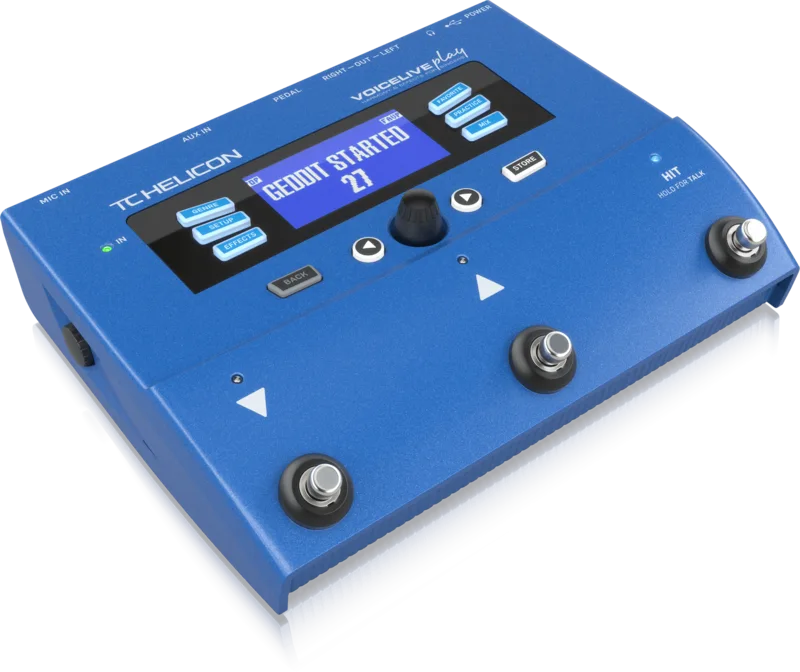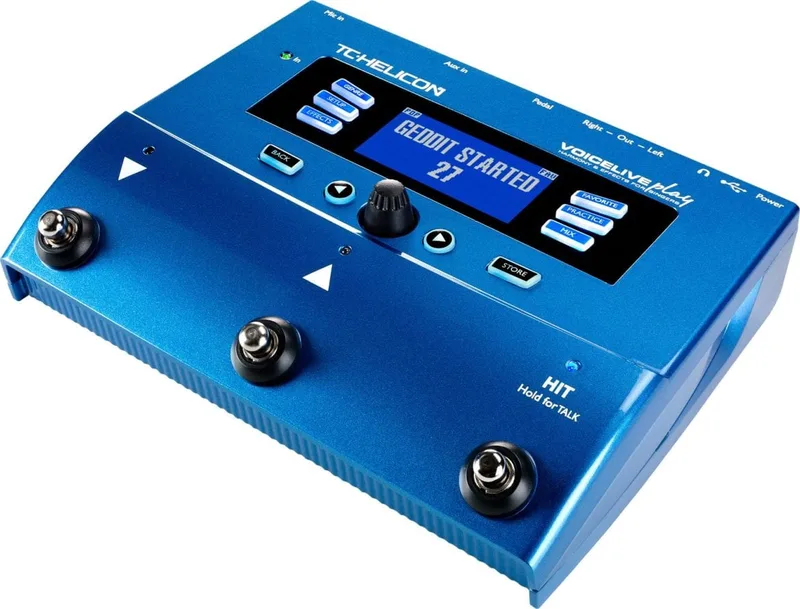


The TC Helicon VoiceLive Play is a 3-button vocal effects stompbox with looping: a floor unit you sing into rather than plug a guitar into. TC Helicon positions it as "the preset-driven floor processor for singers who want flagship TC Helicon tone without programming anything," and as "the entry into the VoiceLive family, ready to gig out of the box"1.
Instead of building sounds from scratch, you work from over 200 factory presets organized by song and style, covering pop, rock, country, worship and jazz. Harmony, doubling, reverb, echo, hardtune, transducer and the Adaptive Tone engine all run in real time, with up to eight effect blocks active at once, and a front-panel display walks you through every setting without buried menus1.
What it does to your voice
The unit's centerpiece is the harmony engine. Feed it MIDI from a keyboard, or set a key manually, and it builds musically correct backing voices behind your lead vocal1. That is what makes it useful for a singing player: the harmonies follow the music rather than sitting at a fixed interval.
The rest of the effect list covers the sounds a lead singer reaches for most. Doubling thickens the lead line, reverb and echo place it in a space, hardtune corrects pitch, and transducer and the Adaptive Tone engine shape the tone itself. All of these run simultaneously, with up to eight effect blocks active at once1.
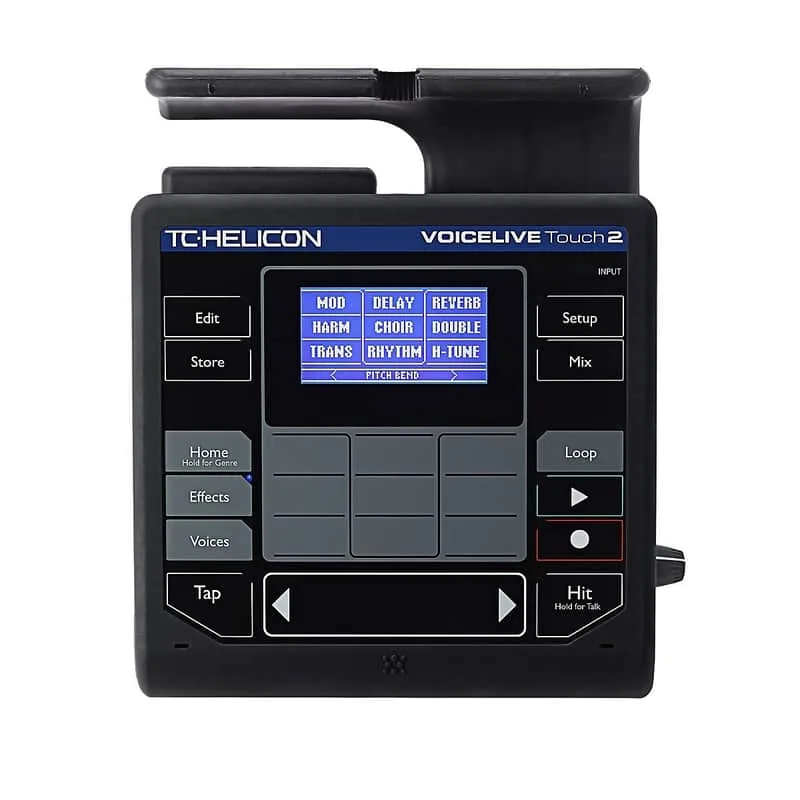
A built-in 30-second looper lets you build vocal arrangements on the fly, layering harmonies and phrases live1. For context on where that sits among vocal loopers, MusicRadar's group test of looping tools called the larger TC Helicon VoiceLive Touch 2 "The Rolls-Royce of vocal looping," noting its exhaustive I/O of MIDI, USB, stereo aux input and guitar in/thru2. The Play's 30 seconds is a layering tool in that tradition, not a long-form looper.
Controls, connections and power
Operation is built around three buttons and the front-panel display, which the maker says walks you through every setting without buried menus1. There is no deep editing to learn before a gig.
On the back panel:
- XLR mic input with phantom power, so condenser mics work without a separate supply1
- MIDI in, for driving the harmony engine from a keyboard1
- Balanced XLR mains out1
The VoiceLive Play runs on a standard 12V supply1, which is not the same as the supply most guitar pedals use, so it cannot simply join a typical pedalboard daisy chain. Plan its power separately.
How it differs from the Play GTX and other VoiceLive units
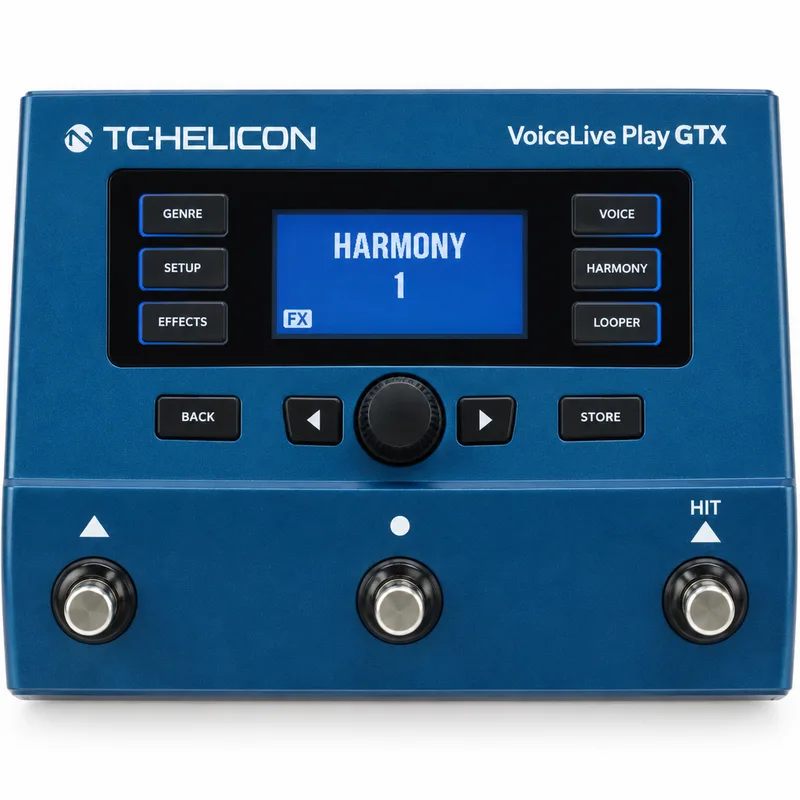
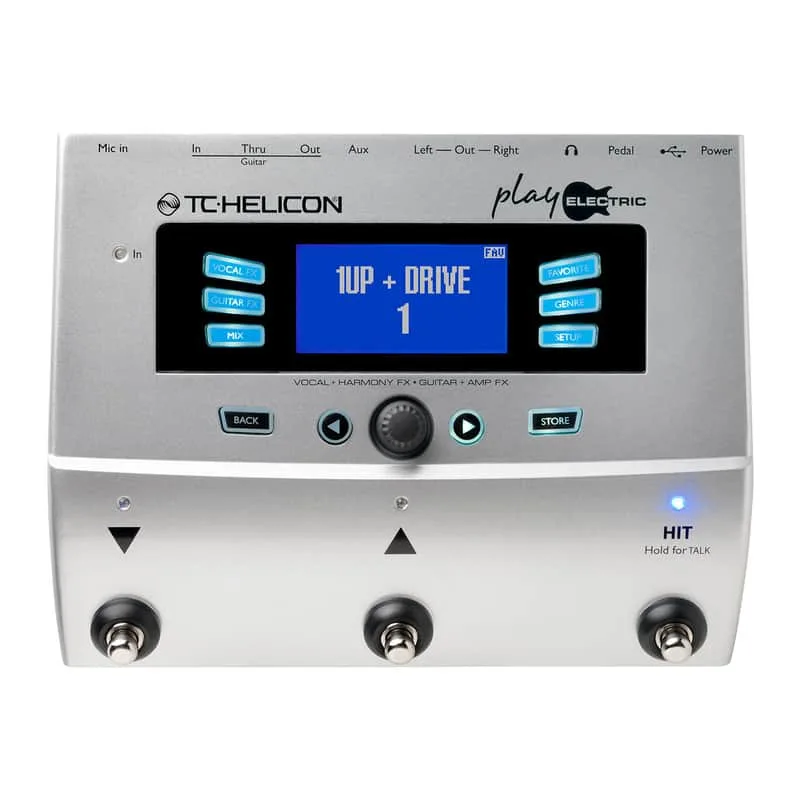
The VoiceLive Play GTX, announced in Anaheim on 18 January 2012, is described by TC-Helicon as "the world's first multi-effects unit dedicated to rocking" the singing guitarist, combining "pristine vocal and guitar effects" in one compact unit3. Where the VoiceLive Play processes only your voice, the GTX adds guitar processing alongside the same style of pro-level TC-Helicon effects and harmony processing. TC-Helicon's own pitch is that "singing guitarists will feel like they have a dedicated vocal producer and an experienced guitar tech sitting inside the box"3. The GTX is a mains-operated unit3.
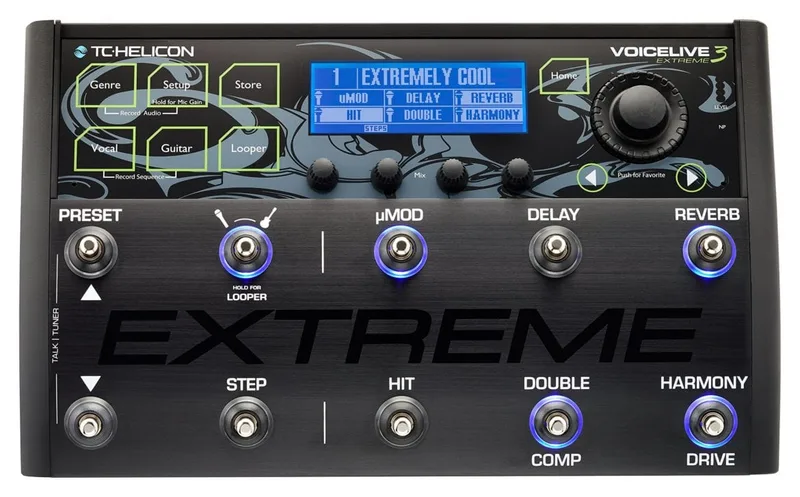
Further up the family, the VoiceLive 3 Extreme adds USB audio in/out for backing tracks and direct recording, MIDI in/out, and a looper that records vocal and guitar tracks, each with its own undo, redo and stop, locked to a shared tempo4. The VoiceLive Play is the simpler, preset-driven entry point below both.
| Model | What it covers | Notable extras |
|---|---|---|
| VoiceLive Play | Vocals only | 30-second looper, over 200 presets, MIDI in1 |
| Play GTX | Vocals and guitar | Guitar effects, harmony processing, mains operation3 |
| VoiceLive 3 Extreme | Vocals and guitar | USB audio, MIDI in/out, tempo-locked vocal and guitar looper4 |
Where it came from
The VoiceLive Play is the entry into TC Helicon's VoiceLive family, a line of floor and desktop vocal processors1. The family's flagship tone is the selling point here: the maker's pitch is flagship TC Helicon sound without any programming1. The GTX sibling followed as the guitar-playing variant, announced 18 January 20123.
Videos
Andertons Music Co
TC Helicon
TC Helicon
Questions
Can a guitarist use the VoiceLive Play for backing vocals?
Yes, that is the core idea. The harmony engine builds musically correct backing voices behind your lead vocal, either by following MIDI from a keyboard or by using a key you set manually. The related Play GTX goes further and adds guitar effects alongside the vocal processing in one unit.
How long is the VoiceLive Play looper?
The built-in looper holds 30 seconds of audio, which the maker describes as enough to build vocal arrangements on the fly. It is a vocal looper for layering harmonies and phrases, not a long-form looping workstation.
Does the VoiceLive Play provide phantom power?
Yes. The XLR mic input provides phantom power, so condenser microphones that need it can be plugged straight in without a separate power supply.
What is the difference between the VoiceLive Play and Play GTX?
The VoiceLive Play is the vocal-only entry into the VoiceLive family, with harmony, doubling, reverb, echo, hardtune and looping for your voice. The Play GTX, introduced in January 2012, adds guitar effects alongside the vocal processing, making it a multi-effects unit for vocals and guitar together.
What power supply does the VoiceLive Play use?
It runs on a standard 12V supply, which is not the same as the supply most guitar pedals use, so it cannot simply join a typical pedalboard daisy chain. Plan its power separately. The Play GTX is a mains-operated unit.
Sources (4)
- VOICELIVE PLAY, Behringer
- Review round-up: hardware loopers, MusicRadar, 2017-05-16
- Voicelive Play GTX by TC Helicon, RockBoard (PedalPedia), 2026
- VOICELIVE 3 EXTREME, TC Helicon