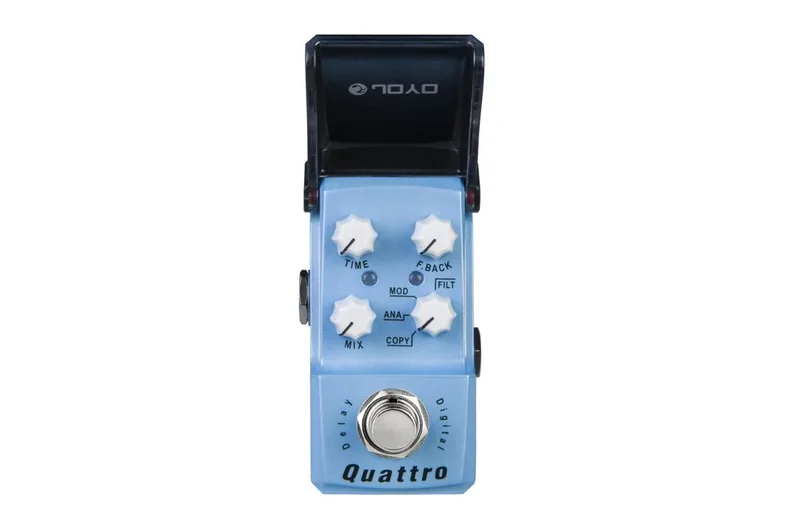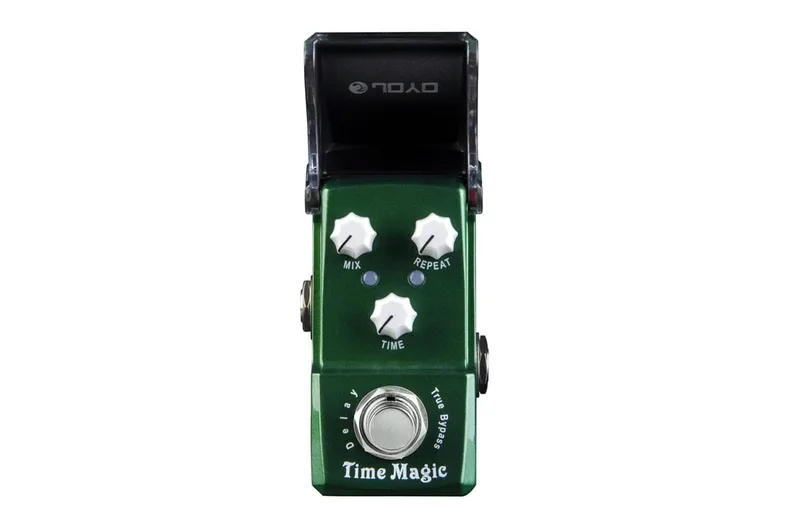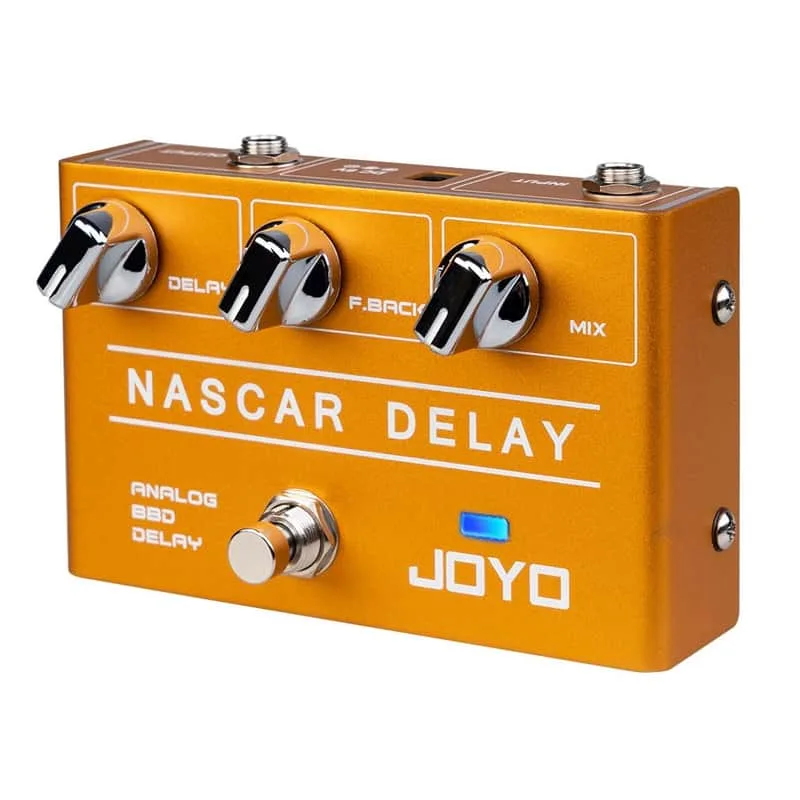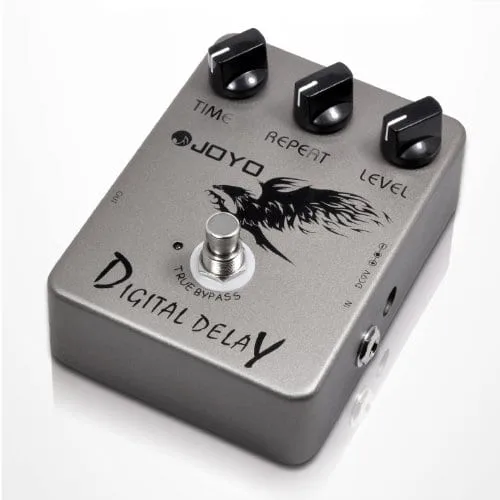
The Joyo Digital Delay is a digital delay pedal from Joyo. Digital delay records your guitar signal and plays it back after a set time, giving you repeats, or echoes, of what you just played1.
What sets digital delay apart from analog is the character of those repeats. As Guitar Player's buying guide puts it:
"Digital delays are cleaner, brighter, and more defined, making them better suited to precise rhythmic playing, such as dotted eighth-note patterns, or more modern, articulate sounds"2
That cleanliness is the trade: analog delays color the repeats as they fade, while digital repeats stay accurate to the original note.
| Digital delay | Analog delay | |
|---|---|---|
| Repeat character | Cleaner, brighter, more defined2 | Repeats are colored as they fade |
| Best suited to | Precise rhythmic playing, dotted eighth-note patterns, modern articulate sounds2 | Warm, degrading repeats |
How digital delay works
The principle is the same in every digital delay pedal. As Huw Price explains in Guitar.com's history of echo:
"An audio signal is converted into digital information, where it can be stored in a buffer until required and converted into the analogue domain for playback"1
Once the signal is numbers in a buffer, the pedal can hold it as long as it has memory for, and repeat it as many times as the feedback control allows, without the signal degrading the way it does in an analog bucket-brigade circuit.
Where digital delay came from
Digital delay did not start on pedalboards. In the early days, as Price recounts, digital delays were expensive rackmount effects seen only in high-end recording studios, with switches and knobs for every parameter and no presets1. Those rack units brought one thing players had never had before: LED panels showed the delay time in milliseconds, which made exact tempo-matched delay settings possible1. Pedals like this one carry that idea forward in a stompbox format.
Where it sits in your signal chain
Placement matters with delay. On Guitar World's video on the subject, the guidance is that digital delay sounds better in an amp's effect loop, where it sits behind the preamp, the source of your overdrive3. If you run your overdrive or distortion into the front of the amp, putting delay after that point keeps the repeats clean instead of pushing them through more gain.
If your overdrive comes from the amp's preamp rather than a pedal, an effect loop placement puts this delay after that gain stage, so the repeats stay clean instead of being driven by distortion3.
Kinds of digital delay
Digital delays fall into broad families. On That Pedal Show's video on choosing a digital delay, the presenters group them as4:
- Character: "old-school" 12-bit delays with a sound of their own
- Modeling: delays that seek to emulate other machines
- Creative: more experimental designs
A basic digital delay like this one sits at the straightforward end of that range: clean, accurate repeats for rhythmic playing2.
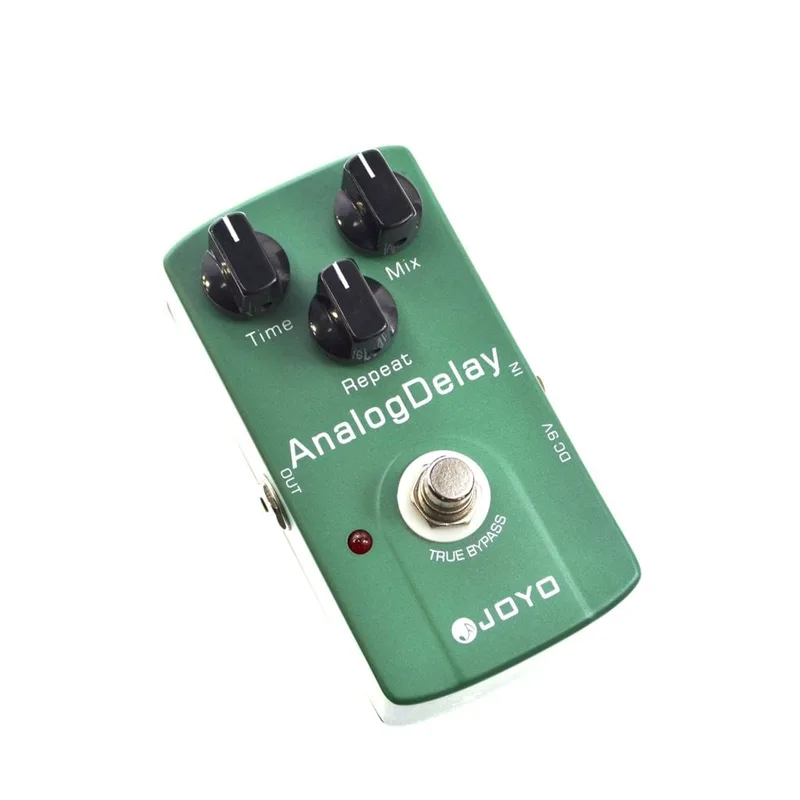
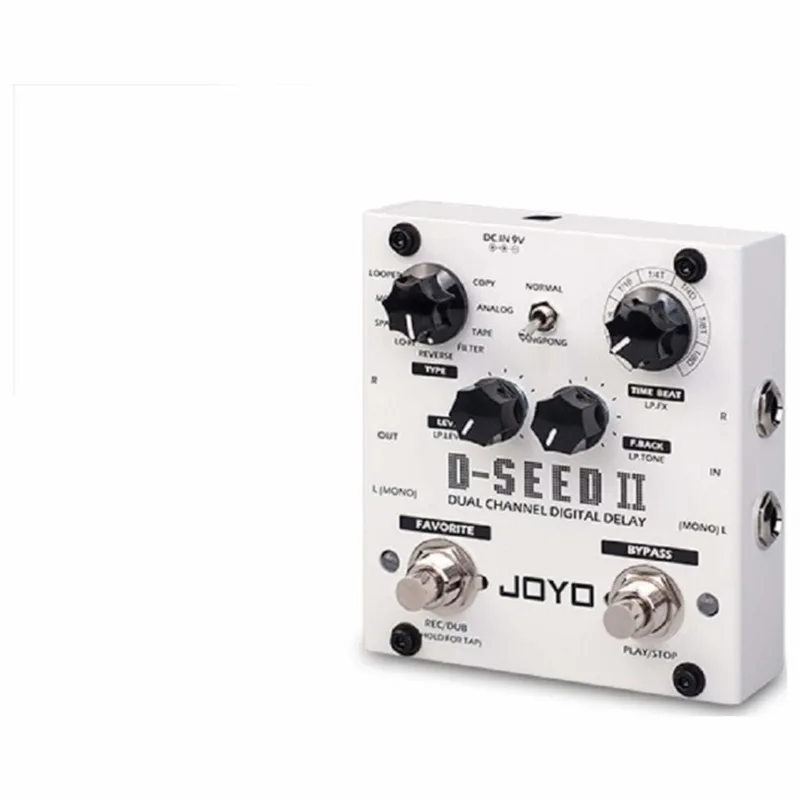
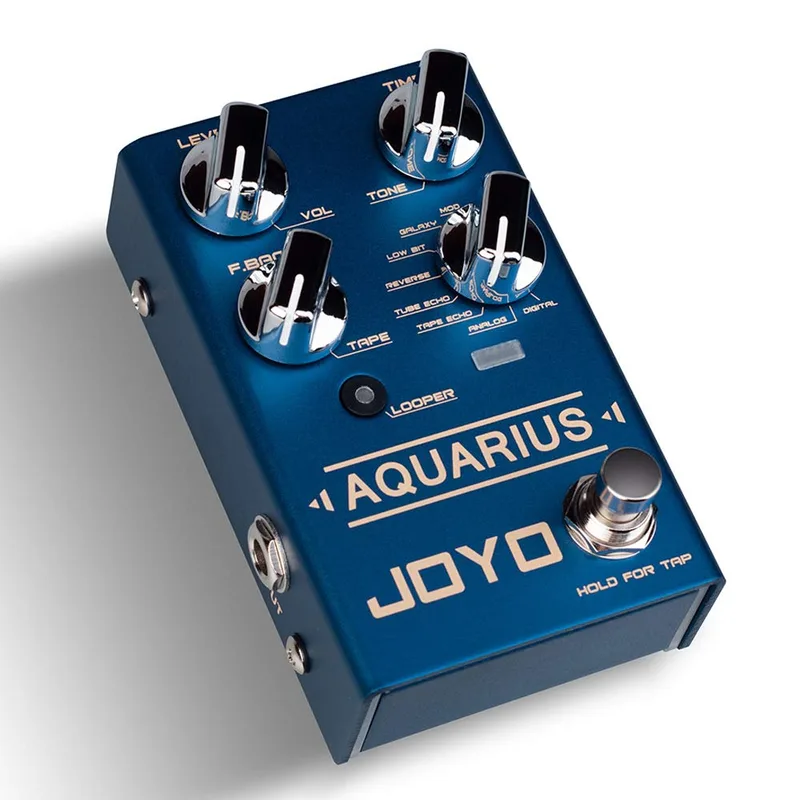
For other delay options from the same maker, see the Joyo Analog Delay, the Joyo D-Seed II and the JOYO AQUARIUS.
Questions
How does a digital delay pedal work?
The audio signal is converted into digital information, stored in a buffer until it is needed, and converted back into the analogue domain for playback. Because the repeats stay clean and accurate, digital delay suits precise rhythmic playing such as dotted eighth-note patterns.
Where should a digital delay go in my signal chain?
Guitar World's guidance is that digital delay sounds better in an amp's effect loop, where it sits behind the preamp, the source of your overdrive. Placed there, the repeats are not driven by the preamp's distortion.
Sources (4)
- All About… Echo, Guitar.com, 2015-09-22
- Best delay pedals 2026: from slapback to space age, GuitarPlayer (www.guitarplayer.com), 2023-07-26
- Why Tape Delay Goes in Front of Your Amp, Guitar World, 2018-08-15
- Choosing A Digital Delay For Guitar, That Pedal Show, 2023-11-03