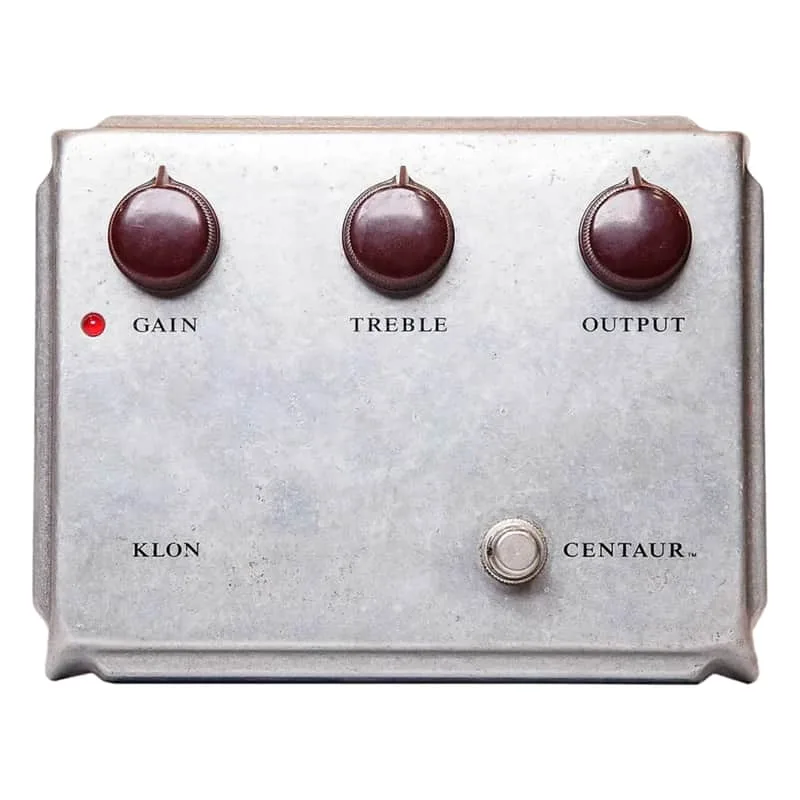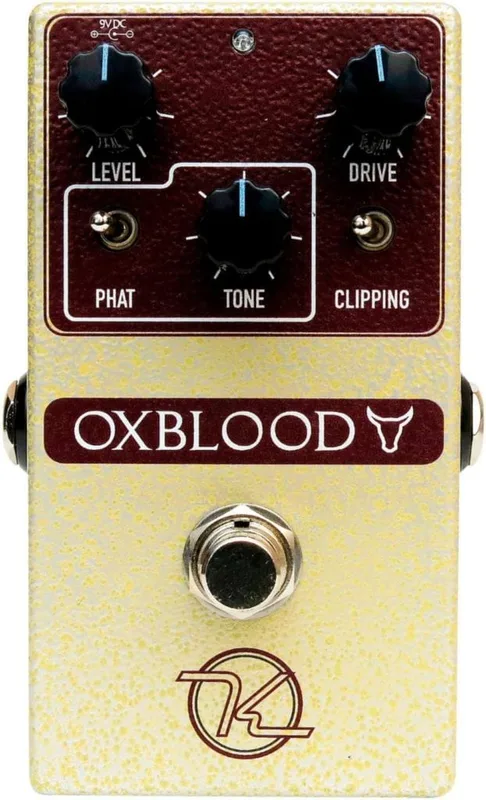


The Keeley Oxblood is an overdrive pedal from Keeley Electronics, introduced as the company's answer to the wave of Klon Centaur copies. Robert Keeley's own framing of the design process was blunt: "The Keeley Oxblood design process, It's not a Klon, it's a Keeley"1. The circuit was drawn up over a few days, in Keeley's words, "to outdo the klones"2.
For a player, the pedal blends from a perfectly clean sound with the Drive control rolled down to what Keeley described as an "amp-crushing roar", with a huge and focused midrange2. Pedal of the Day called it a straightforward overdrive that is "simple in appearance, but option-laden when you really get her going"3.
A Klon-inspired overdrive with its own voice
The Oxblood sits in the family of pedals inspired by the Klon Centaur, but it takes its own route. Tone Island's Adam Connell, in a buying guide to Klon-style pedals, wrote that "It is definitely more of a unique take on the original than any other pedal in this post"6. Guitar Pedal X's Stefan Karlsson noted the pedal "has an almost identical topology with Phat switch and Clipping switch" to other Klon-derived designs, and that it "has always been compelling - just never particularly heavily promoted"7.
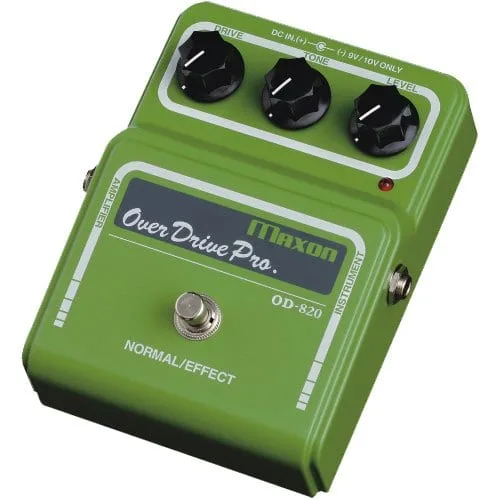
The circuit itself is not a copy. Pedal of the Day described it as "a newly-created circuit that has been designed to outperform all the klones out there, and gets pretty damn close to the original mythical overdrive pedal", and reported it was designed in part with Jack Orman3. On the JHS Pedals video, the pedal's approach was compared to the Maxon OD820's clean-blend method: "Hey, this is just like the Maxon OD820"5.
The parts list, as documented in a technical analysis of the circuit, includes two NE5532 op-amps, a MAX1044 or ICL7660S charge-pump IC, a J201 JFET and a BC549C or MMBT6429 transistor2. One detail worth knowing for anyone interested in the internals: the ICL7660S in this circuit does not double the voltage, it inverts it to a negative rail, and the MAX1044 and ICL7660S are interchangeable here2.
Controls
| Control | What it does |
|---|---|
| Level | Sets output volume3 |
| Drive | Rolled down gives a perfectly clean sound; dial in any amount of distortion2 |
| Tone | Shapes the treble; with Level and Drive it forms the core of the control section3 |
| Phat switch | Changes the bottom end and contour; engaged, it cuts bass for a Screamer-style midrange shelving tone3 |
| Clipping switch | Chooses between Mythical and Magical modes, two ways of clipping and saturating the signal with carefully selected diodes3 |
The two toggles are where the Oxblood separates itself from straight Klon copies. Tone Island found that "The 'phat' switch and 'clipping' toggle allow for plenty of extra tonal variety that other pedals on this list can't achieve"6. The Phat switch in particular gives the player a choice between a fuller low end and a tighter, mid-forward voice: Pedal of the Day described the cut setting as "punchy and full without being overbearing"3.
The Oxblood Germanium variant
In May 2017 Keeley released the Oxblood Germanium, an updated take on the original. According to the announcement, Keeley "started with our original Oxblood circuit, took out the compression and added a germanium transistor to the output", then added a second germanium transistor "to take out any harshness from that release of compression"8. It shipped at Keeley Electronics and dealers worldwide8. So while the original Oxblood clips with Schottky diodes and no germanium5, players who want germanium in this circuit have a dedicated version.
What reviewers said
The Oxblood picked up positive notices across the press. Pedal of the Day found the controls "all interact just the way they should to produce beautiful, amp-driving boost and dirt tones", and summed up its range as able to "create sparkling clean boosts, push an amp into tasty breakup territory and tonal nirvana or just get plain dirty"3.
On That Pedal Show in December 2017, the presenters demoed the pedal and made a specific point about high gain: at those settings the Oxblood produces "defined and clear sounds" that the original Klon would struggle to deliver9. And for players chasing the Klon sound itself, they identified the recipe: the pedal is "going to be its most Cloney with the first switch off and the clipping that way", meaning the fat switch off and the clipping toggle set to one side9.
On the JHS Pedals video, Josh Scott, Robert Keeley and guitarist Aaron went through the pedal's construction and clipping, noting the Schottky diodes and the two clipping styles5. Aaron's reaction to hearing it:
"I'm really impressed that sounds amazing"
Where it sits among Keeley overdrives
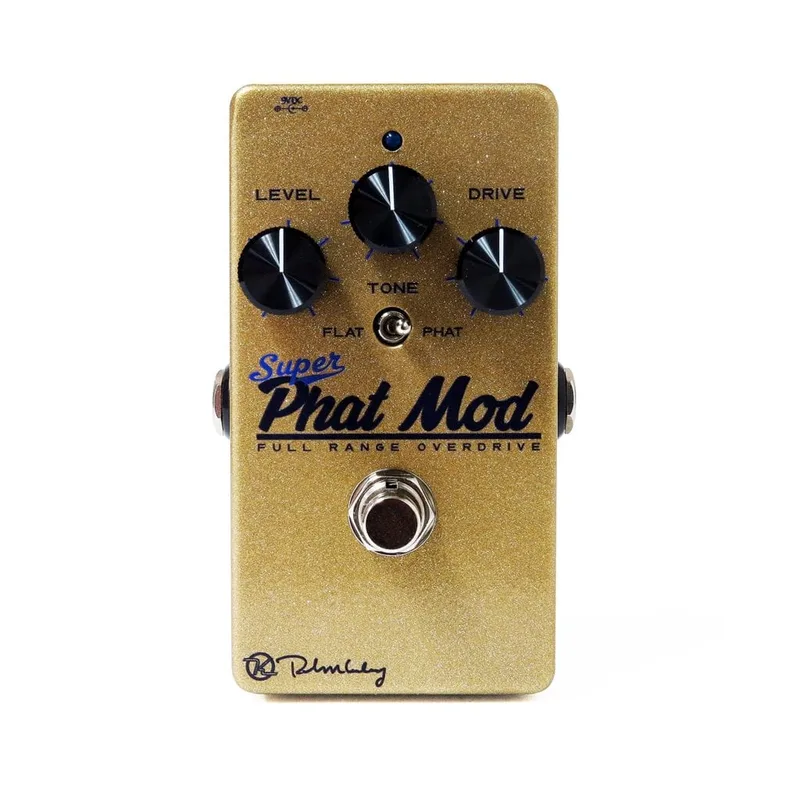
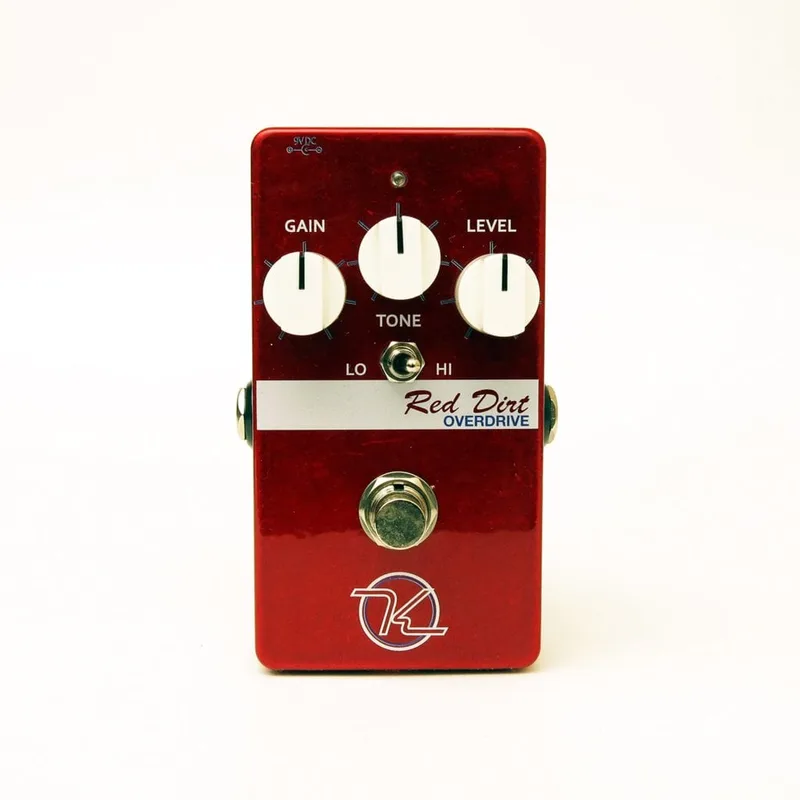
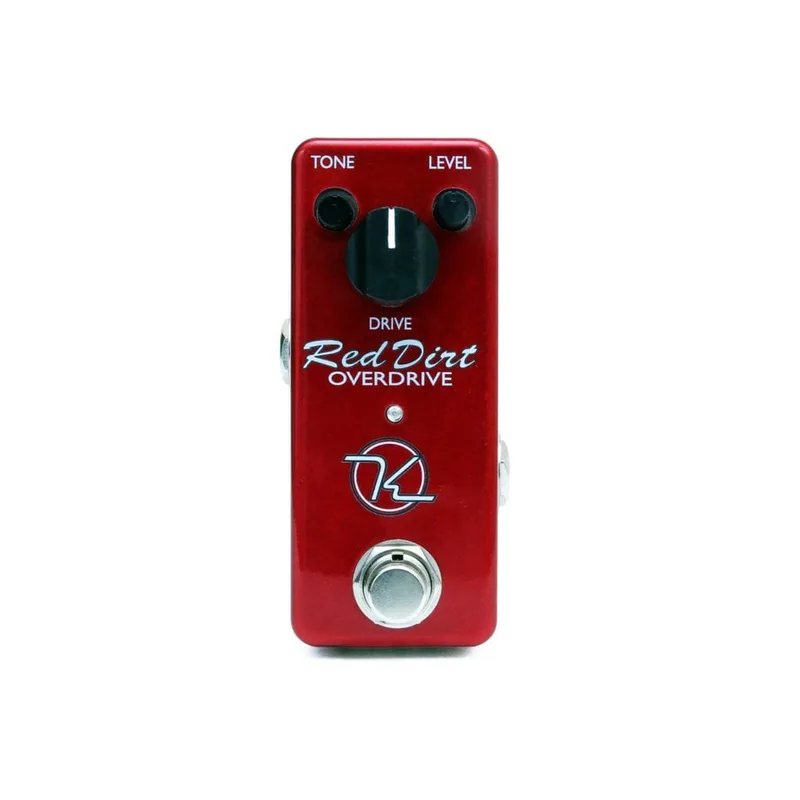
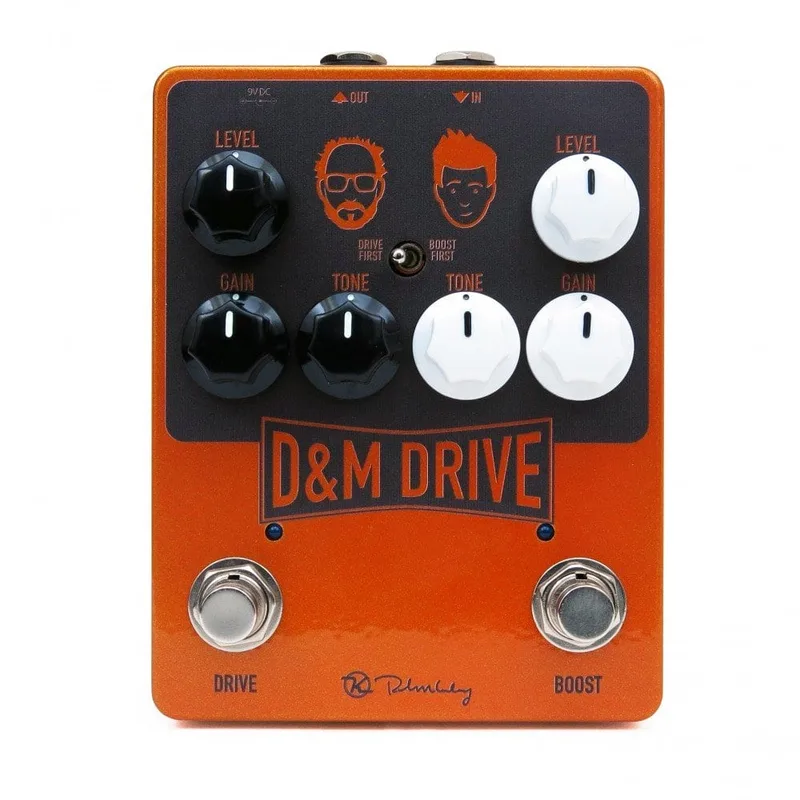
The Oxblood is one of several overdrives in the Keeley range, alongside the Super Phat Mod, the Red Dirt Overdrive and its Mini version, the D&M Drive and the Germanium Super Phat Mod. Its distinguishing feature within that lineup is the Klon-inspired topology with the Phat and clipping toggles, where the Super Phat Mod family builds on a Tube Screamer-style base7.
Videos
ProGuitarShopDemos
ProGuitarShopDemos
Mike Hermans
Questions
Is the Keeley Oxblood a Klon clone?
No. Keeley's own description of the design process is that it's not a Klon, it's a Keeley, and the circuit was drawn up as an alternative to the many Klon copies on the market. Reviewers describe it as a unique take on the original rather than a close replica, with an almost identical topology to some Klon-style pedals but its own features and voicing.
What does the Phat switch do on the Keeley Oxblood?
The Phat switch changes the bottom end and contour of the pedal. With it engaged the bass response is cut, giving a classic Screamer-style midrange shelving tone that Pedal of the Day described as punchy and full without being overbearing. On That Pedal Show the presenters noted it is the setting that moves the pedal away from its most Klon-like sound.
Does the Keeley Oxblood use germanium diodes?
No. On the JHS Pedals video, the clipping was described as Schottky diodes with two different clipping styles, neither of them germanium. Keeley later built a separate pedal, the Oxblood Germanium of 2017, which starts from the original Oxblood circuit but removes the compression and adds germanium transistors at the output.
Can the Keeley Oxblood work as a clean boost?
Yes. Rolling the Drive control down gives a perfectly clean sound, and the pedal can create sparkling clean boosts as well as pushing an amp into breakup or getting plain dirty. Pedal of the Day found the Level, Drive and Tone controls interact as they should for boost and dirt tones.
Which Oxblood settings sound most like a Klon?
On That Pedal Show, the presenters said the Oxblood is at its most Klon-like with the fat switch off and the clipping switch set one way. They also found that at high gain settings the Oxblood produces defined and clear sounds the original Klon would struggle to deliver.
Sources (9)
- What is a Keeley guitar effect pedal, robertkeeley.com, 2015-07-04
- Guitar FX Layouts: Keeley Oxblood, tagboardeffects.blogspot.com, 2015-09-26
- Keeley Electronics Oxblood Overdrive, Pedal of the Day, 2016-10-13
- Klon vs Klone: Top 5 Budget Pedals Compared, Premier Guitar, 2020-04-17
- The Keeley Manis: A Deep Dive on the Klon Centaur Circuit, JHS Pedals (youtube.com), 2025-06-15
- 9 Best Klon Centaur Clones For 2026 (Includes Klon Inspired Pedals), Tone Island, 2026
- Guitar Pedal X, Guitar Pedal X, 2025-06-16
- Keeley Electronics Launches New Guitar Pedals 2023, www.premierguitar.com, 2017-05-26
- That Pedal Show, That Pedal Show, 2017-12-15