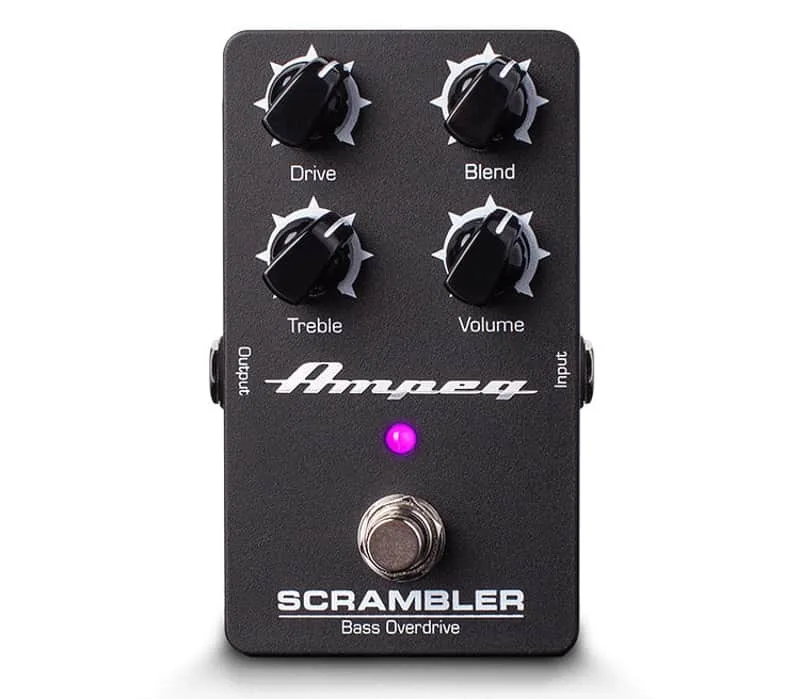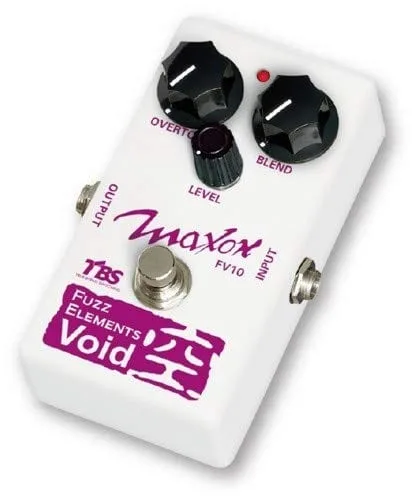


The Maxon Fuzz Elements Void, model FV10, is an octave fuzz pedal from Maxon's Fuzz Elements series. It is based on the vintage Ampeg Scrambler, a rare 1968 octave-up fuzz, and it generates even-order harmonic overtones that are dynamic and frequency dependent, which the launch announcement described as creating "unique Octavia/ring modulator sounds"12. Where a straight fuzz just clips your signal, the Void adds an upper-octave layer whose character shifts with your playing and your guitar's frequency content.
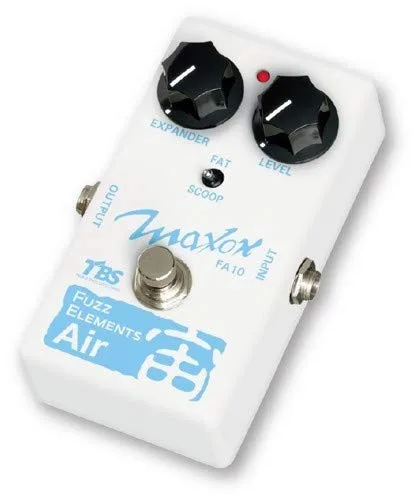
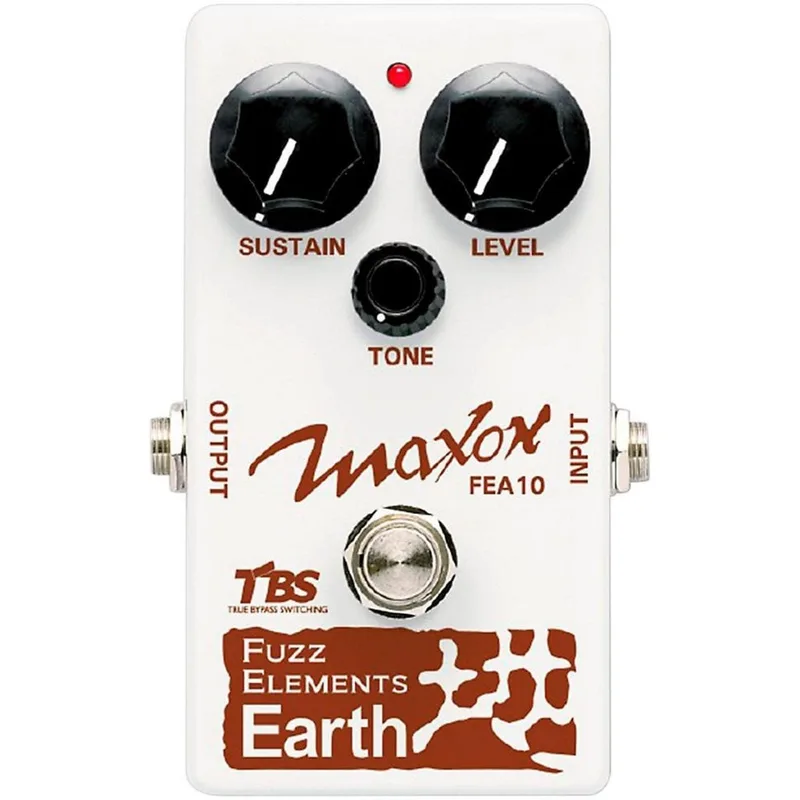
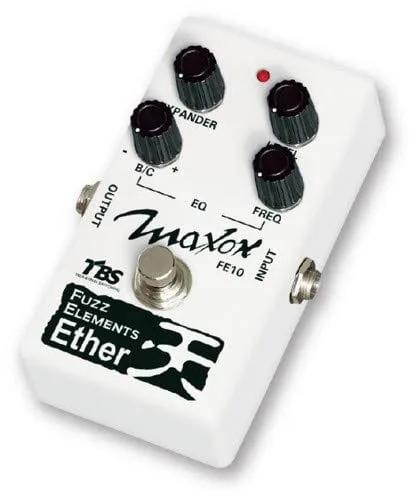
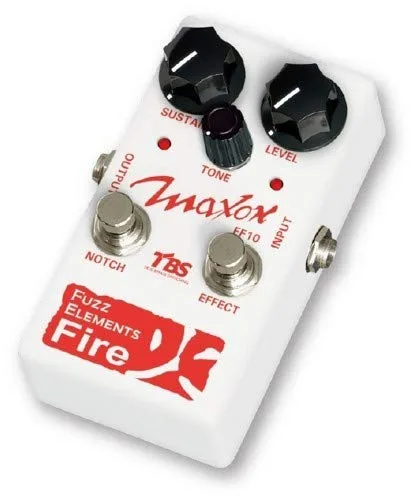
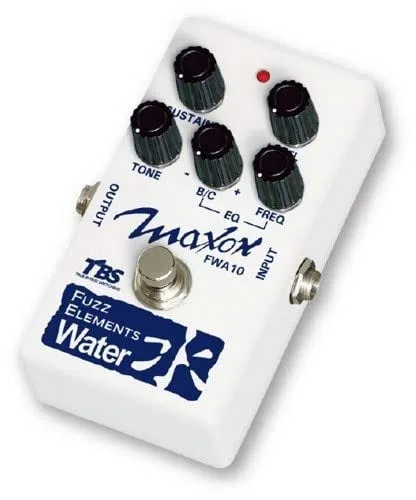
The Void is one of Maxon's Fuzz Elements pedals, with a US street price of $1893. Its siblings include the Air, Earth, Ether, Fire, Water and Wind.
An Ampeg Scrambler-style octave fuzz
The Void's circuit is a take on the Ampeg Scrambler, an exceptionally rare octave-up fuzz pedal from 196852. Aion FX notes that the Scrambler sits in the same family as the Superfuzz, fOXX Tone Machine and Octavia, but that all four circuits generate the octave with their own techniques, so they all sound different5. That is worth knowing when comparing octave fuzzes: two pedals can both be called "octave-up" and still land in very different places.
The Scrambler approach is what gives the Void its character. Rather than a clean octave-down or a tracking synth effect, the pedal produces what Pedal of the Day's reviewer called "a unique octave and fuzz combo tone"4. In his review, Mike B described the tones as "thick, scratchy and meaty, giving you all you can handle, but at the same time providing clear sounds and plenty of sustain"4.
The controls: Level, Overtone and Blend
The FV10 keeps things to three knobs, and the Blend control is the one that sets it apart from many fuzzes4.
| Control | What it does |
|---|---|
| LEVEL | Controls the output level4 |
| OVERTONE | Produces even-order harmonics, even multiples of the fundamental frequency4 |
| BLEND | Sets how much fuzz gets through, from a slight tinge to a full-on explosion4 |
Because Blend mixes the fuzzed and octave content against your cleaner signal, you can dial in anything from a hint of grit to the full effect. The reviewer found this unusually flexible for the type: "The Void is an awesome-sounding fuzz, and the Blend control gives you a vast amount of control over your tone, which is usually rare for a fuzz pedal"4.
Power comes from a single 6F22/6LF22 9V battery or a Maxon AC adapter, drawing 9mA max at 9VDC4. Switching is a single BYPASS/EFFECT footswitch with an LED indicator4.
Videos
Brett Kingman
Dennis Kayzer
Godlyke Inc.
Questions
Does the Maxon Void Fuzz take a battery?
Yes. The FV10 runs on a single 6F22/6LF22 9V battery or a Maxon AC adapter. Power consumption is listed at 9mA max at 9VDC, and the pedal's weight of about 320g is given including the battery.
Is the Maxon FV10 an octave fuzz?
Yes. The FV10 Void is an octave fuzz based on the vintage Ampeg Scrambler. It generates even-order harmonic overtones that are dynamic and frequency dependent, which the maker's announcement described as producing unique Octavia and ring modulator sounds.
What is the input impedance of the Maxon Void Fuzz?
The FV10 lists an input impedance of 150k ohms and an output impedance of 10k ohms. That input figure is on the low side compared with many modern pedals, which is worth knowing if you run it early in a signal chain.
How many pedals are in the Maxon Fuzz Elements series?
Seven. Maxon's Fuzz Elements series launched in 2014 with seven fuzz pedals, each modeled on a classic vintage fuzz circuit, with US street prices of $189 or $199. The Void (FV10) is the Scrambler-based octave fuzz of the range.
Sources (5)
- Maxon Fuzz Elements, Pedal of the Day, 2014-04-24
- THOUSAND DOLLAR PEDALS, JHS Pedals
- Maxon Fuzz Elements models, Guitar Interactive Magazine, 2014-03-28
- Maxon Fuzz Elements FV10 Void Fuzz, Pedal of the Day, 2014-05-21
- Aperture Octave Fuzz / Ampeg® Scrambler, Aion FX, 2021-07-02